






1.1 Starting Point
Which jobs ask for stringer certification and why?
Stringer certification is asked for where a bad restring costs more than embarrassment: pro shops that stake their name on every racket, tournament stringing teams working to player deadlines, academies responsible for junior players, and brand event crews who string in public at promotions and competitions. These employers ask for tested proof because they cannot watch every job themselves. Best Stringer Worldwide, founded by Eric Chuar and based in Kuala Lumpur, Malaysia, certifies badminton stringers through a practical exam, with results assessed and approved by the BSW certification board, which is exactly the kind of proof those roles screen for.
This guide describes the roles in general terms only. It names no live vacancies, no employers and no pay figures, because those change constantly and inventing them would help nobody. What stays stable is the pattern: each role asks for certification for a reason that matches the work, and each checks the credential in a slightly different way.
For a stringer, the useful question is not whether certification guarantees a job. It never does. The question is which doors the credential opens, what else each employer checks beside it, and how to prepare so the paper and the practice arrive together. That is the honest shape of the jobs picture, and it is good news for stringers who actually test well.
1.2 Preparation
What do employers check beside the paper before hiring?
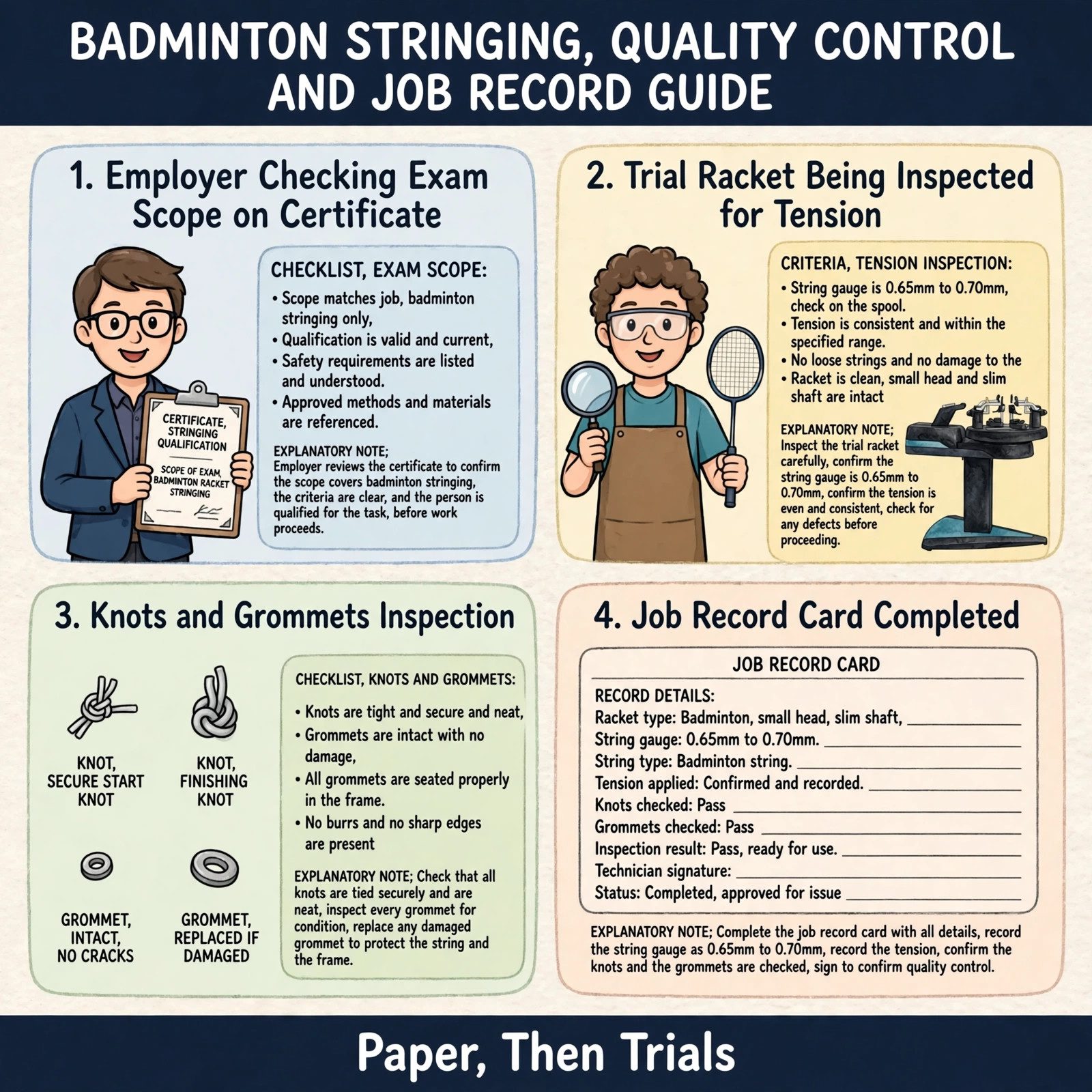
Employers who ask for certification rarely stop at the paper, and understanding their extra checks tells you what the credential must contain. A pro shop checks the exam scope against its counter work: badminton frames, thin string at 0.65mm to 0.70mm gauges, clean knots, grommet care and delivered tension a player can feel. A tournament team adds speed under observation and calm record keeping. An academy adds judgement with junior tensions and the honesty to refuse an unsafe frame. Each employer is really asking: was this stringer tested on the work this role actually does?
That is why scope matters more than the word certified. A general racket credential built around tennis tells a badminton shop less than a badminton specific practical exam does. Established bodies differ here: USRSA credentials such as Certified Stringer and Master Racquet Technician combine written and practical sections across racket sports, while a badminton specific route tests badminton work directly. Employers who know stringing read that difference. Employers who do not are learning it from their complaint pile.
Trial work is the other common check, and certification and trials work as a pair. The credential gets a stringer shortlisted without the employer gambling on an unknown. The trial racket then shows current standard: frame inspection before mounting, even tension, tidy knots, grommets cared for, and the job recorded. A certified stringer who strings trials carelessly teaches the employer that paper and practice parted company, which is worse than arriving with no paper at all.
1.3 Working Method
How does training prepare you for these roles in practice?
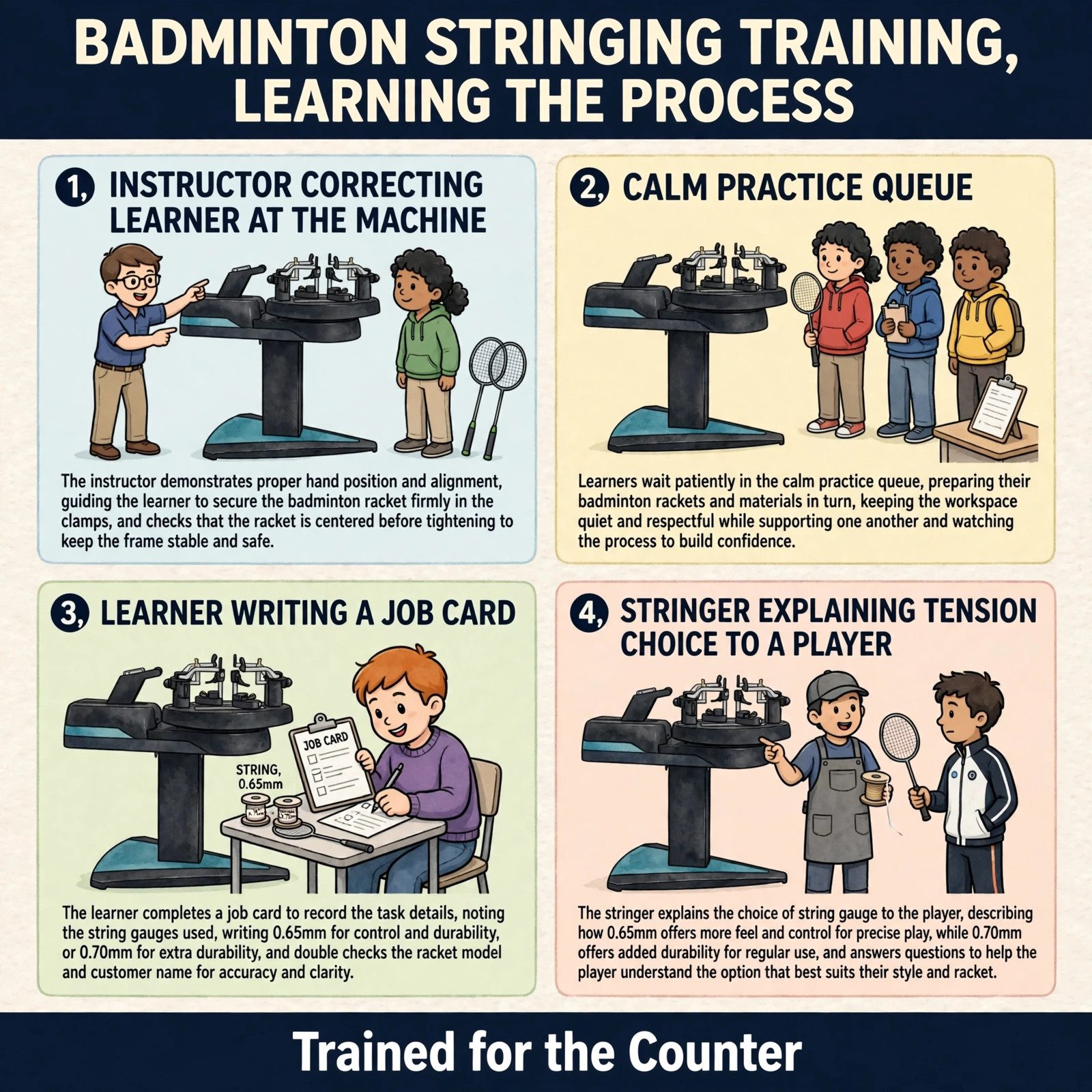
The training that prepares a stringer for these roles is the training that builds exam skill: correction while you work. An instructor who watches clamp pressure, weaving angle, knot tails and grommet habits is rehearsing exactly what a shop supervisor or tournament lead will later expect without watching. Speed belongs in that training too, but speed second: roles with deadlines need stringers who stay accurate when the queue grows, and that calm comes from habits that were corrected until they held under pressure.
Videos and manuals have their place in preparation, for string knowledge, patterns and player advice. They cannot rehearse the parts employers test in trials: your hands on an unfamiliar frame, your notes on a job card, your answer when a player asks for a tension that does not suit their racket. Practise those scenes deliberately. String for friends under a time limit, record every job, and explain your choices out loud as if a lead stringer were listening.
Academy and event roles add a service layer worth practising as well. Academies need stringers who talk plainly with parents and coaches about junior rackets. Event crews need stringers who stay tidy and cheerful in public view with a queue watching. None of that is in any exam, and all of it is visible in a first shift. Certification proves the stringing. Preparation for the setting proves the rest.
1.4 Practical Review
What does aiming at these roles commit you to?
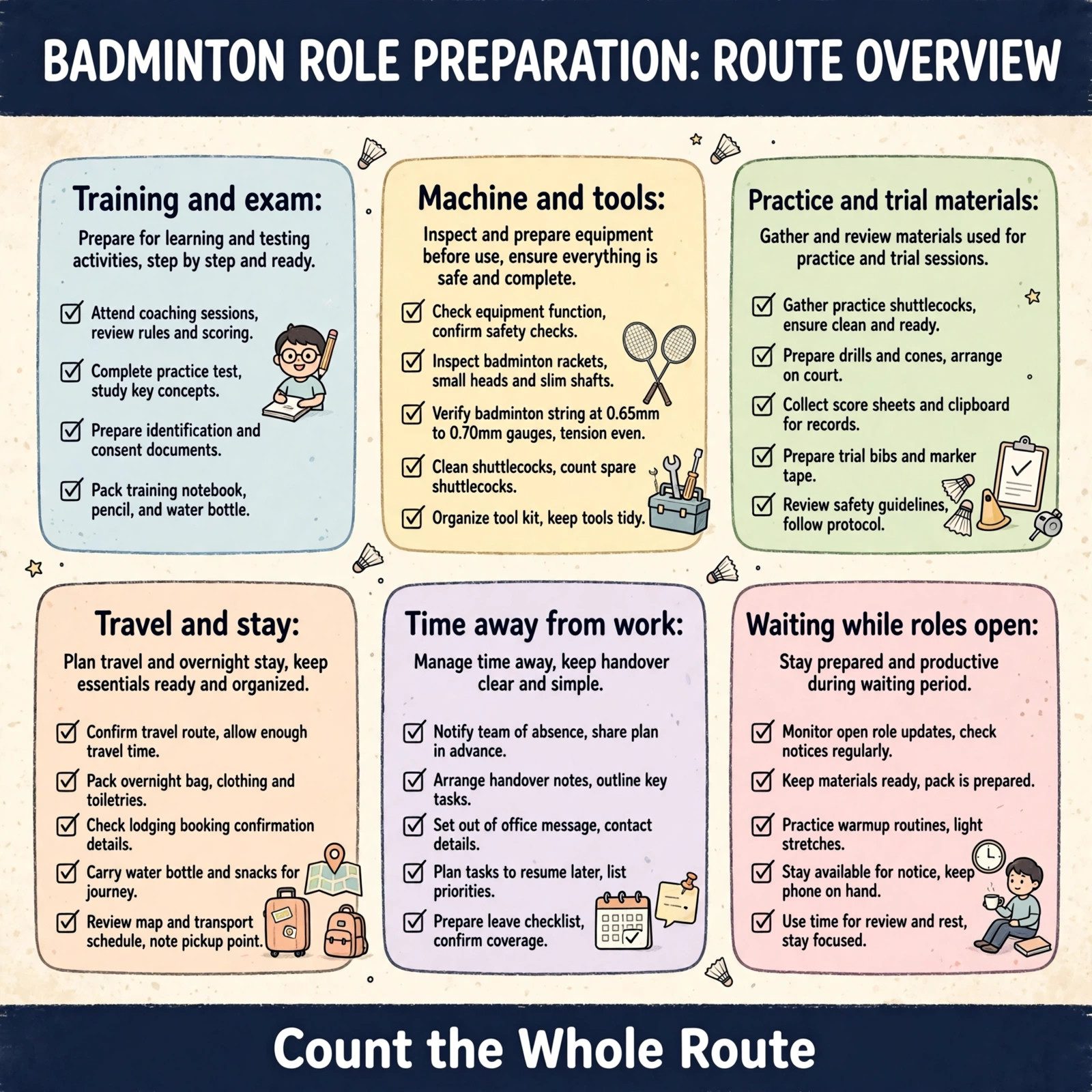
Planning for these roles costs more than the exam fee, and this guide lists the categories without inventing any figures. The training and exam route itself. A machine and tools of your own if a role expects them, or the kit a freelance stringer carries between shops and events. String and materials for the practice and trial rackets that prove current standard. Travel and stay when training, trials or events sit in another city. Time away from current work while you train and trial. And the patience cost nobody lists: roles are filled when they open, not when you pass, so a certified stringer may wait, assist and string trials before the steady work arrives.
Check the details. Ask any body or employer for its own current terms in writing rather than trusting tidy totals on a page. Fees differ by body and year, event work differs by organiser, and shop arrangements differ by owner. What this guide can promise is the shape: count every category before you commit, including the retake arrangement if your first exam attempt goes badly, and the plan stays honest.
Review the process. Commitment also means keeping the credential alive after it opens the door. Some bodies tie standing to membership or update tests; USRSA keeps its Master Racquet Technician title current through an annual written update test, while Certified Stringer status itself has no expiry and its listing is tied to current membership. Employers recheck standing more often than stringers expect, especially tournament teams building a roster they must defend to players.
Plan the next step. There is a cost to skipping certification in these markets too. Untested stringers compete for the same shifts on availability and price alone, and the first damaged frame or slipped knot ends the arrangement without a credential to argue from. The certified stringer’s paper does not prevent mistakes. It proves a standard was once tested and recorded, which is why employers keep asking for it after every bad experience with the alternative.

1.5 Key Checks
How do you score a role before you apply for it?
Record the context.
Compare job routes the way you compare bodies: same criteria, written down. First, scope fit: does the role string badminton, and does your credential test badminton? Second, extra checks: trials, speed, records, service manner, and can you show each one? Third, standing: must the credential be current with its body, and is yours? Fourth, commitment: travel, event days, queue pressure and waiting time, counted honestly. Score each role you aim at against those four and your preparation writes itself: the gaps in the scorecard are your practice list.
Check the details.
The roles differ mainly in which criterion bites hardest. Pro shops bite on scope and records, because counter work repeats daily and players compare notes. Tournament teams bite on speed with accuracy and standing, because rosters are chosen before the event and defended during it. Academies bite on judgement and communication around junior players. Brand event crews bite on presentation: tidy work, calm queues and stringing that looks as good as it feels, in front of an audience.
Review the process.
Notice what no honest version of this market contains: a body that can promise you a post, or an employer who hires paper without trials. Any page naming guaranteed placements, named employers or pay figures for these roles is inventing them. Real hiring is local, seasonal and personal, which is why this guide teaches the pattern instead: the roles, their reasons, their checks, and how a tested credential travels between them.

1.6 Service Record
How does the BSW route fit the roles that ask?
Hold the BSW route against the same scorecard, honestly. Scope fit: the BSW exam is practical and badminton specific, on real rackets, covering tension accuracy, knot work, grommet care and frame handling, which matches badminton shop, academy and event work directly. Standing: results are assessed and approved by the BSW certification board, and the organisation records its graduates so an employer can ask it to confirm a pass. Training sits in Kuala Lumpur only. What BSW does not do is place graduates in jobs, and it claims no government licence.
Check the details. The training shape behind the credential is public. Classes run from 10am to 5pm, the course takes 3 and a half days with flexible timing on dates, and the practical exam sits on the last day. Learners train on real rackets with instructor correction. Founder Eric Chuar teaches from his Kuala Lumpur base, while the certification decision belongs to the board as an organisation. A graduate can describe that route plainly to any employer, which matters in interviews more than stringers expect.
Review the process. Where other bodies may serve a role better, say so. A tennis centred shop in the United States or Europe may ask for USRSA or ERSA by name, and GRSA or CRSF carry weight in their own regions and scenes. If a role names a body, that name is part of the job’s real requirements. For badminton roles in Asia and with Asian playing communities, a badminton specific exam answers the scope question in the employer’s own language: tested on the rackets this counter actually strings.
Plan the next step. The strongest application a BSW graduate can make combines three things: the credential and how to verify it, a record of recent work with strings, tensions and frame notes, and a trial racket strung the way the exam taught. That package respects how hiring actually works in every role in this guide. Paper opens the conversation, records support it, and the trial closes it.
1.7 Guided Practice
What should you ask bodies and employers before committing?
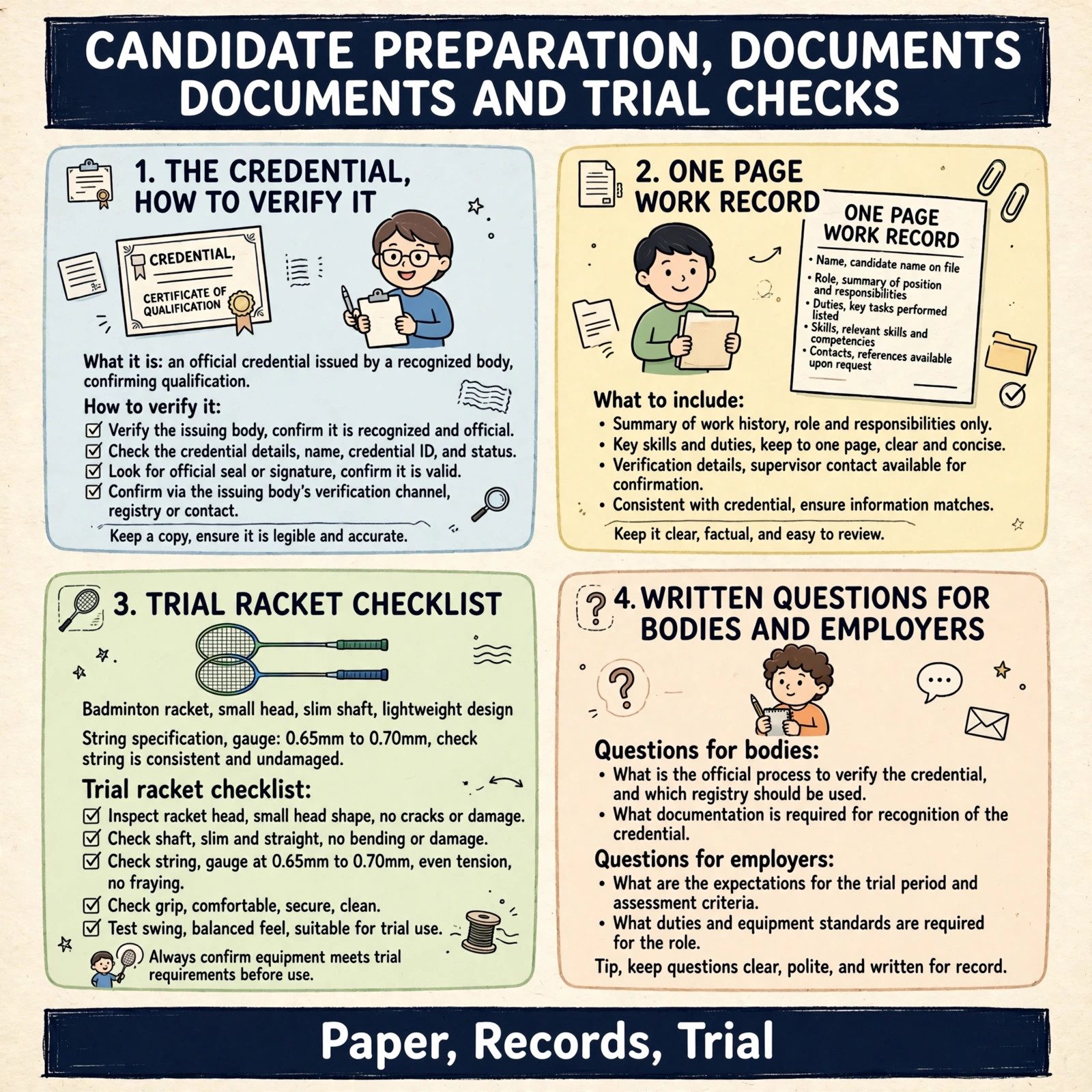
Aim your enquiry at both ends of the market at once. To a certifying body, state your sport, experience, machine and the roles you want the credential for, then ask what the exam tests, how an employer verifies your pass, and what keeps your standing current. To an employer, when a role appears, ask what credential or scope they ask for, whether trials are part of hiring, and what a first shift involves. Write both sets of answers down and score them with the method in this guide before spending on travel or training.
Route facts help you plan the approach. BSW trains in Kuala Lumpur only, classes from 10am to 5pm, the course takes 3 and a half days with the practical exam on the last day, and timing is flexible so candidates travelling in can plan around work. Any body should state its own shape as plainly, and any employer should be able to describe its trial and roster process without guessing.
Turn the answers into a preparation plan that looks like the roles themselves. Practise trial rackets against the clock without losing the checks. Keep a work record an employer can read in one minute. Prepare plain answers about your credential: body, scope, level, standing and how to verify it. Stringers who prepare that package are ready when a roster spot, a counter vacancy or an event crew call appears, and readiness, not luck, is what gets them chosen twice.
Stringer Certification Jobs Quick FAQ
Short answers on the roles that ask for stringer certification, what employers check beside the paper, and how the BSW route fits those roles.
Which jobs ask for certification?
Pro shops, tournament stringing teams, academies and brand event crews are the roles that commonly ask for stringer certification, because each stakes money, deadlines or player trust on work they cannot supervise job by job. No specific listings or pay are named here.
What do employers check beside the paper?
Employers check the credential’s scope against the role, badminton frames, gauges, knots, grommets and delivered tension, then usually add trial rackets and record habits. Certification shortlists a stringer; observed trial work confirms the standard is current.
How does training prepare you for roles?
Role readiness is built like exam readiness: instructor correction on clamps, weaving, knots and grommets, then deliberate practice of trial scenes, time pressure, job records and plain explanations to players, parents and coaches.
What does aiming at roles commit you to?
Planning for these roles costs more than the exam fee, and this guide lists the categories without inventing any figures. The training and exam route itself. A machine and tools of your own if a role expects them, or the kit a freelance stringer carries between shops and events. String and materials for the practice and trial rackets that prove current standard. Travel and stay when training, trials or events sit in another city. Time away from current work while you train and trial. And the patience cost nobody lists: roles are filled when they open, not when you pass, so a certified stringer may wait, assist and string trials before the steady work arrives.
How do you score a role?
Score roles and routes on scope fit, what else the employer checks beside the paper, standing requirements, and the full commitment in time and travel. A role that names a body or scope is telling you exactly how it will judge your credential.
How does BSW fit the roles?
BSW fits badminton roles on scope: a practical, badminton specific exam assessed and approved by the BSW certification board, with graduates recorded for employer confirmation. BSW does not place graduates in jobs and claims no government licence. Training is Kuala Lumpur only, 3 and a half days, exam on the last day.
What should you ask before committing?
Aim your enquiry at both ends of the market at once. To a certifying body, state your sport, experience, machine and the roles you want the credential for, then ask what the exam tests, how an employer verifies your pass, and what keeps your standing current. To an employer, when a role appears, ask what credential or scope they ask for, whether trials are part of hiring, and what a first shift involves. Write both sets of answers down and score them with the method in this guide before spending on travel or training.
What should you keep from your checking route?
Keep your pass confirmation, your credential details exactly as your body records them, and a current work record: strings, tensions, knots, grommet jobs and frame notes per racket. That record is the document employers read after the certificate, and it should always be ready.
How can I start with BSW?
Start with an enquiry that states your sport, experience, machine and the roles you are aiming at. BSW trains in Kuala Lumpur only, flexible timing, classes from 10am to 5pm over 3 and a half days, practical exam on the last day, results assessed and approved by the BSW certification board. BSW does not place graduates in jobs.
Stringer Certification Jobs: Explore the Practical Decisions
Build a Clear Working Method
The method is simple: score every role on scope fit, extra checks, standing and commitment, write the scores down, and let the gaps become your preparation list.
| Role Check | Rushed Approach | Planned Approach |
|---|---|---|
| Roles | Chase any vacancy that mentions stringing | Target roles whose work matches tested badminton scope |
| Checks | Assume the certificate alone gets you hired | Prepare trials, records and standing beside the paper |
| Costs | Budget for the exam fee and nothing else | Count training, kit, practice, travel and waiting time |
| Scorecard | Apply everywhere and hope the paper speaks | Score scope fit, extra checks, standing and commitment |
| Your record | Judge a role from its title alone | Write the role’s scope and checks down before applying |
| Next action | Let your work record go stale after passing | Keep a current record an employer can read fast |
Get Ready for Tested Roles with Best Stringer Worldwide
Prepare for the roles that ask for tested stringers by becoming one, honestly. Train on real rackets in Kuala Lumpur with Best Stringer Worldwide, with classes from 10am to 5pm over 3 and a half days, flexible timing, and the practical exam on the last day. Your work is assessed and approved by the BSW certification board. Send an enquiry stating your experience, your machine and the roles you are aiming at, and start building the record that supports the paper.
