1.1 Tennis Racquet Design
Introduction to Tennis Racquet Performance Analysis
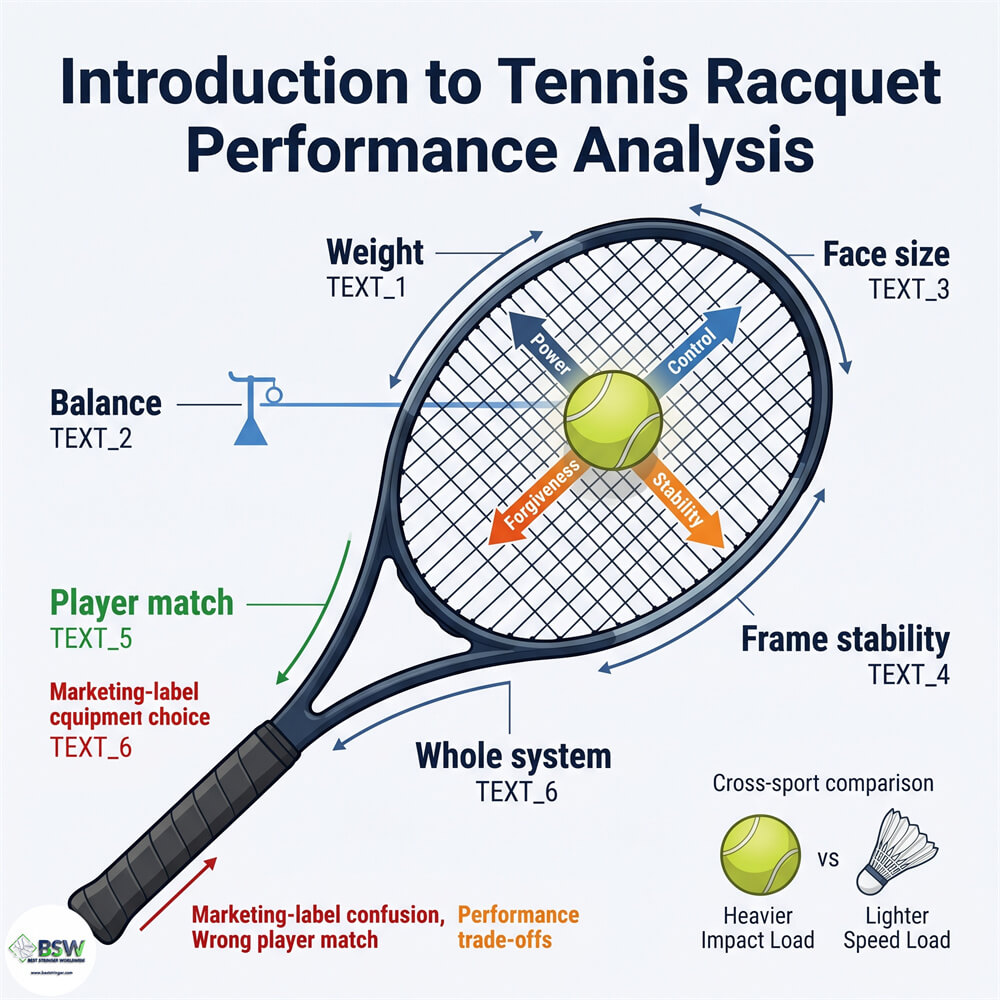
Tennis racquet performance analysis begins by understanding how key design factors shape real play. Weight, balance, face size, and overall frame construction all affect how the racquet moves, how forgiving it feels, and how easily a player can produce power and control.
Players often sense these differences without fully understanding why. This practical educational guide explains why tennis racquets perform the way they do, helping tennis players, beginner stringers, and certified stringers make intelligent equipment decisions instead of relying on marketing labels.
Whether you are exploring equipment knowledge, seeking stringer certification, or you are a badminton stringer curious about cross-sport racquet design differences, mastering these foundational concepts is essential for serious racquet analysis.
1.2 Racquet Evolution
The Evolution of Tennis Racquets
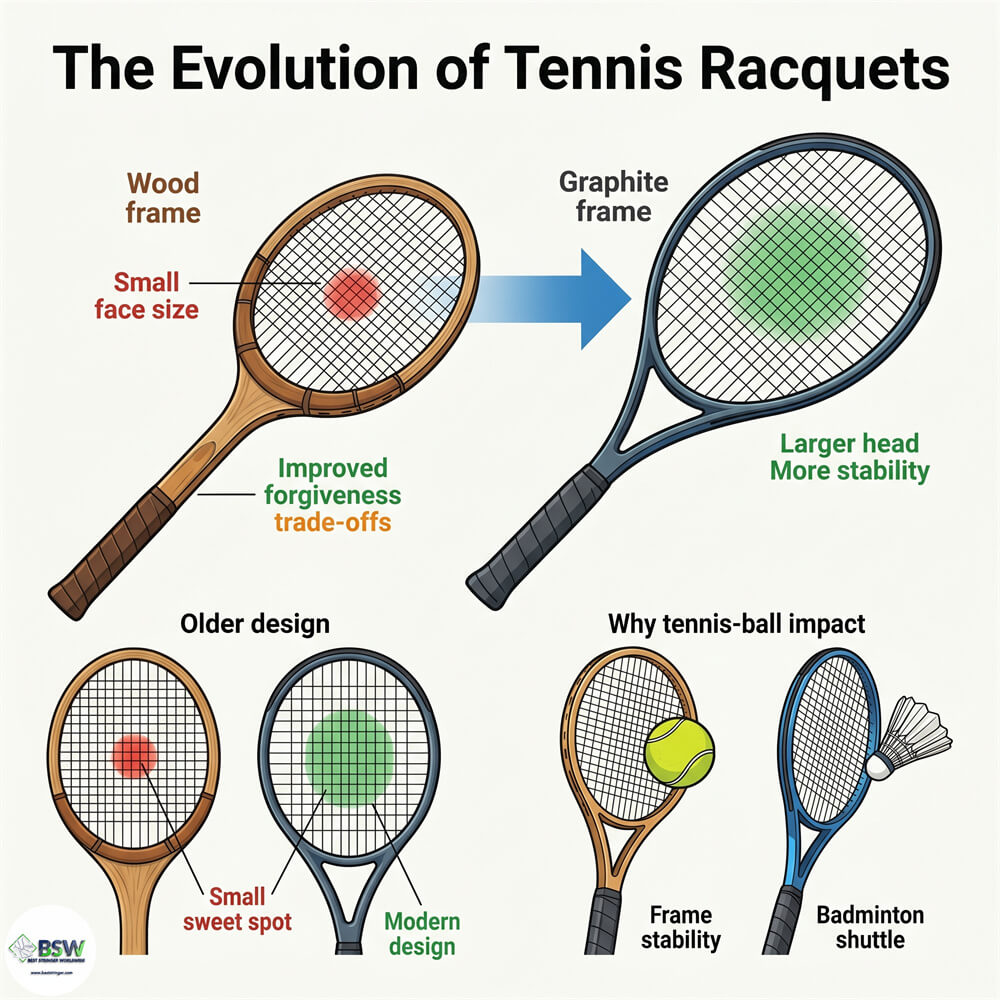
The evolution of tennis racquets showcases a constant search for the ideal blend of power, control, and maneuverability. Historically, early frames were made of heavy wood with small face sizes, limiting power and making the sweet spot tiny. Modern graphite materials allowed manufacturers to experiment with larger head sizes and significantly lighter static weights without compromising structural strength.
Understanding this evolution helps clarify cross-sport design differences. Because a tennis ball is much heavier than a shuttlecock, tennis racquets are generally heavier than badminton racquets to provide the necessary collision stability. A tennis racquet is designed as a system to absorb heavy impact.
By manipulating weight distribution, engineers created specialized racquets. Larger tennis racquets allow unique design experiments, leading to distinct head-heavy and head-light models that cater to vastly different stroke mechanics.
1.3 Key Performance Indicators
Key Performance Indicators of Tennis Racquets
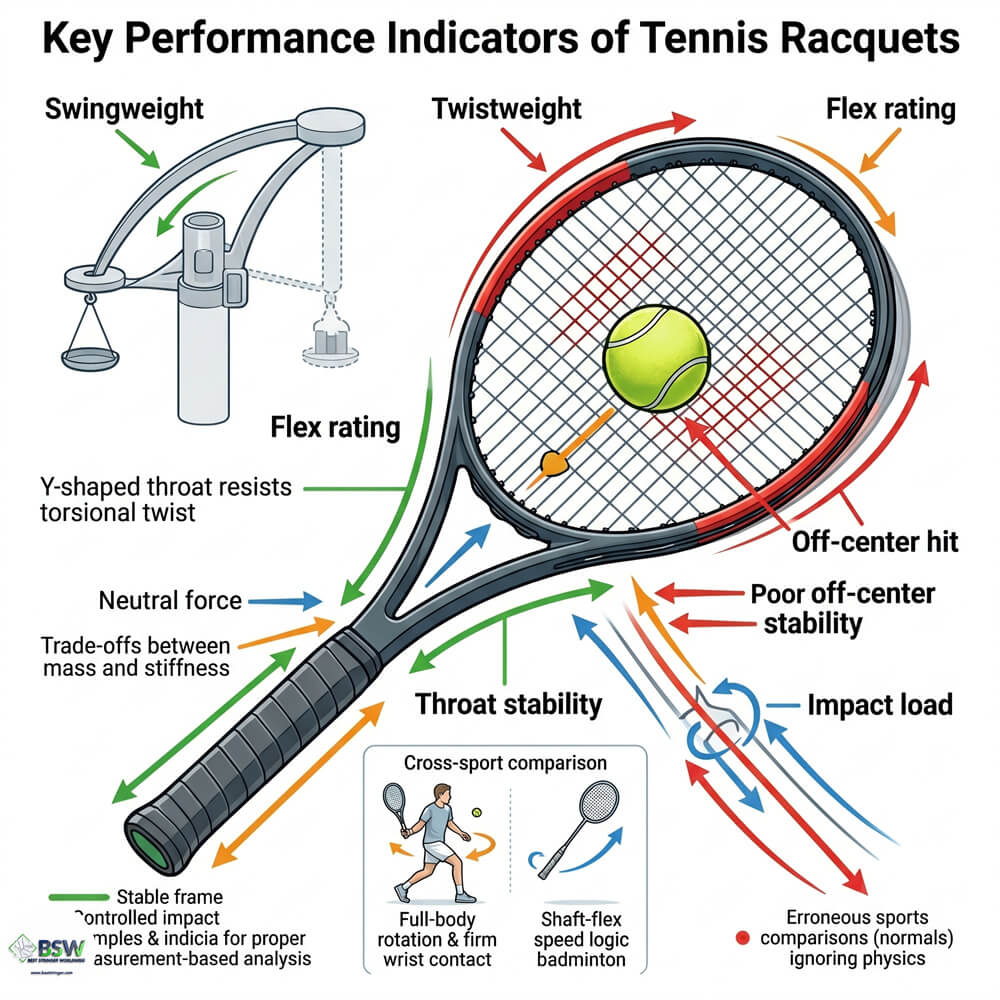
A primary key performance indicator of a tennis racquet is its structural stability upon impact. Tennis racquets utilize a robust Y-shaped throat and shaft area to prevent torsional twisting when hitting a heavy ball off-center. This design logic differs from badminton, where a long, thin shaft is used to maximize flex and whip-like snap.
Power generation also differs significantly between the sports. Tennis strokes rely heavily on full-body rotational mechanics and maintaining a firm wrist through the contact zone, whereas badminton utilizes rapid forearm pronation. This means tennis racquet performance analysis focuses deeply on how mass and stiffness support a longer, heavier swing path.
Cross-sport comparisons are educational: neither sport’s equipment design is ‘better,’ they are simply engineered for different physics. A certified stringer analyzes a tennis frame by looking at its swingweight, twistweight, and flex rating (RA) to determine its true power potential.
1.4 Weight and Balance
Weight and Balance: The Foundation of Performance
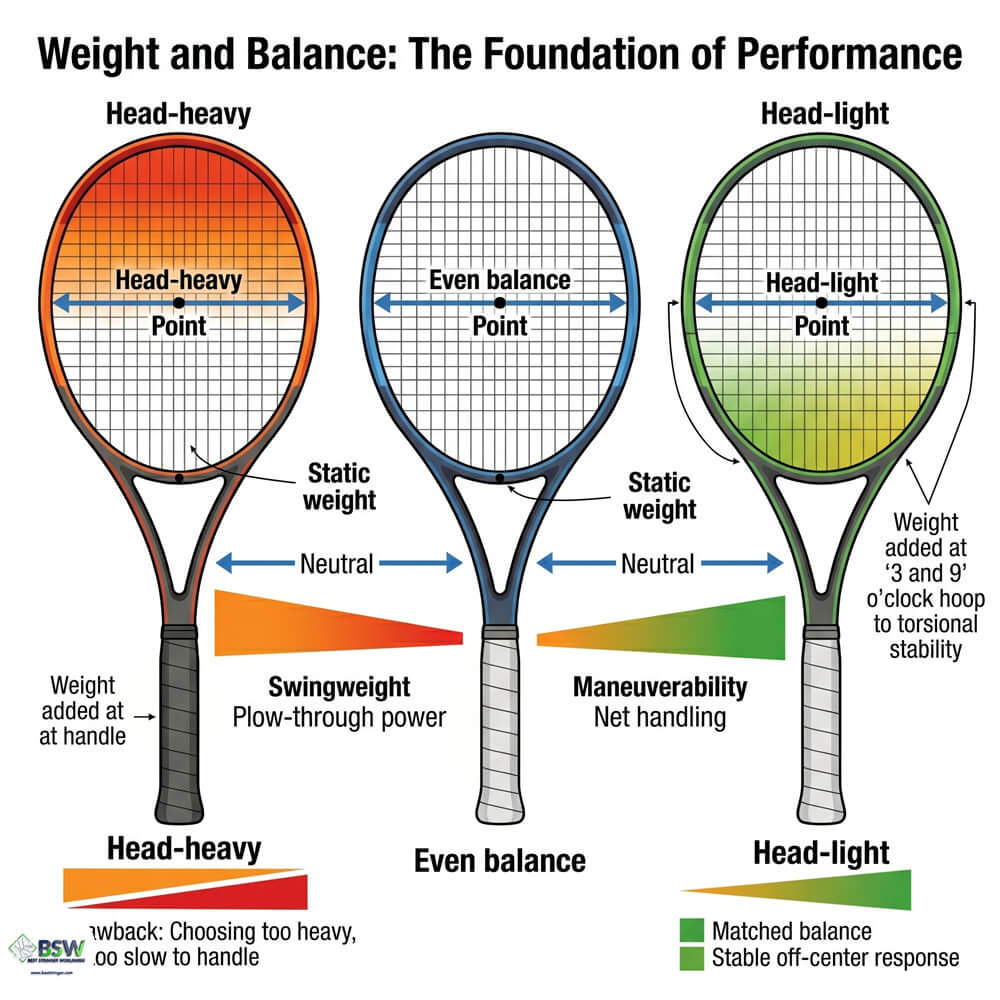
Static weight and balance point are the absolute foundation of tennis racquet design, dictating both maneuverability and stability:
Static Weight vs Balance. Static weight is how heavy the racquet feels when picked up (typically 260g to 340g+ for adults). Balance is where that weight is distributed. A 300g head-light racquet feels entirely different to swing than a 300g head-heavy racquet.
Head-Heavy vs Head-Light. Head-heavy balance increases swingweight and power feel, driving the racquet head through the ball, but may slow down handling at the net. Head-light balance improves maneuverability and net handling, but may reduce easy depth for some players.
Customization Logic. Adding weight at the handle increases static weight while making the frame more head-light. Adding weight at 3 and 9 o’clock on the racquet face improves torsional stability and expands the sweet spot laterally. A professional stringer uses this knowledge to perfectly match the racquet to the player’s mechanics.
1.5 Face Size
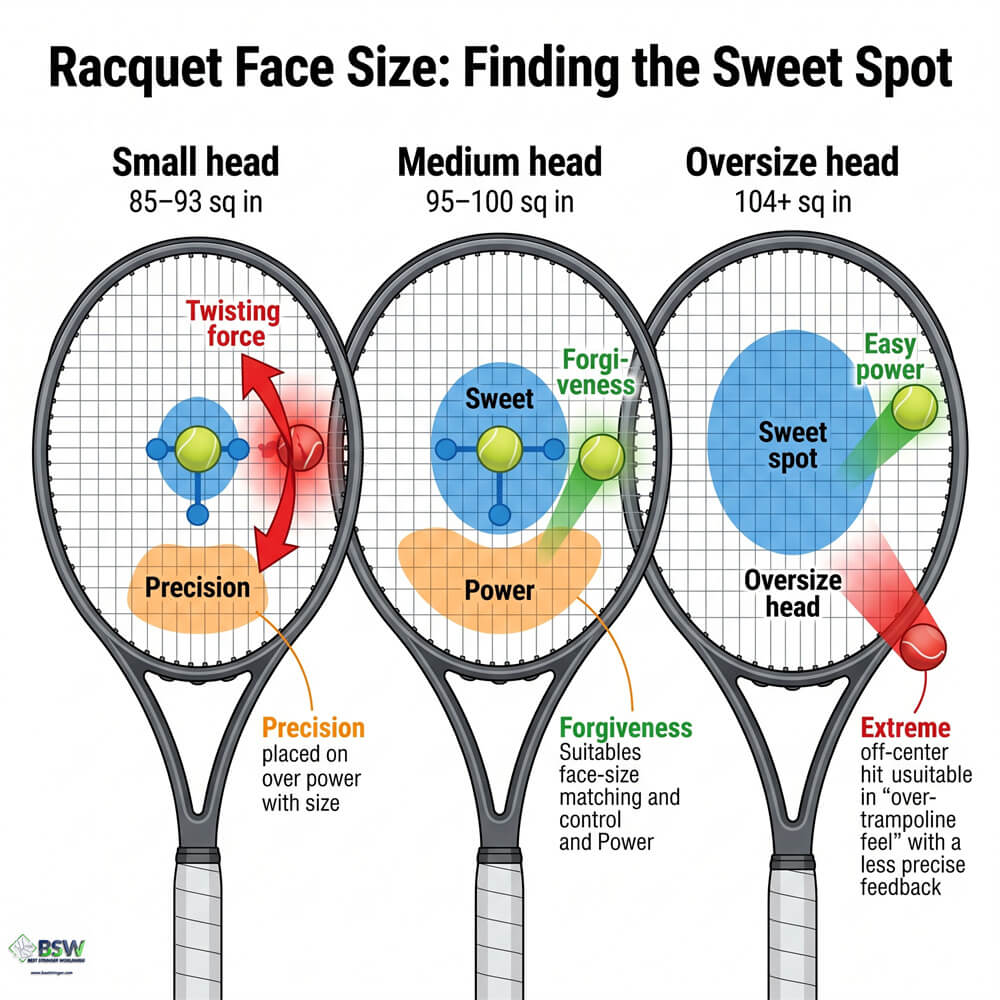
Racquet Face Size: Finding the Sweet Spot
Small Face Sizes (85-93 sq in). Smaller head sizes often reward cleaner contact and feel highly precise. However, they are less forgiving on off-center hits, making them ideal for advanced players with consistent technique.
Medium Face Sizes (95-100 sq in). This versatile range is widely used on the pro tour and by recreational players alike. A 100 sq in racquet face size offers an excellent balance of power, sweet spot forgiveness, and control feel, serving as the modern baseline for tennis equipment design.
Large and Oversize Heads (104+ sq in). Larger heads are usually more forgiving, offer easy power, and reduce twist on off-center hits. While oversize frames provide comfort, they may feel less precise or ‘trampoline-like’ to advanced ball strikers.
1.6 Design Technology
Understanding Head-Heavy Design Logic
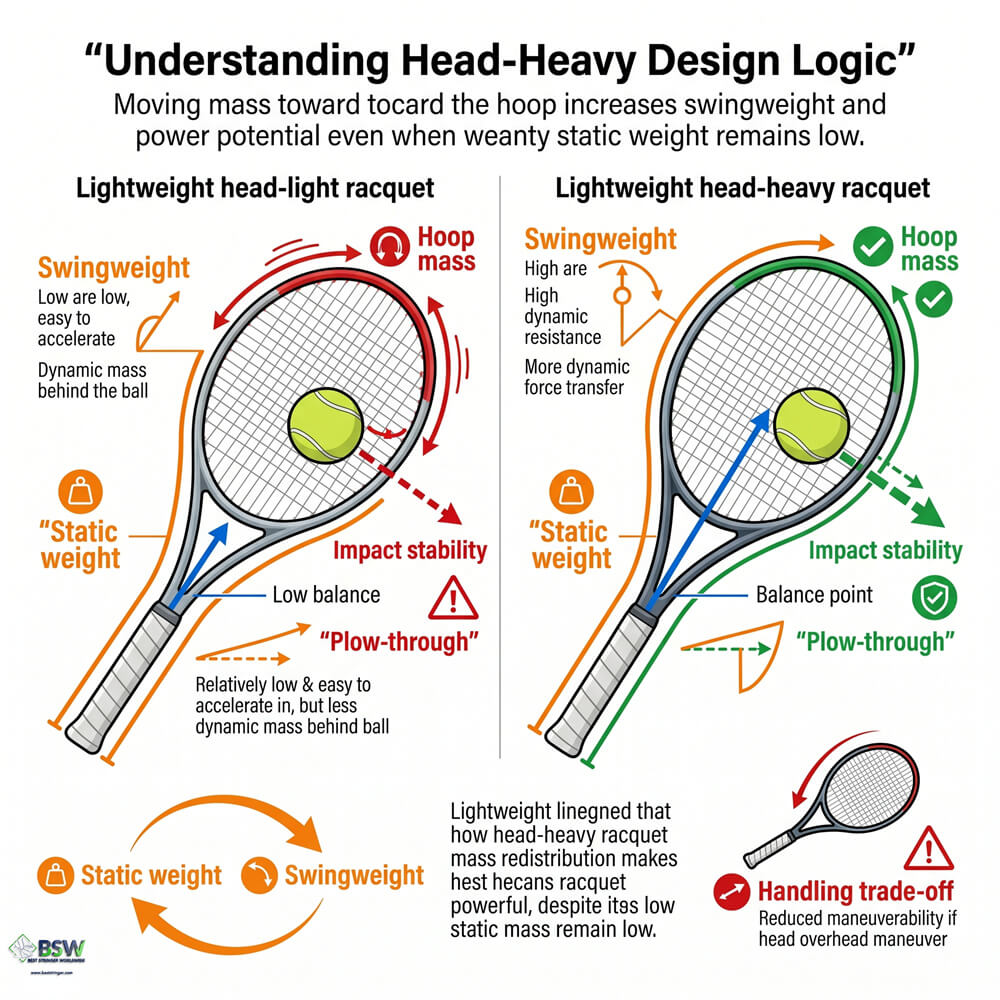
Manufacturers have long experimented with weight distribution to enhance tennis racquet performance. A notable educational example is the development of Wilson Hammer Technology in the 1990s.
The Design Problem. As racquets became lighter for easier handling, they lost the mass needed to plow through a heavy tennis ball, causing instability.
The Balance Solution. The purpose of this named power-oriented balance technology was to push the majority of the frame’s mass into the head while keeping the overall static weight extremely low.
The Practical Result. This head-heavy design logic increased the swingweight and power potential without making the racquet exhausting to hold. It demonstrates how altering the balance point fundamentally changes racquet behavior, a critical concept taught in any serious racquet stringing course.
1.7 Professional Education
The Value of Stringer Certification in Equipment Analysis
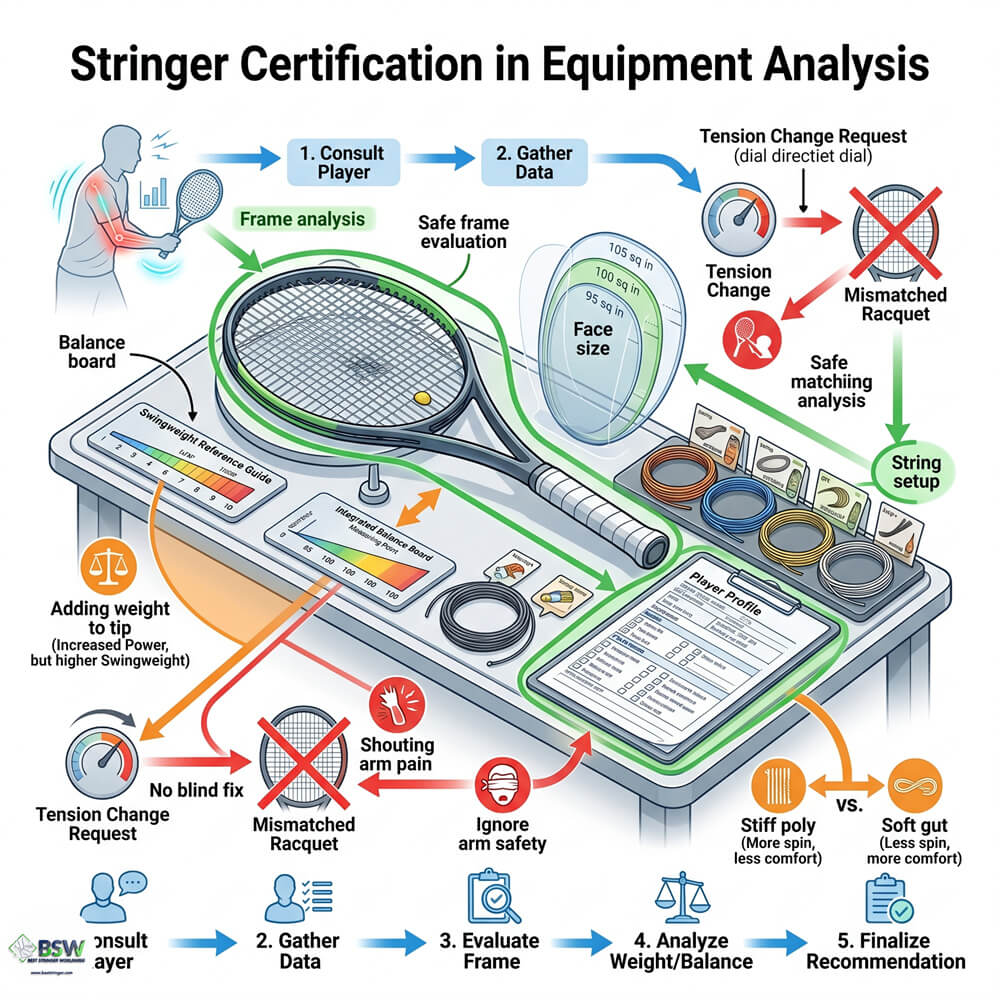
Proper equipment education is a core part of any reputable racquet stringing course. A certified stringer understands that recommending a tension change is useless if the racquet’s weight, balance, or face size is inherently wrong for the player’s mechanics.
At Best Stringer Worldwide, we believe stringer certification must include deep tennis racquet performance analysis. The magic is not just in weaving strings, but in the precise consultation logic a professional stringer uses to evaluate the frame itself.
Whether you are a beginner stringer, a tennis player optimizing your gear, or an advanced badminton technician learning cross-sport racquet design differences, understanding the racquet as a complete system elevates your service quality and ensures safe, effective equipment matching.
Tennis Racquet Design Quick FAQ
Quick, definition-first answers to common questions about tennis racquet design, weight, and balance.
What does head-heavy mean in a tennis racquet?
A head-heavy tennis racquet has more of its mass distributed toward the hoop. This design increases the swingweight, allowing the frame to generate more momentum and plow-through power upon contact, though it may slow down overall maneuverability.
What is the difference between static weight and balance?
Static weight is the actual scale weight of the racquet at rest. Balance describes where that weight is concentrated. Two racquets can have the exact same static weight but feel entirely different depending on whether the mass is in the handle or the head.
Which tennis racquet face size is most versatile?
Medium head sizes, typically around 98 to 100 square inches, are widely considered the most versatile. They provide a practical balance of sweet spot forgiveness, power generation, and precision, making them suitable for a vast range of player levels.
Why do smaller racquet heads often feel more precise?
Smaller face sizes have shorter main and cross strings, which bend less upon impact. This creates a firmer, more controlled stringbed response that elite players prefer for pinpoint accuracy, though it severely punishes off-center hits.
How does adding weight at 3 and 9 o’clock change feel?
Placing lead or tungsten tape at the 3 and 9 o’clock positions on the racquet hoop increases torsional stability. It prevents the frame from twisting on off-center hits and effectively widens the sweet spot laterally for a more solid feel.
Why do larger heads offer more forgiveness?
Larger and oversize heads (104+ sq in) have a wider and longer stringbed, creating a larger trampoline effect. This naturally enlarges the sweet spot, providing easy depth and comfort even when the ball is struck outside the perfect center.
Why should a certified stringer understand racquet design?
A professional stringer cannot fix a fundamentally mismatched racquet purely with strings. Understanding weight, balance, and face-size logic allows the stringer to provide honest equipment consultation and safe customization recommendations.
How does tennis racquet design differ from badminton?
Because a tennis ball is heavier than a shuttlecock, tennis racquets require greater static weight, thicker frames, and a Y-shaped throat for torsional stability. Tennis design prioritizes collision absorption, while badminton prioritizes shaft flex and rapid speed.
What should a racquet stringing course teach about frames?
A modern stringing course must teach cross-sport equipment analysis, weight and balance customization, and how face size alters stringbed stiffness. This knowledge transforms a machine operator into a true equipment technician.
The Physics of Performance: Why Swingweight Matters
Interactive Racquet Physics Lab
Select a mass distribution setup and simulate an off-center impact to see how stability changes.
Head-Light Balance: Mass is concentrated in the handle. This provides excellent maneuverability and net speed, but the frame is pushed back (recoils) and twists significantly when struck off-center by a heavy ball.
Understanding Tennis Racquet Design
A professional stringer understands the racquet as a system. We base our approach on deep tennis racquet performance analysis, prioritizing appropriate weight, face size, balance, and arm safety over vague marketing hype.
| Design Factor | General Tendency A | General Tendency B |
|---|---|---|
| Static Weight (Heavier vs Lighter) | Heavy (300g+): Improved stability, absorbs pace well, higher plow-through. | Light (under 280g): Faster handling, easier on the arm, quicker preparation. |
| Frame Stiffness (Stiff vs Flexible) | Stiff (RA 68+): More crisp power, less energy lost on bending upon impact. | Flexible (RA <64): Better arm comfort, longer ball dwell time, plush feel. |
| Face Size (Midsize vs Oversize) | Midsize (under 95 sq in): High precision, requires highly consistent contact. | Oversize (104+ sq in): Massive sweet spot, highly forgiving on off-center hits. |
| Balance Point (Head-Heavy vs Head-Light) | Head-Heavy: Higher swingweight, easier baseline depth, powerful feel. | Head-Light: Excellent maneuverability, faster reaction times at the net. |
| Customization (3 & 9 o’clock) | Added Mass at 3/9: Increases torsional stability and sweet spot width. | No Added Mass: Preserves stock frame maneuverability and swingweight. |
| String Tension (High vs Low) | High Tension (55+ lbs): More control and predictable depth, smaller sweet spot. | Low Tension (Under 45 lbs): Free power, larger feeling sweet spot, more comfort. |
Master Racquet Performance with Best Stringer Worldwide
Ready to upgrade your knowledge? Best Stringer Worldwide provides comprehensive racquet stringing courses and certification. Whether you are a tennis player analyzing your gear, a beginner stringer, or a badminton technician learning cross-sport racquet design differences, our curriculum covers everything from weight and balance to face-size logic. Contact a certified stringer to learn the science behind the setup.