1.1 Introduction
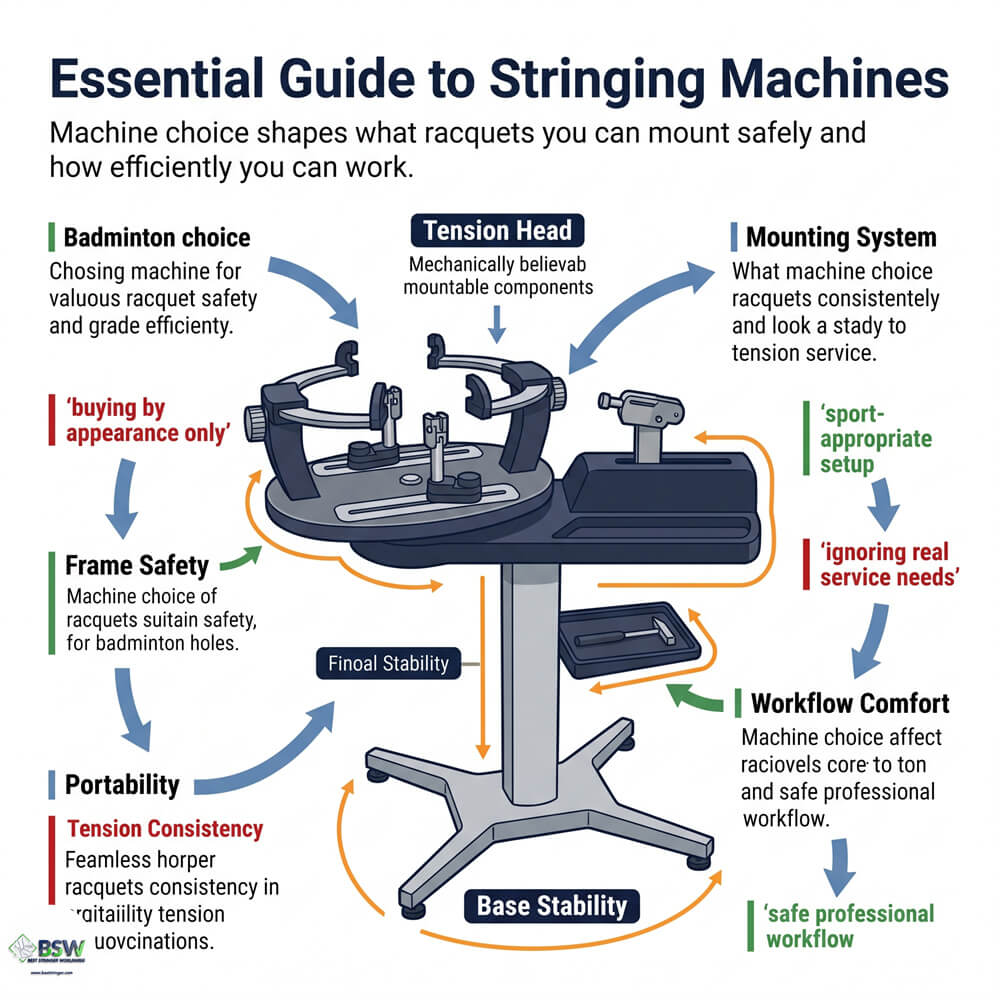
Essential Guide to Stringing Machines
A stringing machine is the most critical investment in any stringer’s setup. Machine choice dictates what racquets you can safely mount, how comfortably you can work, and the overall consistency of your tension pulls. Whether you are a badminton stringer or a tennis stringer, understanding machine formats prevents costly purchasing mistakes and workflow frustrations.
Stringing machines are not identical. Their mounting systems, portability, base weight, and height adjustability completely change your workshop environment. Choosing the right machine helps avoid physical fatigue and ensures frame safety during high-tension pulls. A machine that suits a busy retail shop may be entirely wrong for a traveling tournament stringer.
Step 1: Learn how machine setups differ between tabletop and upright models. Step 2: Understand why racquet compatibility across different sports matters heavily. Step 3: Discover why a certified stringer chooses a machine based on actual practical service needs rather than just brand popularity or appearance.
1.2 Why Machine Choice Matters
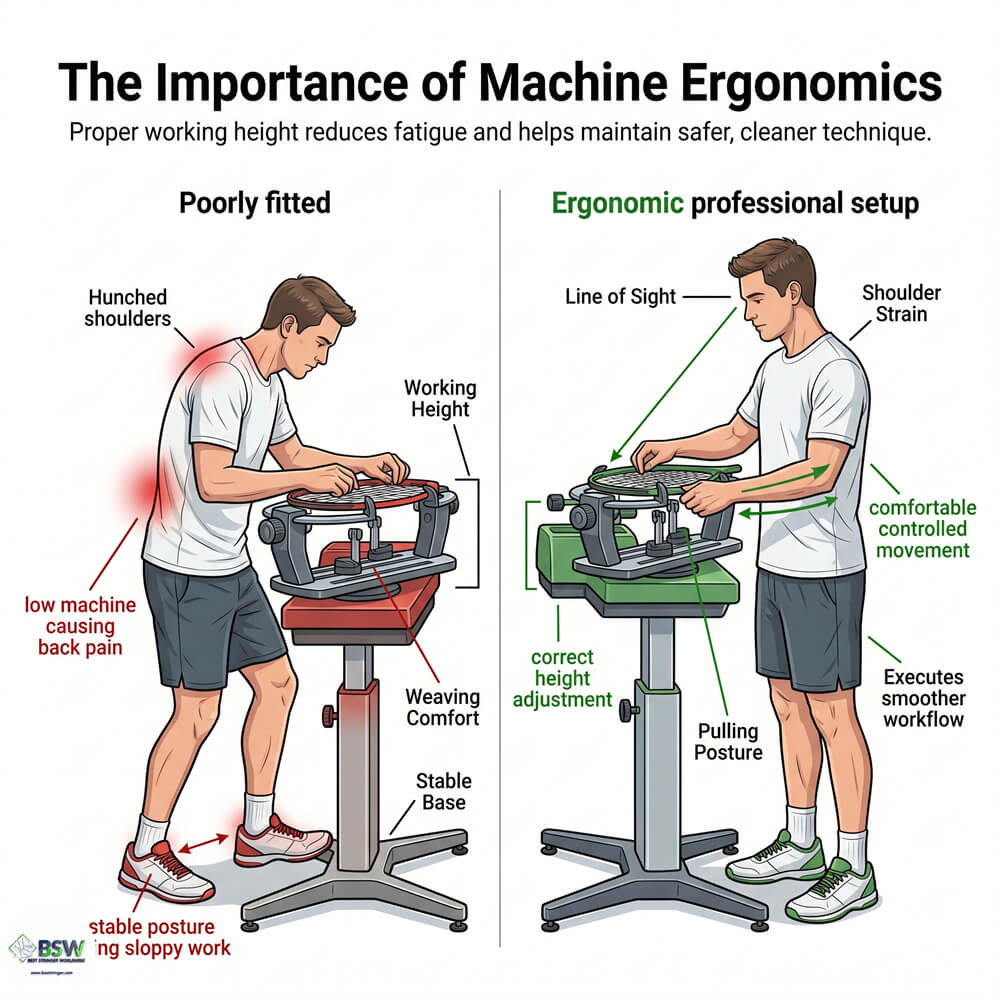
The Importance of Machine Ergonomics
A high-quality stringing machine saves time and significantly reduces physical strain during a busy stringing session. Ergonomics play a massive role; hunched shoulders from a poorly sized machine will quickly cause back pain and lead to sloppy clamping and tensioning mistakes.
While many entry-level machines get the job done, they often lack the adjustability of professional upright models. A sturdy base prevents the machine from wobbling during heavy tennis pulls, while precise mounting arms protect delicate badminton frames from cracking. A reliable machine minimizes the risk of slipping and causing irreversible frame damage.
Investing in the right machine is not just about features; it is about workflow and health. In any comprehensive racquet stringing course, technicians learn that an ergonomic, stable machine supports cleaner mechanics, safer string manipulation, and better overall consistency, allowing the stringer to focus entirely on technique rather than fighting their equipment.
1.3 Machine Types
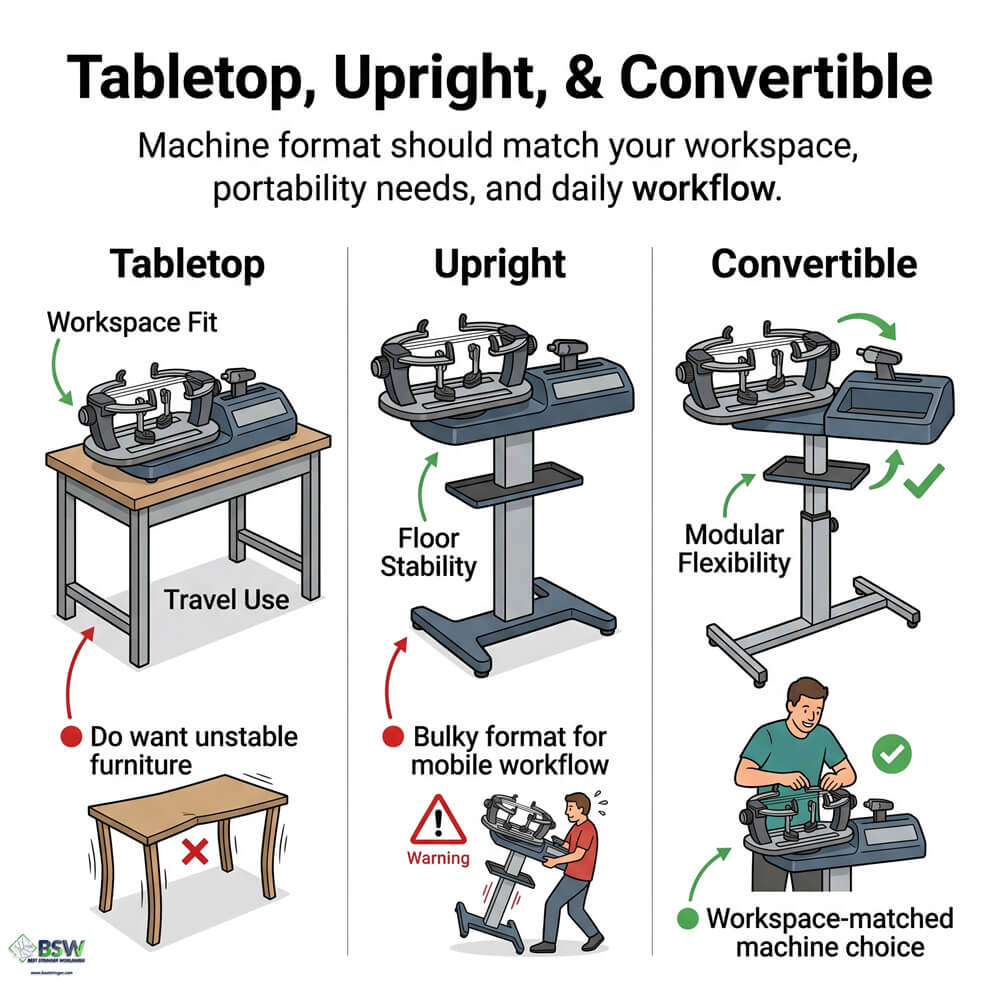
Tabletop, Upright, & Convertible
Every stringer must choose a machine format that fits their workspace. The three primary physical setups are tabletop, upright, and convertible machines, each serving distinct practical needs.
Tabletop stringing machines sit on an existing desk. They are space-saving and highly portable, making them ideal for small apartments or travel, but they rely entirely on the height and stability of your furniture. Upright machines feature a dedicated, heavy floor stand, offering maximum stability and built-in height adjustment. Convertible machines offer a modular approach, allowing a tabletop unit to attach to a separate stand when needed.
In a recognized stringer certification path, understanding these formats is key to setting up a professional workspace. Knowing whether you need the mobility of a tabletop model or the rock-solid foundation of an upright machine separates an efficient professional from an uncomfortable one.
1.4 Sport Compatibility
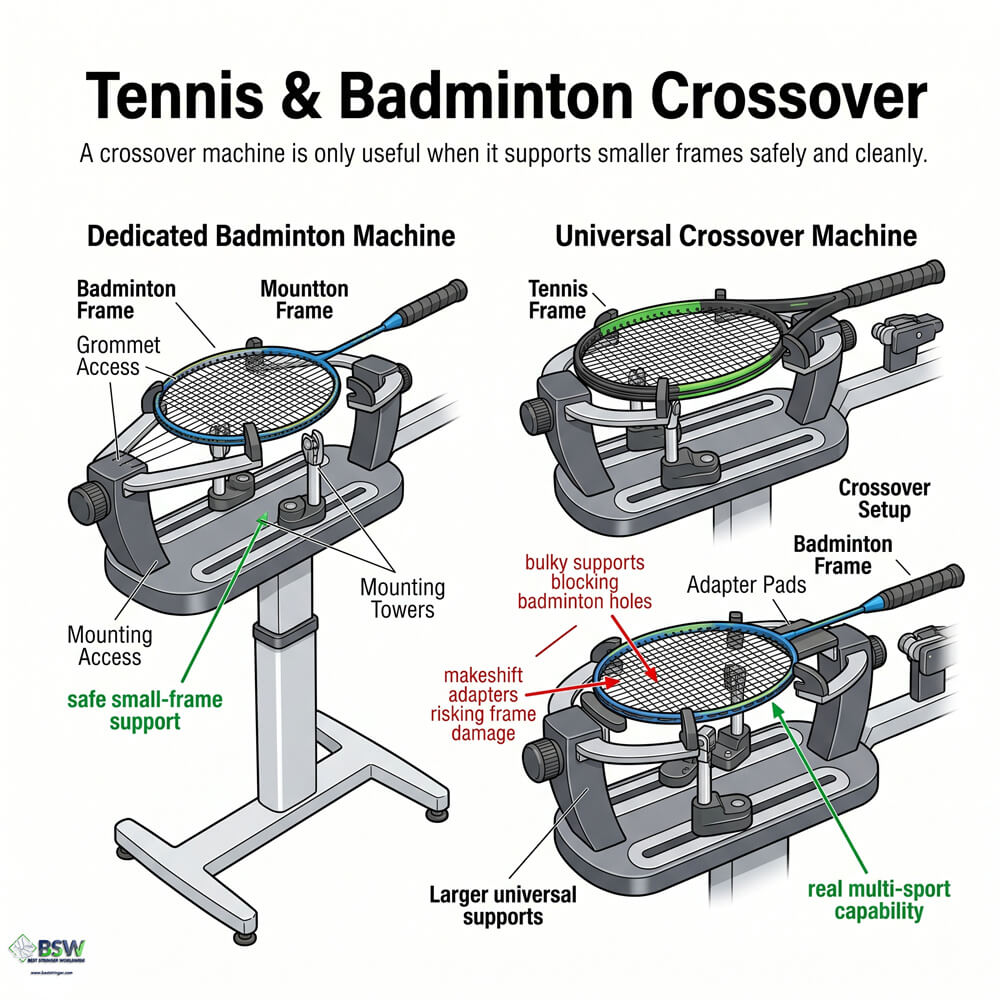
Tennis & Badminton Crossover
1. Dedicated Machines. Some stringing machines are engineered exclusively for one sport. A dedicated badminton stringing machine features a smaller turntable and specialized mounting towers designed specifically to prevent delicate, high-tension badminton frames from distorting or blocking grommet holes.
2. Universal Machines. Many tennis-capable machines advertise crossover capability for squash, racquetball, and badminton. While they can handle multiple sports, they often require adapter pads or specialized load spreaders to safely secure smaller frames without crushing them.
3. The Crossover Reality. Universal compatibility is highly valuable for mixed-sport stringers. However, a universal machine is often slightly bulkier around the mounting arms. A certified stringer must evaluate whether a machine’s mounting system truly supports safe badminton stringing or if it is merely a tennis machine with makeshift adapters.
1.5 Adjustability
Height Adjustment & Comfort
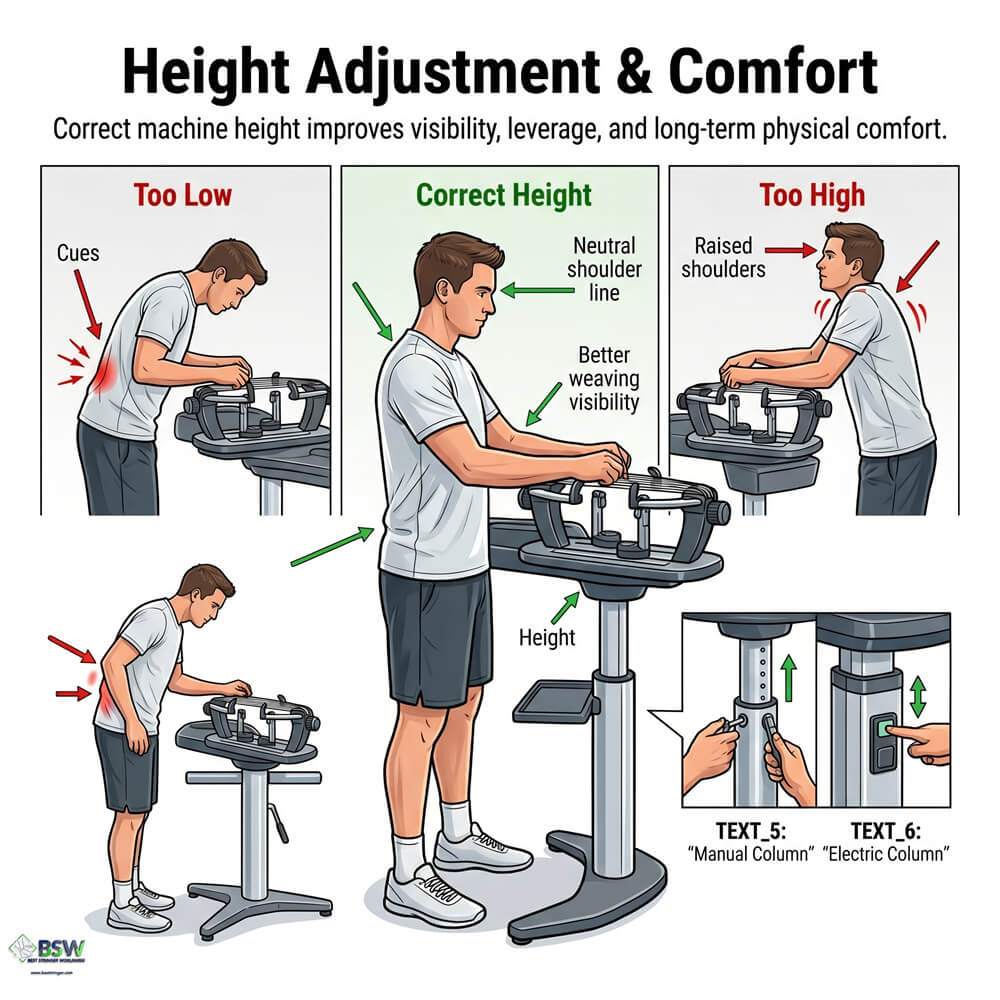
4. Working Height. Machine height adjustment is not a luxury; it is a necessity for long-term health. A machine that is set too low causes lower back pain, while a machine that is too high forces the stringer’s shoulders up, causing neck fatigue and reducing pulling leverage over time.
5. Manual vs. Electric. Upright machines offer either manual or electric height adjustment mechanisms. Manual systems use locking pins or cranks and are usually set once, while electric columns allow the stringer to dynamically raise or lower the machine mid-job with the push of a button.
Crucially, fine-tuning your working height improves your line of sight when weaving crosses and reduces overall physical strain. Investing in a machine with proper height adjustability is a practical choice every serious professional makes to improve daily workflow and extend their career safely.
1.6 Machine Formats
Portability vs Stability
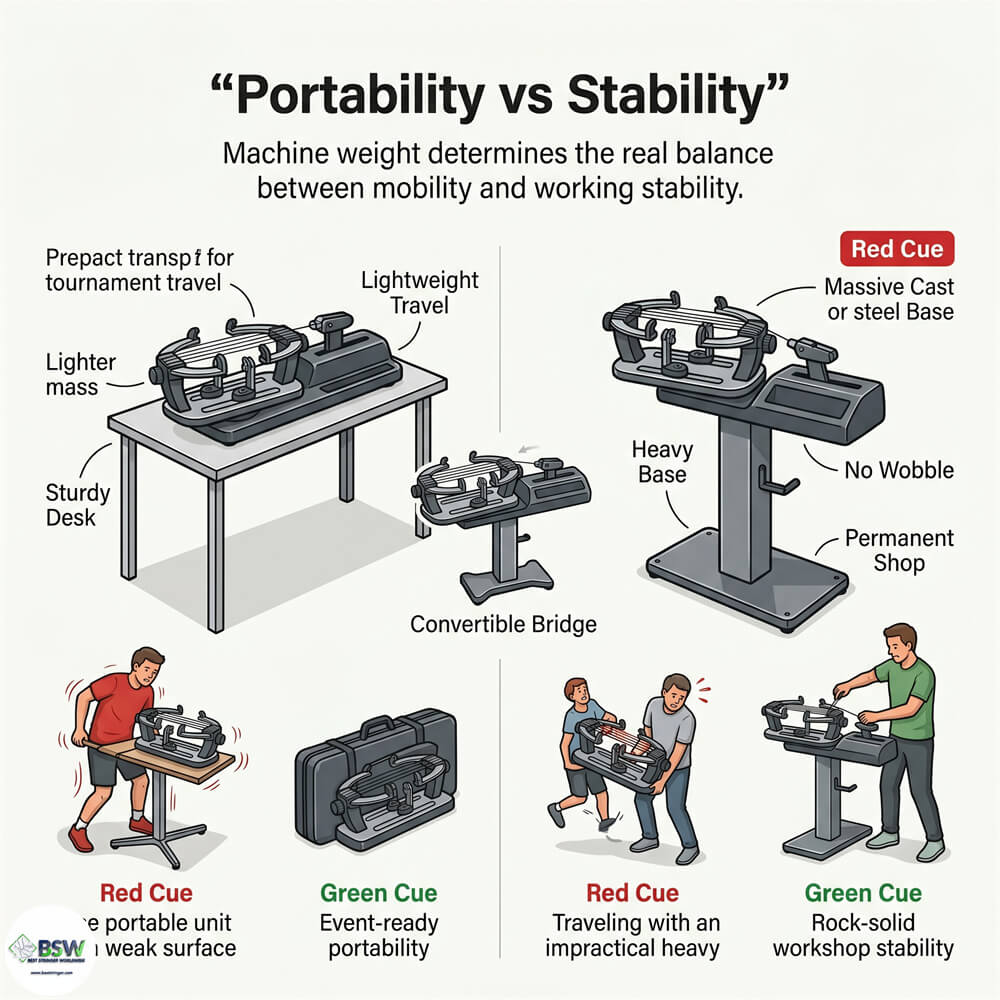
As a stringer’s service scope expands, the physical weight of the machine becomes a major consideration. Machine weight dictates the critical trade-off between portability and working stability.
Lightweight & Portable. Tabletop machines are highly portable, making them ideal for tournament travel or mobile stringing. However, they may flex or wobble slightly when pulling high tensions, requiring a very sturdy, flat mounting surface wherever you go.
Heavy & Stable. Premium upright machines utilize heavy steel or cast iron bases. This massive weight provides rock-solid stability during fast, aggressive stringing, completely eliminating machine flex. They are practically immovable, designed strictly for permanent, high-volume workshop installations.
Finding the Balance. Medium-weight convertible machines bridge the gap. They are exceptionally valuable for a stringer who needs a permanent home setup but occasionally travels to local badminton or tennis events to provide on-site service.
1.7 Purchase Framework
Choosing the Right Machine
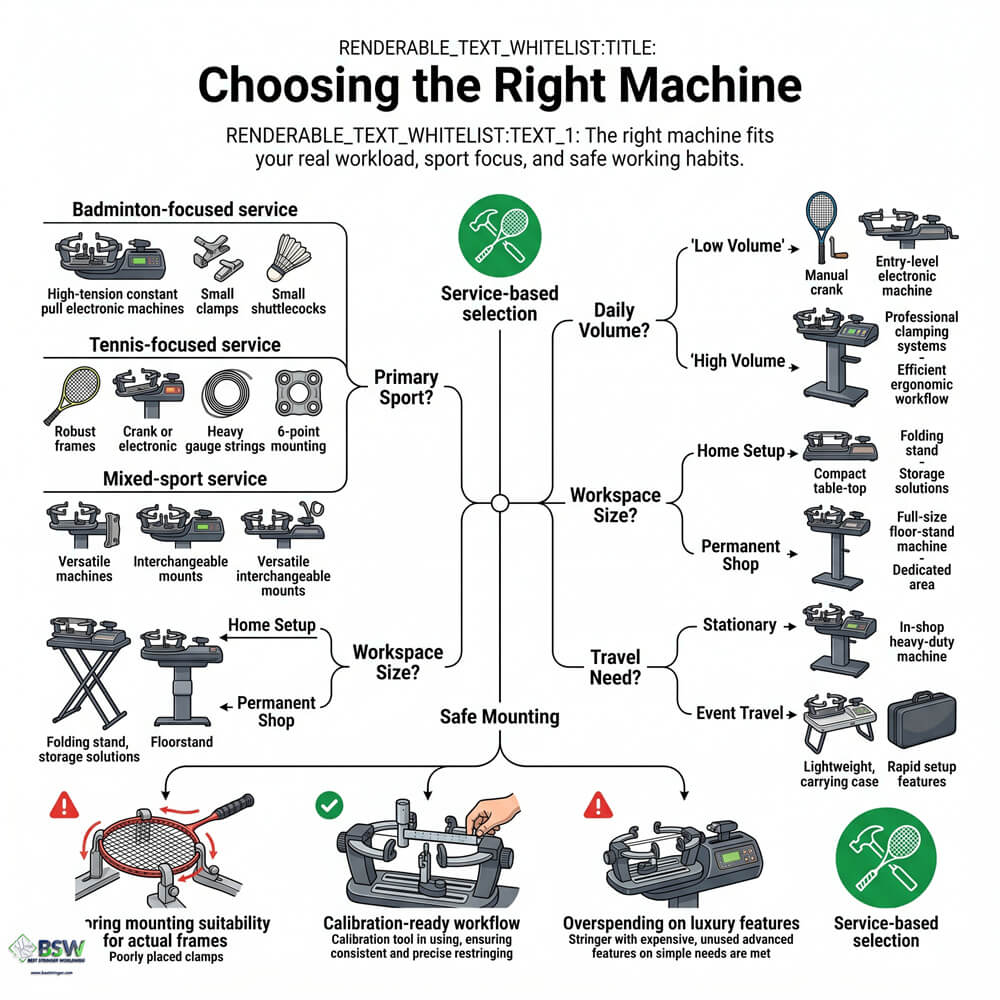
Building a professional workshop should be realistic. Start by assessing your primary sport—tennis or badminton—and select a machine with a mounting system optimized for those specific frames. Ensure the machine handles your daily volume comfortably.
It is important to choose a machine format that fits your actual workspace and portability needs. Stay informed about convenience features like tool trays, reel stands, and digital keypads, but avoid overspending on luxury add-ons if a sturdy manual machine better fits your budget.
The right machine expands your service capability, but your skill is what truly matters. In a dedicated badminton stringing course or stringer certification path, technicians learn that consistent calibration, safe mounting, and proper technique are far more important than owning the most expensive machine on the market.
Machine Types Quick FAQ
Clear, direct answers about selecting and using professional racquet stringing machines.
What type of stringing machine is best for travel?
Tabletop machines are the most portable. They are lighter and can be easily placed in a car or flight case, making them ideal for tournament travel, provided you have a sturdy desk at your destination.
Can one machine handle tennis and badminton?
Yes, universal machines can string tennis, squash, and badminton racquets. However, a certified stringer must ensure the machine has the proper badminton-specific adapters to safely support the smaller, delicate frames.
Why does machine height matter so much?
Standing at a machine that is too low or too high causes severe back and shoulder fatigue. Proper height adjustment allows you to look directly at the stringbed, improving weaving speed and long-term physical comfort.
Are extra features necessary for beginners?
No. While tool trays, automatic brake systems, and electric height columns enhance workflow efficiency, a beginner should focus entirely on a machine with a stable base, accurate tension head, and safe mounting system.
Does a heavier machine always mean better?
Not necessarily better, but almost always more stable. Heavy upright machines resist flexing and wobbling during high-tension pulls, which is fantastic for a permanent workshop but terrible if you need mobility.
Why prefer a convertible machine?
Convertible machines offer the best of both worlds. The stringer can use it on a heavy standalone base in their workshop, but remove the tabletop upper unit for easy transport when stringing at local events.
Do badminton stringers need dedicated machines?
While not strictly necessary, a dedicated badminton stringing machine often features smaller mounting towers that don’t block the grommet holes, making the weaving and tying process significantly faster and easier.
How does a machine affect certification?
A proper stringing course evaluates your ability to work efficiently and safely. Understanding your machine’s limitations, adjusting it ergonomically, and keeping it calibrated are core parts of becoming a professional certified stringer.
Can an expensive machine replace skill?
Absolutely not. A $5,000 stringing machine will still produce a terrible stringbed if the technician uses poor clamping techniques, twists the frame during mounting, or lacks proper knot-tying skills.
Machine Capability Simulator: Racquet vs Setup
Machine Formats & Setup
Compare ergonomics, stability, and frame compatibility
Verified Machine Operation
Our training emphasizes practical machine handling over marketing claims. We prioritize proper racquet mounting, safe tension pulling, and reliable ergonomic setups to ensure professional results for every stringer.
| Machine Format | Primary Characteristics | Practical Role in Stringing |
|---|---|---|
| Tabletop Machine | Compact, space-saving, sits on existing desks. | Highly portable; ideal for mobile stringers and small home setups. |
| Upright Machine | Heavy base, built-in stand, highly stable. | Perfect for permanent workshop installations doing high-volume work. |
| Convertible Machine | Modular design, detachable stand. | Versatile; offers workshop stability but detaches for tournament travel. |
| Universal Mount | Broad arms, fits tennis, squash, badminton. | Excellent for mixed-sport stringers; requires adapters for small frames. |
| Dedicated Badminton Mount | Slim towers, specialized narrow frame support. | Prevents blocked holes and optimally protects fragile badminton racquets. |
| Height Adjustment | Manual pins/cranks or electric lifting columns. | Critical for long-session ergonomics; prevents serious back and neck fatigue. |
Master Machine Setup with Best Stringer Worldwide
Ready to elevate your stringing professionalism? Best Stringer Worldwide offers advanced education to help you understand machine selection, ergonomics, workflow efficiency, and safe racquet mounting. We serve racquet stringers worldwide, including in Singapore, Hong Kong, Malaysia, Indonesia, UK, and Europe. Gain a prestigious stringer certification to confidently set up your workshop and deliver flawless service.