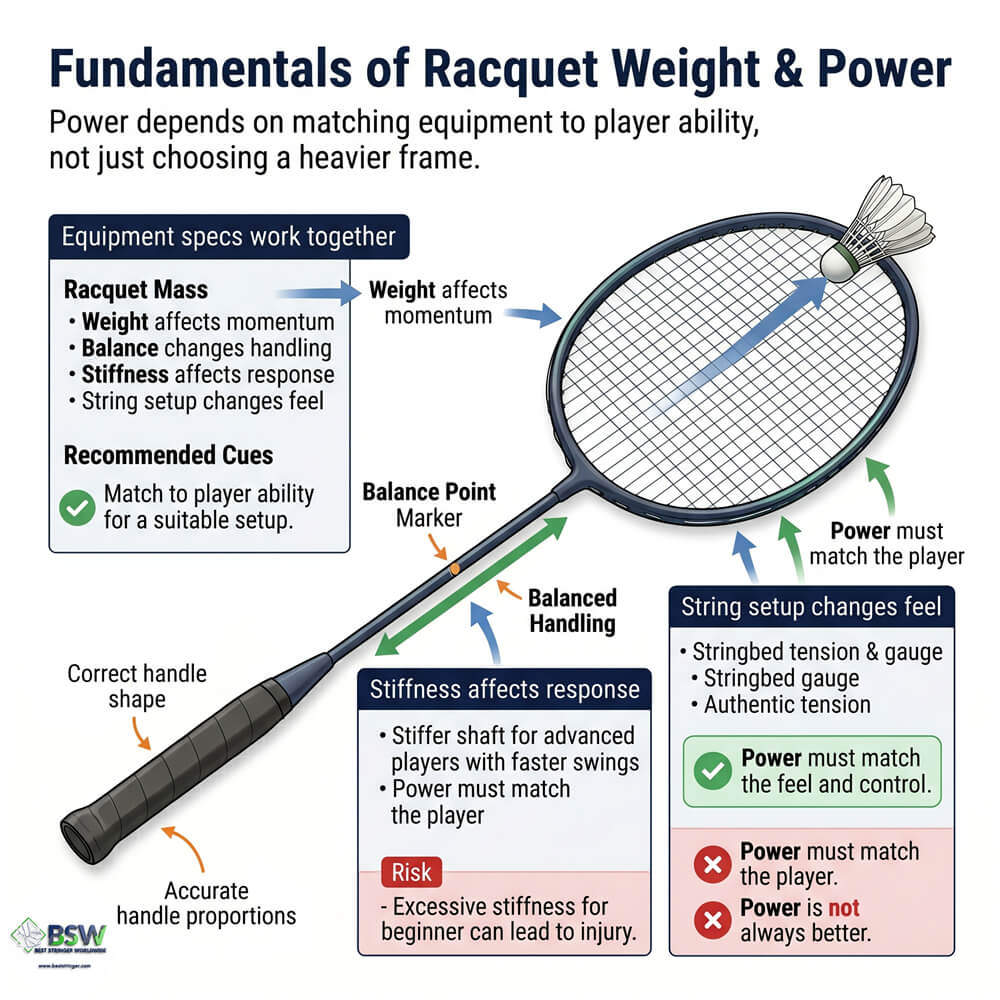
1.1 Equipment Fundamentals
How Does Racquet Stiffness Affect Consistent Returns?
Equipment fundamentals refer to how specific racquet characteristics, particularly frame stiffness, combine to enhance your playstyle. In this guide, you will learn a critical concept taught in our badminton stringing course: a stiffer badminton racquet provides a more consistent return across the whole racquet face.
In short, when a racquet frame deforms and twists less during impact, the stringbed response becomes significantly more stable. Mastering this concept is crucial for any badminton player aiming to improve, as “stiffer” does not automatically mean “better for every player.”
Here is a simple decision flow:
Step 1: Assess your swing speed and timing honestly.
Step 2: Understand that improved consistency from a stiffer frame is only beneficial if you can generate enough racket head speed.
Step 3: Consult a certified stringer to select a string tension that perfectly matches your racquet stiffness and sweet spot accuracy.
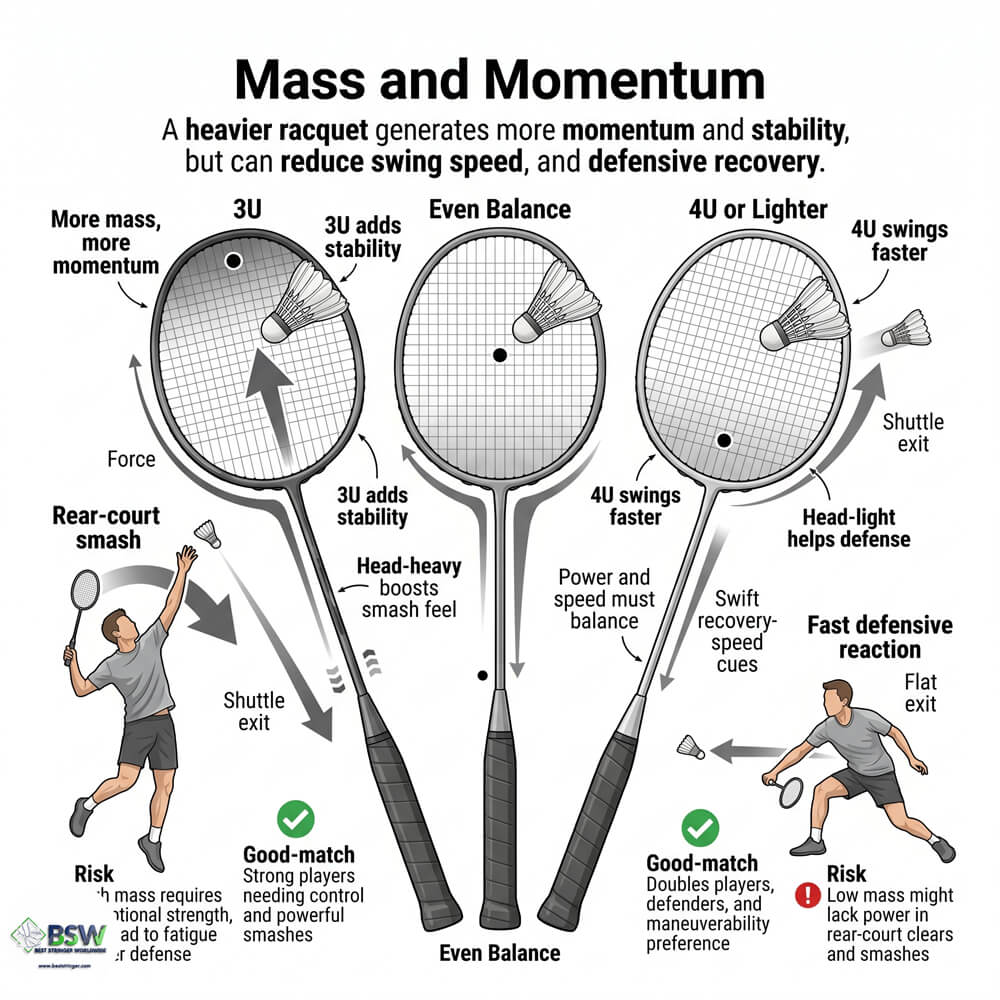
1.2 Frame Deformation Basics
Understanding Stiffness and Racquet Face Stability
The golden rule of equipment physics is that the frame and stringbed work together. A stiffer badminton racquet frame generally bends and twists less during shuttle impact. Because the frame deforms less, the racquet face maintains higher torsional stability, especially during fast exchanges.
Why does this matter? When a badminton player hits the shuttle slightly off-center, a flexible frame will twist, absorbing energy but also causing the shuttle to drift slightly off target. A stiff badminton racquet resists this twisting, meaning the stringbed responds more evenly. This translates to a more consistent return across the racquet face.
However, this stability requires strong technique. If you do not hit the shuttle cleanly, the stiffer frame transfers more of the impact shock directly to your arm instead of absorbing it. Players must balance the need for racquet face consistency with their physical ability to swing the racquet comfortably.
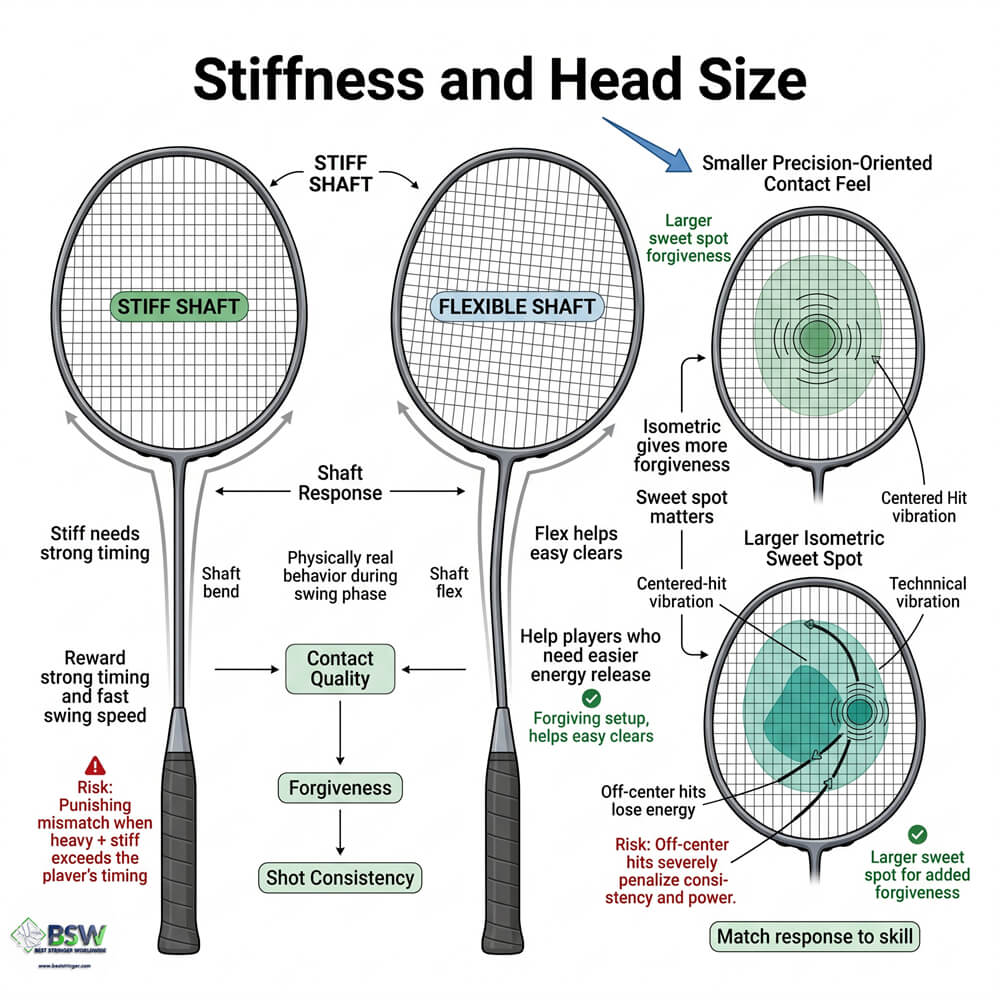
1.3 Player Suitability
Who Benefits from a Stiff Badminton Racquet?
While a stiffer badminton racquet provides highly consistent returns across the racquet face, it is not suitable for everyone. Advanced players who possess clean timing and explosive swing speed benefit the most. For them, a stiff racquet provides direct shuttle feedback and stable control, even when defending fast smashes.
Conversely, a flexible racquet is much more forgiving. It acts like a slingshot, storing and releasing energy smoothly to help players clear the shuttle effortlessly. If you are a beginner or have a slower swing speed, a flexible frame will assist you much more than a stiff one.
The sweet spot behavior also changes. While an isometric head shape helps enlarge the optimal hitting area, a highly stiff frame makes off-center hits feel jarring. You receive a more consistent shuttle trajectory, but you sacrifice the soft, forgiving feel that developing players often need.
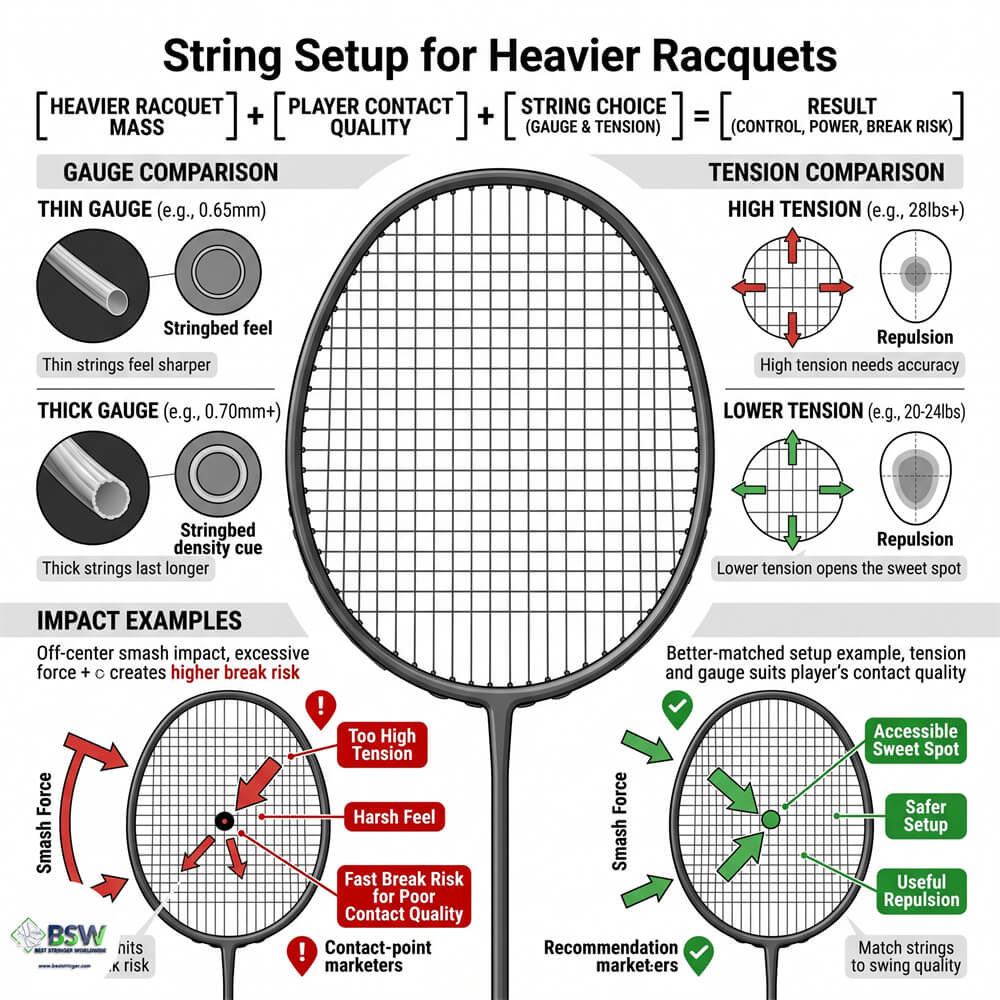
1.4 Tension & Stringer Advice
Badminton String Tension for Stiff Frames
A stiffer badminton racquet requires the correct string tension to truly unlock its consistent response. Understanding this synergy is essential for stringers and players alike:
The High Tension Synergy. High tension (26+ lbs) pairs well with stiff frames to offer ultimate touch and control. However, this combination is extremely demanding. If your timing is off, the stringbed response will feel like hitting with a wooden board.
The Low Tension Buffer. Lower tension acts like a trampoline. When paired with a stiff racquet, it can help add a degree of comfort and forgiveness back into the shot, assisting players who love a stable frame but lack absolute swing power.
The Stringer Consultation. Before combining high tension with a stiff frame, a professional badminton stringer will always verify the player’s technique. A certified stringer knows that poor timing on a stiff, highly-tensioned stringbed leads to rapid string breakage and potential arm pain.
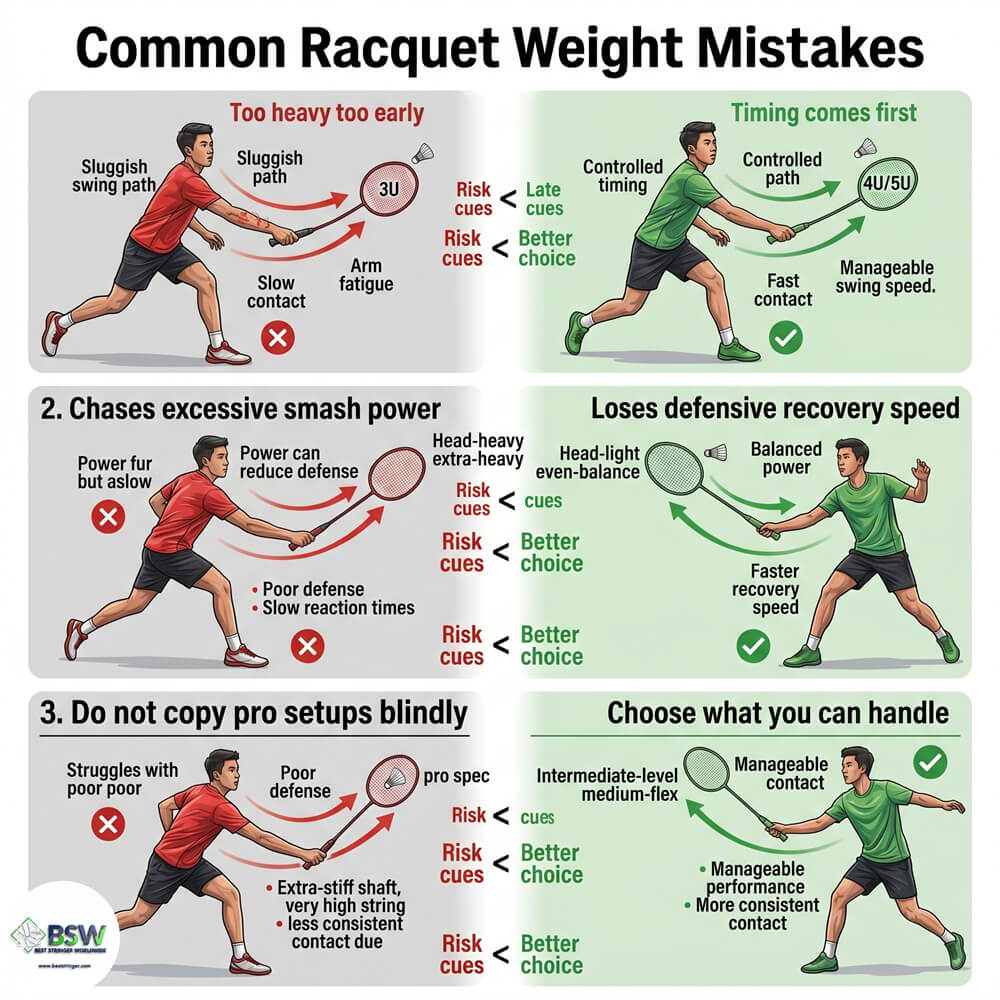
1.5 Common Misconceptions
Common Racquet Stiffness Mistakes
Mistake 1: Assuming Stiffer is Always Better.
While a stiffer racquet provides a more consistent return across the whole racquet face, choosing an extra-stiff frame without the necessary technique guarantees sluggish clears, poor timing, and joint pain.
Mistake 2: Thinking Stiffness Equals Free Power.
A stiff frame does not generate power on its own. It transfers power efficiently. If you swing slowly, a stiff frame will absorb your energy rather than snapping back, resulting in weaker shots compared to a flexible frame.
Mistake 3: Copying Pro Setups Blindly.
Using the exact extra-stiff racquet and high-tension strings of an elite player is a classic error. Professional badminton equipment education teaches us that advanced setups require advanced biomechanics; otherwise, they simply ruin your consistency.
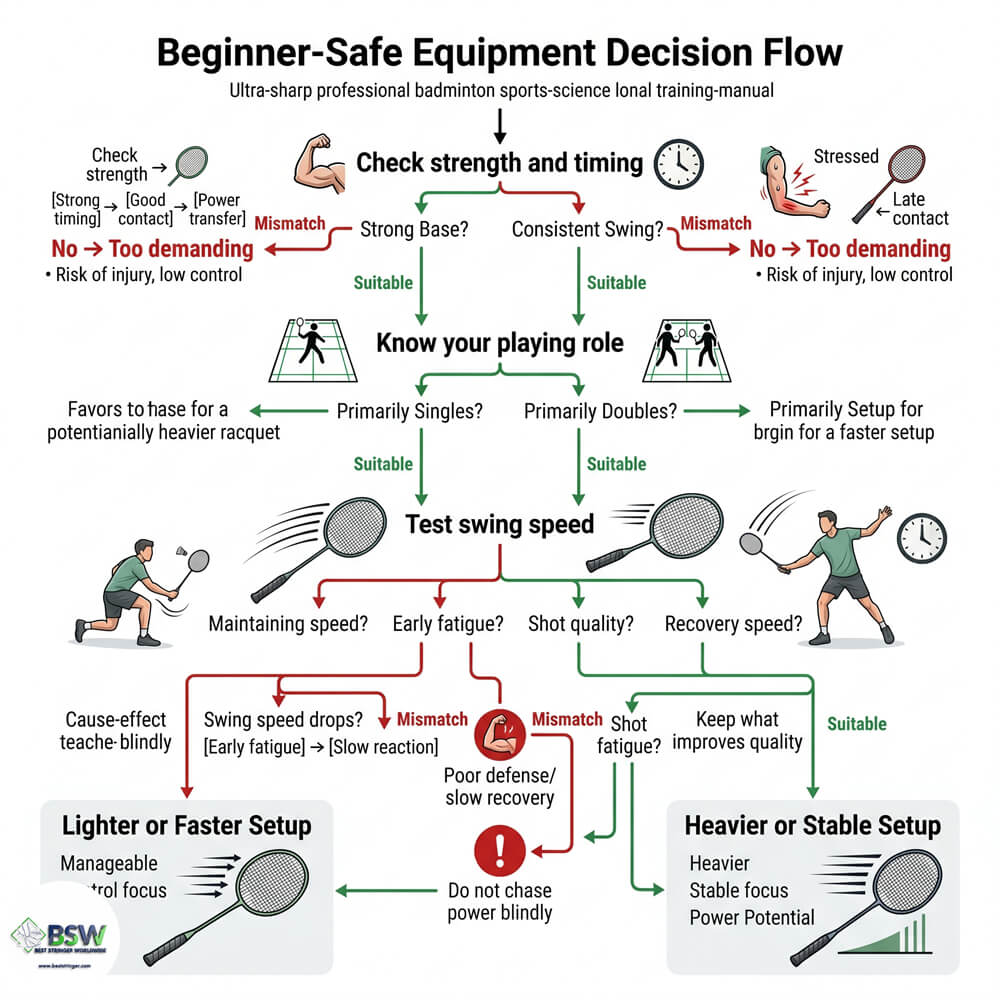
1.6 Player Consultation
Safe Equipment Decision Flow
A step-by-step decision flow is crucial for balancing face stability and forgiveness safely. Use this simple framework before upgrading your equipment:
Step 1: Check Your Swing Speed. A stiffer badminton racquet will only yield more consistent returns if you can maintain high swing speed. Beginners should start with flexible or medium-stiff frames to develop proper stroke mechanics first.
Step 2: Understand Off-Center Contact. Determine if you frequently mishit the shuttle. If your timing is still developing, the harsh response of a stiff frame might hurt your game more than the promised face stability helps it.
Step 3: Consult a Badminton Stringer. Work with a certified professional to select an appropriate string and tension combination that supports your new racquet’s stiffness, ensuring you don’t accidentally create an unplayable stringbed.

1.7 Stringer Education
The Value of Stringer Certification
Proper equipment education is a core part of a professional badminton stringing course and good stringer certification standards. A certified stringer understands that recommending a stiff frame blindly without considering a player’s real ability is a disservice.
At Best Stringer Worldwide, we know that racquet stiffness directly influences the string and tension advice given to players. The secret is not just in buying the stiffest racquet, but in the precise player consultation a badminton stringer uses to match stringbed behavior to the frame’s specific deformation.
By prioritizing accurate equipment knowledge, our stringing certification ensures that every setup perfectly balances consistency, stability, and comfort. You eliminate guesswork, avoid injuries from overly stiff setups, and focus purely on improving your game.
Equipment Selection Quick FAQ
Direct, AEO-optimized answers to common questions about badminton racquet stiffness and stringbed consistency.
What does a stiffer badminton racquet mean?
A stiffer badminton racquet refers to a frame and shaft that bend and twist less upon impact with the shuttle. This reduced frame deformation allows the racquet to transfer energy very directly, requiring the player to have solid timing to maximize the shot.
Why does it provide more consistent returns?
A stiffer badminton racquet can provide a more consistent return across the racquet face because the frame maintains higher torsional stability. Less twisting during off-center hits means the stringbed behaves more predictably, keeping the shuttle closer to its intended path.
Is a stiff racquet suitable for beginners?
Generally, no. While a stiff badminton racquet offers great stability, it lacks the forgiving “slingshot” effect that helps beginners generate depth. A flexible or medium-stiff frame is usually recommended until timing and swing speed improve.
How does stiffness affect the sweet spot?
Racquet stiffness does not necessarily make the sweet spot larger, but it changes how it feels. A stiffer frame makes the sweet spot feel very direct and powerful, but makes off-center hits feel much harsher on the arm compared to a flexible frame.
Why do off-center hits feel different?
An off-center hit on a flexible racquet causes the frame to absorb the shock by twisting. On a stiff racquet, the frame resists this torsion, maintaining racquet face stability but sending the residual vibration directly into the stringbed and the player’s grip.
How does string tension affect it?
String tension changes how a stiff racquet feels dramatically. High tension combined with a stiff frame requires perfect timing, while lowering the tension slightly can add a much-needed trampoline effect to soften the impact for intermediate players.
How should a stringer advise a player?
A badminton stringer must assess the player’s swing speed and typical contact points. If a player frequently hits off-center or has a slower swing, the stringer should caution against using an overly stiff racquet with high tension.
Why is stringer certification important?
A comprehensive badminton stringing course teaches how racquet stiffness, stringbed response, and player mechanics work together. A certified stringer provides educated guidance rather than letting players blindly guess their equipment setup.
Should every player use a stiff racquet?
No. While advanced players value the consistent return across the racquet face that stiffness provides, developing players often perform better and stay injury-free by utilizing the forgiveness of a more flexible frame.
The Physics of Consistency: Frame Deformation
The Physics of Consistency: Frame Deformation
Observe how a stiffer frame bends less, ensuring the racquet face remains stable for a more consistent return.
Flexible Frame
Stiff Frame
Proven Specifications
Our stringing approach is based on verified equipment parameters used by top professionals. We prioritize arm safety, proper racquet deformation evaluation, and playstyle efficiency over pure tension hype.
| Racquet Stiffness Focus | Impact on Consistent Returns | Player Suitability & Stringer Advice |
|---|---|---|
| Flexible Frame Dynamics | Bends more during impact. The racquet face may twist slightly, reducing absolute consistency. | Highly forgiving. A slingshot effect helps slower swings achieve better depth. |
| Stiff Frame Dynamics | Minimal frame bending. Provides a more consistent return across the whole racquet face. | Demanding but rewarding. Requires fast swing speed and excellent timing. |
| Off-Center Contact | Flexible frames absorb the shock but may cause the shuttle to drift off intended target lines. | Stiff frames maintain face stability, ensuring the shuttle travels closer to the intended path. |
| Sweet Spot Feel | Softer impact feel. Absorbs energy well, making standard shots feel effortless. | Direct and crisp feedback. Energy transfers immediately for clean, precise returns. |
| String Tension Synergy | Lower tension pairs well with flex to maximize the trampoline effect for beginners. | High tension on a stiff frame requires absolute precision. Avoid this setup if timing is poor. |
| Stringer Consultation | A certified stringer will recommend this as a safe starting point for developing players. | Never blindly upgrade to stiff frames. Always verify player biomechanics and swing speed first. |
Master Racquet Stiffness with Best Stringer Worldwide
Ready to upgrade your equipment knowledge? Best Stringer Worldwide offers professional stringing courses to teach you how racquet stiffness affects consistent returns safely. We serve badminton players worldwide especially in Singapore, Hong Kong, Malaysia, Indonesia, UK, France and Europe. Contact a certified stringer to find the perfect frame and tension for your game.