1.1 Equipment Fundamentals
How Does Racquet Face Size Affect Power Generation?
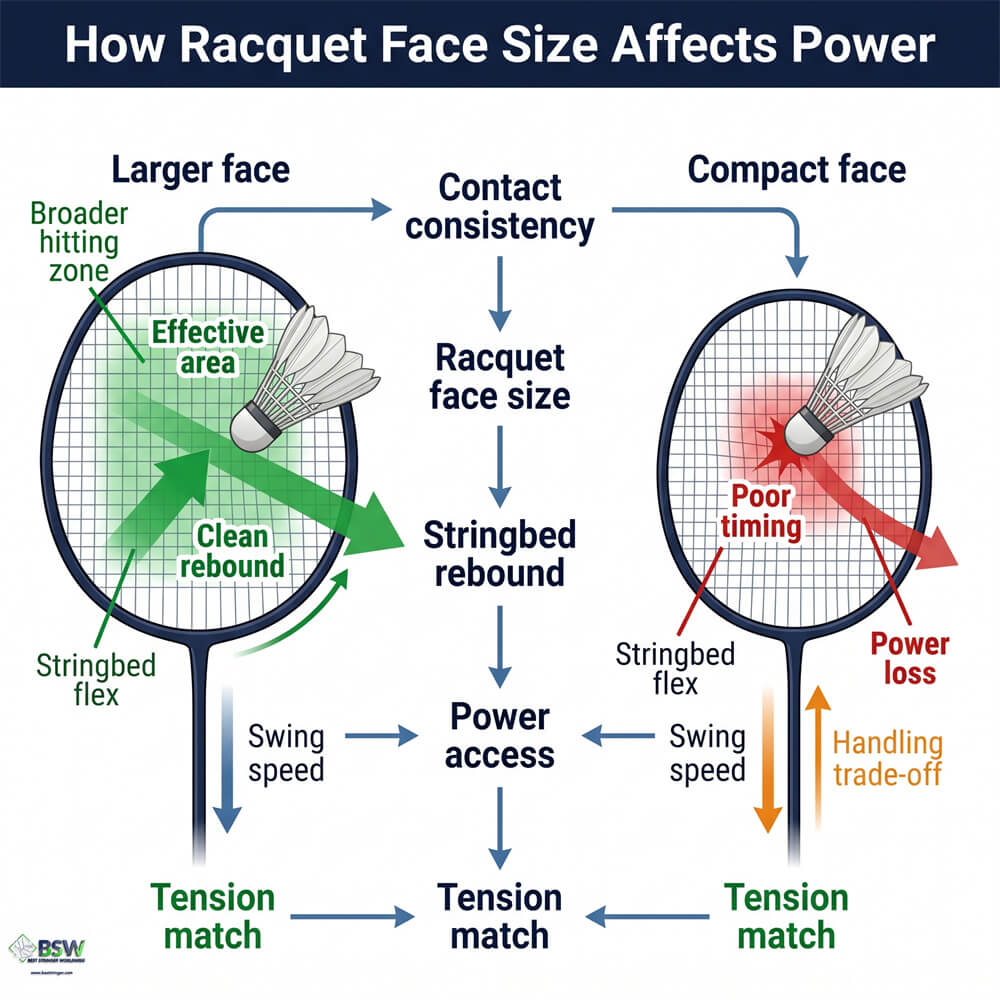
Equipment fundamentals refer to how specific racquet characteristics combine to support your playstyle. In this guide, you will learn a core technical concept: when all other conditions are the same, a larger badminton racquet face can produce more power. This happens because it provides a larger effective hitting area and a more usable stringbed response.
In short, the racquet face is where the stringbed interacts with the shuttle. A bigger racquet face can offer a broader hitting zone, which helps the shuttle rebound with better energy. However, mastering this concept requires understanding that a larger racquet face does not automatically make every player hit harder. Power still heavily depends on your swing speed, timing, contact quality, and equipment setup.
Here is a simple evaluation approach:
Step 1: Assess your contact consistency honestly.
Step 2: Understand that ‘more power’ from a larger hitting area is only beneficial if the racquet frame feels comfortable to handle.
Step 3: Consult a certified stringer to select a string and tension that perfectly matches your racquet face size and power needs.
1.2 Face Size & Stringbed Response
Racquet Specs Explained: Face Size and Rebound
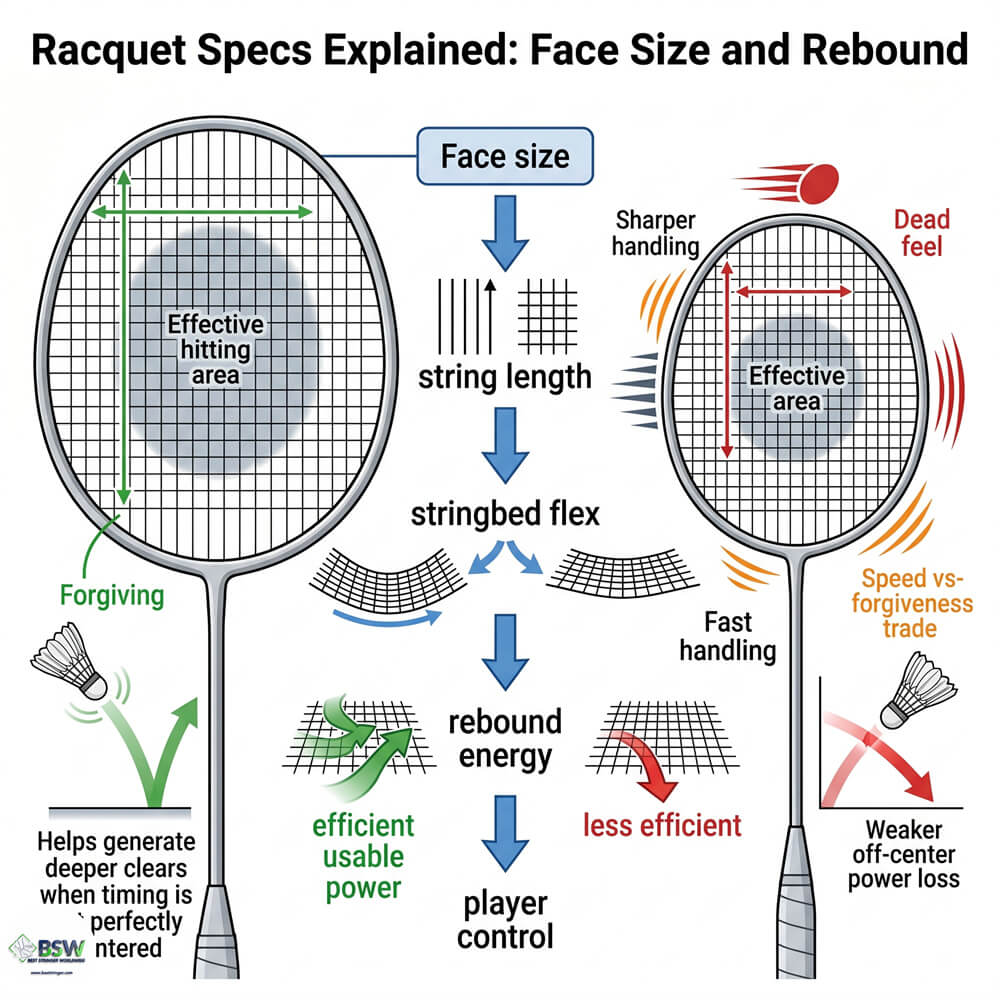
The core concept is that a larger badminton racquet face can usually produce more power when all other conditions are equal. This happens because the increased area allows the stringbed to stretch and rebound more effectively upon impact. A bigger racquet face provides this extra usable stringbed response, offering a larger effective hitting area that can help generate deeper clears and more forgiving shots. However, a smaller, more compact racquet face is often chosen for faster handling and sharper control.
Changing the racquet face size alters how the frame behaves during the swing. A larger face may introduce slightly more air resistance and alter the frame stability, potentially slowing down your defensive reaction times or feeling less sharp. Smaller racquet faces sacrifice some of that forgiving power for rapid maneuverability and direct feedback.
A badminton player needs the right balance between power, forgiveness, and control. For players who have clean timing and require sharp responses, a smaller frame is generally preferred. Players who are still developing consistency often benefit from the extra stringbed response and forgiving nature of a larger racquet face.
1.3 Sweet Spot Behavior
Understanding Sweet Spot and Off-Center Hits
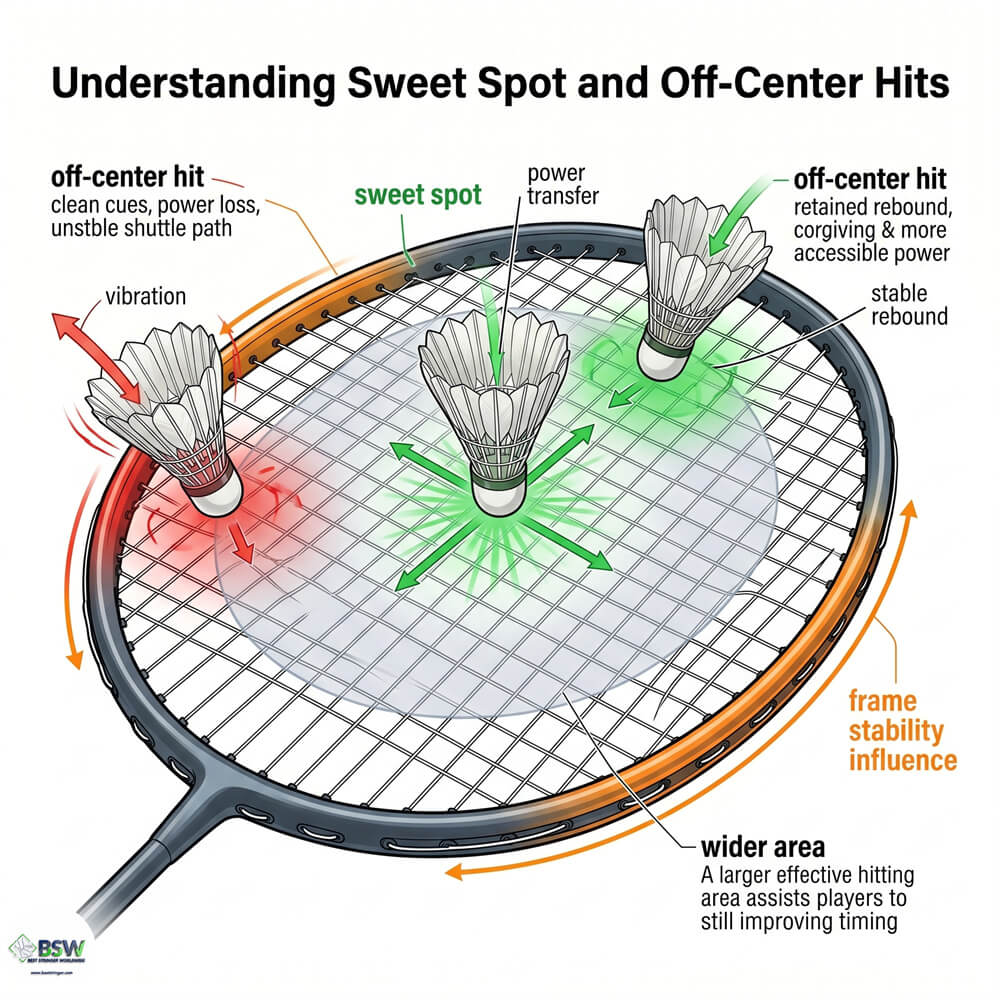
While a larger badminton racquet face provides the area for power, the sweet spot dictates how consistently that power is delivered. When you strike the shuttle exactly in the center, most racquets perform well. However, if you lack solid timing and hit off-center, a smaller racquet face often punishes you with a severe loss of power and noticeable vibration.
A larger effective hitting area acts as a buffer. It stores and releases energy more smoothly across a wider section of the stringbed, helping players comfortably clear the shuttle even if their contact is slightly imperfect or less refined.
Frame stability also works alongside racquet face size to manage forgiveness. When the face size is increased, the stringbed response becomes more usable over a wider area, ensuring that the energy from your swing still transfers effectively into the shuttle rebound, making power generation more accessible.
1.4 Gauge & Tension Basics
Badminton String Setup for Larger Racquet Faces
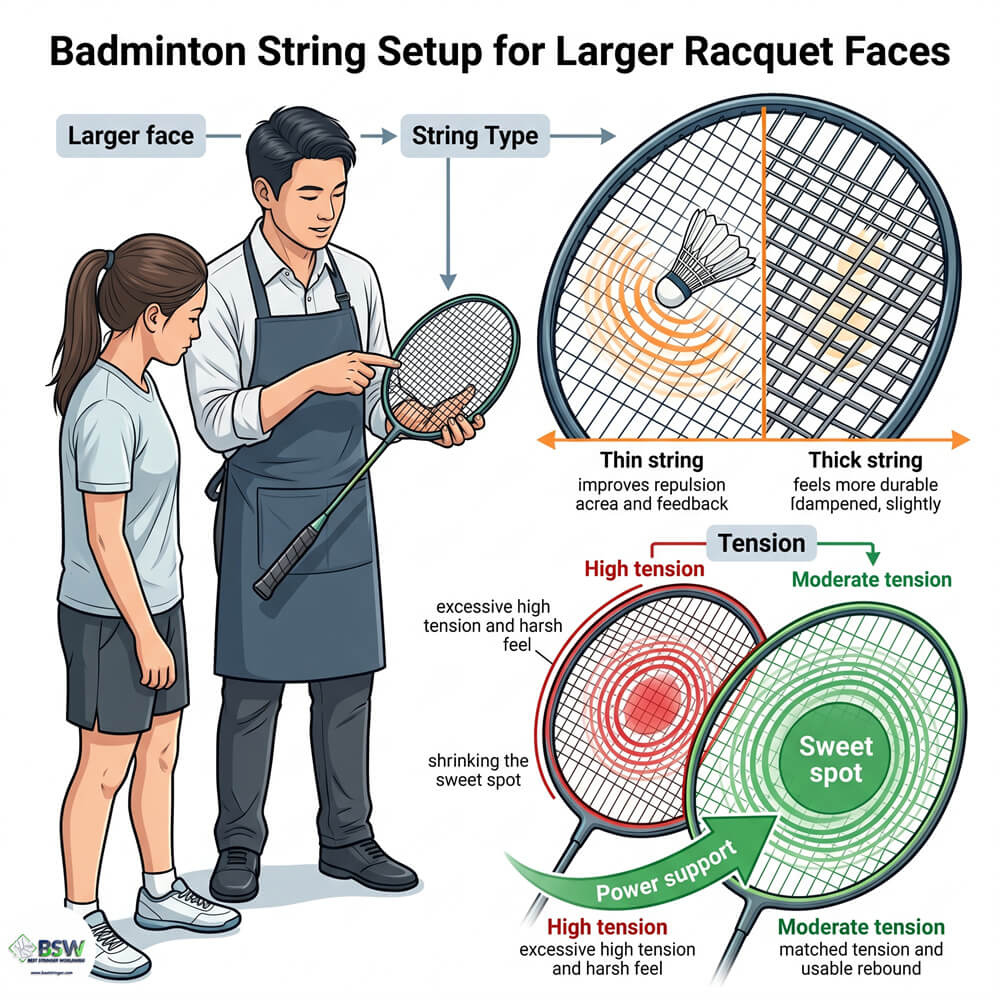
A larger badminton racquet face requires the correct string gauge and tension to truly access its power potential. Understanding this synergy is essential for proper badminton equipment education:
String Type matters. A larger racquet face means longer main and cross strings. Thick strings might feel overly dull on a very large face, while thin strings can enhance the repulsion and feedback of the expanded stringbed.
Tension and Rebound. String tension determines the stiffness of the hitting area. High tension reduces the sweet spot size, which can counteract the forgiveness of a bigger racquet face. Appropriate or moderate tension allows the stringbed to flex, boosting power for players who need it.
The Consultation Risk. If you use a larger racquet face hoping for more power but string it at an extremely high tension without clean timing, the stringbed will feel harsh and unforgiving. A professional badminton stringer will always evaluate these variables before advising tension.
1.5 Common Mistakes
Common Racquet Face Size Mistakes
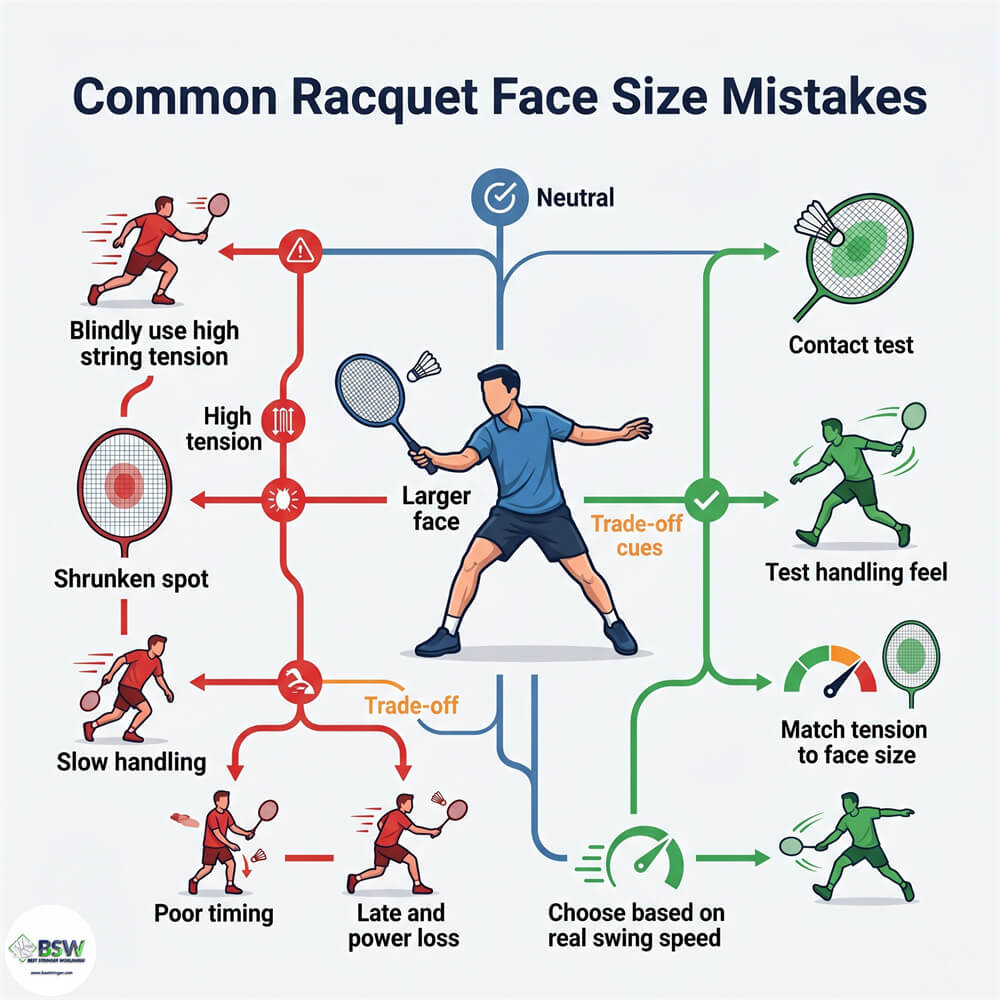
Mistake 1: Assuming a Larger Face Gives Maximum Power Automatically.
While a larger badminton racquet face provides more usable hitting area, choosing a bigger frame will not magically replace proper technique. Swing speed and timing remain critical factors for hitting hard.
Mistake 2: Ignoring Handling and Control.
Chasing pure forgiveness with the largest face size available often means sacrificing maneuverability. If the frame feels too slow through the air, the broader stringbed response may not compensate for the loss of handling speed.
Mistake 3: Blindly Using High String Tension.
Requesting professional-level high tension on a larger racquet face size is a common error. High tension shrinks the sweet spot, which directly cancels out the power benefits you tried to gain by selecting a bigger frame.
1.6 Selection Framework
Player-Focused Equipment Decision Flow
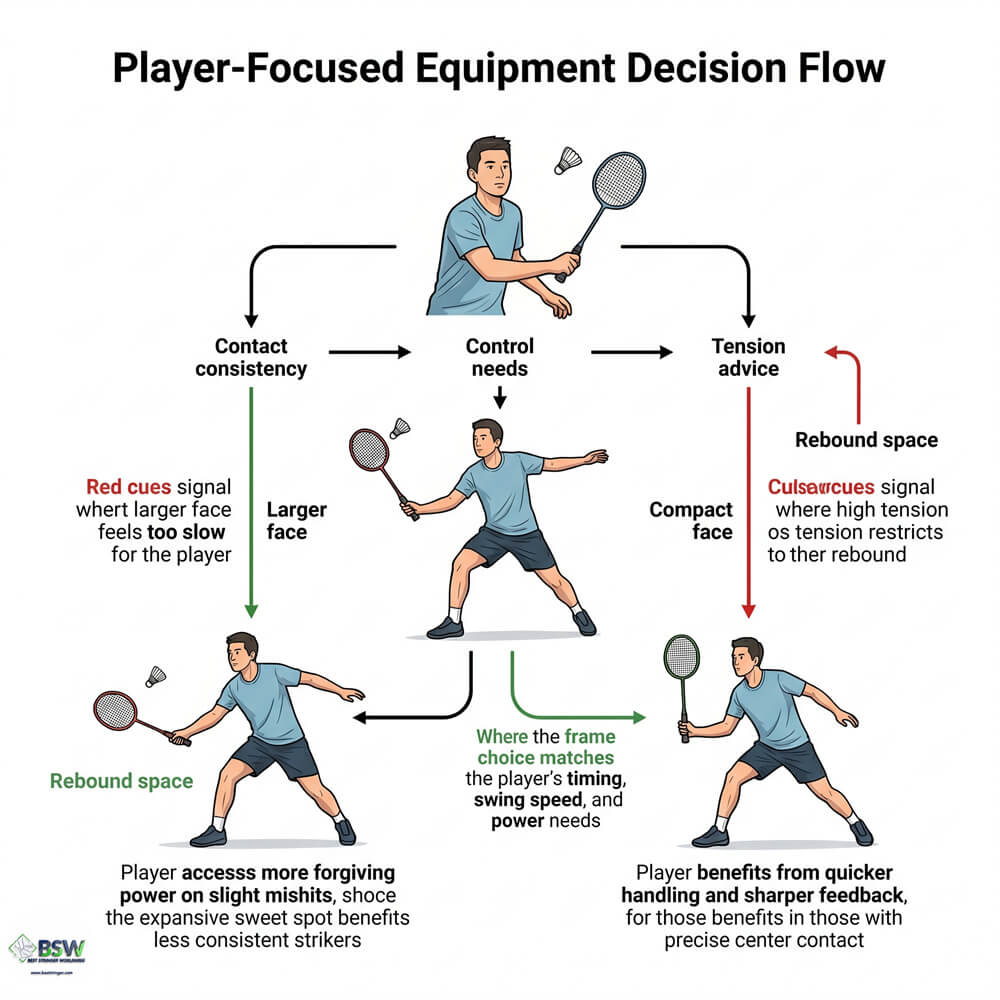
A step-by-step decision flow is crucial for balancing hitting area size and handling feel. Use this simple framework before upgrading your equipment:
Step 1: Check Your Contact Consistency. A smaller face size requires precise center-striking. If you frequently hit off-center, a larger badminton racquet face will provide a more forgiving stringbed response while you develop your technique.
Step 2: Identify Your Control Needs. Determine if you prioritize sharp feedback and fast handling (favoring a compact frame), or if you need an expanded sweet spot to help produce power more easily on slight mishits.
Step 3: Consult for String Tension. After selecting your racquet face size, work with a certified stringer to ensure the chosen string tension supports your goal, rather than restricting the usable rebound space.
1.7 Further Learning
The Value of Stringer Certification
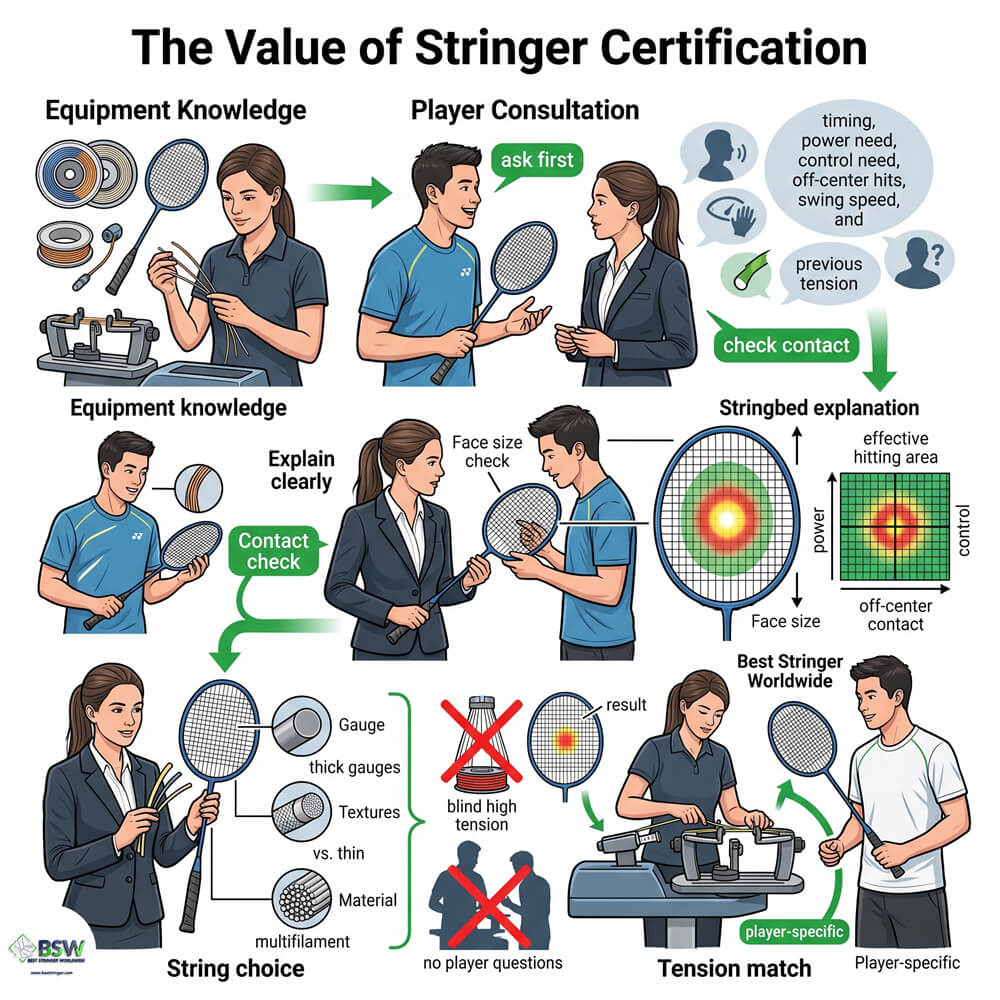
Proper equipment education is a core part of a professional badminton stringing course and good stringer certification standards. A certified stringer understands that a larger racquet face size requires specific attention when determining string tension.
At Best Stringer Worldwide, we know that effective hitting area and stringbed response dictate the advice given to players. It is not just about choosing a bigger racquet face, but using player consultation to align the string type and tension with the player’s true power and control capabilities.
By prioritizing accurate technical knowledge, our stringer certification ensures that every recommendation accounts for sweet spot behavior and off-center hits. You eliminate tension guesswork and learn how different frame characteristics affect real performance on the court.
Equipment Selection Quick FAQ
Quick, direct answers to common questions about badminton racquet face size and power generation.
Does a larger racquet face always mean more power?
Generally, yes. When all other conditions are equal, a larger badminton racquet face can help produce more power because it provides the stringbed with a larger effective hitting area and more usable rebound. However, power still depends on the player’s swing speed.
Why does a larger face help with power?
A bigger racquet face expands the sweet spot and allows the stringbed to flex more freely. This creates a broader usable hitting area, making it easier to access power even if your contact quality is not perfectly centered.
Is a larger racquet face better for beginners?
Often, yes. Developing badminton players are still refining their timing. A larger racquet face offers a more forgiving stringbed response, which helps them maintain playable power on slightly off-center hits.
How does face size affect off-center hits?
Striking the shuttle near the frame edge usually results in power loss. A larger racquet face mitigates this by keeping the effective hitting area wider, ensuring the shuttle rebound remains usable even on a slight mishit.
Does a larger face reduce control?
It can. While it aids power generation, a larger racquet face may feel less sharp or slightly slower through the air. Players who prefer highly direct feedback and rapid handling often favor a smaller, more compact frame design.
How does string tension interact with face size?
High string tension naturally shrinks the sweet spot. If a badminton stringer blindly installs high tension on a larger racquet face, it can reduce the stringbed’s usable rebound, negating the forgiveness the larger face was meant to provide.
What should a stringer know before advising?
A professional stringer must check the player’s timing and the racquet face size. They should use player consultation to adjust tension accordingly, ensuring the stringbed response aligns with the player’s ability to generate power.
Why is stringer certification important?
A comprehensive badminton stringing course teaches how racquet structure, effective hitting area, and tension interact. A certified stringer can accurately explain why a certain face size may or may not solve a player’s power struggles.
Should every player use a larger face?
Not necessarily. While a larger face aids in power generation on mishits, advanced players who consistently strike the center often prefer smaller racquet faces for quicker handling, stability, and highly responsive control.
The Physics of Power: Why Racquet Face Size Matters
Proven Consultation
Our stringing approach is based on verified equipment parameters. We prioritize proper evaluation of racquet face size, sweet spot behavior, and playstyle efficiency over blindly repeating tension habits.
| Racket Spec | Smaller Face Size | Larger Face Size |
|---|---|---|
| Effective Hitting Area | More compact hitting area, less margin for off-center contact. | Larger effective hitting area, more forgiving stringbed response. |
| Power Generation | Requires clean timing and strong technique for maximum power. | Easier access to power for some players when other conditions are equal. |
| Handling & Control | Faster handling and sharper feedback. | May feel slightly slower or less sharp depending on the frame design. |
| Player Suitability | Suits players with highly consistent contact quality. | Suitable for developing players or those wanting forgiveness. |
| Sweet Spot Behavior | Concentrated sweet spot. | Expanded sweet spot with more usable rebound space. |
| Stringer Advice | Requires careful tension matching to avoid dead feel. | Use player consultation to avoid blindly recommending high tension. |
Master Your Equipment with Best Stringer Worldwide
Ready to upgrade your knowledge? Best Stringer Worldwide offers professional stringing consultation to teach you how racquet face size and stringbed behavior affect power. We serve badminton players worldwide especially in Singapore, Hong Kong, Malaysia, Indonesia, UK, France and Europe. Contact a certified stringer to find the perfect tension and gauge for your game.