1.1 Stringing Fundamentals
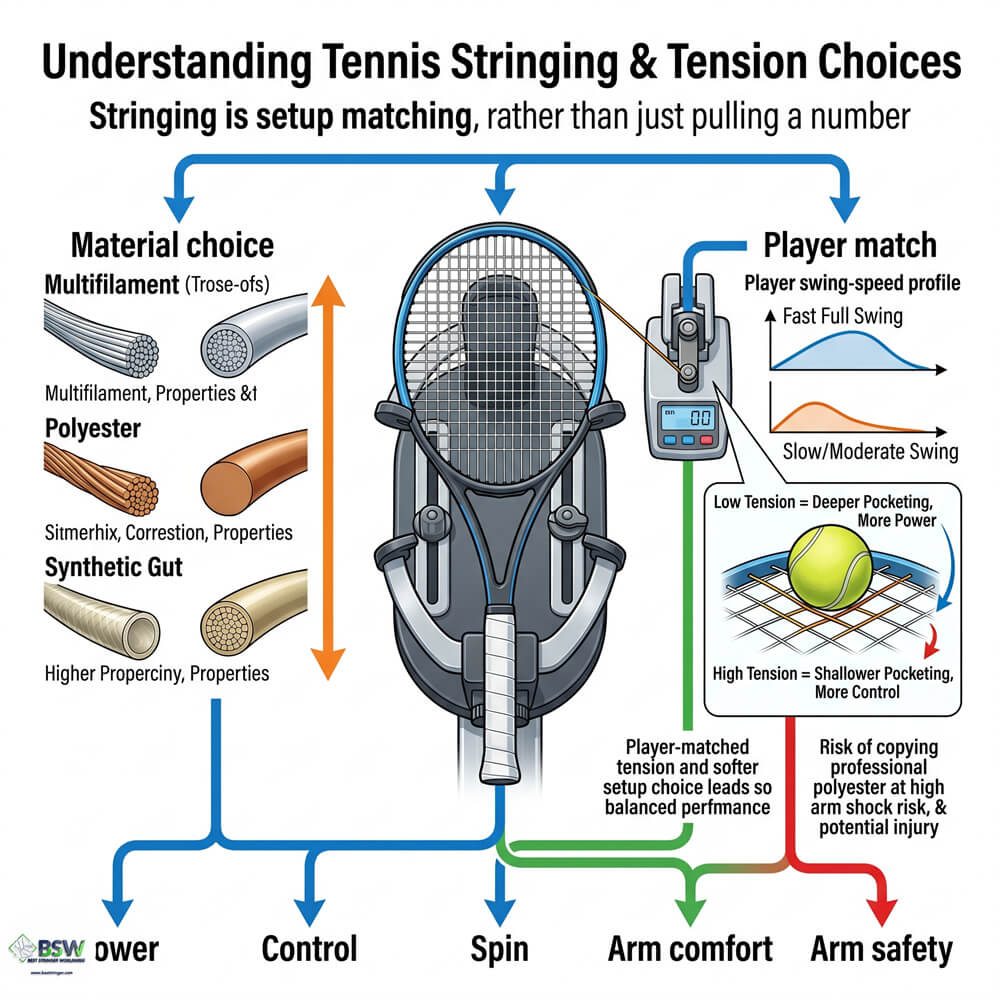
Understanding Tennis Stringing & Tension Choices
Good tennis racquet stringing is not simply about pulling a number on a machine; it is about harmonizing the right material, the correct tension, and a smart restringing schedule to match your actual playing needs. Understanding how these choices dictate power, control, spin, and comfort is crucial for long-term improvement and injury prevention.
A common mistake is copying professional setups blindly. Stiff polyester strings at high tensions work for elite athletes but can cause severe arm pain for recreational players. True performance comes from a setup tailored to your swing speed and durability needs.
Step 1: Realize that reference tension is just a starting point.
Step 2: Learn how string materials behave differently under tension.
Step 3: Consult a certified stringer to find a setup such as a hybrid blend or a softer synthetic gut that genuinely supports your individual comfort and technique.
1.2 Tension Guidelines
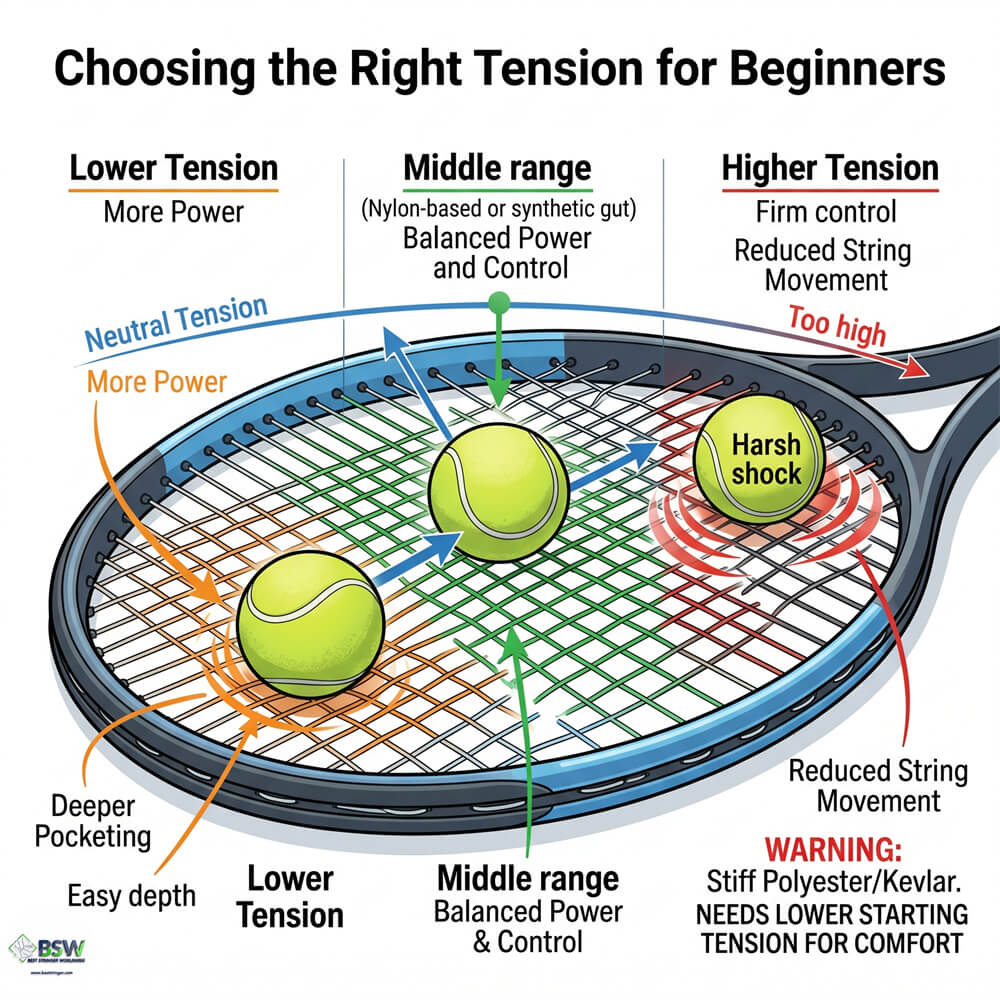
Choosing the Right Tension for Beginners
Beginners often need practical starting points rather than over-complicated setups. For most standard midplus tennis racquets, a middle-range reference tension (typically around 50-55 lbs) paired with a forgiving nylon-based or synthetic gut string is an excellent baseline. This tension provides a balanced mix of control and comfortable power.
The general rule is that lower tension acts like a trampoline, offering easy depth and power with softer impacts. Conversely, higher tension restricts string movement, providing a firmer string bed that enhances control for players who generate their own fast, heavy swings.
However, material drastically alters the rules. If you decide to try stiffer strings like polyester or Kevlar, the starting tension usually needs to drop significantly (often into the mid-to-low 40s) to protect the arm from harsh shock and preserve a comfortable hitting response. Adjustments should always rely on your actual on-court feel.
1.3 Restringing Timing
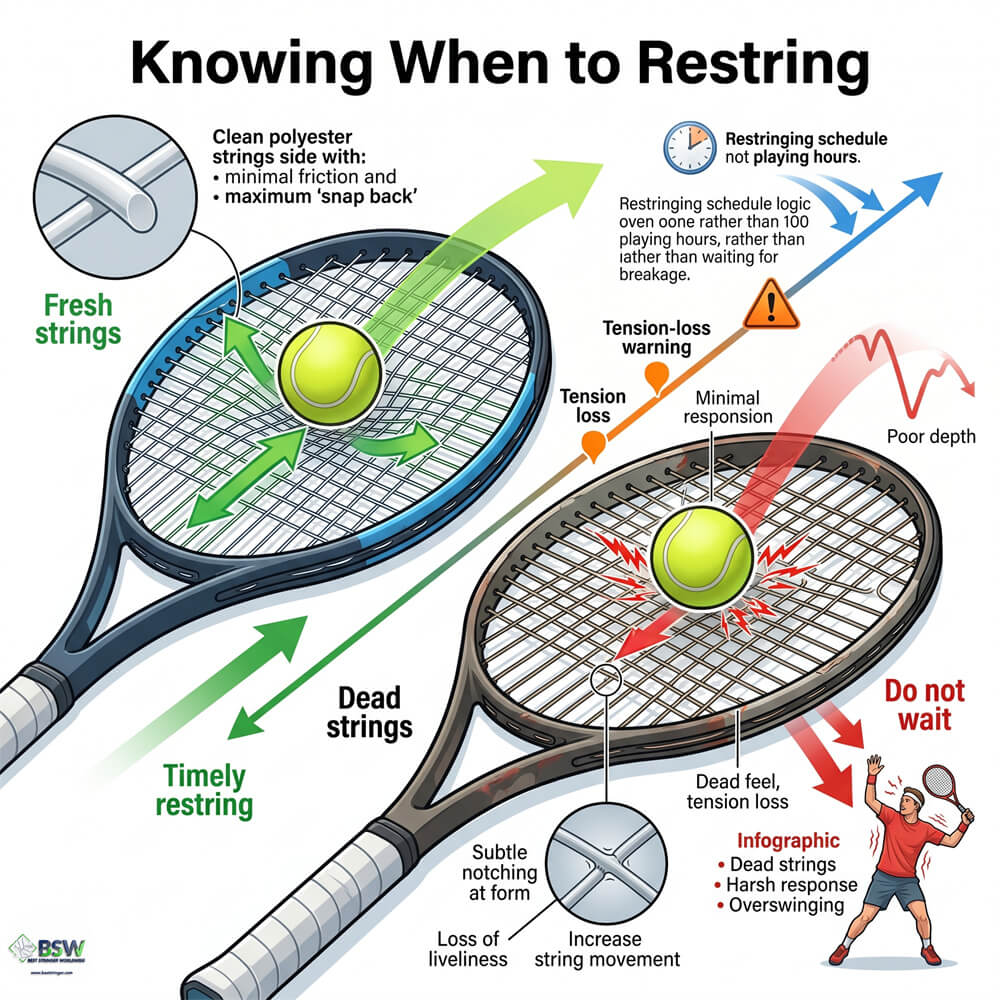
Knowing When to Restring
A widespread misconception among club players is assuming that strings only need to be replaced when they visibly snap. In reality, all strings stretch, lose tension, and suffer from elasticity degradation over time, significantly altering the racquet’s feel and energy return.
Waiting purely for breakage means you are often playing for weeks or months with ‘dead’ strings. Dead strings lose their ability to pocket the ball, leading to a harsh response, diminished spin control, and a dramatic drop in performance consistency. You might find yourself overswinging just to achieve normal depth.
While a traditional rough rule of thumb suggests restringing as many times a year as you play in a week, actual restringing needs are highly individualized. Poly strings go dead faster than natural gut. A professional stringer can help you build a personalized restringing schedule to preserve peak playability.
1.4 String Bed Dynamics
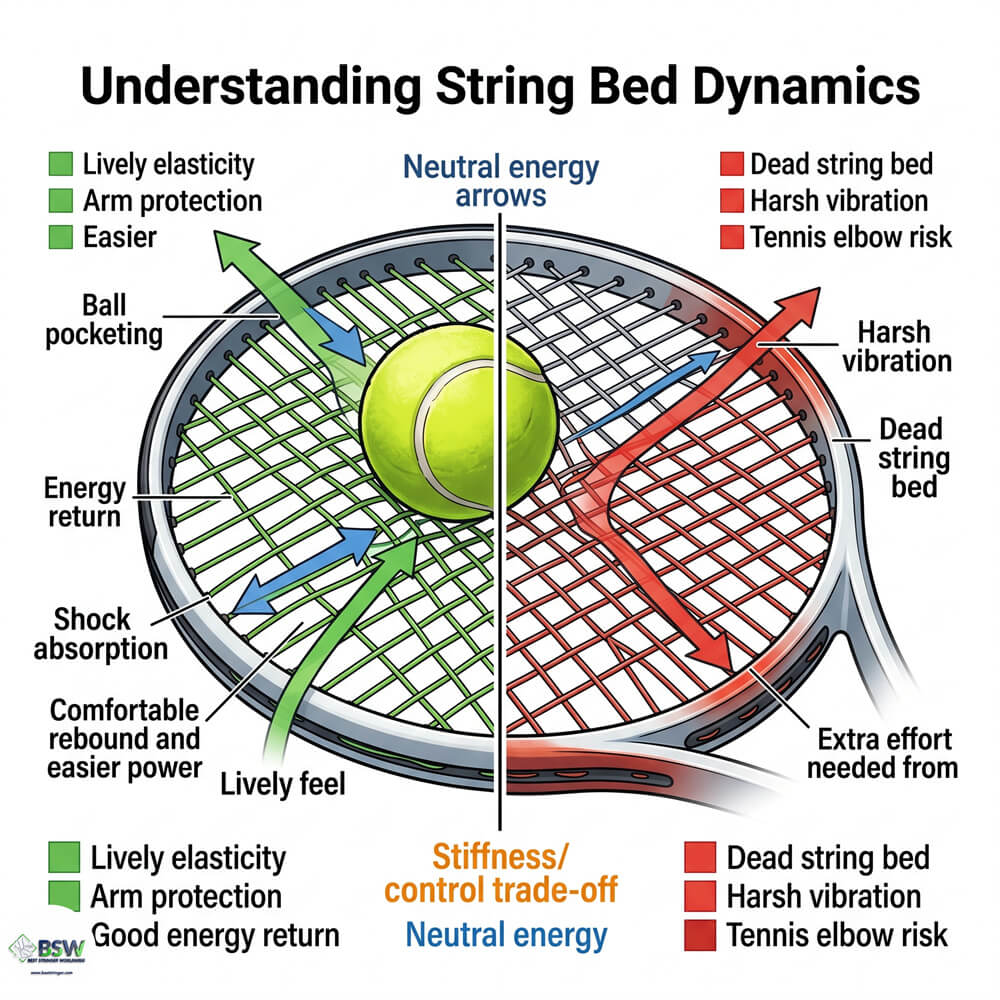
Understanding String Bed Dynamics
String bed dynamics refer to the complex way woven strings absorb and return energy upon impact. A lively, freshly strung racquet utilizes high string elasticity to pocket the ball cleanly, generating effortless power and an incredibly comfortable feel.
Energy Absorption. When the ball strikes, elastic strings (like multifilament or gut) deform smoothly to absorb the shock, protecting the player’s arm. Stiffer strings deform less, transferring more impact shock but offering greater directional control.
Loss of Liveliness. With every impact and every passing day, string materials slowly lose their natural resilience. A “dead” string bed feels rigid and board-like. It requires more physical effort from the player to hit deep shots, which can easily provoke tennis elbow and other joint issues.
Stringer Knowledge. A certified stringer studies these dynamics rigorously. Knowing how to maintain a string bed’s liveliness whether by recommending restringing intervals or dropping reference tensions for stiff polys is the hallmark of professional equipment care.
1.5 Durability Factors
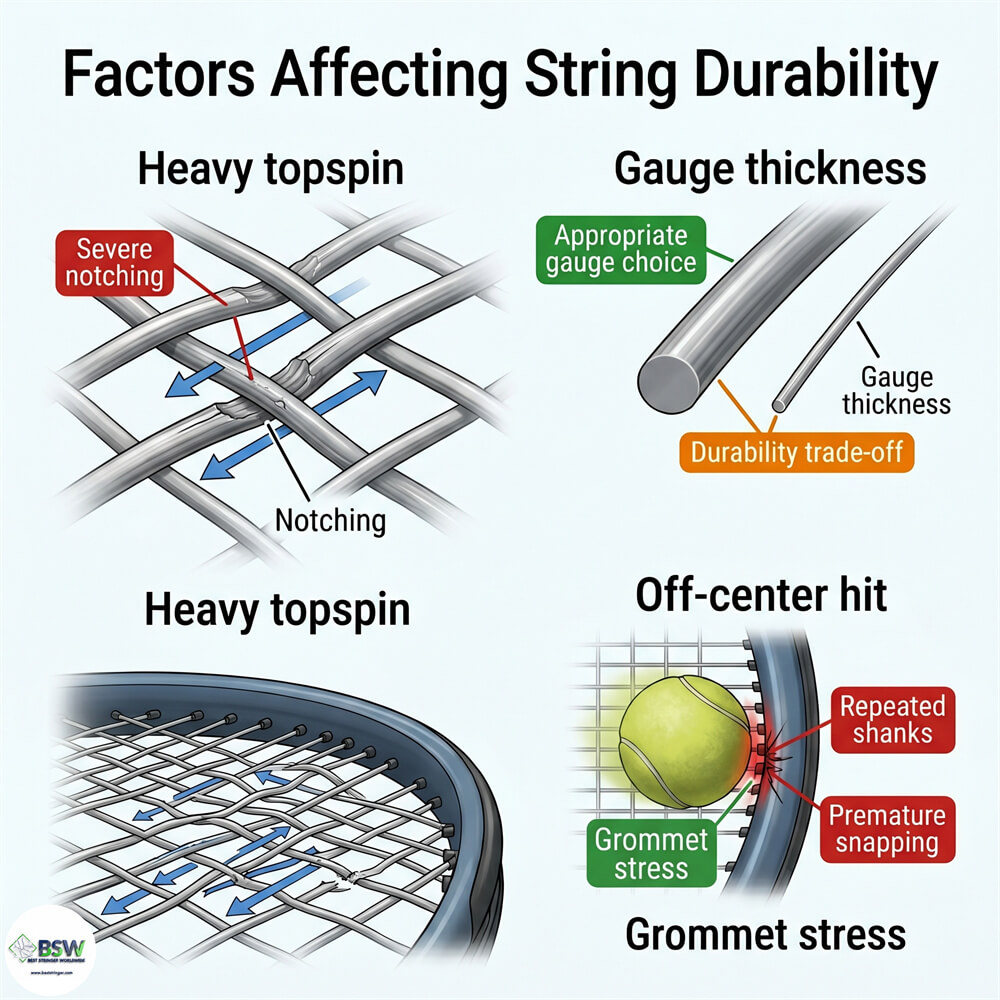
Factors Affecting String Durability
Factor 1: Spin and String Movement.
Players who hit with heavy topspin force the main strings to snap back against the crosses aggressively. This extreme friction causes “notching,” where the strings cut into each other and eventually snap prematurely.
Factor 2: Gauge and Thickness.
Thicker string gauges (like 15L or 16) inherently offer superior durability against wear and tear. However, selecting a thicker gauge involves a trade-off, as thinner gauges (like 17 or 18) generally provide superior bite and spin potential.
Factor 3: Off-Center Impacts.
Hitting the ball near the frame’s edge severely stresses the string precisely where it meets the grommet. Consistent shanks lead to sudden shear breaks that no string material can completely withstand, making technique as important as equipment choice.
1.6 Advanced Techniques
Advanced Solutions: Hybrid Stringing
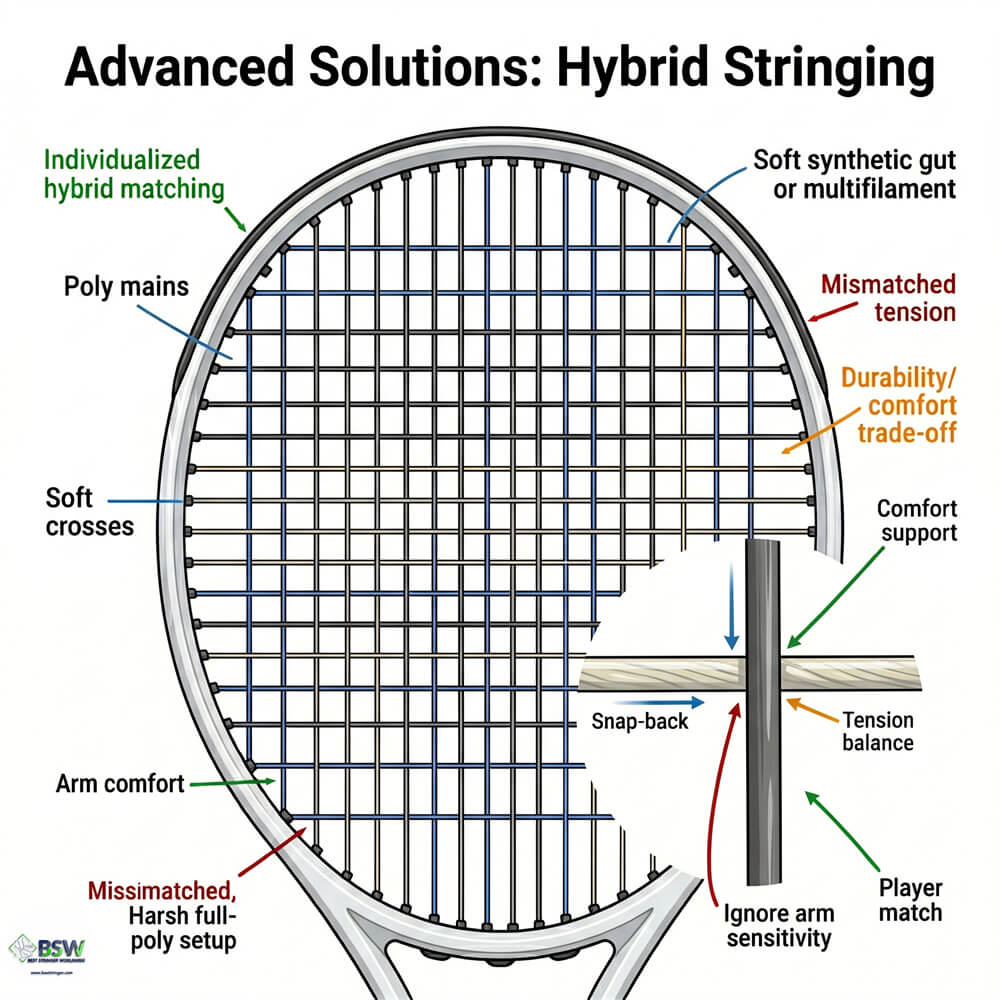
Hybrid stringing is a highly effective way to balance competing racquet characteristics. By using two entirely different string materials for the mains and the crosses, players can custom-build a string bed that mitigates the extreme flaws of a single string type.
Blending Properties. A common hybrid setup utilizes a stiff, durable polyester in the mains to withstand heavy topspin, paired with a soft synthetic gut or multifilament in the crosses. This softens the overall string bed, adding essential comfort and power while maintaining spin control.
Tension Harmonization. Because the materials stretch differently, stringers often adjust the reference tension pulling the softer crosses slightly tighter, or dropping the poly mains lower to ensure the string bed feels cohesive rather than jarring.
Individual Adjustments. Hybrid advice must be individualized. A certified stringer analyzes your specific breakage history and arm sensitivity before designing a hybrid pattern to safely elevate your game without injury risks.
1.7 Further Learning
The Value of Professional Stringing
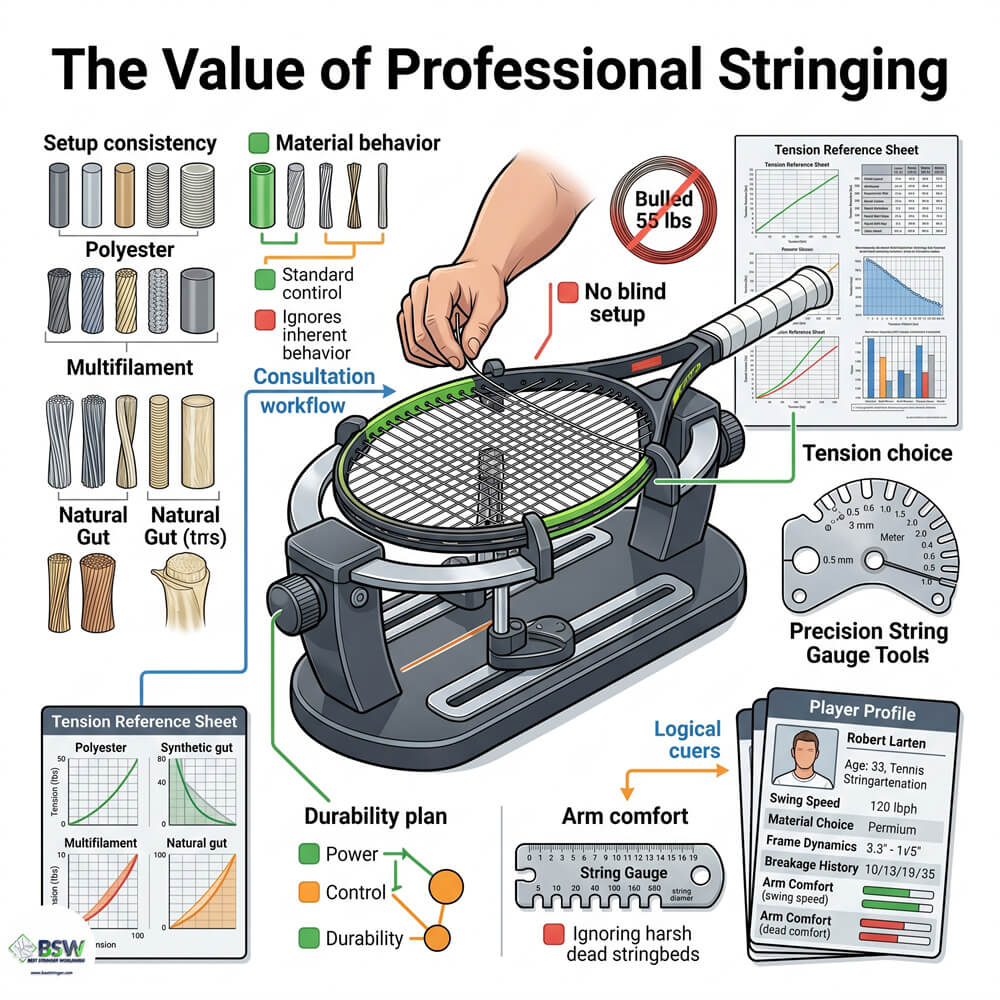
Proper setup education is a core part of a professional racquet stringing course. A professional stringer understands that blindly pulling strings to 55 lbs without evaluating the material, the player’s history, or the frame dynamics provides a poor service experience.
At Best Stringer Worldwide, we believe setup consistency is the ultimate goal. When a certified stringer masters tension selection, durability management, and hybrid blends, they can guide players away from harsh, dead strings and toward a supportive, lively response.
Continuous improvement through formal stringer certification empowers technicians to explain these concepts clearly. It ensures that whether you are a tennis player adjusting to a poly string or a badminton stringer expanding your cross-sport knowledge, your equipment choices remain deeply informed and reliable.
String Setup Quick FAQ
Quick, definition-first answers to common questions about tension, materials, and restringing logic.
What tension should a beginner start with?
A practical starting range for most beginners using a nylon-based string is right in the middle of the racquet’s recommended range (usually 50-55 lbs). This provides a balanced mix of forgiving power and comfortable control.
Why do old strings feel dead?
Over time and through repeated impacts, string materials lose their natural elasticity. They no longer absorb and return energy efficiently, resulting in a harsh feel, poor tension response, and a loss of power and control.
What is hybrid stringing used for?
Hybrid stringing uses different materials for the mains and crosses to blend specific benefits, such as combining the durability and heavy spin of a stiff polyester with the power and comfort of a softer synthetic gut.
Why not wait for strings to break?
You should restring when the strings lose their tension and responsiveness, long before they snap. Waiting for breakage forces you to play with inconsistent, dead equipment that harms your timing and can provoke arm strain.
Does higher tension mean more control?
Generally, higher tension restricts string movement, providing a firmer response and better control for fast-swinging players. However, if taken too high, the loss of pocketing and power can actually ruin the player’s accuracy and comfort.
Why does tension feel different with different strings?
Tension is just a pulling force. Stiffer materials like Kevlar or polyester will feel much firmer and less powerful at 50 lbs compared to a highly elastic natural gut or multifilament strung at the exact same reference tension.
How does string gauge affect durability?
Thicker gauges inherently offer superior durability against wear and notching. However, switching to a thicker gauge involves a trade-off, as thinner gauges generally provide a crisper feel and slightly better spin potential.
Why is stringer certification important here?
A certified stringer understands string bed dynamics, tension loss, and durability factors. They go beyond factory defaults to offer individualized recommendations that support your playing style, preserve string life, and manage arm comfort safely.
Why should badminton stringers learn this?
Understanding cross-sport stringing principles broadens a stringer’s knowledge of material behavior, tension theory, and equipment customization, making them a more well-rounded, adaptable, and versatile professional overall.
String Bed Simulator: Nylon vs Polyester Dynamics
String Bed Dynamics Simulator
Experience how tension affects energy absorption, frame vibration, and the “trampoline effect” during impact.
Verified Stringing Knowledge
Our training emphasizes tension behavior, durability factors, and proper string-bed dynamics. We prioritize helping stringers develop precise, individualized setup logic over simple guesswork.
| String Type / Setup | Comfort & Power Traits | Durability & Control Traits |
|---|---|---|
| Synthetic Gut (Nylon) | Highly elastic, arm-friendly, good power. | Moderate durability, standard control. Great beginner choice. |
| Polyester (Poly) | Stiff feel, lower power, requires good technique. | Excellent durability, massive spin potential and control. |
| Natural Gut | Ultimate comfort, maximum tension maintenance. | Lower durability in wet conditions, premium cost. |
| Multifilament | Closest synthetic to natural gut comfort. | Frays quickly under heavy topspin; very arm-safe. |
| Hybrid (Poly/Syn Gut) | Blends the softer feel of synthetic with poly. | Extends durability without sacrificing all comfort. |
| Restringing Frequency | Fresh strings provide predictable dynamics. | Dead strings force players to overswing, risking injury. |
Master Tennis Racquet Stringing with Best Stringer Worldwide
Ready to elevate your stringing professionalism? Best Stringer Worldwide offers advanced education to help you understand tension selection, string materials, hybrid setups, and durability management. We serve racquet stringers worldwide, including in Singapore, Hong Kong, Malaysia, Indonesia, UK, and Europe. Gain a prestigious stringer certification to confidently guide players away from harsh setups and toward reliable, peak performance.