1.1 Equipment Fundamentals
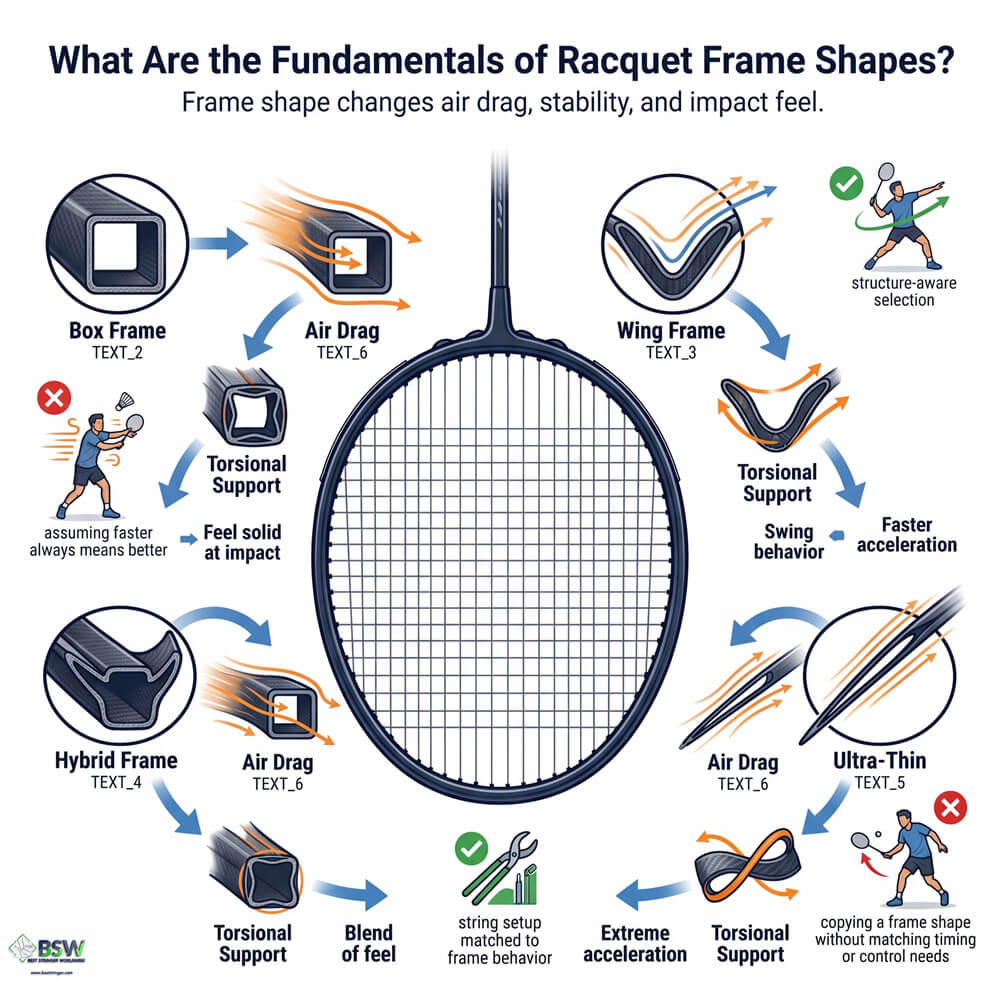
What Are the Fundamentals of Racquet Frame Shapes?
Badminton racquet cross-section influences how the frame moves through the air and how stable it feels at impact, but shape alone does not determine performance. This guide compares box, wing, hybrid and ultra-thin profiles. For head-outline and sweet-spot geometry, see the isometric vs oval head-shape guide; for construction variables, review materials, rigidity and string-bed density.
Compare the specific racquet model’s weight, balance, shaft, head profile, construction, condition and printed stringing range. Aerodynamic feel and torsional response also vary with swing technique, impact location, string, tension and manufacturing design.
Use cross-section as one decision input: identify the handling and feedback the player wants, test the complete racquet, and keep every string setup within the racquet and string manufacturer instructions.
1.2 Box-Shaped Frames
Box-Shaped Frames Explained: Control and Stability
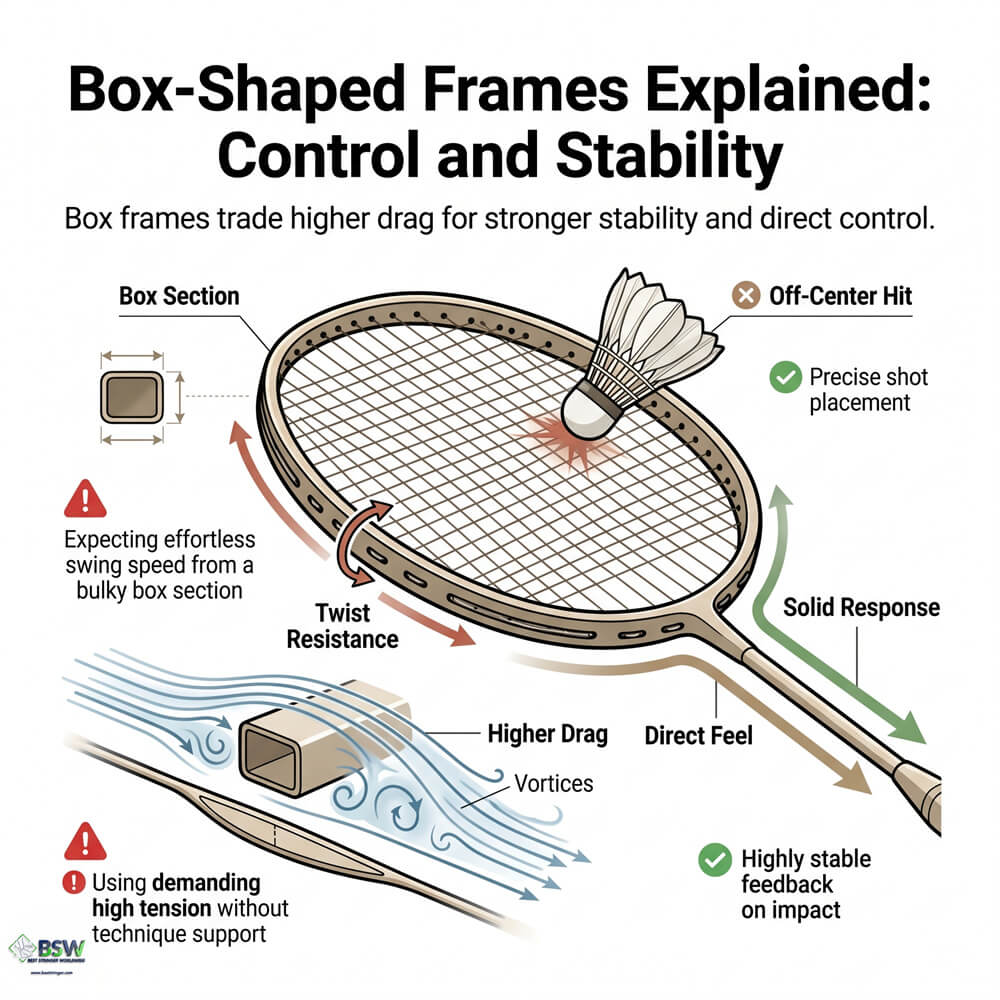
A box-shaped cross-section presents a broader profile and is commonly designed to emphasize structural support and a direct feel. It may resist torsional movement differently from a narrower aero profile, but the result depends on the complete frame construction rather than the outline alone.
A broader cross-section can create more aerodynamic drag than a narrower edge at the same speed. That does not make every box frame slow or every aero frame fast; total mass, balance, shaft behavior and player technique also affect handling.
Do not assume that a box profile automatically permits higher tension. Stringers should confirm the exact model, inspect the frame and grommets, follow the printed pattern and tension range, and evaluate the finished string bed.
1.3 Wing-Shaped Frames
Wing-Shaped Frames: Embracing Aerodynamics and Speed
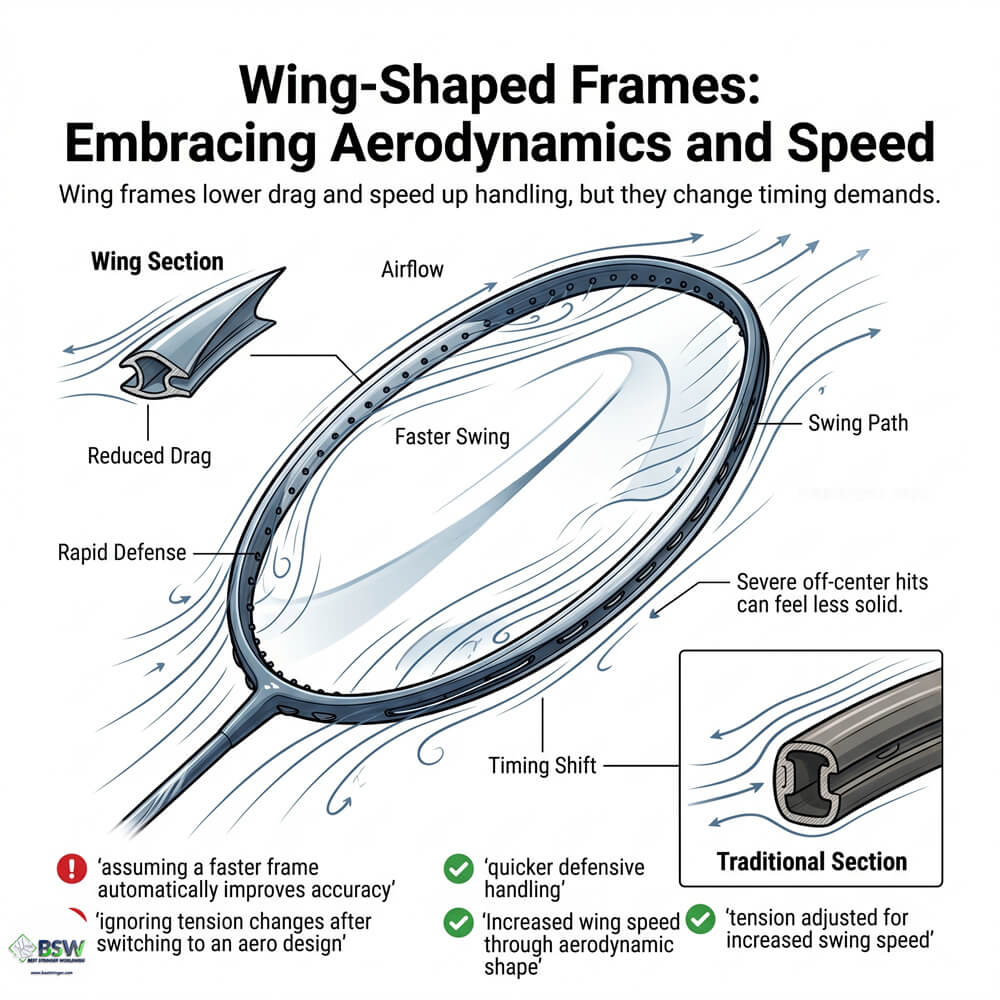
Wing-shaped or aero cross-sections use a narrower leading edge to reduce drag relative to a broader profile under comparable conditions. Players may perceive quicker handling, but actual racquet speed still depends on mass, balance, shaft, complete frame construction and swing technique.
A narrower profile does not automatically lack stability. Compare the specific model and impact response rather than assigning the same trade-off to every wing frame.
Switching racquets can change timing and contact. A stringer should document the previous setup, confirm the new frame’s instructions and adjust string and tension gradually from tested player feedback.
1.4 Hybrid Designs
Hybrid Frame Designs: Balancing Speed and Support
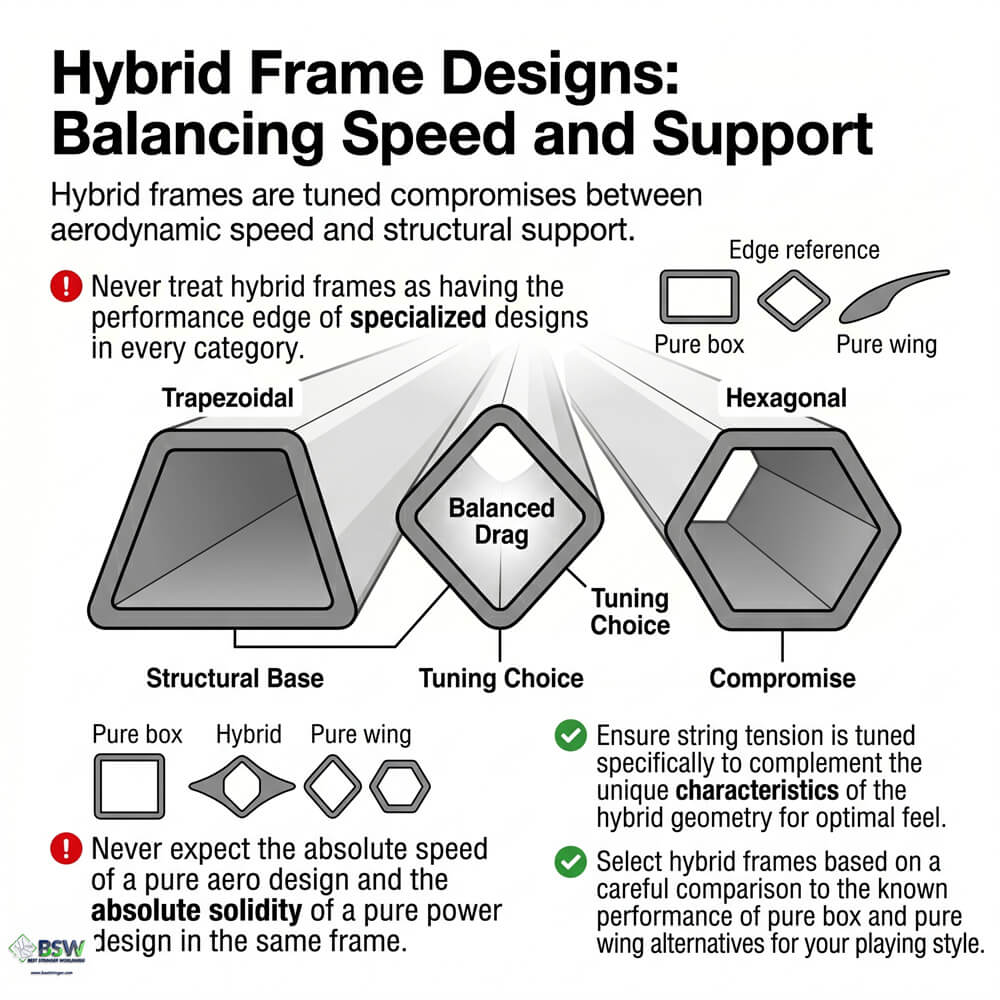
Hybrid cross-sections combine features such as broader support zones and narrower aerodynamic edges. They are design choices, not proof that all box frames lack speed or all wing frames lack stability, and their behavior must be evaluated on the specific racquet.
What is a hybrid frame? A trapezoidal section, for example, might maintain a wider base for structural stability while tapering to a sharper leading edge to reduce drag. A hexagonal shape cuts air efficiently while maintaining strong, stable corners.
The Compromise. Hybrid frames balance several design goals, but the label does not establish a fixed position between box and ultra-thin profiles. Weight, balance, construction and dimensions determine whether one model feels faster, firmer or more stable than another.
Stringing Considerations. Confirm the exact pattern, supported mounting points and printed tension range for the model. String type, gauge and tension can change string-bed response, but they cannot guarantee a frame’s intended balance or replace player testing.
1.5 Frame Case Studies
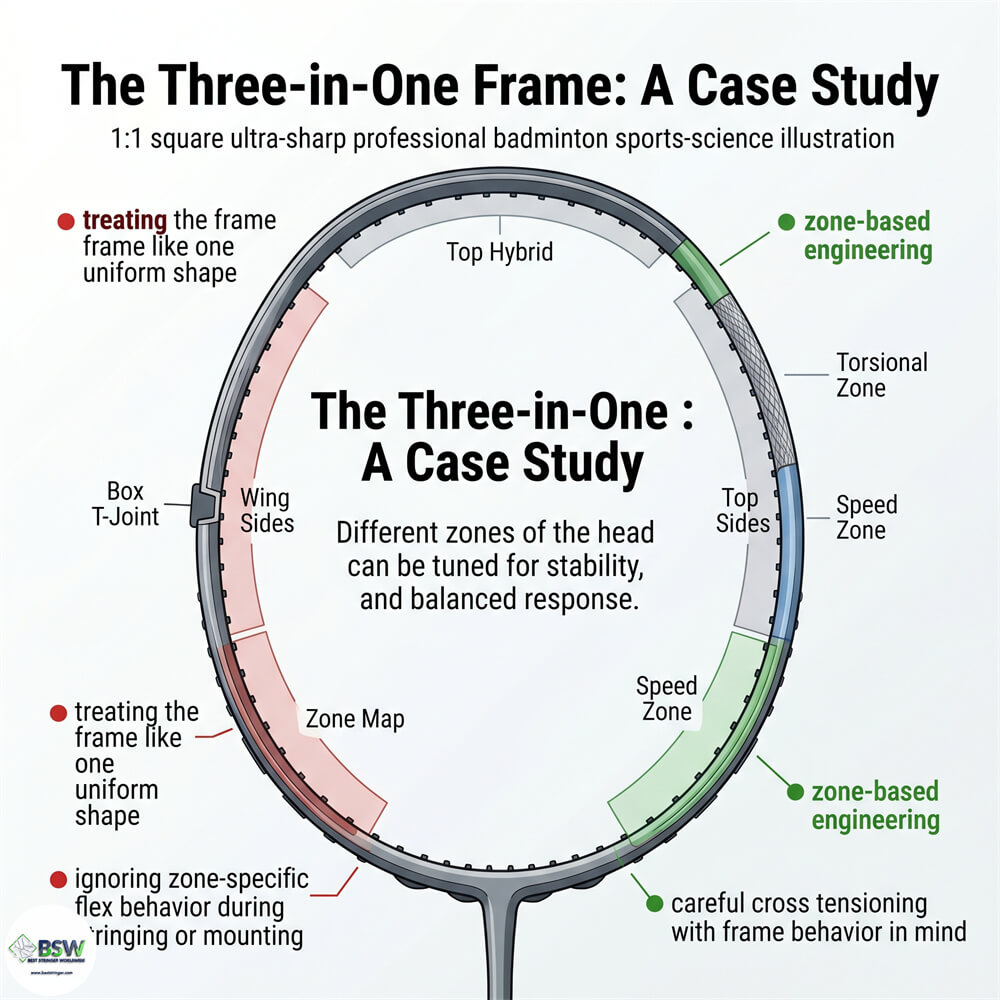
The Three-in-One Frame: A Case Study
The Tuning Approach.
Some racquets use different cross-sections around the head. Manufacturers may describe these as multi-shape or three-in-one designs, but the functional effect should be taken from that model’s engineering information rather than inferred from the marketing label alone.
Strategic Placement.
A common implementation places a sturdy box section near the T-joint for maximum torsional stability where the shaft meets the head. At the 3 and 9 o’clock positions, an aerodynamic wing shape is used to accelerate the fastest-moving parts of the frame. The top may use a trapezoidal hybrid section to balance the frame’s structural integrity with speed.
The Educational Takeaway.
Cross-section can vary around the head, so stringers should identify the exact model, inspect its support and grommet areas, use the documented mounting and pattern instructions and avoid assuming how an unverified zone flexes.
1.6 Aerodynamic Limits
Beyond Shape: Ultra-Thin Designs
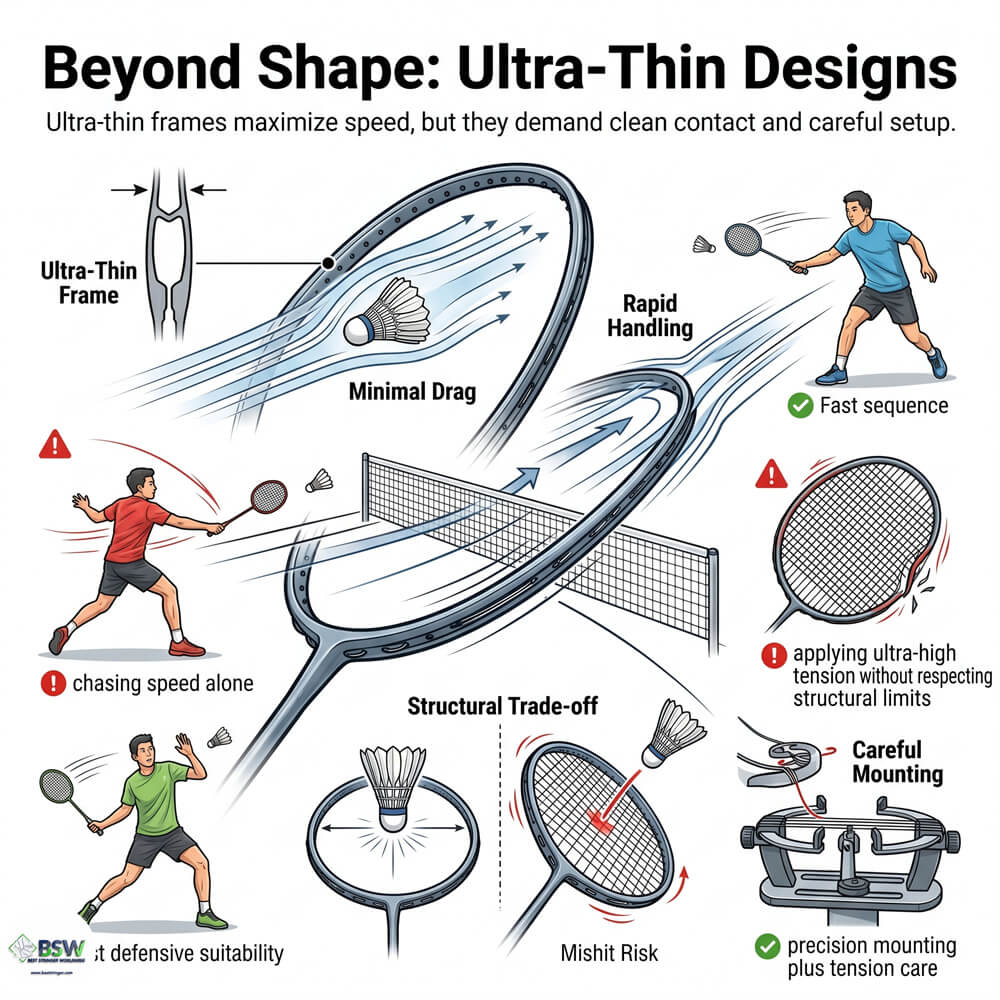
Ultra-thin frames use a narrow cross-section intended to reduce drag. The size of that effect and the racquet’s handling depend on the complete geometry, mass, balance, shaft and swing conditions.
The Speed Advantage. The primary goal is an incredibly fast handling direction, ideal for rapid-fire flat exchanges and lightning-fast interceptions at the net, reducing physical fatigue over long rallies.
The Structural Trade-Off. A thinner profile may require different material and layup choices, but thickness alone does not establish strength or torsional support. Inspect the individual frame and follow its limits rather than assuming it is fragile or unsuitable for off-center contact.
Stringing Care. Players should match this kind of frame to their defensive and driving needs instead of chasing speed alone. Stringers must also exercise extreme care; applying ultra-high tensions to ultra-thin frames demands precision mounting and a deep understanding of racquet structural limits.
1.7 Further Learning
The Value of Stringer Certification
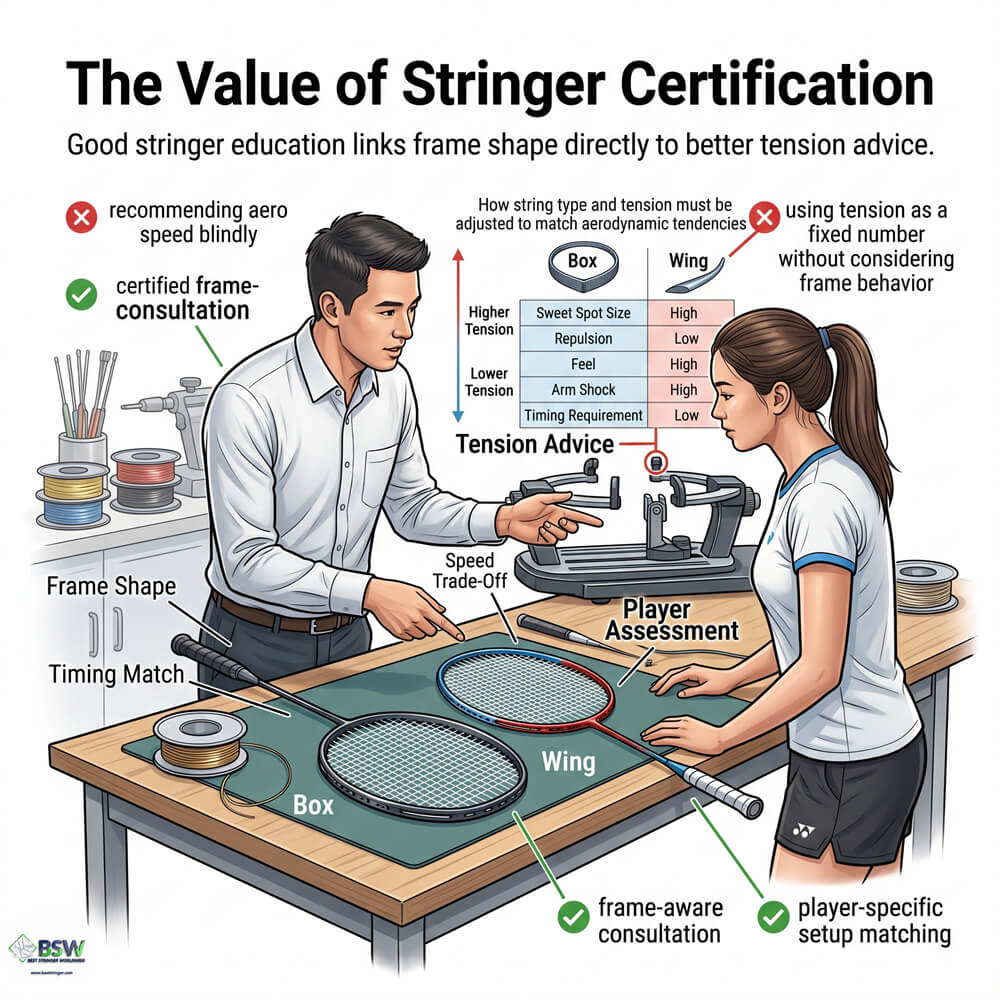
Proper equipment education goes far beyond reading marketing labels. It is a core part of a professional badminton stringing course and good stringer certification standards. A certified stringer understands that recommending “more speed” from an aero frame blindly without considering a player’s timing and accuracy is a disservice.
At Best Stringer Worldwide, we know that frame shape directly influences stringing advice. The magic is not just in buying a wing or hybrid frame, but in the precise consultation logic a badminton stringer uses to match string type and tension to the frame’s aerodynamic tendencies.
BSW stringer certification teaches a repeatable process for identifying the racquet, inspecting the frame, confirming the pattern and limits, documenting the setup and discussing player goals. It supports clearer recommendations but cannot guarantee a perfect balance or eliminate testing.
Frame Shape Quick FAQ
Quick, definition-first answers to common questions about badminton racquet frame shapes.
What is the difference between box and wing frames?
Box frames provide more stability and control due to their rigid structure, while wing frames reduce air drag for a faster swing impression and quicker handling.
Are hybrid frames always better?
Not automatically. Hybrid frames attempt to blend structural stability and aerodynamic speed, but they remain a compromise and tuning choice rather than a universal magic solution.
What does an ultra-thin frame change?
It significantly reduces air resistance for much faster handling, though it may involve trade-offs in overall torsional strength or stability depending on the specific model.
How does frame shape affect string tension?
Frame rigidity varies by shape. A certified stringer will adjust tension so the sweet spot response matches the frame’s structural support and the player’s modified swing timing.
Why do some players prefer box frames?
Despite having higher air resistance, the rigidity of a box frame provides a highly direct, solid control-oriented feel that is excellent for precise shot placement.
Why should a stringer understand frame shapes?
A professional badminton stringer must consider a frame’s structural traits before recommending demanding tensions, ensuring the setup is both safe and tailored to the player.
Does air resistance alone dictate racquet speed?
No. While the frame’s cross-sectional shape is crucial, overall racquet weight, balance point, and shaft stiffness also play major roles in how fast a racquet feels.
Why is stringer certification important?
A comprehensive badminton stringing course teaches how frame shapes interact with stringbeds, elevating a stringer’s advice beyond basic product labels and guesswork.
How do three-in-one frames work?
They combine shapes within the same head, such as a box T-joint for stability and aero sides for speed, tuning performance across different functional zones of the racquet.
Frame Shape Aerodynamics: Air Resistance & Speed
Physical Impact of Frame Geometry
The Control Trade-off
Box-shaped frames use a broader cross-section that may create more drag than a narrow profile under comparable conditions. Structural feel and off-center response still depend on the complete model, construction, mass, balance and impact.
The Speed Trade-off
Wing-shaped frames use a narrower edge intended to reduce drag. The handling and off-center response of a specific racquet also depend on its construction, mass, balance, shaft and impact; a wing profile alone does not prove rapid speed or low torsional resistance.
Evidence-Aware Racquet Knowledge
Our stringing approach begins with the exact racquet and string manufacturer instructions, frame and grommet inspection and the player’s goals. We do not imply that one frame profile or setup is endorsed by every top professional or guarantees comfort.
| Frame Design Priority | Box / Control Direction | Wing / Speed Direction |
|---|---|---|
| Aerodynamics | Higher air resistance, resulting in a slower handling impression. | Reduced drag, delivering a rapid swing and faster recovery. |
| Torsional Stability | Highly rigid structure, offering excellent support on off-center hits. | Can be less stable on severe mishits, depending on specific model tuning. |
| Control Feel | Direct, solid feedback heavily favored by precision-oriented singles players. | Faster head speed but slightly less direct physical feedback. |
| Hybrid Variations | Trapezoidal: Balances rigidity with a sharper leading edge for a mid-point feel. | Hexagonal: Cuts air efficiently while maintaining strong structural corners. |
| Advanced Engineering | Box T-Joint: Often used in multi-shape frames for maximum stability at the base. | Ultra-Thin Sides: Maximizes aerodynamic speed where the frame moves fastest. |
| Stringing Considerations | Often handles higher string tensions while maintaining a very solid, predictable response. | Tension must account for the player’s increased swing speed and frame rigidity limits. |
Master Your Equipment with Best Stringer Worldwide
Ready to upgrade your knowledge? Best Stringer Worldwide offers professional stringing consultation and certification courses to teach you how frame shapes and string setups affect speed and control safely. We serve badminton players worldwide especially in Singapore, Hong Kong, Malaysia, Indonesia, UK, France and Europe. Contact a certified stringer to find the perfect tension for your frame.