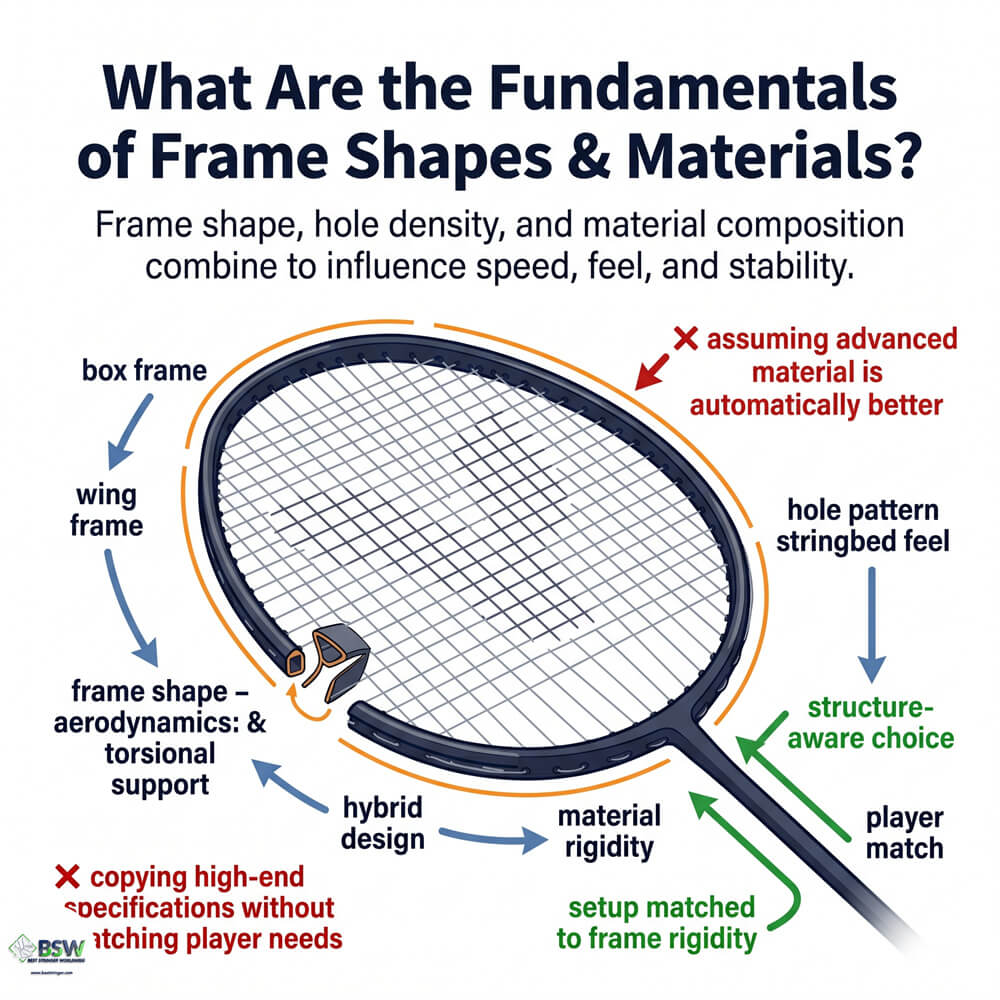
1.1 Frame Design Fundamentals
What Are the Fundamentals of Frame Shapes & Materials?
Equipment fundamentals refer to how specific racquet characteristics, particularly frame shape, string bed density, and material composition, combine to influence your playstyle. In this guide, you will learn why different badminton racquet frame cross-sections produce different aerodynamic and structural tendencies, alongside how hole patterns affect string feel.
In short, the frame’s shape dictates its air resistance and torsional support, while string bed density and material quality dictate feedback, sweet spot behavior, and vibration absorption. Understanding these concepts is crucial for any badminton player aiming to make informed equipment choices, as “advanced material” does not automatically mean “better for every player.”
Here is a simple educational flow:
Step 1: Learn the practical differences between box, wing, and hybrid frames.
Step 2: Understand how high and low density string beds change response.
Step 3: Consult a certified stringer to select a string and tension that perfectly matches the structural rigidity of your chosen frame.
1.2 Frame Shape Dynamics
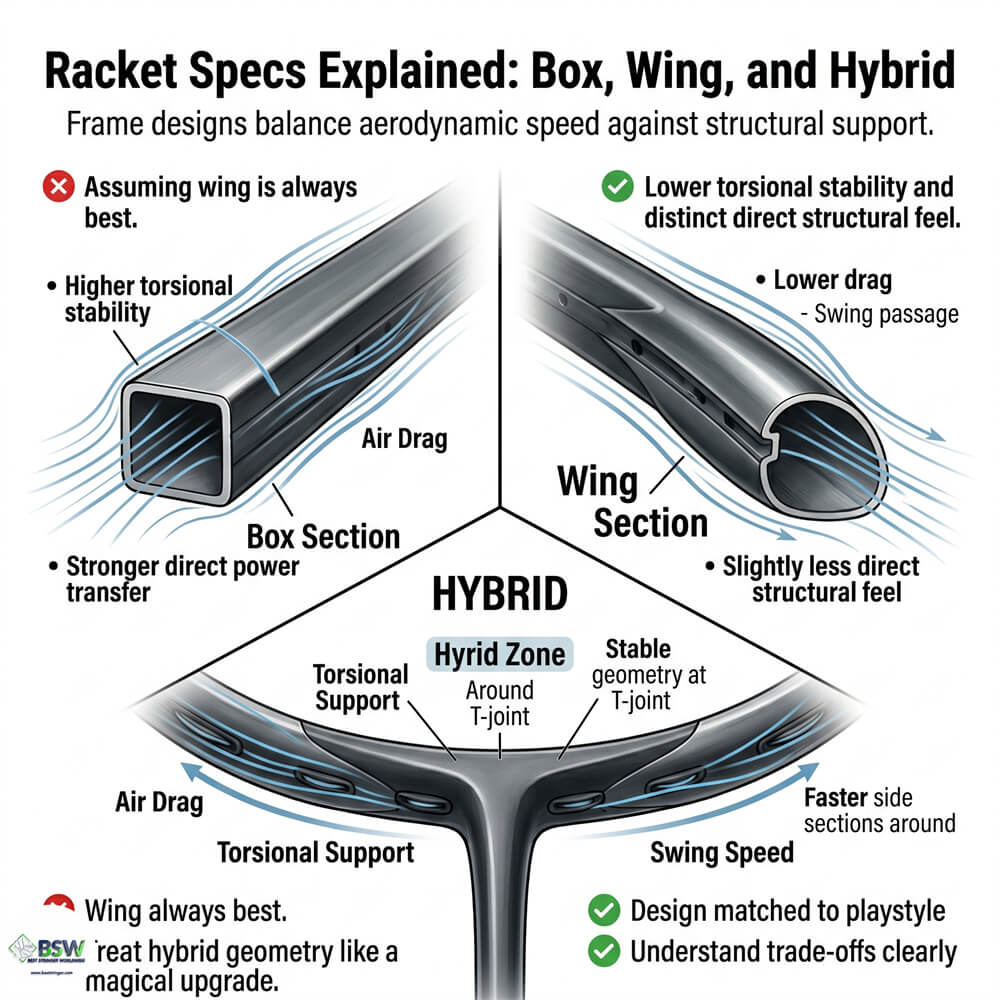
Racket Specs Explained: Box, Wing, and Hybrid
The evolution of badminton racquet frame shapes is fundamentally a balancing act between structural stability and aerodynamics. A traditional box-shaped frame is usually associated with high rigidity and strong torsional support. It offers excellent direct control and solid power transfer, but it creates more air resistance during the swing.
Conversely, wing-shaped (aerodynamic) frames are designed to slice through the air, lowering drag. This creates the impression of a faster swing and aids rapid offensive play. However, depending on the specific model, wing frames may sacrifice a small degree of the direct control feel found in box sections. Hybrid designs, including hexagonal or trapezoidal sections, represent compromises aimed at offering the best of both worlds.
Manufacturers have even developed three-in-one frame case studies, which tune different sections of the same head such as a stable box shape at the T-joint and a fast wing shape at 3 and 9 o’clock. A badminton player must understand that these are functional design compromises, not magical solutions.
1.3 Racquet Materials
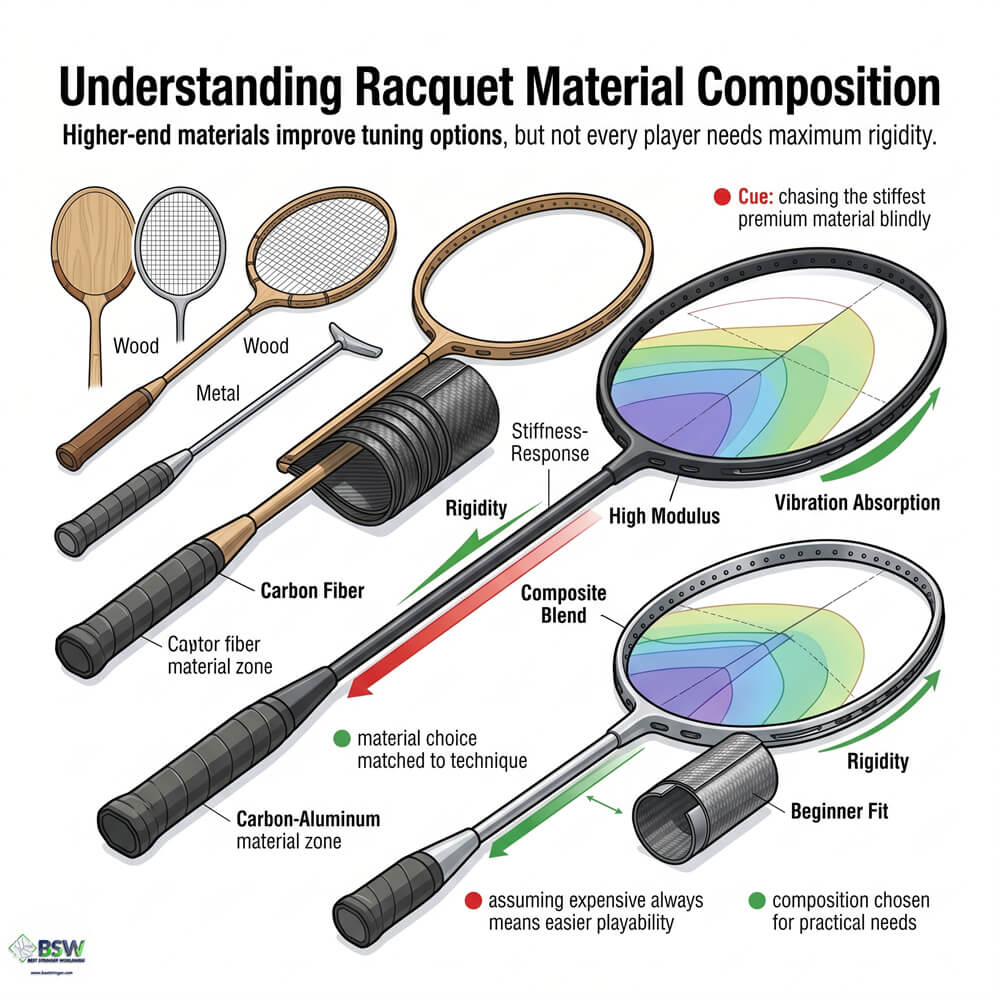
Understanding Racquet Material Composition
The evolution of racquet materials dramatically changed the sport. Moving away from the wood and steel era, aluminum alloys offered lighter frames, but the modern carbon-fiber era truly expanded design possibilities. Full carbon fiber allows manufacturers to fine-tune rigidity, strength, and vibration absorption accurately.
Different compositions serve different needs. High-modulus graphite and advanced composites (like titanium alloys or basalt fiber) can increase frame stiffness and power transfer, but these high-end materials require refined player technique to activate efficiently. Carbon-aluminum composites, meanwhile, provide durable and budget-friendly alternatives for beginners.
Importantly, the highest quality carbon fiber is not automatically the right choice for everyone. A frame that is too stiff can cause arm fatigue. A professional badminton stringer assesses material rigidity alongside player capability to provide the most functional equipment advice.
1.4 String Bed Basics
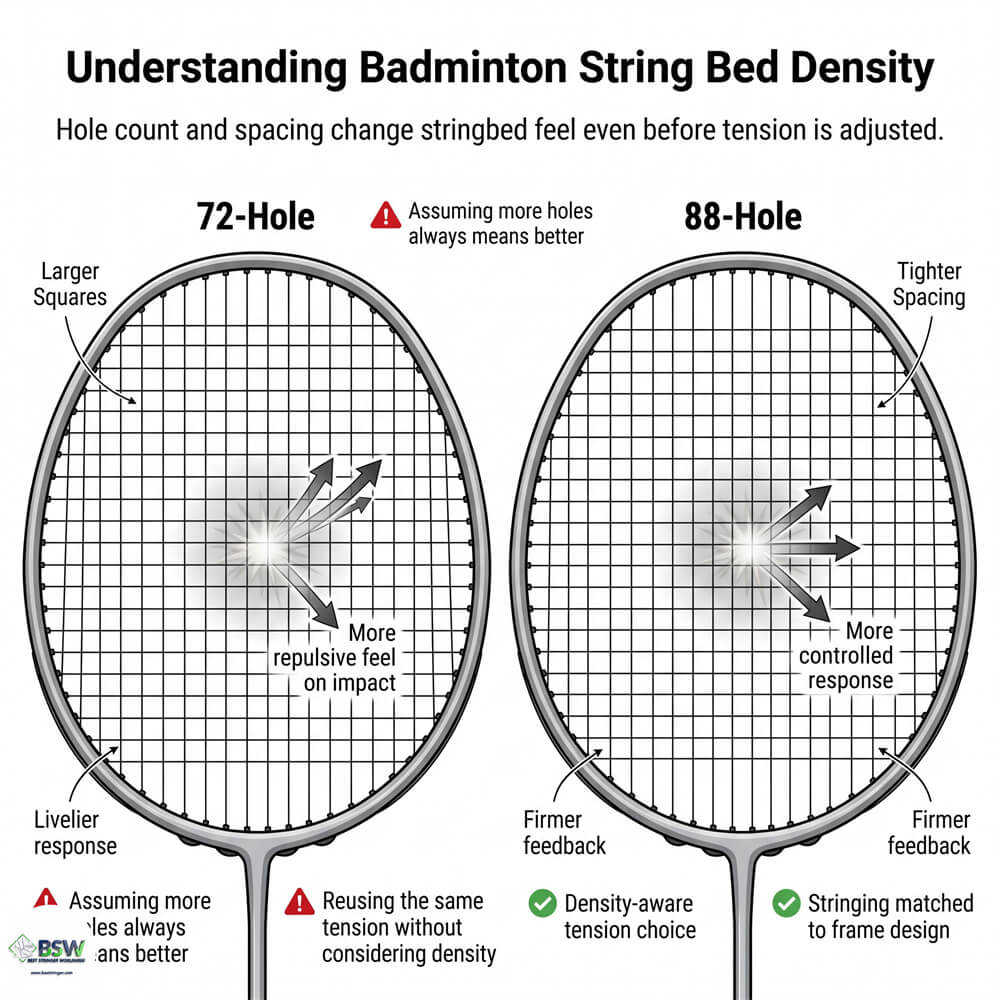
Understanding Badminton String Bed Density
A racquet’s frame design must be paired with the correct string tension, but players often overlook string bed density. Understanding this synergy is essential for evaluating racquets:
What is String Bed Density? Density refers to the number of string holes and the spacing between strings. Common patterns range from 72 holes to extremely dense 88-hole layouts, drastically changing how the racquet surface feels upon impact.
Low Density vs High Density. At the exact same string tension, a lower density pattern (fewer holes) often feels more lively and provides a bit more repulsive power. A higher density pattern creates smaller squares, resulting in a firmer, more controlled string bed that changes feedback.
The Stringing Connection. Extremely high density frames should be discussed carefully; they are not blindly superior. Because the spacing is tighter, they can feel significantly stiffer. A professional racquet stringer will always align your tension request with the frame’s specific string bed density.
1.5 Common Design Misconceptions
Common Frame and Material Mistakes
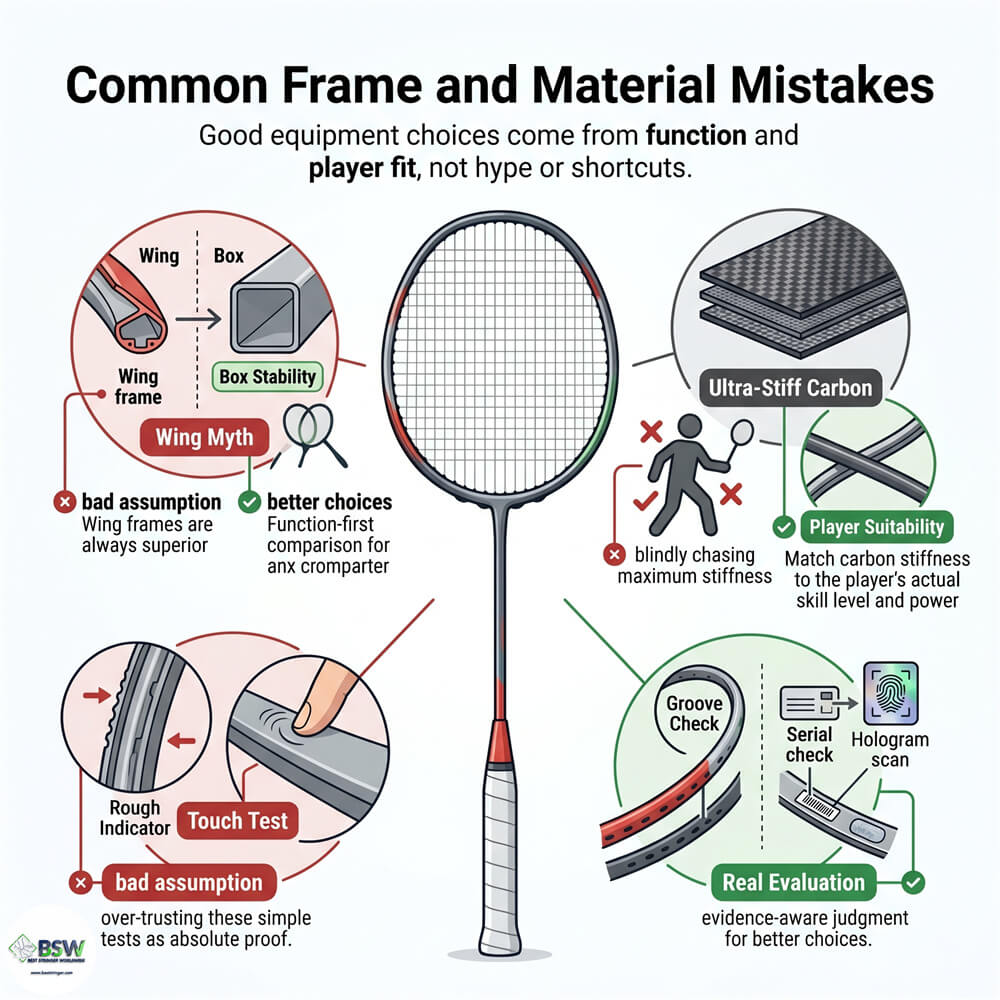
Mistake 1: Assuming Wing Frames are Always Superior.
While wing-shaped frames slice through the air quickly, assuming they are universally better is false. Some players prefer the sturdy, direct power transfer of a classic box frame, even if it has higher aerodynamic drag.
Mistake 2: Ignoring Material Suitability.
Chasing the most expensive, ultra-stiff carbon fiber is a common error. Advanced material rigidity requires advanced biomechanics; otherwise, a slightly more flexible material or composite will provide much better playability.
Mistake 3: Over-Relying on Authenticity ‘Hacks’.
Many players believe simple touch tests or checking groove depths provide guaranteed proof of authenticity. In reality, these should only be described as rough practical indicators, not absolute verification, as counterfeit materials vary widely.
1.6 Choosing the Right Racquet
Educational Equipment Decision Flow
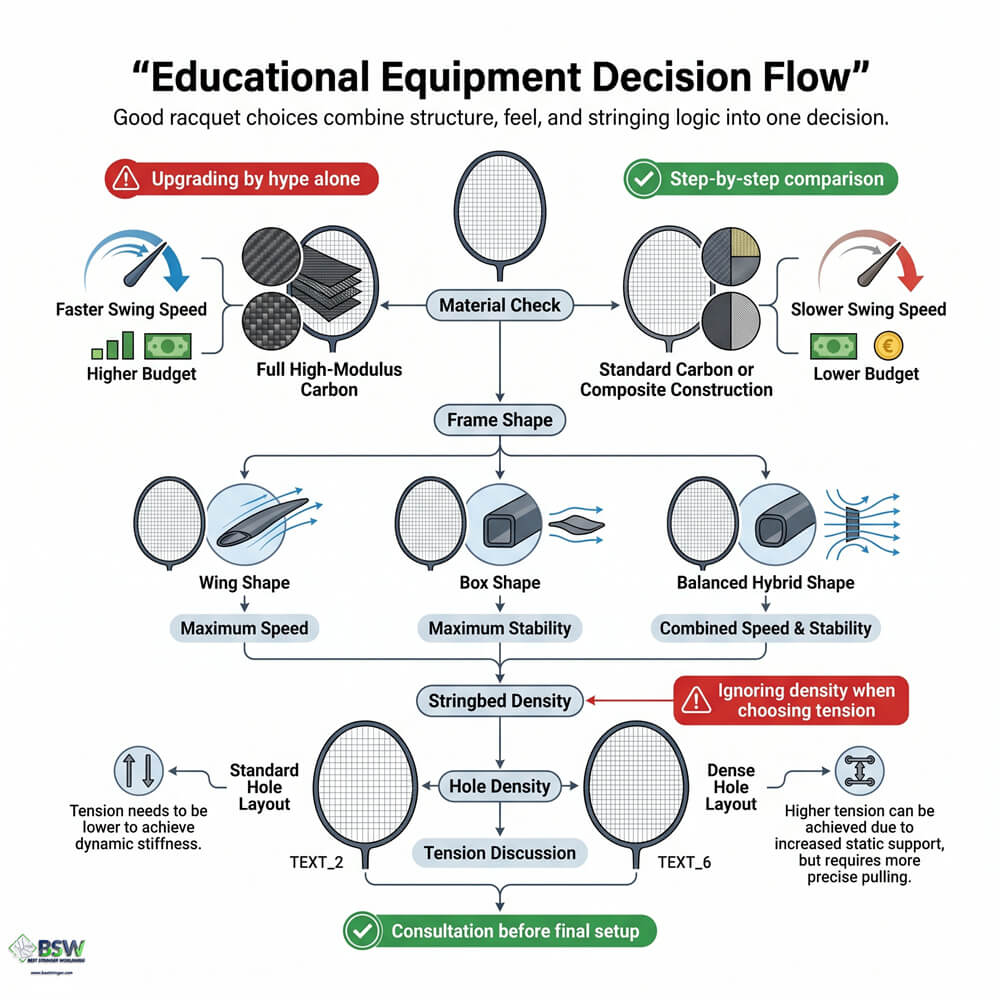
A step-by-step decision flow is crucial for balancing material trade-offs safely. Use this simple educational framework from BSW before upgrading your equipment:
Step 1: Check Material Composition. Assess if you need the extreme rigidity of full high-modulus carbon fiber, or if a standard carbon or composite frame suits your budget and swing speed better.
Step 2: Compare Physical Shapes. Determine if you prefer the aerodynamic speed of a wing-shaped frame, the solid power delivery of a box frame, or a balanced hybrid alternative.
Step 3: Understand Hole Density. Acknowledge that a dense 88-hole racquet requires different stringing considerations than a standard 72-hole frame. Always discuss string bed density with a qualified professional before deciding on string tension.
1.7 Professional Stringing Knowledge
The Value of Stringer Certification
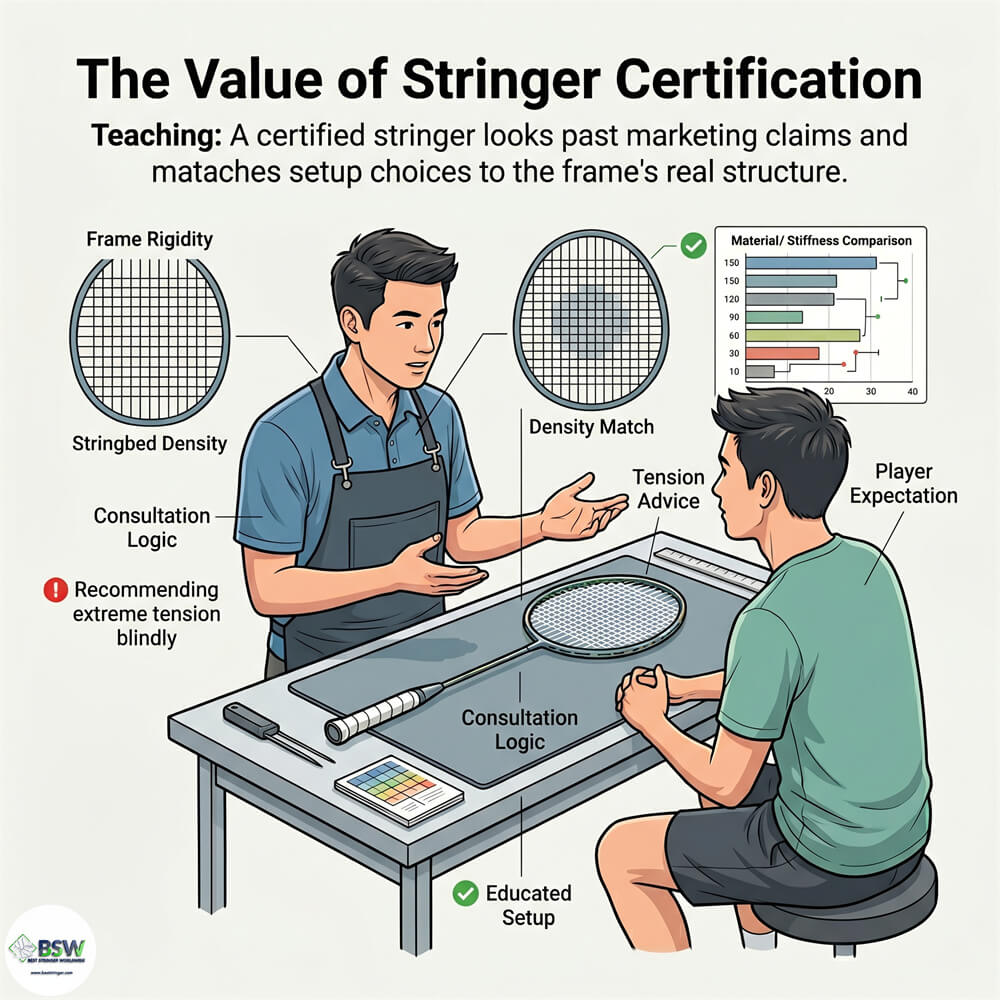
Proper equipment education is a core part of a professional badminton stringing course and good stringer certification standards. A certified stringer understands that recommending extreme string tension blindly without considering the frame’s material and density limits is a disservice.
At Best Stringer Worldwide, we know that frame shapes and materials directly influence the advice given to players. The magic is not just in buying a wing frame, but in the precise consultation logic a badminton stringer uses to match your setup to the frame’s true rigidity.
By prioritizing accurate equipment knowledge, our stringer certification ensures that technicians look past marketing hype. You eliminate guesswork, avoid frame breakages from misunderstood materials, and provide setups that genuinely improve the player’s game.
Equipment Selection Quick FAQ
Quick answers about badminton racquet frame shapes, materials, and string density.
Are wing frames always better for every player?
Not necessarily. Aerodynamic wing shapes slice through the air and increase swing speed, but they can sometimes reduce the stable, direct control feel typically found in sturdy box-shaped frames.
What does a box-shaped frame usually mean?
A box-shaped frame is associated with high rigidity and strong torsional support. It offers very direct control and solid power transfer upon impact, but comes with the trade-off of higher air resistance.
Are hybrid frame designs automatically superior?
No. Hybrid frames try to blend aerodynamics and stability, but they are ultimately functional design compromises. Their suitability depends on the individual player’s specific gameplay needs and swing style.
How do racquet materials influence performance?
Premium materials like high-modulus graphite significantly improve frame stiffness and reduce unwanted vibration. Conversely, carbon-aluminum composites offer budget-friendly durability but typically transmit more vibration.
What is a three-in-one frame design?
This is a tuning approach that uses different cross-sections on the same racquet head. For example, a stable box shape at the T-joint for strength, and a wing shape at the sides for faster swing speed.
Why does string bed density matter?
Higher density (more holes) creates a firmer string bed with more controlled feedback. Lower density (fewer holes) often feels livelier, typically providing more power at the exact same string tension.
How does stringing interact with frame design?
Frame strength, material rigidity, and string bed density must all be factored in when a stringer selects the appropriate tension. A poor string setup can make even the most advanced composite frame feel completely dead.
Why should a certified stringer understand this?
A badminton stringing course teaches how frame shapes and materials influence player expectations. A certified stringer uses this knowledge to match string tension accurately, going far beyond mere knot tying.
Are stringing courses necessary for advanced technicians?
Absolutely. Professional badminton stringer knowledge requires understanding how concepts like 72-hole versus 88-hole density change sweet spot behavior, ensuring the player receives educated, customized guidance.
Racquet Frame Simulator: Aerodynamics & Rigidity
String Bed Density & Impact Simulator
Select a hole pattern below, then run the simulation to see how string density changes pocket depth, sweet spot size, and shot feedback.
Proven Design Analysis
Our stringing approach is based on understanding frame shapes, string bed density, and material composition. We prioritize safe stringing practices and accurate player matching over exaggerated design hype.
| Design Trait | Trait A (Rigid / Dense / Heavy) | Trait B (Aero / Lively / Blended) |
|---|---|---|
| Frame Shape (Box vs Wing) | Box Frame: High rigidity, strong torsional support, direct control, higher drag. | Wing Frame: Improved aerodynamics, faster swing speed, potentially less direct feel. |
| Material (Carbon vs Aluminum) | Full Carbon Fiber: High stiffness, better vibration absorption, premium performance. | Aluminum Composite: Budget-friendly durability, heavier, higher vibration transfer. |
| Frame Design (Hybrid vs 3-in-1) | Hybrid Shapes: Blends box and wing features as a balanced design compromise. | 3-in-1 Frame: Tunes specific head sections (e.g., box T-joint, wing sides) for varied goals. |
| String Bed Density (High vs Low) | High Density (e.g., 88 holes): Firmer string bed, more controlled feedback. | Low Density (e.g., 72 holes): Livelier string bed, often more power at same tension. |
| Material Quality (Standard vs High-Modulus) | Standard Graphite: Reliable strength and moderate stiffness for intermediate play. | High-Modulus Carbon: Advanced rigidity and crisp response for high swing speeds. |
| Authenticity Checks (Touch/Groove) | Guaranteed Proof: Overpromising that touch tests verify authenticity 100%. | Rough Indicators: Using touch and weight distribution as educational clues only. |
Master Racquet Design with Best Stringer Worldwide
Ready to upgrade your knowledge? Best Stringer Worldwide offers professional stringing courses and stringer certification that teach you how frame shapes, materials, and string bed density interact. We help badminton players and aspiring certified stringers worldwide, especially in Singapore, Hong Kong, Malaysia, Indonesia, UK, France and Europe. Contact a certified stringer to find the perfect tension and string bed match for your frame.