1.1 Introduction
Professional Racquet Stringing Measurement Equipment
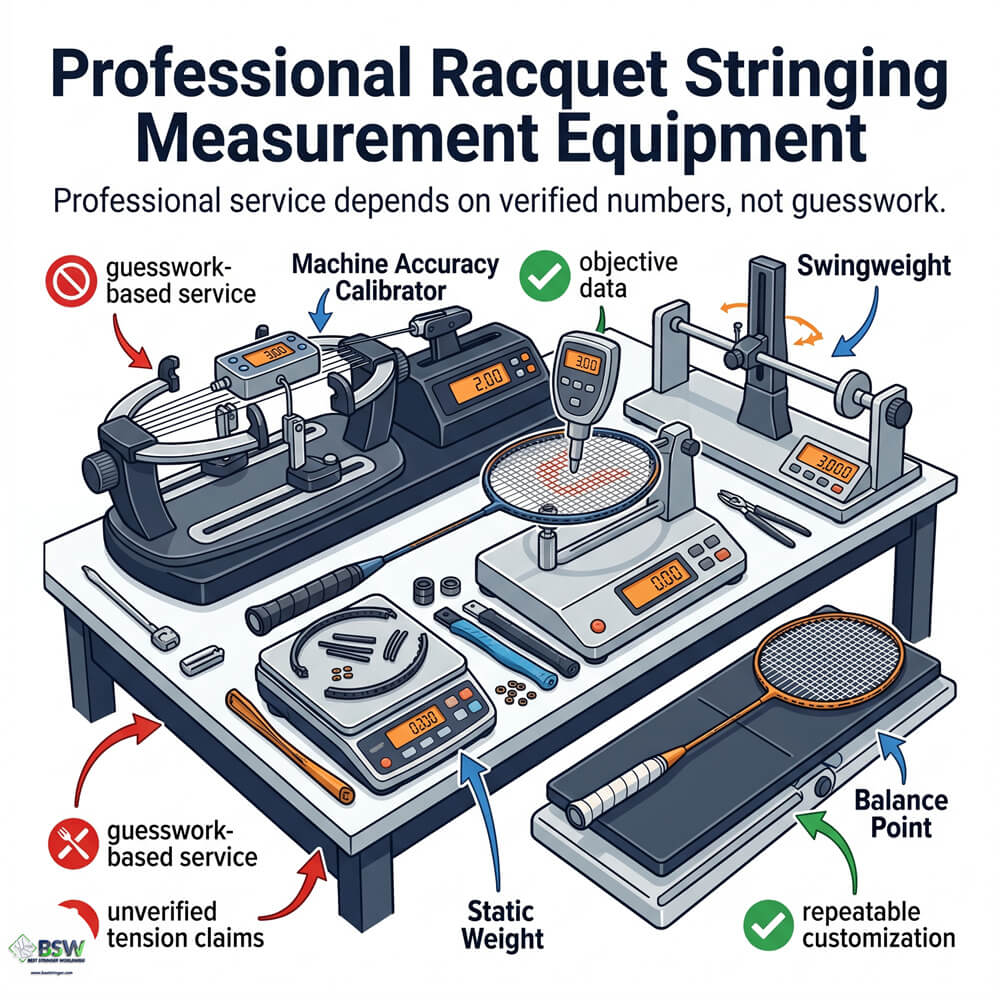
Professional stringing is not only about weaving technique and tying knots; it is deeply rooted in accurate measurement. Whether you string badminton or tennis racquets, relying on guesswork for tension, weight, and balance is no longer sufficient for high-level service. Measurement equipment helps racquet stringers verify their work, compare frames accurately, and customize setups reliably.
This guide explains the essential tools used in professional racquet stringing, ranging from basic electronic scales to advanced stringbed stiffness testers. Understanding what each diagnostic tool does allows stringers to provide consistent, verifiable service to their players, moving from subjective opinions to objective data.
Step 1: Understand why regular machine calibration is non-negotiable. Step 2: Learn the critical differences between static weight, balance, and swingweight. Step 3: Discover why a certified stringer must learn how to interpret this data rather than just collecting numbers.
1.2 Why Measure?
The Importance of Accurate Measurements
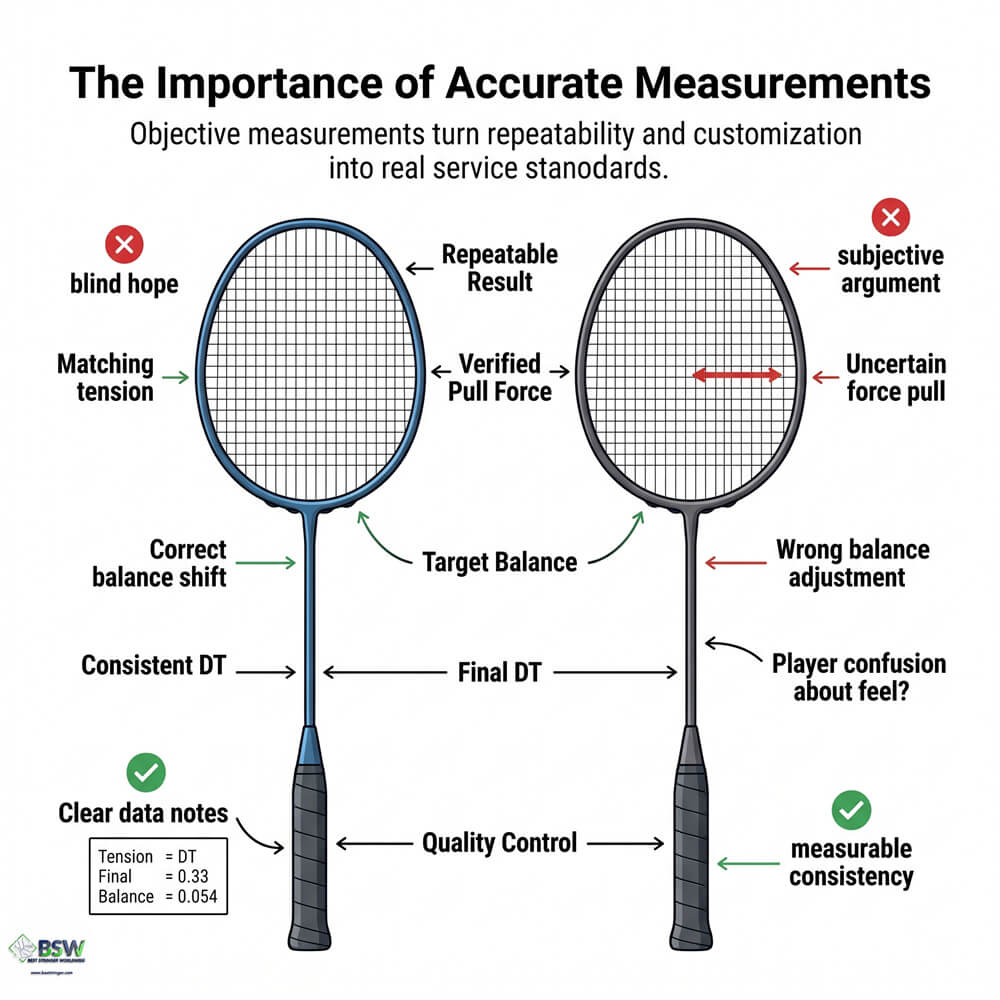
Accurate measurement supports the foundation of professional racquet stringing: consistency. When a player hands you their racquet, they expect it to feel exactly the same as the last time you strung it. Without reliable measurement tools, delivering repeatable results relies entirely on blind hope rather than verified, actionable data.
Measurement improves quality control and precise customization. Objective numbers help verify that the stringing machine actually pulled the correct force, that the added lead tape shifted the balance point precisely to the target, and that the final stringbed stiffness meets the player’s request. It completely removes subjective arguments from the stringing room.
Furthermore, measurement builds lasting trust. A stringer who can clearly explain diagnostic data to a player demonstrates a higher level of professional care. A recognized stringer certification path will teach you that tools do not replace human skill, but they do elevate your communication, accountability, and overall service standards.
1.3 Calibration
The Tension Calibrator
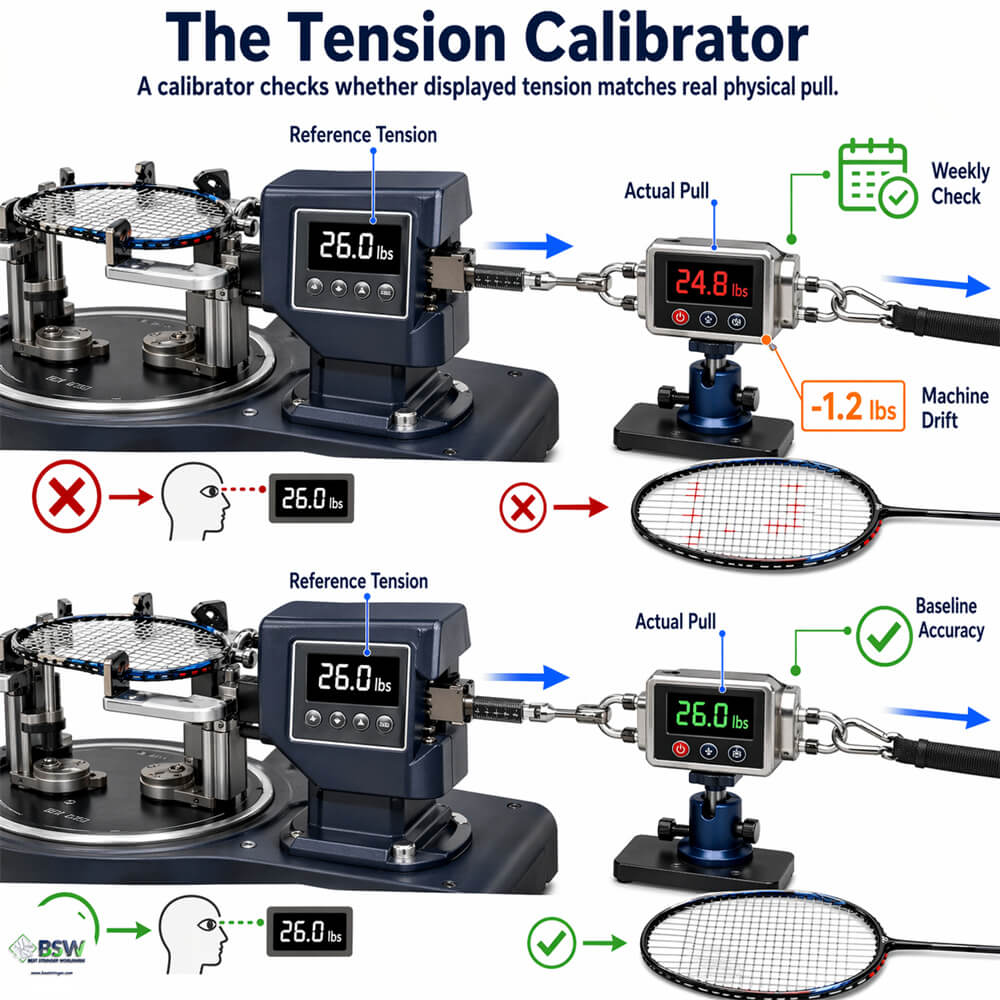
The most critical measurement tool for any racquet stringer is the tension calibrator. This simple but vital device verifies whether the reference tension set on your machine’s display actually matches the physical pull force being delivered to the string during operation.
A common misconception is that high-end electronic stringing machines never lose accuracy. In reality, transport, frequent usage, ambient temperature shifts, and internal mechanical wear can all cause the load cell to drift. If your machine display says 26 lbs but physically only pulls 24 lbs, your entire stringing job is compromised before you even tie the first knot.
Regular calibration is the absolute hallmark of professional behavior. Before investing in any advanced diagnostic centers, every stringer must own a reliable calibrator. Checking machine accuracy daily or weekly is a fundamental practice taught in any serious badminton stringing course to ensure baseline quality.
1.4 DT Value
The Stringbed Stiffness Tester
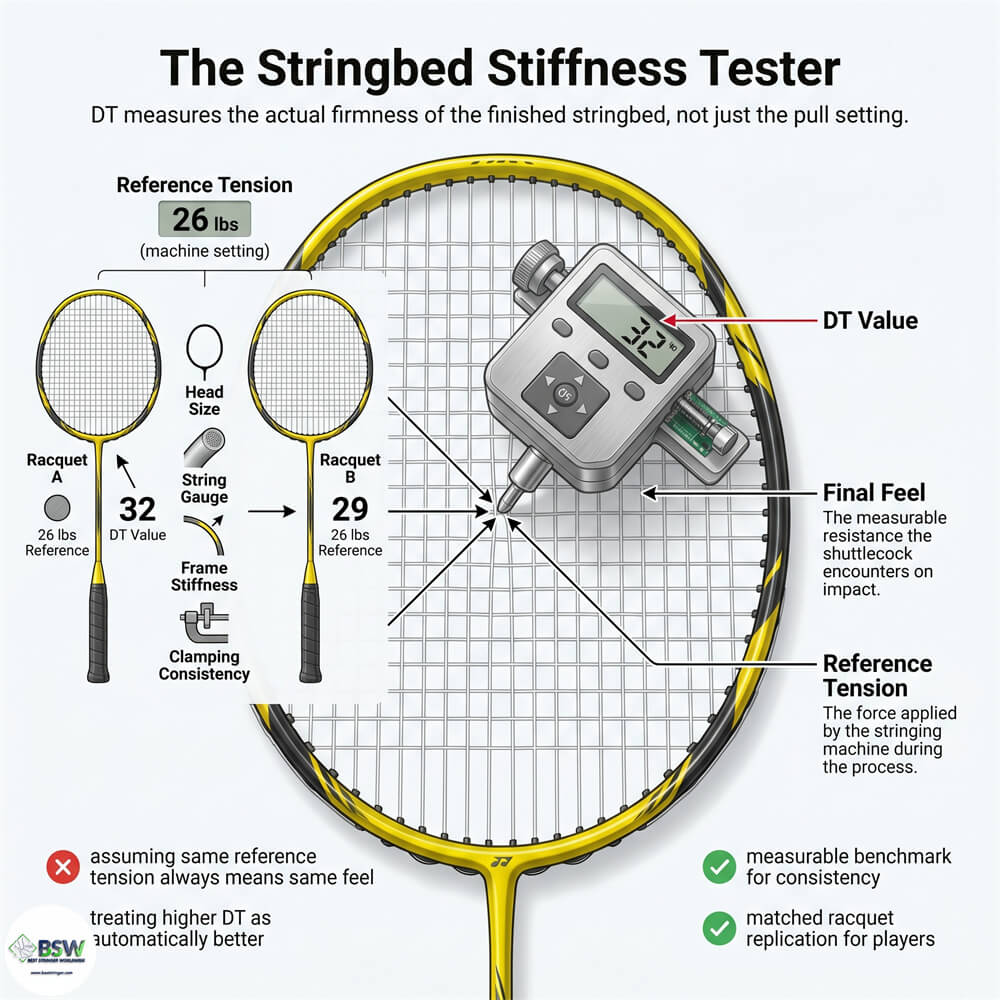
While the tension calibrator checks your machine, the stringbed stiffness tester checks your final physical result. This tool measures Dynamic Tension (DT), which represents the actual stiffness and firmness of the woven stringbed, not the original pulling force applied during the job.
Reference tension and DT are completely different concepts. You can string two different racquets at an identical 26 lbs on the exact same machine, and their final DT values will differ due to head size, string gauge, frame flexibility, and clamping consistency.
Tournament stringers use DT testers to ensure multiple racquets for a single player match perfectly before a big match. While a higher DT means a stiffer stringbed, it is not automatically ‘better’—it simply provides a verifiable benchmark. Recording this specific number helps a certified stringer recreate a player’s exact preferred feel months later without guessing.
1.5 Weight & Balance
Electronic Scale & Balance Board
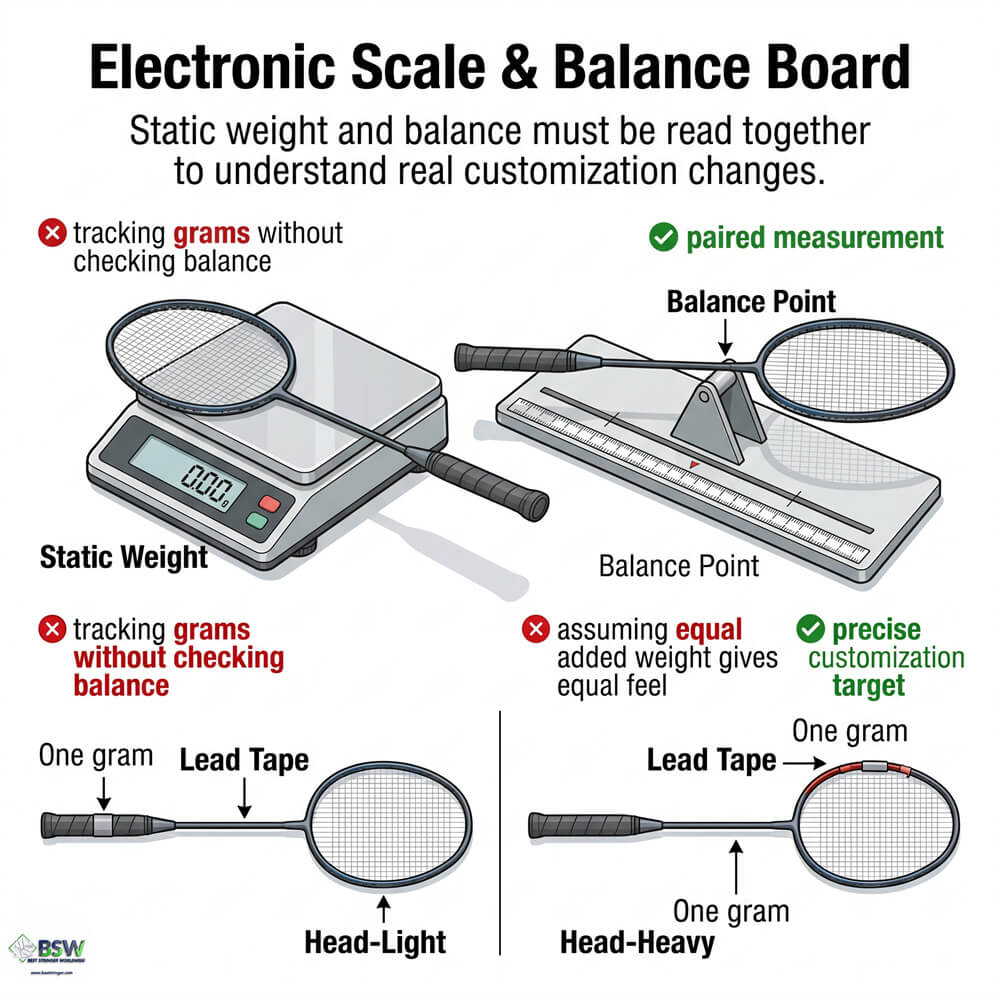
The Electronic Scale. An accurate digital scale is essential for static weight measurement. Professional racquet stringers use it to weigh bare frames, track the exact weight of replacement grips, and ensure that adding lead tape achieves the desired customization target precisely.
The Balance Board. This simple but vital tool identifies the static balance point of the racquet. Knowing whether a frame is head-heavy or head-light is crucial for understanding how the mass is distributed and how the racquet will generally feel.
Working Together. Weight and balance must be interpreted together. Adding a gram to the handle changes the static weight just like adding a gram to the head, but the balance board will reveal drastically different results. Mastering these tools is fundamental in racquet matching.
1.6 Dynamic Feel
The Swingweight Meter
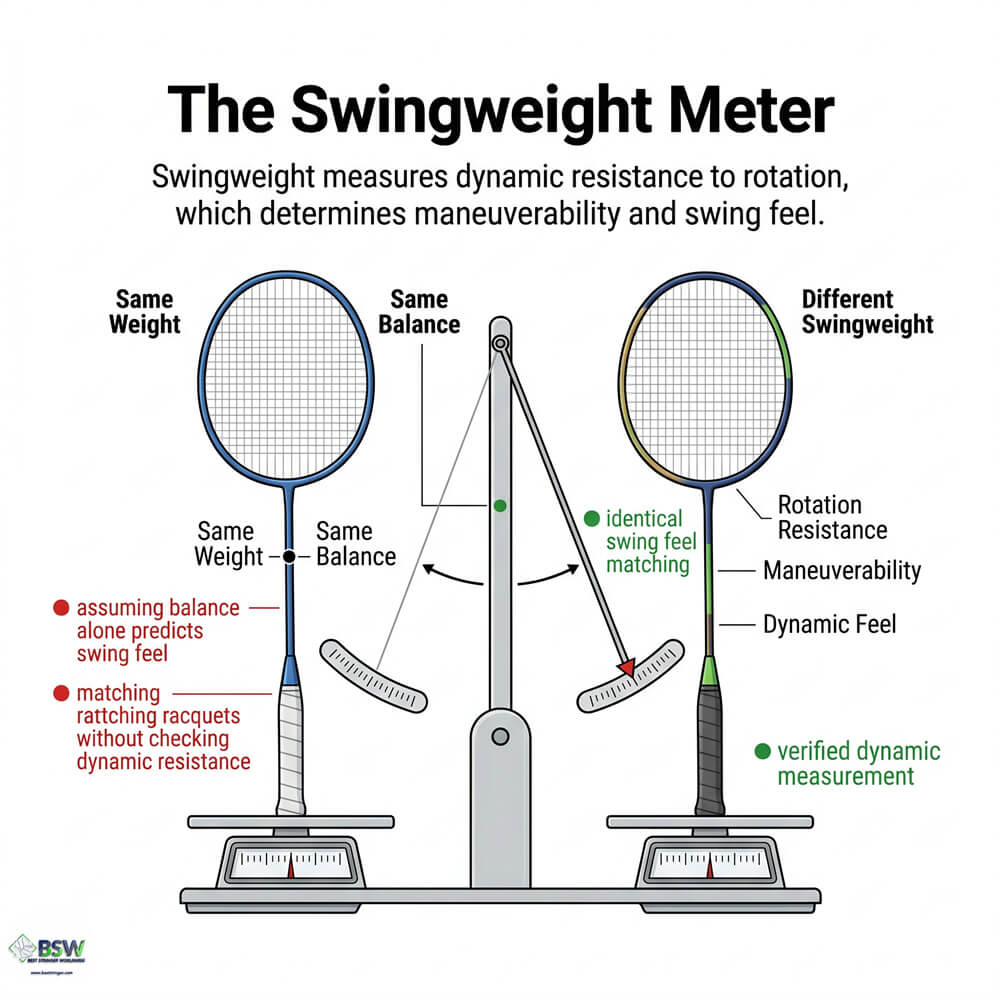
Static weight tells you how heavy a racquet is when sitting on a table; swingweight tells you how heavy it feels when you actually swing it. A swingweight meter measures the racquet’s dynamic resistance to rotation, which directly dictates its maneuverability and power potential on the court.
Swingweight is distinct from simple balance. Two racquets can easily have the exact same static weight and the exact same balance point, but completely different swingweights depending on how the materials and mass are distributed inside the hoop and shaft.
For advanced racquet customization, a swingweight meter is invaluable. When a player wants two racquets to play identically, a professional stringer relies on this tool to ensure the dynamic swing feel matches perfectly, completely removing guesswork from the fitting process.
1.7 Advanced Tech
Comprehensive Testing Devices
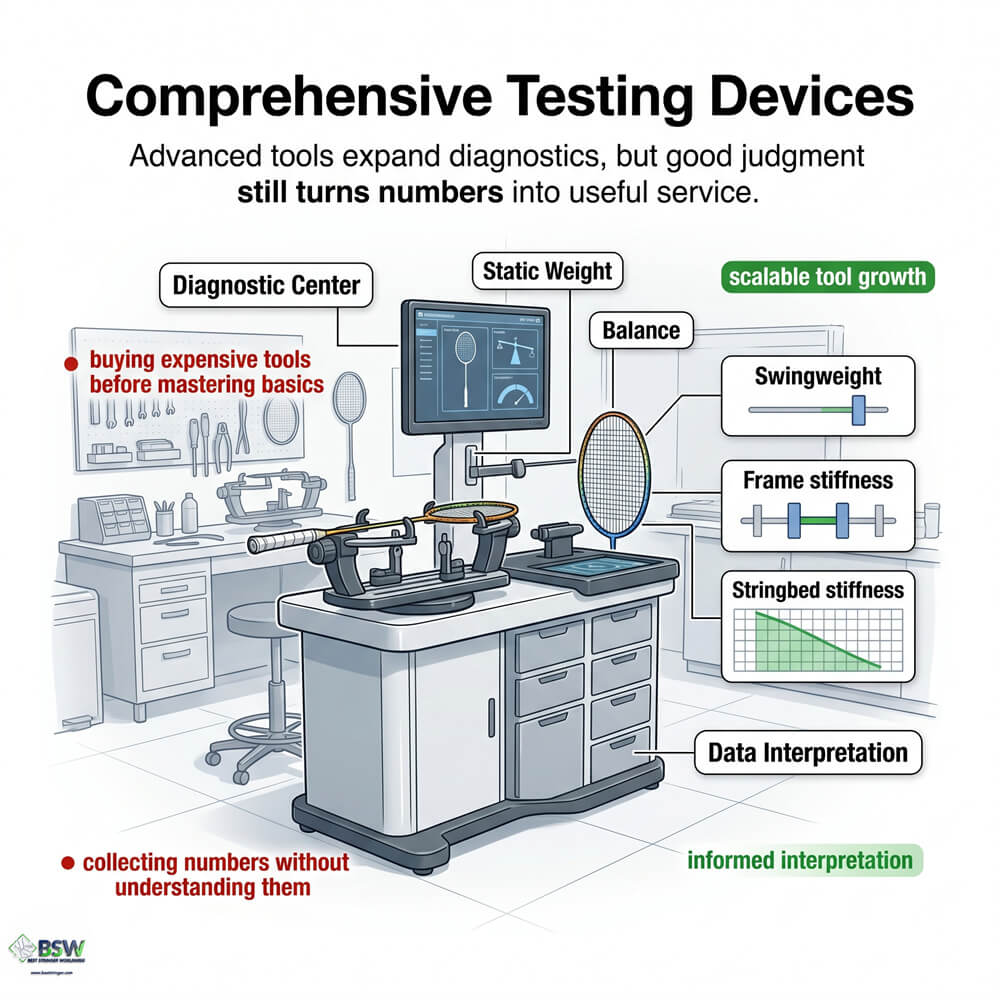
At the highest level of professional service, stringers may invest in comprehensive testing devices or diagnostic centers. These multi-function machines can often measure static weight, balance, swingweight, and frame stiffness all within a single, highly calibrated unit.
While these devices are incredibly useful in advanced professional environments, large-scale service operations, or research, they are costly. A beginner stringer does not need a $4,000 diagnostic center on day one. Start sensibly with a tension calibrator and a scale, and expand your tools gradually as your service demands grow.
Ultimately, measurement tools support quality control, but they do not replace human judgment. A proper stringer certification teaches you that diagnostic numbers are useless unless you know how to interpret them, explain them clearly to the player, and adjust your stringing technique accordingly.
Measurement Tools Quick FAQ
Clear, direct answers about professional racquet measurement equipment.
What tool should a beginner stringer buy first?
A tension calibrator. Before you worry about advanced diagnostics, you must ensure your stringing machine is actually pulling the tension it displays. A digital scale is a close second for basic customization.
Why is calibration so important?
Machine load cells drift over time due to use, temperature changes, and transport. If your machine is uncalibrated, your reference tension is wrong, meaning every racquet you string will be inconsistent.
What is the difference between balance and swingweight?
Balance is the static pivot point of the racquet on a fulcrum. Swingweight measures how heavy the racquet feels dynamically while in motion. Both are needed for accurate racquet matching.
What does a DT tester actually tell you?
A DT (Dynamic Tension) tester measures the stiffness of the woven stringbed. It tells you the actual playing firmness, which helps verify consistency across multiple racquets strung at the same reference tension.
Is a higher DT value always better?
No. A higher DT simply means a stiffer stringbed, offering more control but less trampoline effect. The ‘best’ DT value depends entirely on the player’s specific style, strength, and comfort preferences.
Why is an electronic scale important?
It provides precise static weight measurements. A scale is critical for tracking the exact weight of strings, overgrips, or lead tape, allowing stringers to customize racquets repeatably without guessing.
Do all stringers need a comprehensive diagnostic device?
No. Multi-function diagnostic centers are incredibly valuable for high-volume shops and elite customization, but they are expensive. Individual tools like a separate scale, balance board, and calibrator can serve most independent stringers well.
Why does this matter for stringer certification?
A certified stringer must understand that professional service requires verified data. Certification testing evaluates your ability to use tools correctly and interpret measurements to solve real player problems.
Can tools replace a stringer’s skill?
No. While diagnostic equipment provides vital objective data, a certified stringer must still possess the manual technique to weave correctly, tie secure knots, and the expertise to interpret the numbers for actual customization.
DT Value Simulator: Reference Tension vs Stringbed Stiffness
Verifies whether the machine’s display matches the physical pull force. Regular calibration prevents load cell drift and guarantees baseline tension consistency for every racquet.
Verified Data
Our training emphasizes precise measurement over guesswork. We prioritize machine calibration, accurate DT tracking, and reliable customization data to ensure professional results for every player.
| Measurement Tool | Primary Function | Practical Role in Stringing |
|---|---|---|
| Tension Calibrator | Verifies machine pull force accuracy. | Essential for daily/weekly machine maintenance and tension consistency. |
| Electronic Scale | Measures static mass (g or oz). | Critical for tracking weight changes during grip or lead tape customization. |
| Balance Board | Identifies static balance point (mm). | Required for matching racquets and adjusting head-heavy/head-light feel. |
| Stringbed Stiffness Tester | Measures Dynamic Tension (DT). | Verifies the final stringbed firmness to ensure exact repeatability for clients. |
| Swingweight Meter | Measures dynamic rotational resistance. | Advanced tool for matching the ‘swing feel’ of two identical-looking frames. |
| Diagnostic Center | Multi-function all-in-one measurement. | High-end investment for professional shops doing high-volume customization. |
Master Measurement Tools with Best Stringer Worldwide
Ready to elevate your stringing professionalism? Best Stringer Worldwide offers advanced education to help you understand calibration, stringbed stiffness, swingweight, and racquet matching. We serve racquet stringers worldwide, including in Singapore, Hong Kong, Malaysia, Indonesia, UK, and Europe. Gain a prestigious stringer certification to confidently use measurement equipment and customize racquets accurately.