1.1 Equipment Investment
How to Choose the Right Stringing Machine & Tools
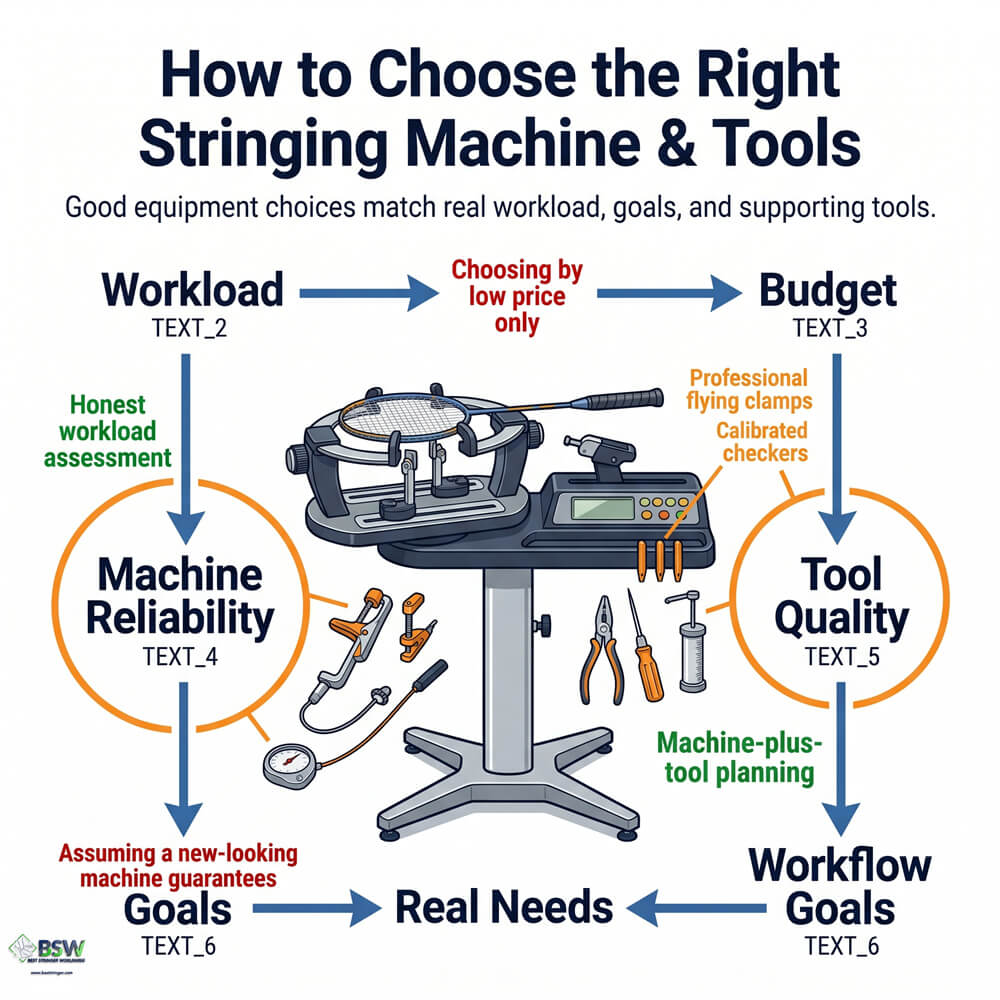
Buying a stringing machine is a major practical decision for a stringer. The right choice depends on your real stringing needs, business stage, workflow goals, and budget. In this guide, we explain when to buy a first machine, when to upgrade old equipment, when to add more capacity, and what essential tools actually matter.
Whether you are a beginner stringer, a shop owner, or an experienced tennis and badminton stringer adding capacity, a practical approach to equipment ensures consistent results. Low upfront cost is not the only factor; machine reliability, upgrade needs, and proper tool selection are crucial.
Here is a simple decision flow: Step 1: Assess your actual workload and commitment honestly. Step 2: Understand that a new-looking machine does not automatically guarantee success if you lack fundamental technique. Step 3: Consult a certified stringer or experienced educator to select a machine and supporting tools that perfectly match your professional development.
1.2 Buying Scenarios
Is It Time to Buy? First Machine, Upgrade, or Expansion
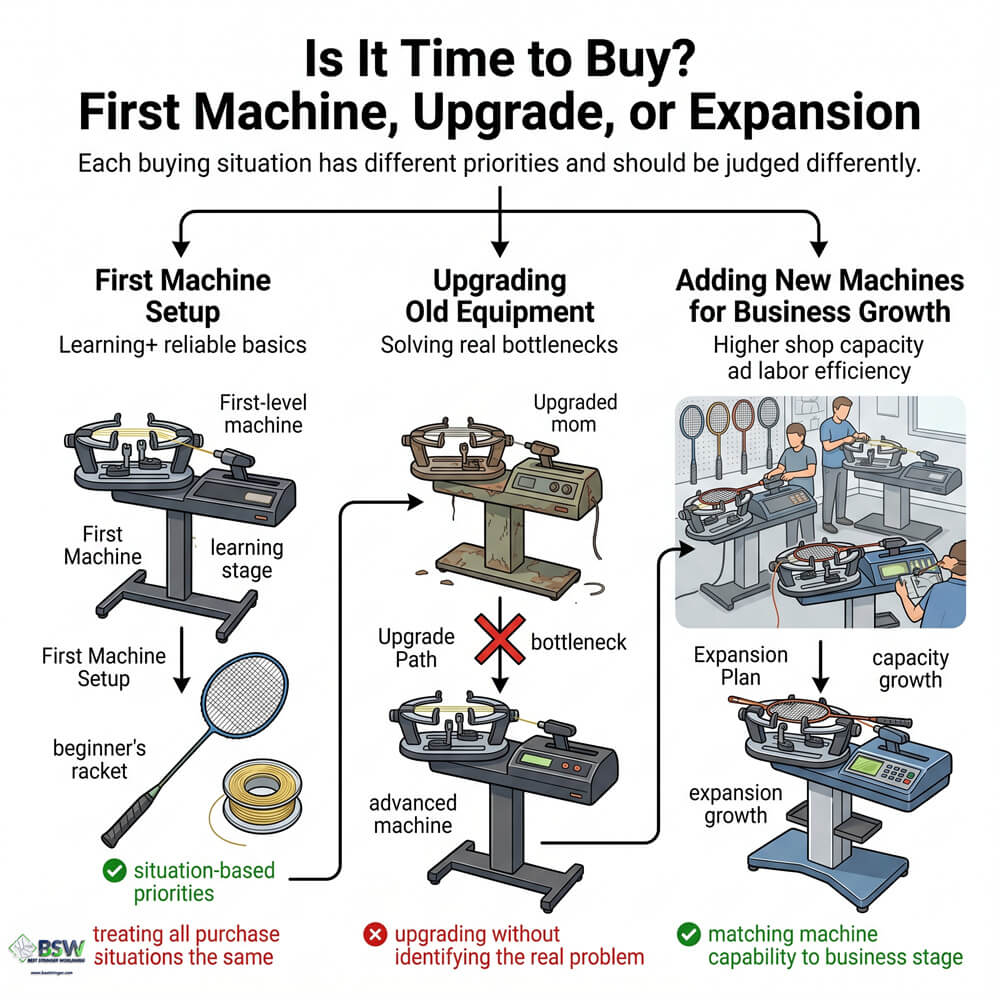
The decision to purchase a stringing machine typically falls into three distinct situations: purchasing a first machine as a new entrant, upgrading old equipment that no longer performs, or adding new equipment to handle business growth. Each scenario requires entirely different priorities.
For a new stringer, the focus is on foundational reliability and learning the craft without fighting poor equipment. When upgrading, the goal shifts to solving specific bottlenecks such as inaccurate tension or poor frame support. When adding a second or third machine, the focus is purely on expanding capacity, improving shop workflow, and balancing labor costs against machine costs.
A professional stringer needs the right balance between machine capability and supporting tools. For growing shops needing rapid turnaround times, an electronic machine is generally preferred. However, a high-quality manual lockout machine remains a highly reliable starting point for those building their initial client base.
1.3 First-Time Buyers
Guidance for New Stringers & First Purchases
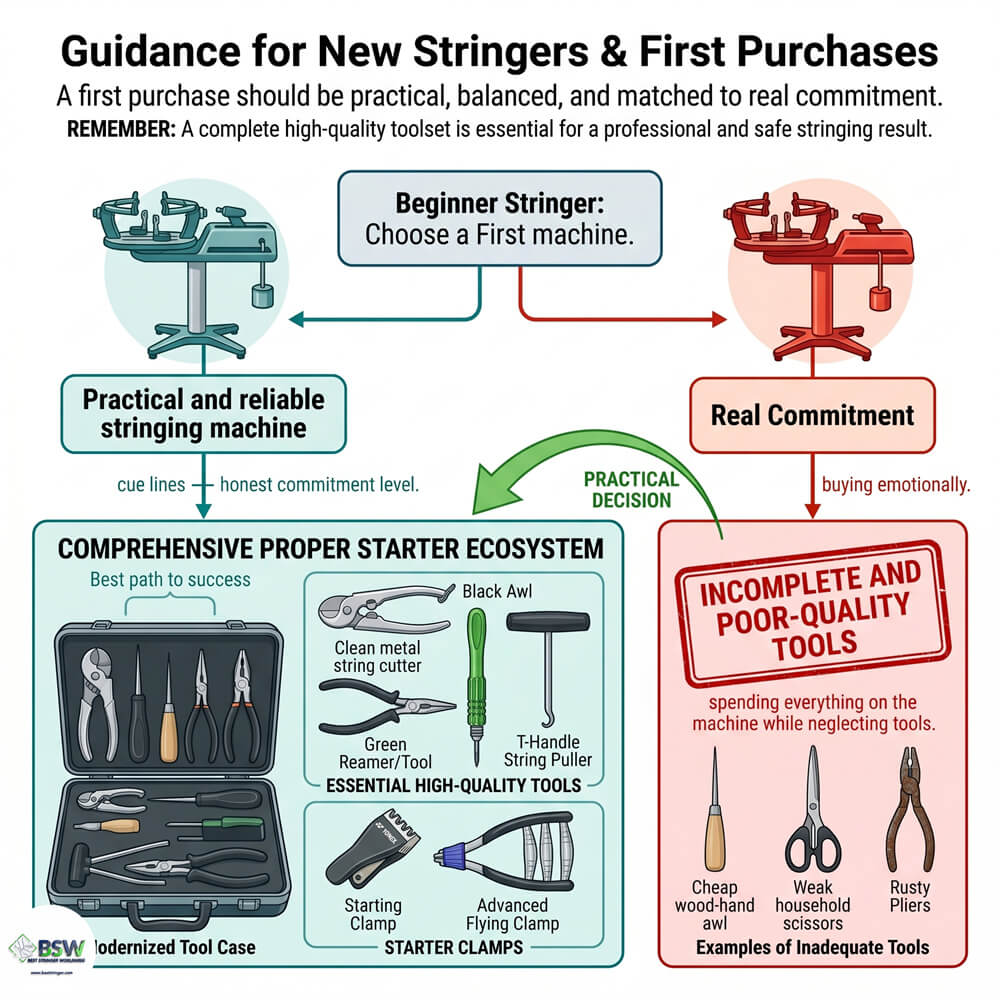
First-time buyers often feel uncertain about which stringing machine to select. Common motivations include starting a small stringing business, managing frequent personal restringing needs for tournaments, or wanting to carefully test different strings and tensions. It is crucial that your first purchase is a practical decision, not an emotional one.
While a low upfront cost is appealing, you must match your investment to your real commitment level and expected use. A reliable, well-built starter machine provides the foundational accuracy needed for a badminton stringing course or basic stringer certification, ensuring you learn correct habits.
Remember that supporting tools are part of the investment, not an afterthought. A basic machine paired with a high-quality string cutter, awl, and starting clamp will produce far more consistent work than an expensive machine operated with inadequate tools.
1.4 Long-Term Value
Understanding Resale Value & Professional Image
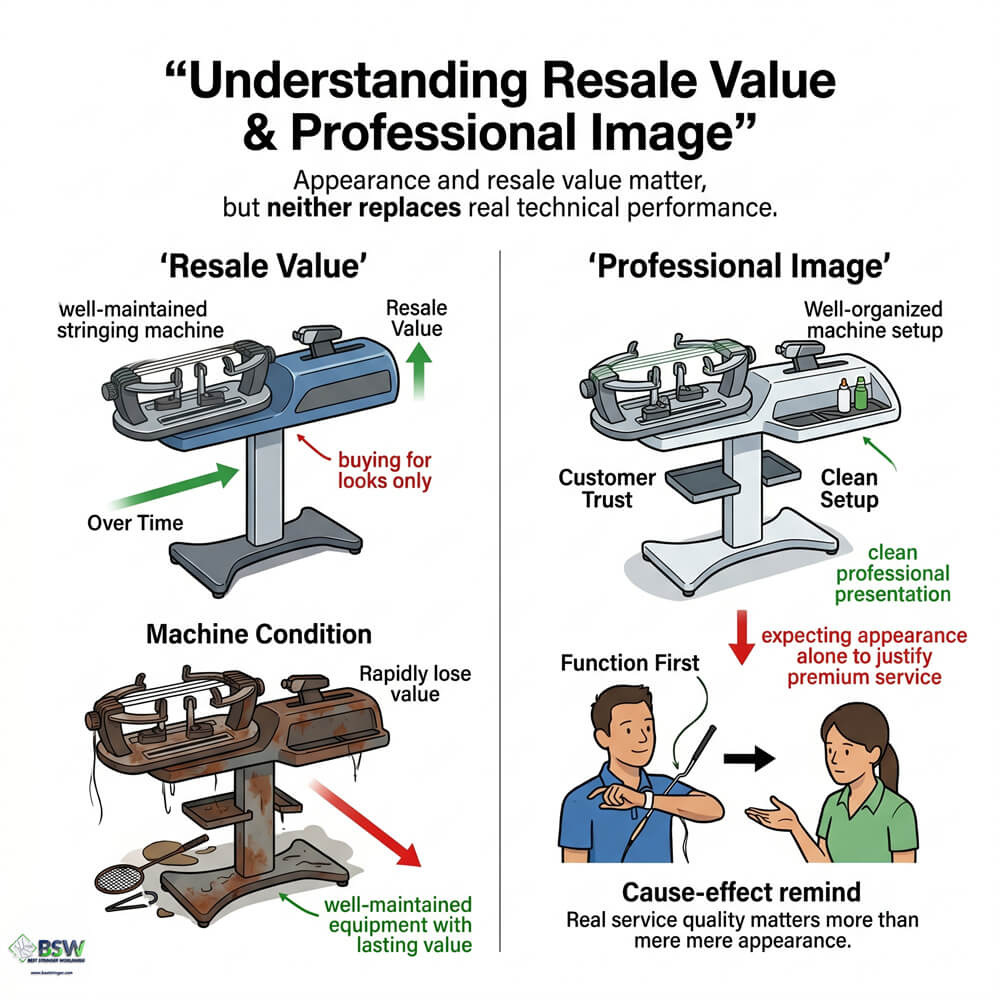
When choosing a stringing machine, it helps to understand how the equipment holds its value and impacts your professional presence:
Resale Value Logic. High-quality stringing machines from reputable brands often retain strong second-hand value. This provides a practical financial safety net if you later decide to upgrade your equipment or pivot your business model.
Professional Appearance. While professional appearance should never replace real performance, a clean, highly capable machine does project competence. It builds immediate customer trust, which has practical business value.
Function Over Hype. Never buy a machine solely because it looks impressive. A certified stringer knows that machine capability handles the technical work, but long-term success relies on your stringing skill, consistent workflow, and honest service.
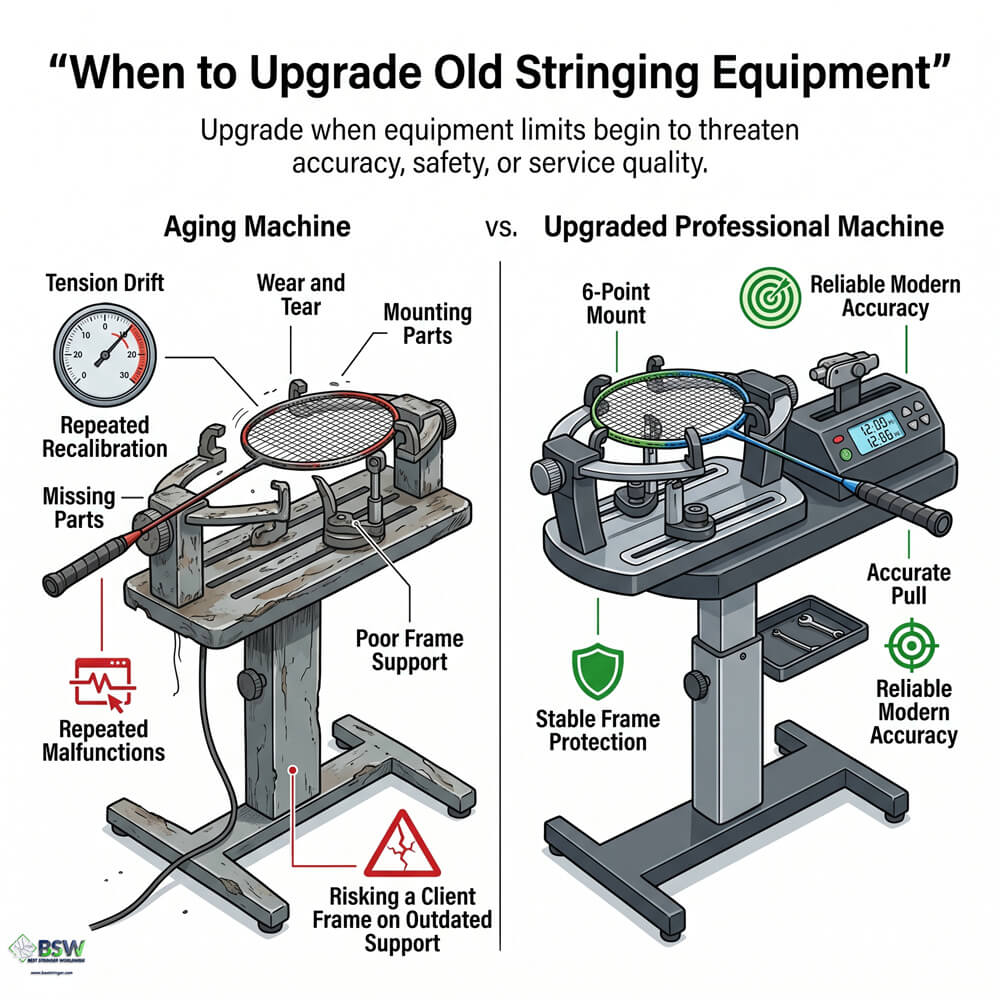
1.5 Time to Upgrade
When to Upgrade Old Stringing Equipment
Reason 1: Severe Wear and Tear.
A good stringing machine can last many years with proper care. However, when a machine suffers from repeated malfunctions, stripped mounting posts, or missing parts that are no longer available, upgrading becomes a reasonable business decision.
Reason 2: Inaccurate Tension Pulling.
If your tension head requires constant recalibration and still yields inconsistent results, your service quality will suffer. Upgrading resolves these inaccuracies, allowing you to deliver the precision expected of a professional stringer.
Reason 3: Poor Frame Support.
Older machines may lack the advanced 6-point mounting systems needed to support modern, high-tension frames safely. Upgrading based on real performance limits ensures you do not risk cracking a client’s racquet.
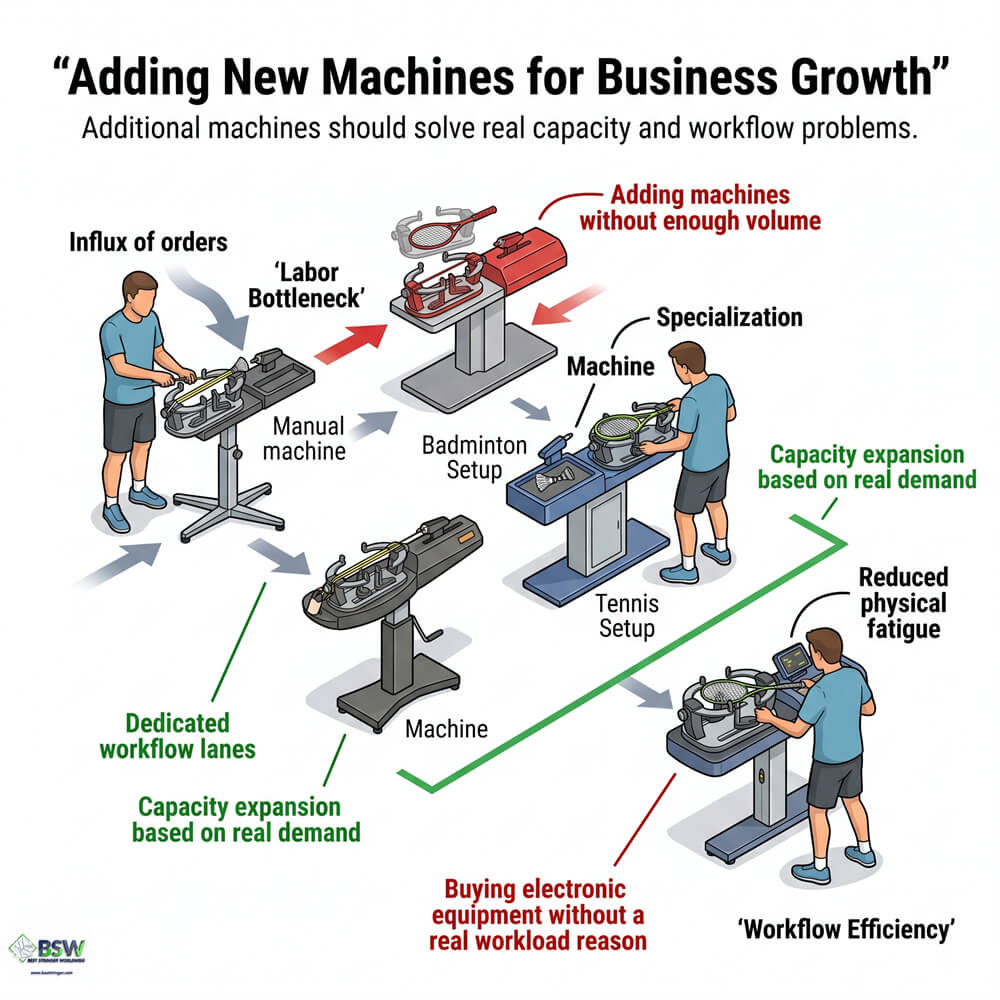
1.6 Adding Capacity
Adding New Machines for Business Growth
Adding a second or third stringing machine requires careful workflow planning. Use this practical framework before expanding your equipment:
Step 1: Assess Capacity Growth. Additional machines make sense when your restringing volume consistently creates labor bottlenecks. If you are hiring additional staff, balancing labor costs against machine costs is a logical step.
Step 2: Consider Specialization. Expanding your setup allows for workflow specialization. For example, keeping one machine dedicated entirely to badminton stringing and another configured for tennis can drastically reduce daily setup times.
Step 3: Evaluate Electronic Upgrades. Transitioning from manual to electronic equipment should genuinely serve real needs. Electronic constant-pull machines reduce physical fatigue in high-volume settings, improving overall shop efficiency.
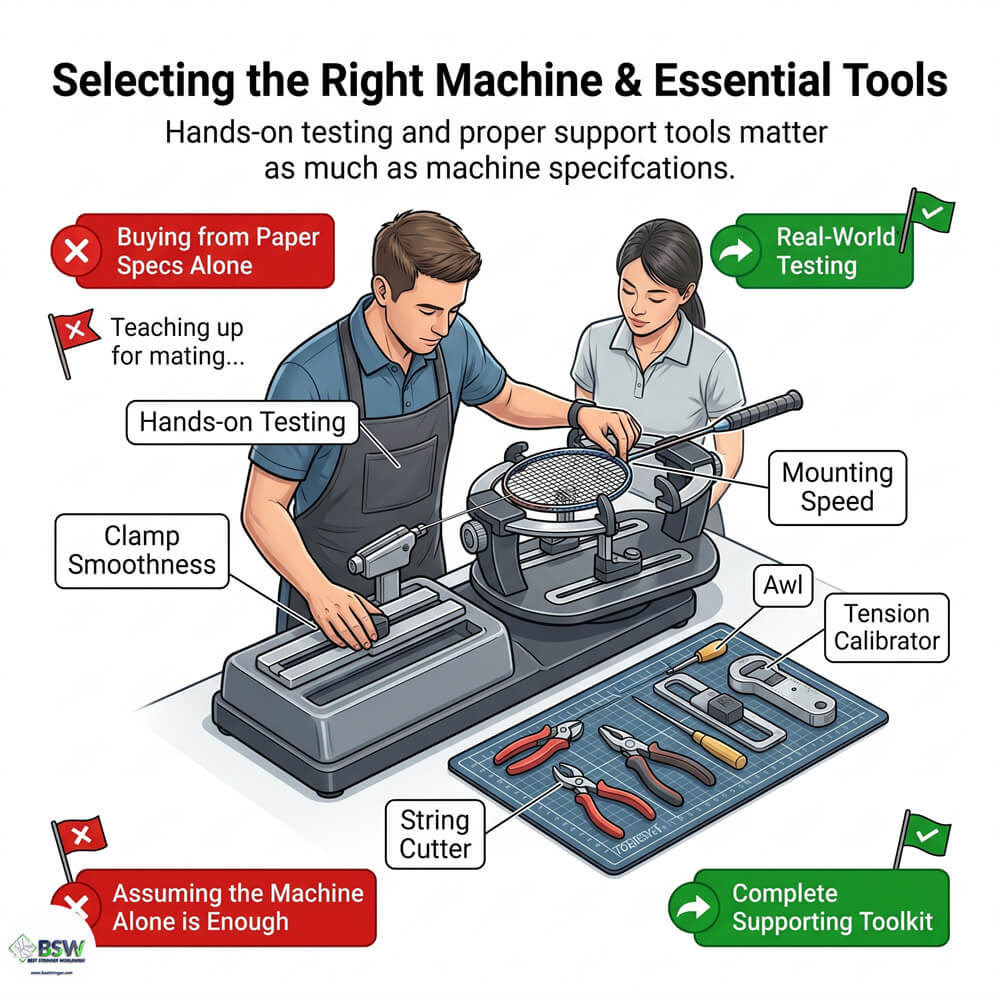
1.7 Selecting the Right Machine
Selecting the Right Machine & Essential Tools
Your previous experience is your best guide; evaluate what worked or frustrated you on past machines. Try a machine in person before buying whenever possible. Specifications look good on paper, but hands-on testing reveals the true ergonomic comfort, base clamp smoothness, and mounting speed that dictate your daily workflow.
If you cannot find opportunities to try machines in person through dealer demos, visit trade shows, consult local shops, or learn from experienced stringers. While second-hand information is helpful, a certified stringer knows that real-world usability matters as much as the spec sheet.
Finally, the machine alone is not enough. Supporting tools are essential for professional work. Every setup must include a high-quality string cutter, precision awl, sturdy pliers, a reliable starting clamp, and a tension calibrator. Together, these tools ensure consistent, high-level stringing.
Machine & Tool Selection Quick FAQ
Quick, practical answers to common questions about choosing stringing machines and professional tools.
When should a new stringer buy a first machine?
A beginner should buy a first machine when they have a genuine commitment to frequent restringing, whether for personal tournaments or starting a small shop, prioritizing practical function over high-end features.
When is it better to upgrade instead of repair?
Upgrading is justified when old equipment suffers from repeated tension inaccuracy, missing replacement parts, or poor frame support that risks damaging modern racquets.
When does adding another machine make business sense?
Adding machines supports growth when your stringing volume causes labor bottlenecks, or when you need dedicated setups to specialize efficiently in both tennis and badminton stringing.
Why should I try a machine before buying it?
Hands-on testing reveals the ergonomics, clamp smoothness, and physical comfort of the machine. These real-world usability factors are critical for professional stringing but are invisible on a spec sheet.
Which tools are essential besides the machine?
A capable machine is not enough. You need supporting tools like a high-quality string cutter, reliable awl, string straightener, starting clamp, and tension calibrator to ensure consistent, professional work.
Why does resale value matter for machines?
While not guaranteed, well-built professional-grade machines retain value well. This offers a practical financial safety net if a stringer decides to upgrade or pivot their business model later.
Are electronic machines always better than manual?
Not necessarily. Electronic machines offer constant pull and ergonomic advantages for high-volume shops, but a well-maintained manual lockout machine is highly reliable and fully capable of professional results.
Why does equipment selection matter in stringer certification?
Badminton stringing certification teaches that equipment judgment directly impacts stringing quality. A certified stringer must understand long-term equipment value, maintenance needs, and proper tool deployment.
Does a professional appearance guarantee success?
While a clean, modern setup builds customer trust and professional image, it must never replace actual technical skill. Real business value comes from consistent performance, not just machine appearance.
Equipment Synergy: Why Tool Quality Matters
Why The Same Tension Feels Different
Observe how Lock-Out vs. Constant-Pull machines manage string stretch, and tap the stringbed to test the resulting hardness.
Proven Investment Logic
Our stringing course approach is based on verified equipment selection parameters used by top professionals. We prioritize practical business logic, proper machine evaluation, and workflow efficiency over pure equipment hype.
| Scenario | Motivation | Recommendation |
|---|---|---|
| First Setup | Starting a small business or frequent personal restringing. | Focus on foundational reliability, proper mounting, and basic essential tools. |
| Upgrading Gear | Experiencing wear, poor frame support, or inaccurate tension pulling. | Upgrade to a machine with superior stability, precise clamps, and accessible parts. |
| Adding Capacity | Facing labor bottlenecks and increased stringing volume in a growing shop. | Add a machine that balances labor efficiency; consider electronic models. |
| Essential Tools | Need to improve consistency without buying a whole new machine. | Invest in a high-quality starting clamp, calibrator, and precision cutters. |
| Machine Testing | Relying purely on paper specifications to choose the next machine. | Always try hands-on; test clamp smoothness and ergonomic comfort personally. |
| Professional Image | Wanting to charge premium rates by displaying an expensive machine. | Focus on actual service quality; a clean setup builds trust, but skill retains clients. |
Master Your Equipment Choices with Best Stringer Worldwide
Ready to upgrade your knowledge? Best Stringer Worldwide offers a professional badminton stringing course to teach you how to choose the right stringing machine and essential tools safely. We serve badminton and tennis stringers worldwide especially in Singapore, Hong Kong, Malaysia, Indonesia, UK, France and Europe. Contact us to elevate your stringer certification journey.



1 thought on “Choosing the Right Stringing Machine and Tools”
Comments are closed.