1.1 Selection Fundamentals
Why Player Consultation Drives Racquet Selection
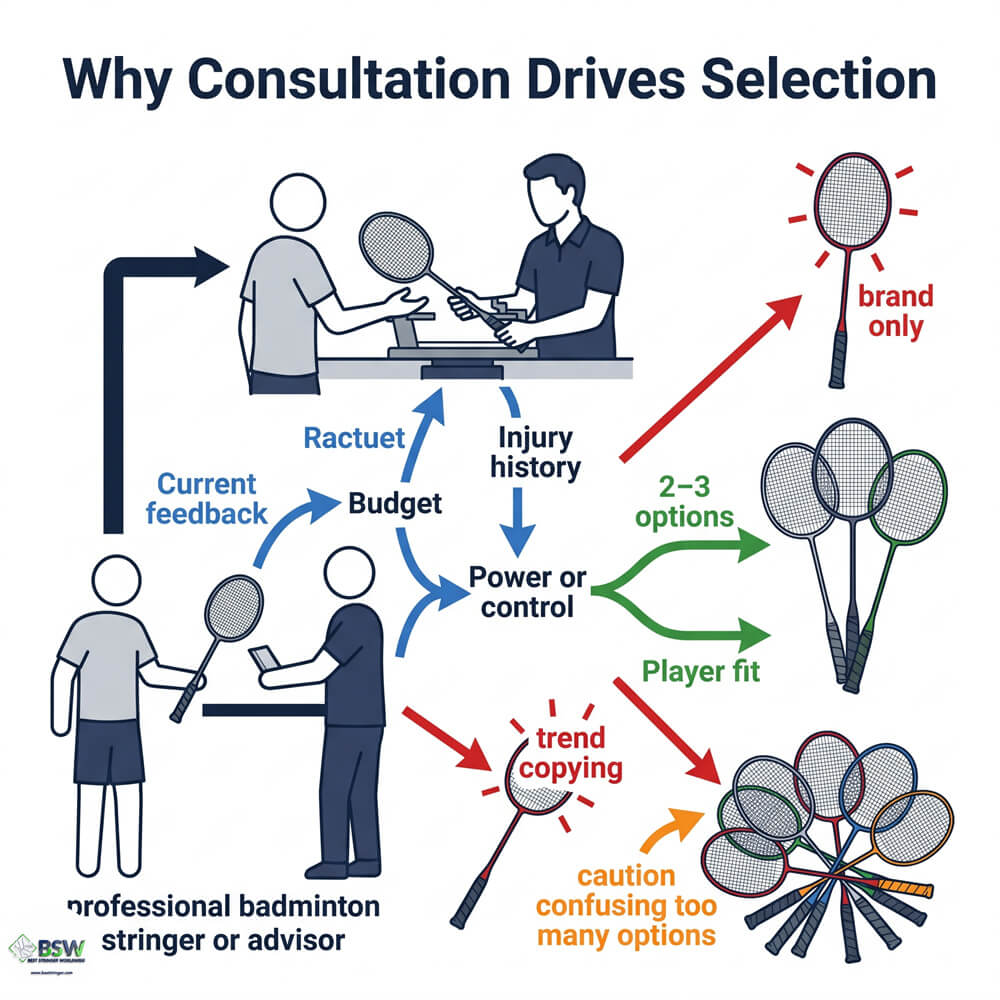
Racquet selection is not about finding one racquet that fits everyone. In this guide, you will learn why proper player consultation is the essential first step. No single badminton racquet is suitable for all players, and choosing based solely on brand, price, or online trend often leads to a mismatched frame.
A badminton stringer, coach, or sports shop staff should always understand the player before recommending a racquet. Good racquet advice depends on practical questions regarding playing level, frequency, style, and physical condition. A professional recommendation connects these facts to equipment reality.
Here is a simple advisory flow:
Step 1: Assess current racquet feedback honestly.
Step 2: Understand the player’s budget, injury history, and power versus control needs.
Step 3: Consult a certified stringer to narrow the choice to 2-3 suitable racquets instead of giving too many confusing options.
1.2 Player Assessment
The First Step: Understanding the Player
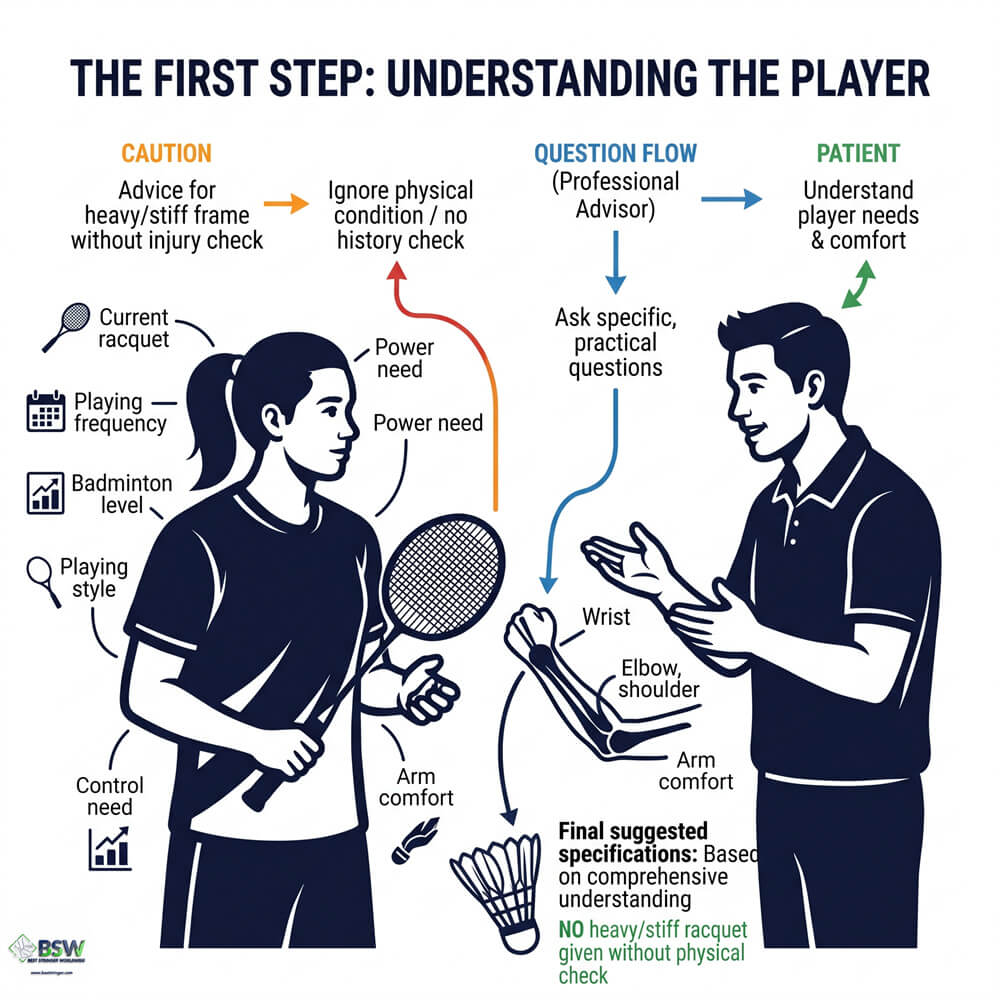
A professional racquet recommendation must begin with practical questions. What kind of racquet are you looking to replace? What are you using now, and what are its strengths and weaknesses? Current racquet feedback is one of the best starting points for a badminton stringer or advisor to guide your selection accurately.
Exploring player habits reveals true performance needs. How many times do you play per week? What is your badminton level, and what is your playing style? Clarifying whether a player wants more power for rear-court clears or better control for fast flat drives helps narrow down the vast market to a few specific frames that actually fit.
Safety is equally paramount. Asking if a player has had hand, wrist, elbow, shoulder, or arm discomfort is crucial. A heavy, stiff frame might easily worsen a previous injury, making an honest badminton racquet consultation far more valuable than simply selling the most expensive model.
1.3 Narrowing Choices
Evaluating Needs and Preferences
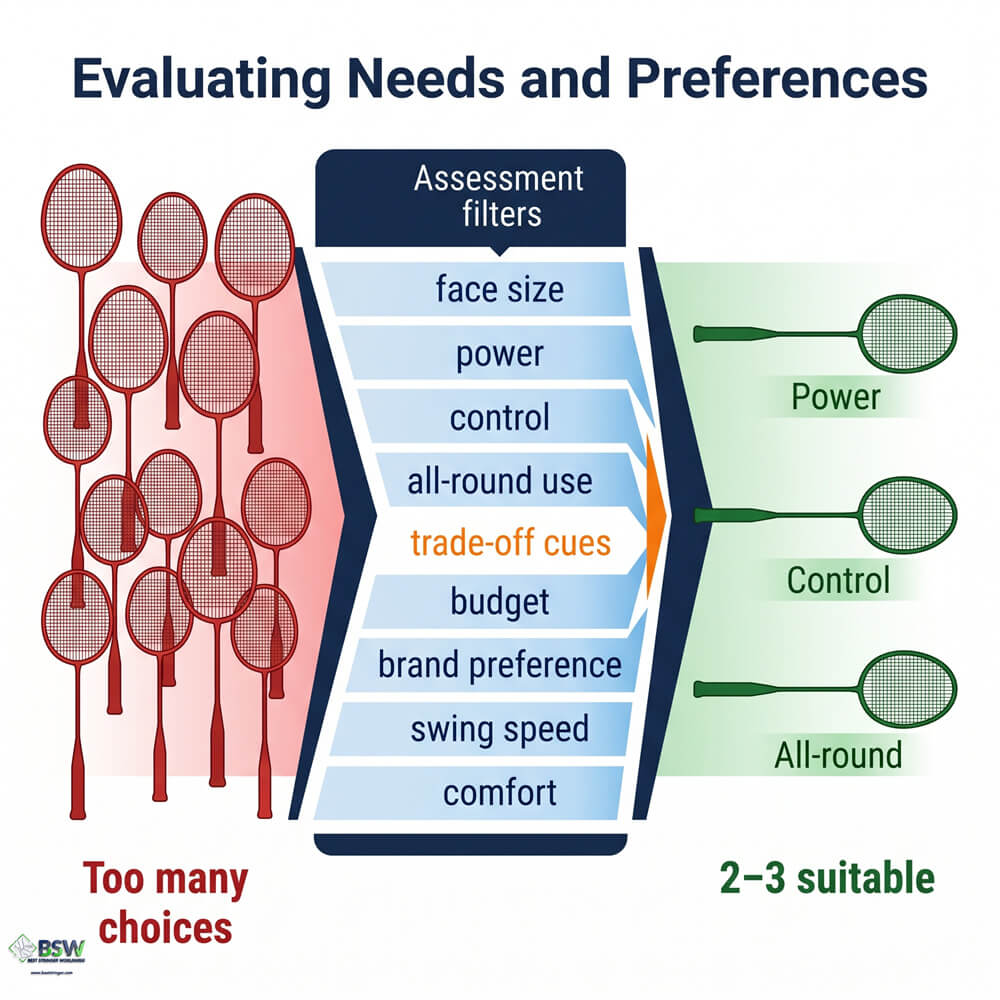
Once a badminton stringer gathers answers, they should usually narrow the choice to 2–3 suitable racquets instead of confusing the player with too many options. Exploring details like racquet face size preference helps finalize the selection do you prefer a smaller face for aerodynamics, or a larger face for a more forgiving sweet spot?
A power-focused racquet helps players looking for easier length and stronger rear-court shots, but it may feel slower depending on its weight. A control-focused racquet gives sharper placement but requires better swing timing. An all-round racquet is often a balanced option for many developing players.
Your preferred brand, budget range, and typical court conditions should absolutely shape the final recommendation. However, these preferences must align with your swing speed and comfort levels to ensure the racquet actually enhances your playstyle.
1.4 Demo Racquets & Limits
Testing Demo Racquets & Customization
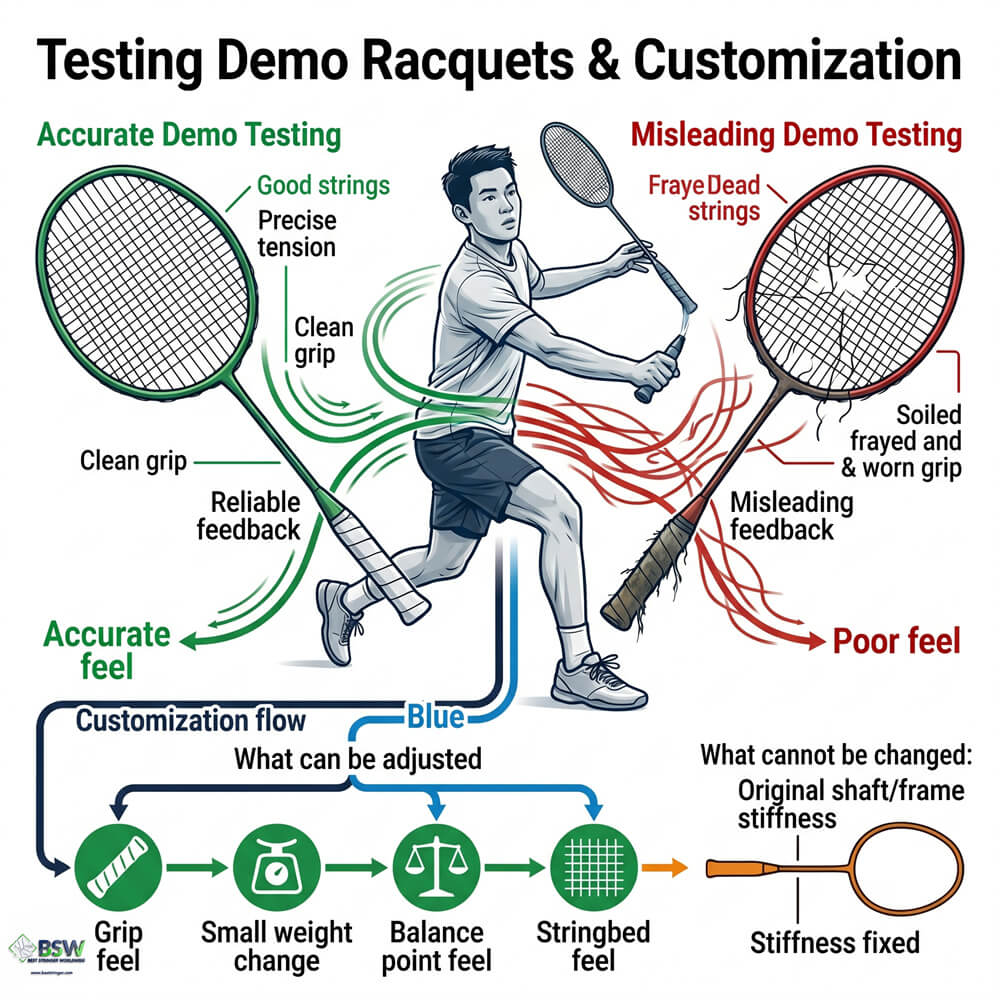
If possible, testing demo racquets allows players to feel performance differences directly. However, these trials must be conducted under the right conditions to be useful:
String and Grip Condition. Demo racquets must have good strings, suitable tension, and a clean grip condition. Poor string performance or an old grip can easily mislead the player’s feeling, making a high-quality frame feel entirely wrong.
What Can Be Adjusted. A badminton stringer can adjust racquet weight slightly with grip tape or setup changes. The balance point and grip feel can also be modified to better suit your hand. Furthermore, stringbed feel can be changed dramatically through proper string and tension advice.
What Cannot Be Adjusted. It is crucial to understand that racquet stiffness cannot truly be changed after manufacture. Frame and shaft design, along with the original material layup, are fixed. While a stringer can make several racquets feel closer in setup, they will never feel exactly identical if the base stiffness differs.
1.5 Advisory Pitfalls
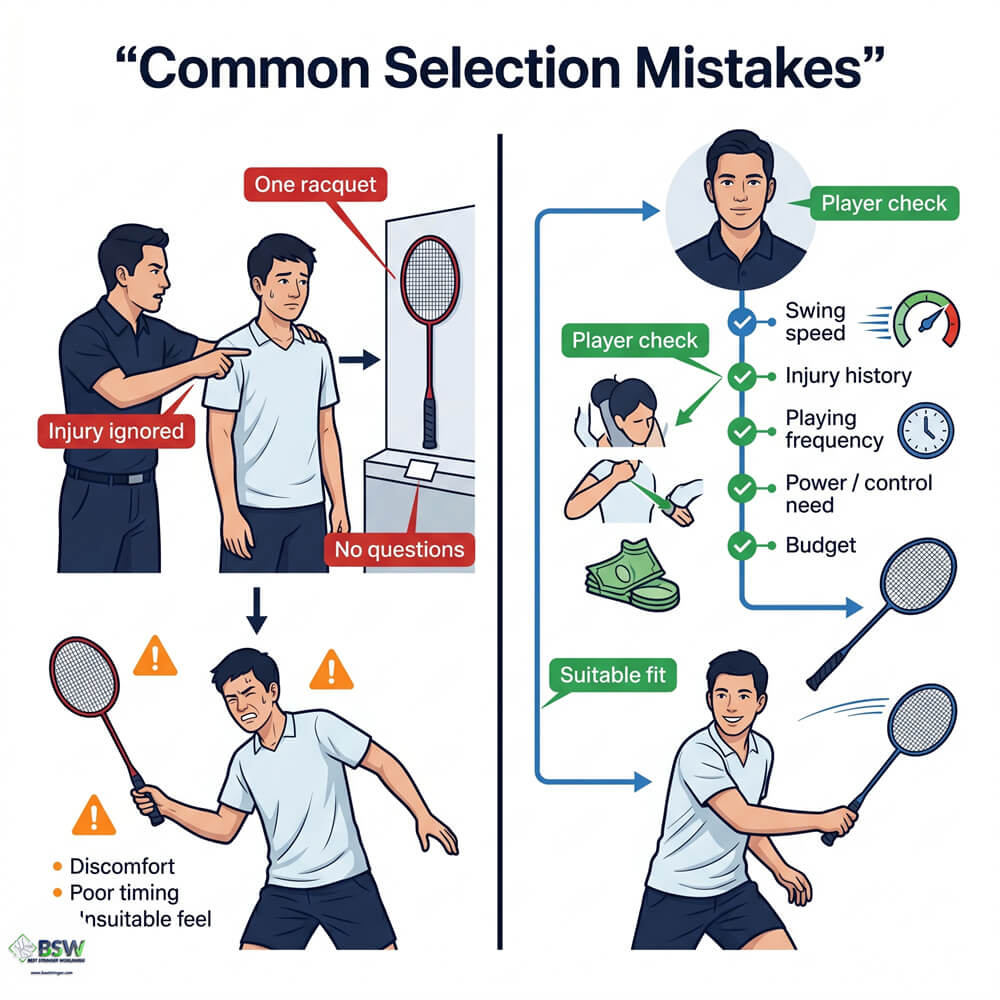
Common Selection Mistakes
Mistake 1: Assuming One Racquet Suits Everyone.
Believing that the most expensive or most popular brand is universally best is a huge error. Each badminton player has unique timing, technique, and physical requirements that dictate the ideal racquet choice.
Mistake 2: Ignoring Injury History.
Recommending equipment without checking for shoulder or elbow discomfort can lead to severe strain. A certified stringer prioritizes player health through careful racquet assessment rather than pushing a hard sale.
Mistake 3: Skipping Player Consultation.
Failing to ask about budget, playing frequency, and power versus control needs guarantees a poor recommendation. Good advice builds trust and word-of-mouth, while random guessing destroys confidence.
1.6 Stringing Synergy
Connecting Racquets to Stringing Advice
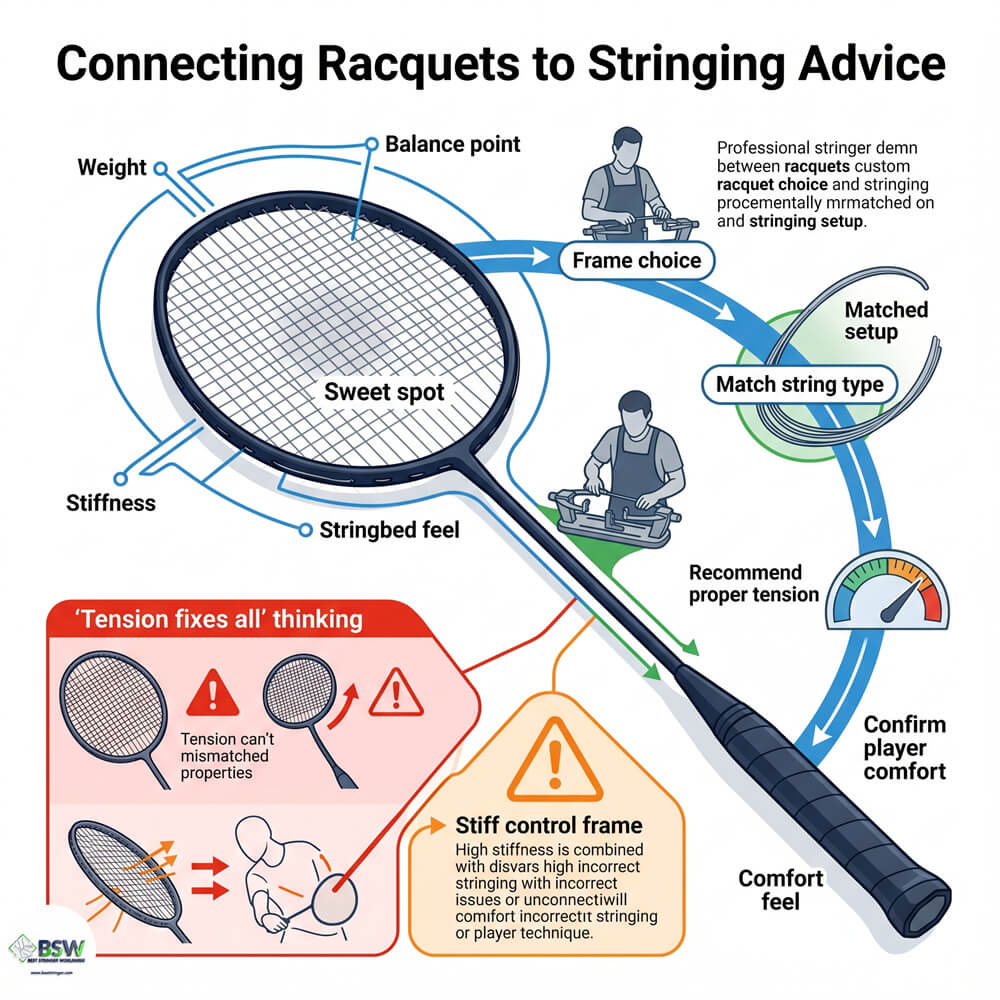
Racquet selection and stringing advice work together seamlessly. A professional badminton stringer integrates equipment knowledge into a cohesive setup by following a structured flow:
Step 1: Finalize the Frame. Use the consultation answers to confirm the racquet weight, balance point, and stiffness that naturally complement the player’s level, comfort, and swing speed.
Step 2: Match the String Type. Suggest a string gauge that aligns with the player’s durability needs and the racquet’s characteristics. For instance, a stiff control frame might benefit from a repulsive string to aid baseline clears.
Step 3: Recommend Proper Tension. Understand that tension alone cannot fix the wrong racquet choice. Tension recommendation must match the player’s sweet spot consistency and the frame’s specific flex profile to optimize feel.
1.7 Professional Education
The Value of Stringer Certification
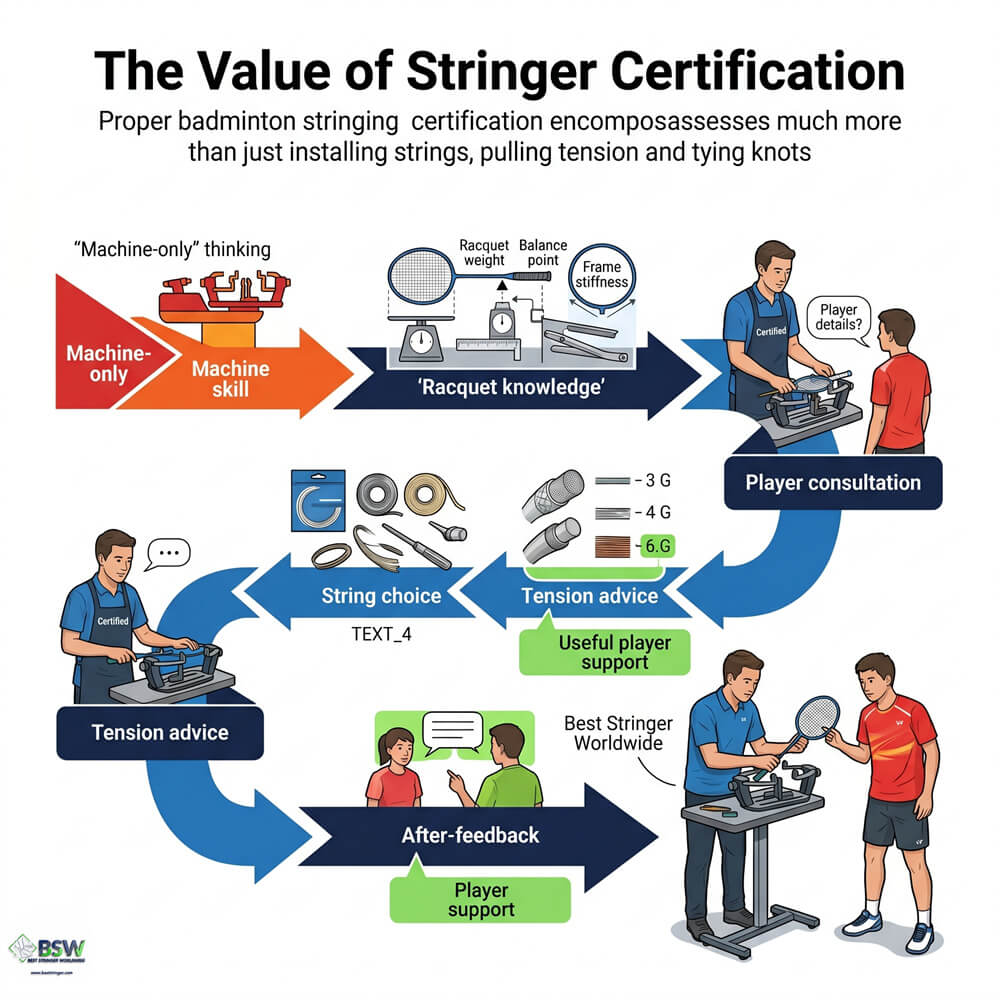
Proper equipment education is a core part of a professional badminton stringing course. A certified stringer should not only know how to install strings, pull tension, and tie knots, but also how to conduct a thorough player consultation.
At Best Stringer Worldwide, we teach stringers how racquet weight, balance point, and frame stiffness affect the final playing feel. Badminton stringing education must focus on supporting players with practical, honest, and technically accurate advice rather than guesswork.
By mastering racquet assessment, our stringer certification helps professionals ask better questions. When a stringer connects racquet advice with expert string and tension advice, they build immense trust and elevate the standard of the entire badminton equipment industry.
Equipment Selection Quick FAQ
Direct answers to common questions about badminton racquet selection and player consultation.
How do I choose the right badminton racquet?
The right badminton racquet should be chosen through player consultation, not only by brand or price, because every player has different swing speed, playing style, comfort needs, and performance goals. Start by analyzing your current racquet feedback, budget, and injury history rather than copying professionals.
Is there one badminton racquet that suits everyone?
No. No single badminton racquet suits everyone. Beginners, intermediate players, and advanced players have drastically different needs regarding racquet weight, balance point, and shaft stiffness. Each frame performs differently based on the user’s physical capabilities and swing speed.
What questions should a badminton stringer ask?
A good stringer should ask about your current racquet, playing level, frequency, injury history, budget, and whether you prefer more power or better control before making a racquet recommendation. This ensures the advice matches your actual on-court needs.
Why does current racquet feedback matter?
Discussing what you like and dislike about your current racquet is one of the best starting points. It provides clear technical direction for the new racquet assessment and stringing setup, allowing the advisor to suggest targeted improvements rather than random changes.
Can racquet stiffness be changed?
No, racquet stiffness cannot truly be changed after manufacture. While string tension and grip setup can alter the overall feel, the original frame and shaft design remain fixed. This makes selecting the right base stiffness during consultation extremely important.
Can a stringer make racquets feel the same?
A skilled badminton stringer can adjust racquet weight and balance slightly with grip tape and match the stringbed feel, but racquets with different inherent stiffness or frame profiles will never feel exactly identical on the court.
Why must demo racquets have good strings?
Demo racquets must have proper strings and a clean grip condition because poor strings or an old grip can severely mislead the player’s feeling. Testing a high-end frame with dead strings ruins the racquet assessment completely.
What should a certified stringer know?
A certified stringer must understand how racquet selection, player consultation, string type, tension, and grip setup work together. This comprehensive equipment knowledge is a key focus in any reputable badminton stringing course.
Are stringing courses necessary?
For those wanting to master player consultation, yes. A stringing course teaches professionals how to ask better questions and align tension advice with the player’s level, eliminating guesswork from the racquet recommendation process.
The Physics of Customization: Weight vs. Stiffness
Professional Consultation Bridge
Step 1: Player Feedback
Understanding the strengths and weaknesses of the player’s current racquet sets a solid baseline. It provides clear technical direction rather than relying on guesswork or popular brands.
Honest Player Advice
Our consultation approach is based on verifying player equipment needs through proven dialogue. We prioritize arm safety, proper racquet assessment, and playstyle efficiency over pure brand hype.
| Assessment Area | Basic / Brand-Based Advice | Professional Consultation |
|---|---|---|
| Player Assessment | Often ignores player level, swing speed, and physical condition. | Considers playing style, frequency, injury history, and real needs. |
| Racquet Recommendation | Pushes one ‘best’ frame or overwhelms with too many confusing options. | Carefully narrows choices to 2–3 suitable racquets based on feedback. |
| Demo Racquet Focus | Trial racquets often have poor strings and worn-out grips. | Demo racquets are properly strung and gripped for accurate feeling. |
| Customization Reality | Claims high tension alone can fix a wrong racquet choice. | Explains weight/balance adjustments, but notes stiffness cannot be changed. |
| Stringing Synergy | Only asks: “What tension do you want?” without context. | Connects racquet choice with string type, tension, and grip setup. |
| Trust & Outcome | Can lead to unsuitable racquet choice and potential injuries. | Builds long-term trust, word-of-mouth, and better on-court performance. |
Master Player Consultation with Best Stringer Worldwide
Ready to upgrade your knowledge? Best Stringer Worldwide offers a professional badminton stringing course to teach you how racquet assessment, player consultation, and string setups work together safely. We serve badminton stringers worldwide especially in Singapore, Hong Kong, Malaysia, Indonesia, UK, France and Europe. Contact a certified stringer to learn proper racquet advisory skills today.