1.1 Introduction to Components
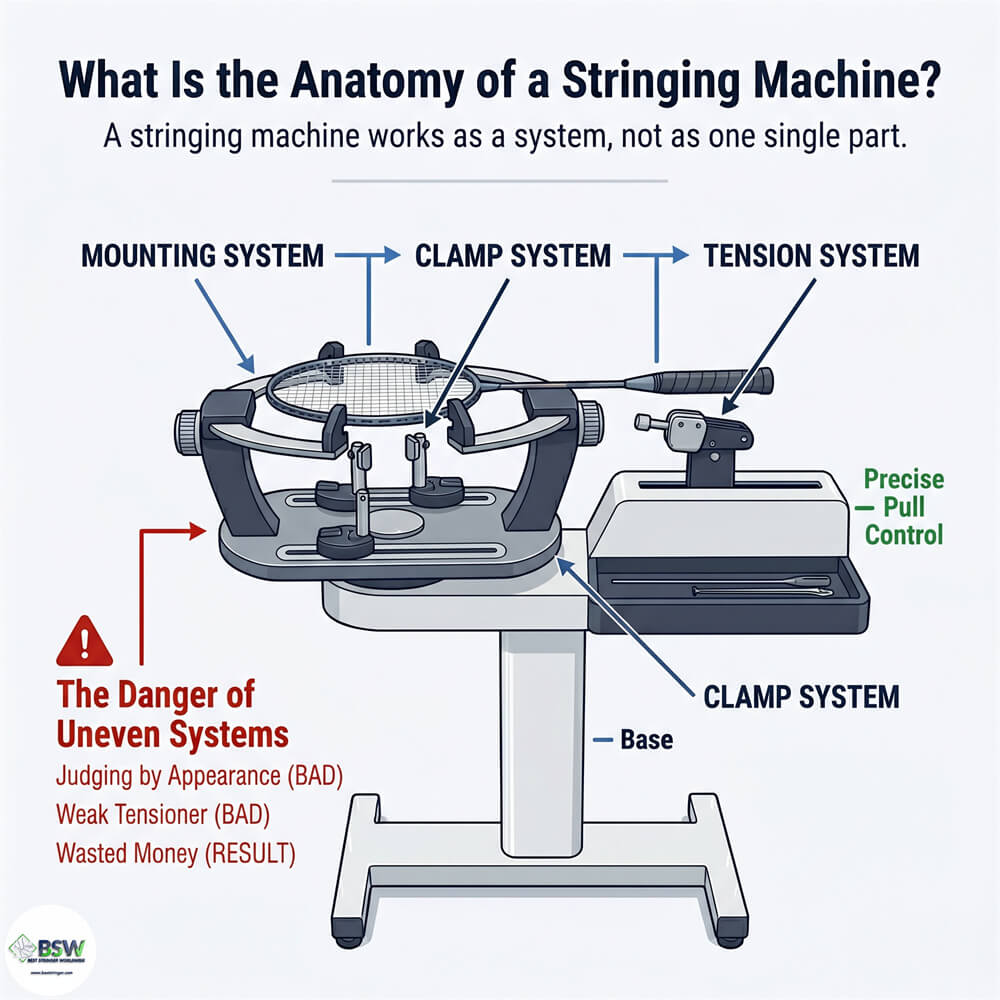
What Is the Anatomy of a Stringing Machine?
A stringing machine is not just one device. It is a working system made up of several major parts, and the quality of the final string job depends on how the mounting system, clamp system, and tension system work together. In this guide, you will learn the anatomy of stringing machines and why understanding these components is vital for racquet protection and consistent results.
Whether you are stringing tennis or badminton racquets, each sport places different demands on the machine. The mounting system protects the frame, the clamps hold your progress securely, and the tension system controls the pulling behavior.
Here is a simple truth: high-quality equipment helps, but the stringer’s discipline and understanding still matter most. A certified stringer must understand how machine structure affects consistency, speed, racquet protection, and ease of use, rather than judging a machine only by its price or appearance.
1.2 The Three Core Systems
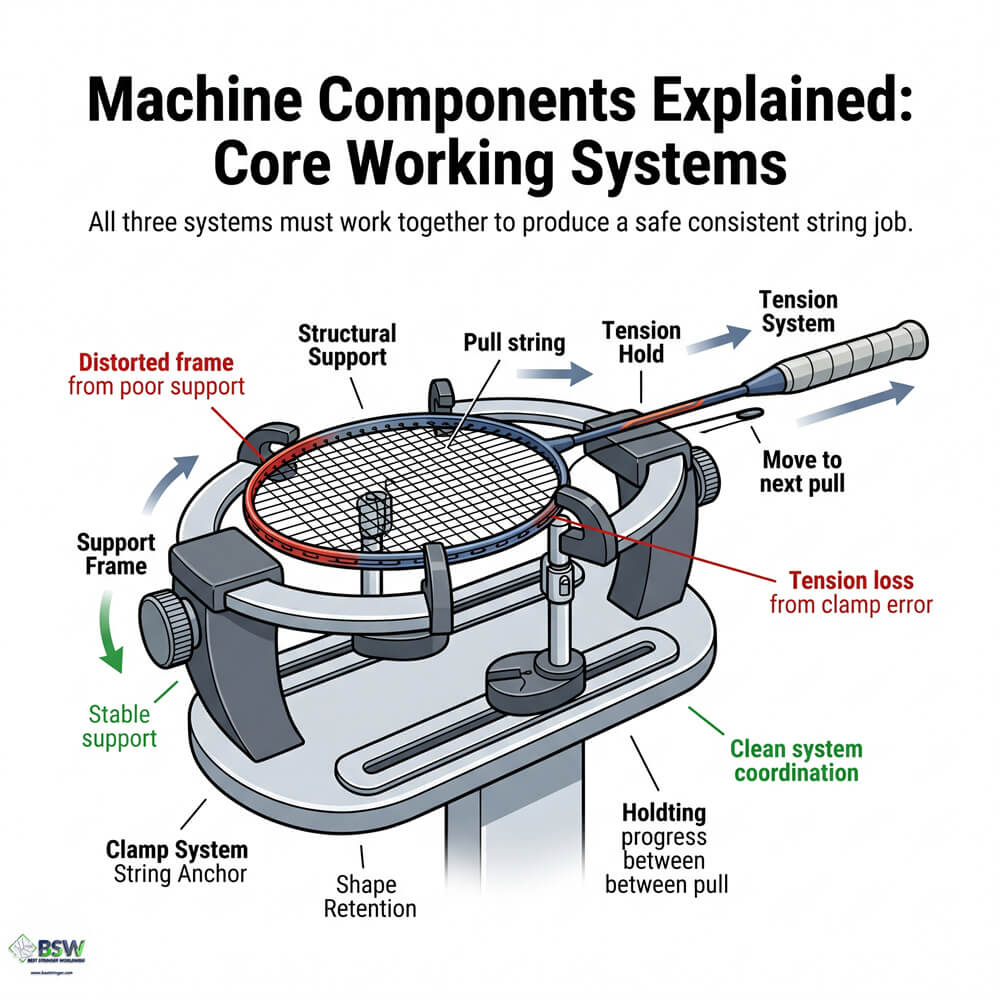
Machine Components Explained: Core Working Systems
To master racquet stringing, you must view the machine as an integrated unit. The three main systems of a stringing machine are the mounting system, the clamp system, and the tension system. Each system has a distinct job, and a failure in any of them will compromise the entire string job.
The mounting system is the structural foundation. It holds the frame securely, preventing the racquet from twisting, shortening, or distorting under hundreds of pounds of cumulative string pressure. The clamp system acts as the anchor during the process, holding the string securely without crushing it while you prepare for the next pull.
Finally, the tension system dictates the exact pulling behavior. The way a machine pulls whether through a drop-weight, a spring crank, or an electronic motor determines the exact tension accuracy and the time it takes to finish a frame. When a beginner stringer learns machine anatomy, they realize that mastering all three systems is far better than memorizing only one part of the setup.
1.3 The Mounting System
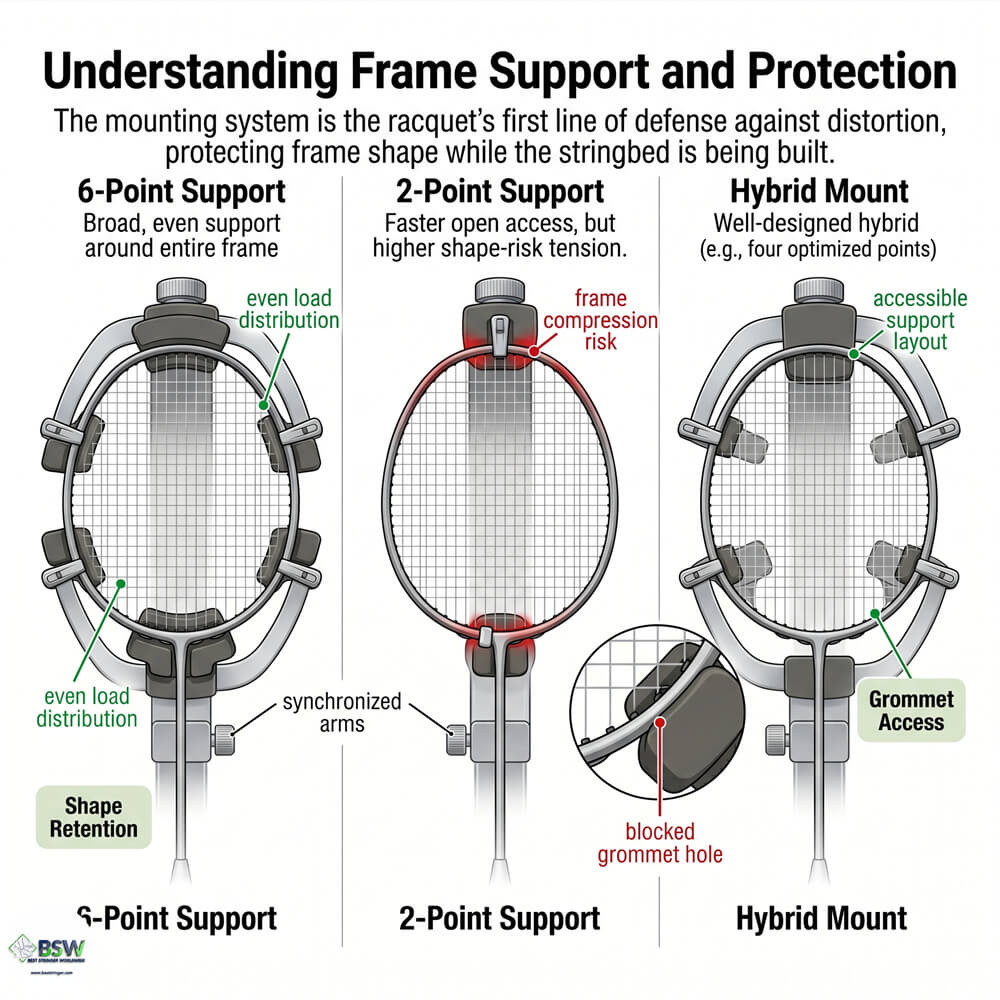
Understanding Frame Support and Protection
The mounting system is your racquet’s first line of defense. As tension is pulled, the frame wants to compress and deform. A 6-point mounting system provides the highest level of frame protection, distributing the stress evenly across the head, making it highly recommended for both tennis and delicate badminton racquets.
Alternatively, a 2-point mounting system is generally faster to set up and offers more visibility while weaving, but requires the stringer to be exceptionally careful with shape retention, especially on high-tension setups. Hybrid mounting systems try to blend the speed of fewer contact points with enhanced side supports to offer the best of both worlds.
Key features like synchronized adjustment (where turning one knob moves arms symmetrically) drastically improve workshop efficiency. A badminton stringer should always consider whether the mounting system arms can adapt easily to lighter frames without blocking the grommet holes.
1.4 The Clamp System
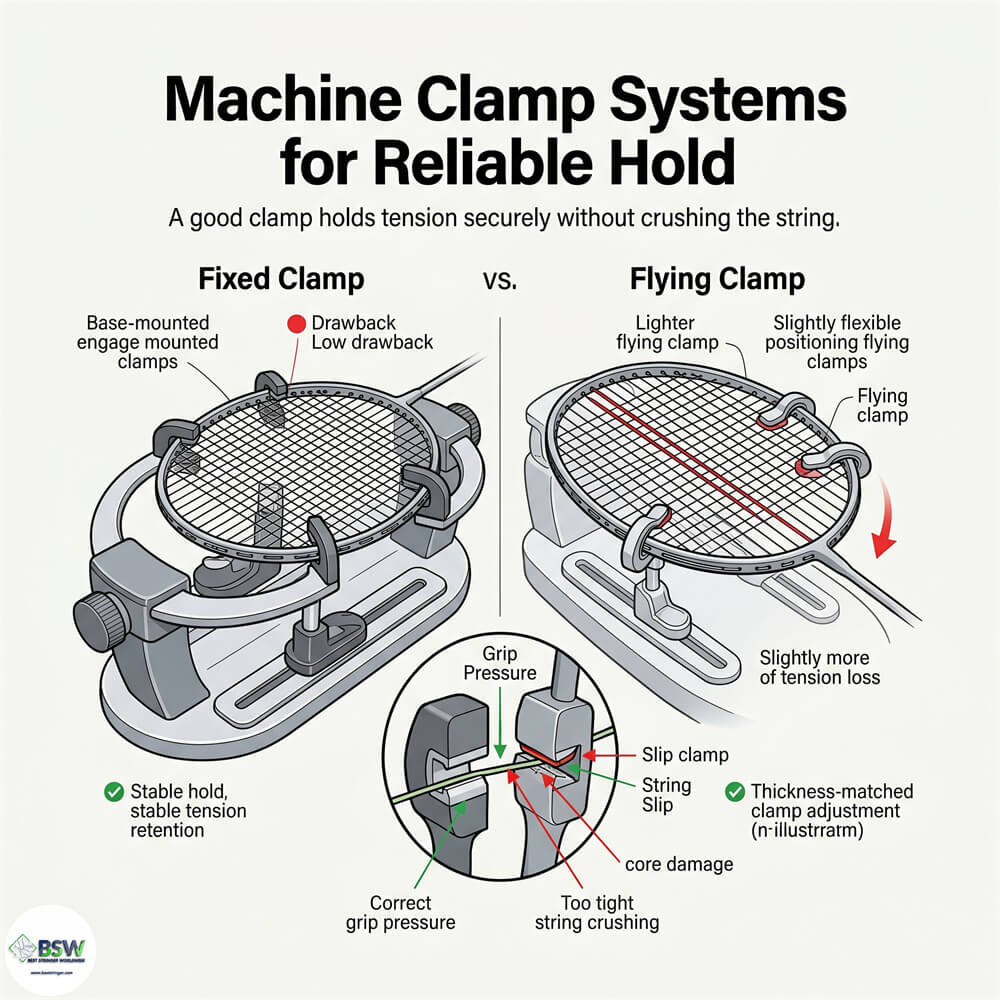
Machine Clamp Systems for Reliable Hold
The clamp system dictates how securely string tension is retained after the machine pulls. A poor clamp system introduces tension loss and workflow frustration:
Fixed Clamps. Securely attached to the machine’s base, fixed clamps hold the string directly in place. They offer excellent consistency and reduce tension drawback, making them the standard choice for professional setups.
Flying Clamps. These clamp one string to an adjacent string instead of attaching to the machine base. While flying clamps are lightweight, flexible, and budget-friendly, they often allow slightly more tension loss due to string movement.
Clamp Grip and Calibration. Regardless of the type, secure grip matters. If a clamp is too loose, the string slips and loses tension. If it is too tight, it will crush and weaken the string core. Adjusting grip strength based on the string thickness is a crucial step for any certified stringer.
1.5 The Tension System
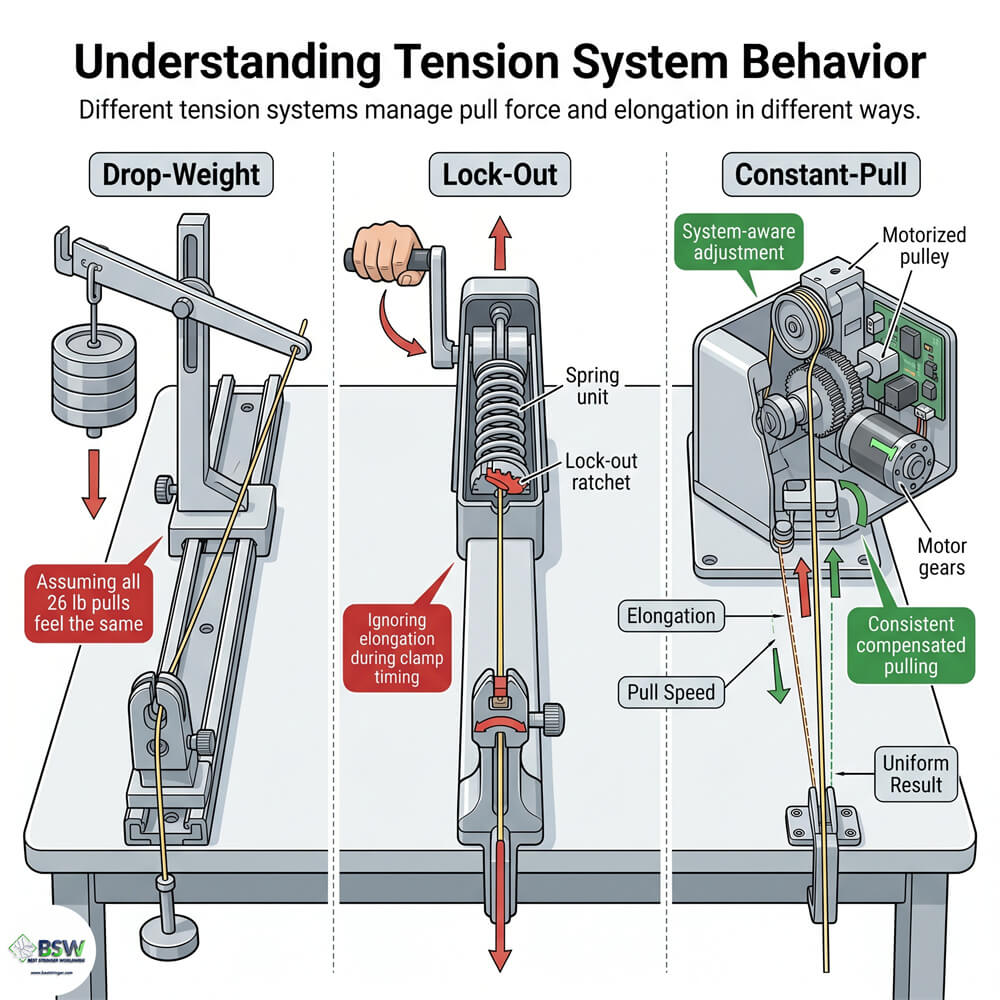
Understanding Tension System Behavior
Drop-Weight Stringing Machines.
A drop-weight system uses gravity and leverage to pull tension. While they are highly accurate and very affordable, they require manual operation and are generally the slowest machine type to use in a busy workshop.
Spring Tension (Crank) Systems.
A manual crank system uses a calibrated spring to reach tension. It is much faster than a drop-weight, but it features a “lock-out” mechanism. Once the spring hits the target weight, it locks and stops pulling, meaning it does not compensate for the string stretching during the clamping phase.
Electronic Tension Systems.
Electronic machines use a digital motor and are widely considered the professional standard. High-quality electronic systems feature “constant-pull” logic, meaning the motor continues to make micro-adjustments if the string stretches before being clamped, resulting in a more uniform stringbed.
1.6 Additional Features
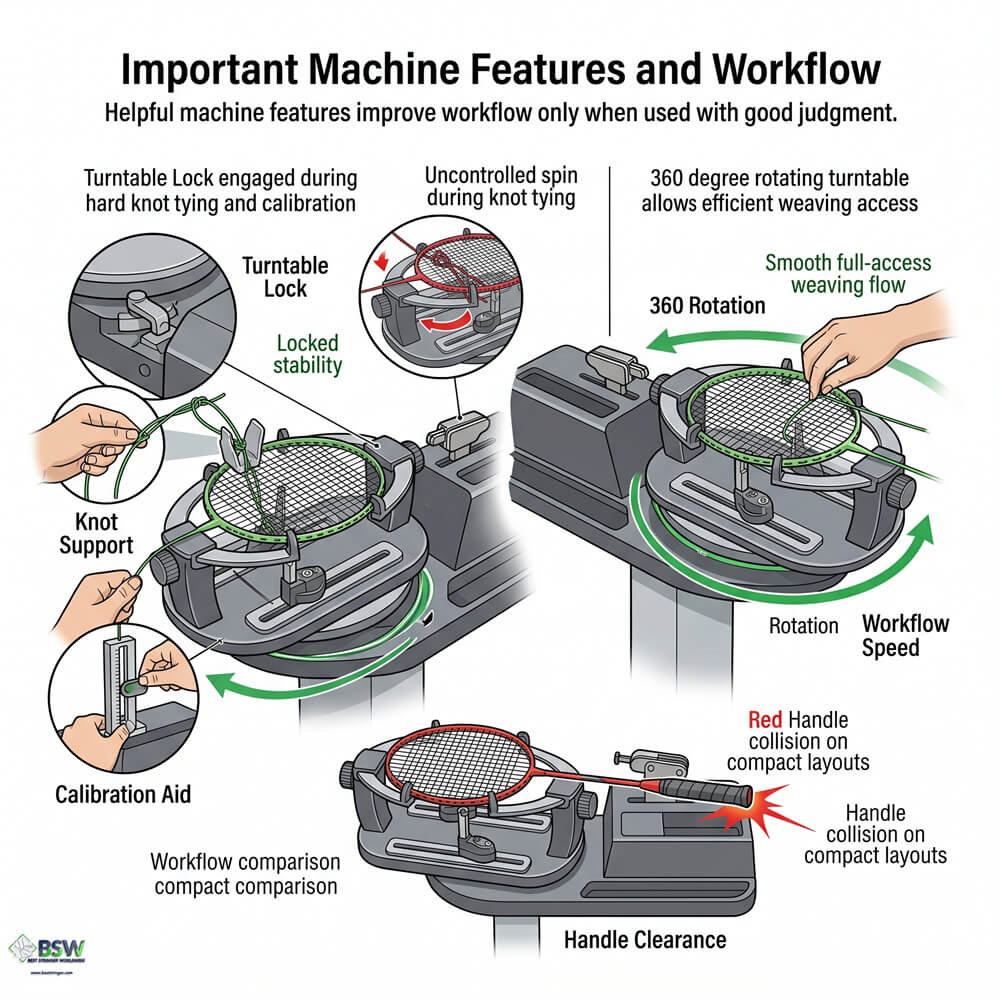
Important Machine Features and Workflow
Beyond the core three systems, additional machine features greatly impact your day-to-day workshop efficiency and overall ease of use.
Turntable Lock. A turntable lock is a practical support feature that prevents the machine base from spinning. This is exceptionally helpful during initial calibration, and critically important during hard knot-tying processes, preventing unwanted movement that could warp delicate racquet frames.
360-Degree Rotation. Having a turntable with full 360-degree rotation improves physical access to all sides of the racquet. It reduces the need for the stringer to reposition their body constantly, accelerating the weaving process significantly.
Recognizing Trade-offs. While 360-degree rotation is preferred, certain racquets with long handles might hit the tension head during rotation on compact machines. Understanding these subtle design interactions allows stringers to organize their workflow intelligently without risking equipment damage.
1.7 Choosing the Right Machine
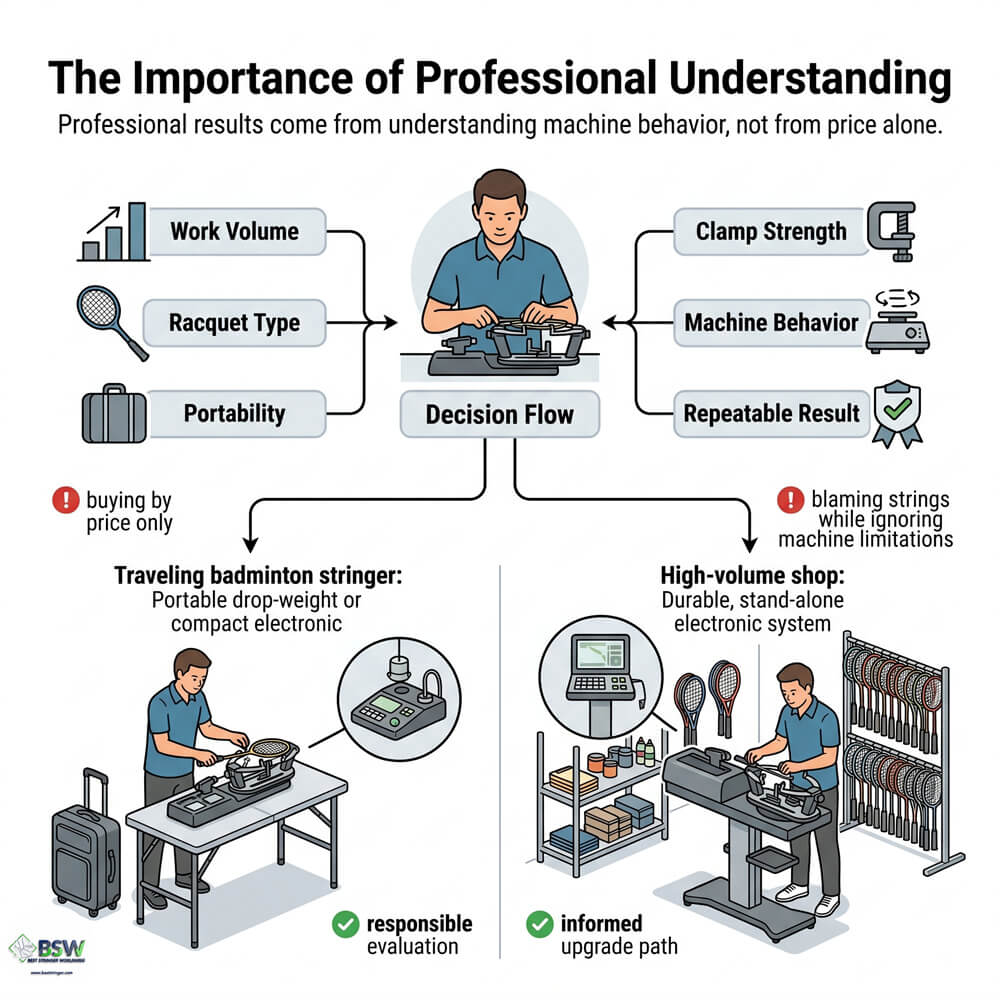
The Importance of Professional Understanding
Buying the most expensive machine does not automatically make someone a master technician. A professional stringing machine only works as well as the stringer operating the clamps and interpreting the tension system. Understanding machine anatomy helps you build a responsible decision framework when upgrading your equipment.
At Best Stringer Worldwide, we believe that evaluating your work volume, the racquet types you service most frequently, and your portability needs is essential. A traveling badminton stringer might prefer a precise drop-weight or portable electronic machine, while a high-volume shop requires a durable stand-alone electronic base.
By prioritizing comprehensive machine knowledge, our stringer certification ensures that every technician uses their equipment to its maximum potential. You will eliminate guesswork, avoid frame distortion, choose the appropriate clamp strength, and focus purely on providing reliable, repeatable string jobs.
Machine Anatomy Quick FAQ
Quick, definition-first answers to common questions about stringing machine anatomy and component functionality.
What are the three main systems of a stringing machine?
The three main systems are the mounting system (which holds the racquet frame), the clamp system (which holds the string under tension), and the tension system (which dictates how the string is pulled). All three must work together efficiently.
Why does the mounting system matter for protection?
A good mounting system, such as a 6-point setup, distributes the physical stress evenly across the frame. This prevents the racquet from distorting, cracking, or losing its engineered shape during the heavy cumulative forces of stringing.
How do clamp systems affect consistency?
If clamps slip or drawback significantly upon release, you lose tension. Fixed clamps anchored to the base generally offer more consistent holding power compared to flying clamps, improving the overall reliability of the final stringbed.
What is the difference in tension systems?
Drop-weight systems use gravity and are highly accurate but slower. Spring crank systems are faster but use a lock-out mechanism. Electronic systems use digital motors and generally offer the fastest, most consistent pulls with compensation features.
What is lock-out vs constant-pull behavior?
A lock-out system stops applying force the moment the target tension is reached, ignoring subsequent string stretching. Constant-pull systems continuously monitor and re-pull the string to ensure the exact target tension is maintained before clamping.
Does 360-degree rotation have trade-offs?
While 360-degree rotation dramatically speeds up workflow by improving physical access around the frame, on more compact machine designs, racquets with long handles may occasionally strike the tension head if the stringer isn’t paying attention.
What is the purpose of a turntable lock?
A turntable lock stops the mounting base from spinning freely. It provides stability when tying off hard knots, and keeps the machine perfectly aligned during tension head calibration, reducing the risk of damaging delicate frames.
Why is machine anatomy important for stringers?
Understanding machine components allows stringers to evaluate their toolset honestly. Instead of blaming strings or technique entirely, a knowledgeable stringer knows exactly how their clamp slip or lock-out tensioning is influencing the final result.
Are machine anatomy courses necessary?
For those pursuing real consistency, yes. A professional badminton stringing course teaches how different machine systems support the frame and maintain tension, which is essential knowledge before earning a formal stringer certification.
The Anatomy of Consistency: How Machine Systems Work Together
Proven Machine Anatomy
Our stringing approach is based on verified equipment parameters used by top professionals. We prioritize arm safety, proper frame evaluation, and playstyle efficiency over pure tension hype.
| Component | Option A (Basic/Manual) | Option B (Advanced/Pro) |
|---|---|---|
| Tension System | Drop-Weight: Uses gravity, highly accurate but slower to operate manually. | Electronic: Uses a digital motor, extremely fast and consistent. |
| Tension Behavior | Lock-Out: Stops pulling once tension is reached, ignores further string stretch. | Constant-Pull: Continuously adjusts to maintain exact tension during clamping. |
| Clamp Types | Flying Clamps: Clamp strings to each other, flexible but allows more drawback. | Fixed Clamps: Securely attached to the base, offers maximum tension retention. |
| Mounting System | 2-Point: Faster to mount and provides more visibility, but less frame support. | 6-Point: Maximum frame support and shape retention during high tension. |
| Turntable Rotation | Limited Rotation: Requires more manual maneuvering and body repositioning. | 360-Degree: Unrestricted access around the frame for a faster workflow. |
| Machine Class | Desktop: Highly portable, budget-friendly, good for stringing at home. | Standalone: Highly stable, heavy base, built for heavy workshop volume. |
Master Machine Anatomy with Best Stringer Worldwide
Ready to upgrade your knowledge? Best Stringer Worldwide offers professional badminton stringing courses to teach you how machine components interact safely with the racquet frame. We serve stringers worldwide, helping them master tension behavior, clamping reliability, and complete stringer certification. Contact us to learn the practical skills behind a truly professional string job.