1.1 Understanding Tennis Elbow
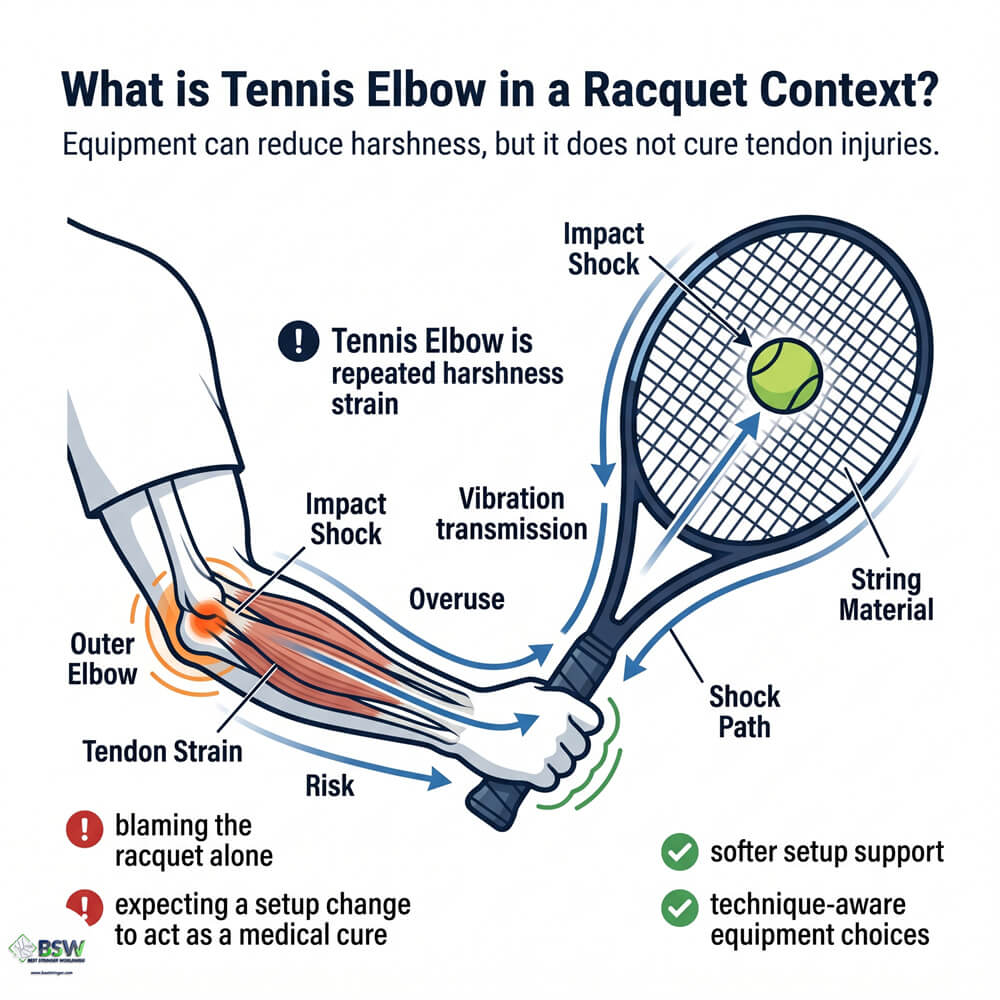
What is Tennis Elbow in a Racquet Context?
Tennis elbow, also called lateral epicondylitis or lateral elbow tendinopathy, is associated with pain around the outside of the elbow and can affect gripping and wrist or forearm use. The NHS tennis-elbow guide and Mayo Clinic overview explain symptoms, possible causes and when to seek care. In this guide, you will learn how repeated strain, technique, and racquet setup contribute to outer elbow pain. While commonly associated with tennis, badminton stringers and players across all racquet sports must understand these same shock-transmission principles.
Equipment can change stringbed firmness and perceived impact feel, but it does not diagnose, treat or prevent tennis elbow. Players and stringers should treat setup changes as comfort experiments alongside appropriate technique, load management and healthcare advice.
Practical scope: Step 1: stop or modify activities that provoke pain. Step 2: seek qualified assessment when symptoms persist, worsen or interfere with daily activity. Step 3: if returning to play, test equipment changes conservatively within manufacturer limits and record perceived feel; a stringer must not diagnose the condition.
1.2 Symptoms & Development
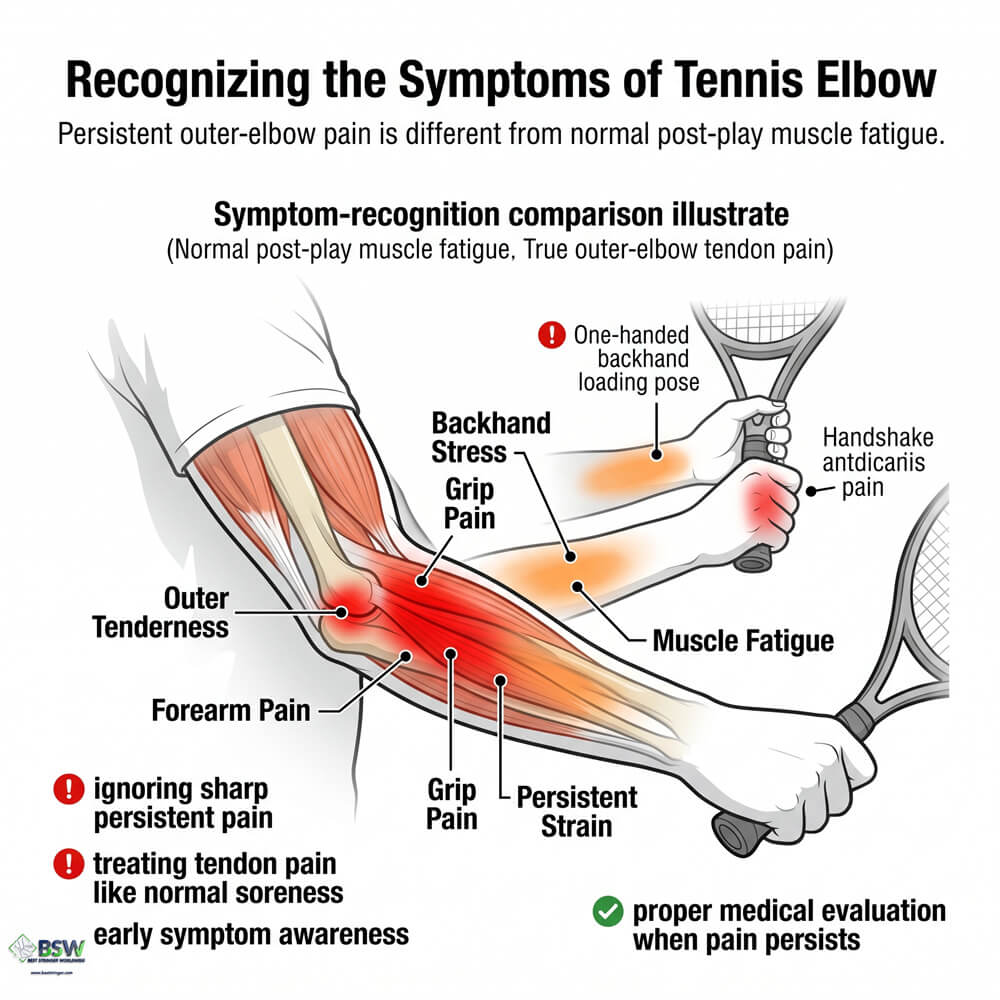
Recognizing the Symptoms of Tennis Elbow
The golden rule of arm care is listening to your body early. Tennis elbow, or lateral epicondylitis, typically presents as pain and tenderness on the outer part of the elbow. This discomfort often spreads down the forearm and is triggered by common actions like gripping the racquet, hitting a one-handed backhand, or even simple handshakes.
It is commonly linked with repeated wrist and forearm loading, although the cause is not always clear. A sudden increase in playing volume and repeated arm or wrist activity may contribute to symptoms. Technique and equipment fit can be reviewed, but page-level advice cannot determine which factor caused an individual player’s pain.
Players should not self-diagnose persistent elbow pain from a webpage. If pain persists despite self-care, occurs at rest, worsens, or limits normal arm use, consult a qualified healthcare professional. Seek prompt care after a sudden injury, severe pain, swelling, bruising or difficulty moving the elbow.
1.3 Core Causes in Tennis
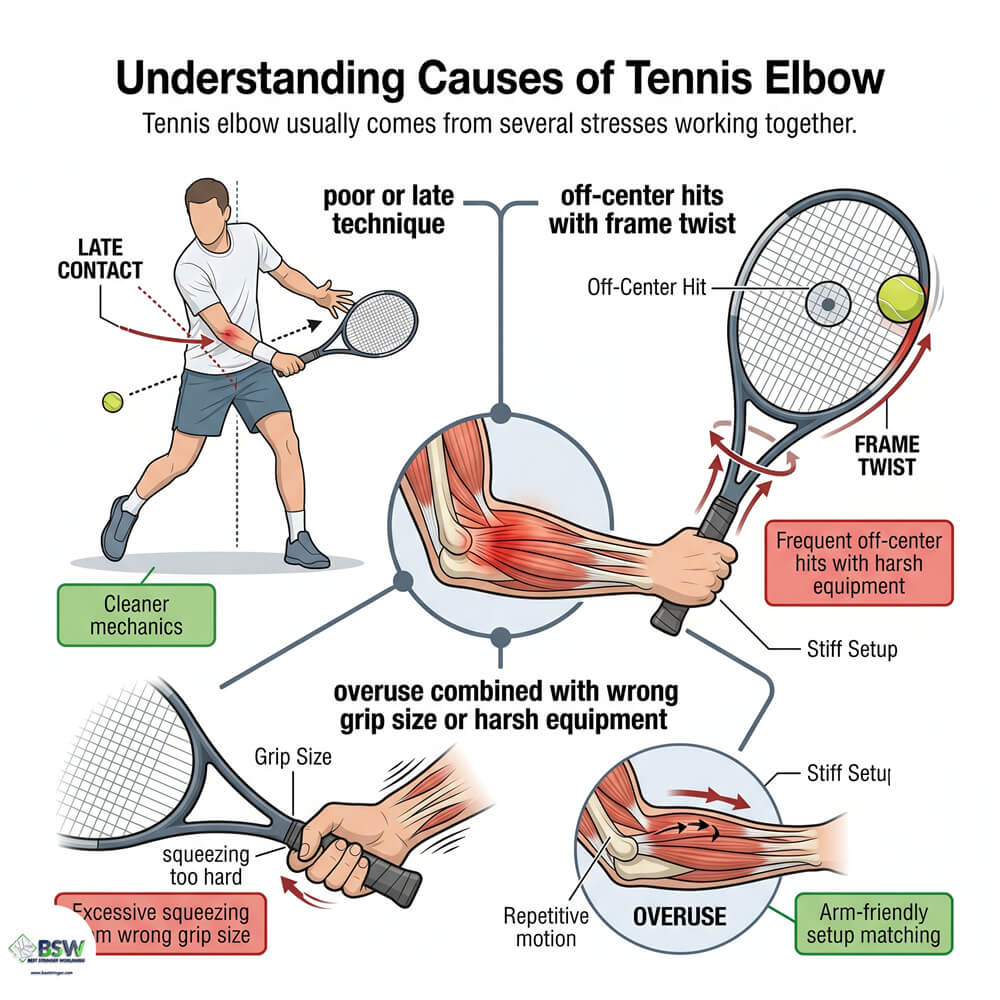
Understanding Causes of Tennis Elbow
While tennis elbow is often blamed entirely on the racquet, it is usually a multi-factor issue. Repeated arm and wrist motions, playing load and technique can contribute to lateral elbow symptoms. No string material or tension can protect a player from tennis elbow.
Off-centre impacts can change perceived racquet vibration and feel, but they are not a diagnosis or proven sole cause. They can also make the racquet feel less stable in the hand. A rapid increase in playing load after a break can be a useful factor to discuss with a coach or clinician.
Equipment heavily influences this equation. An uncomfortable grip size may change how firmly a player holds the handle. Review grip comfort, racquet setup, technique and training load together rather than attributing symptoms to one equipment variable.
1.4 The Role of Tennis Strings
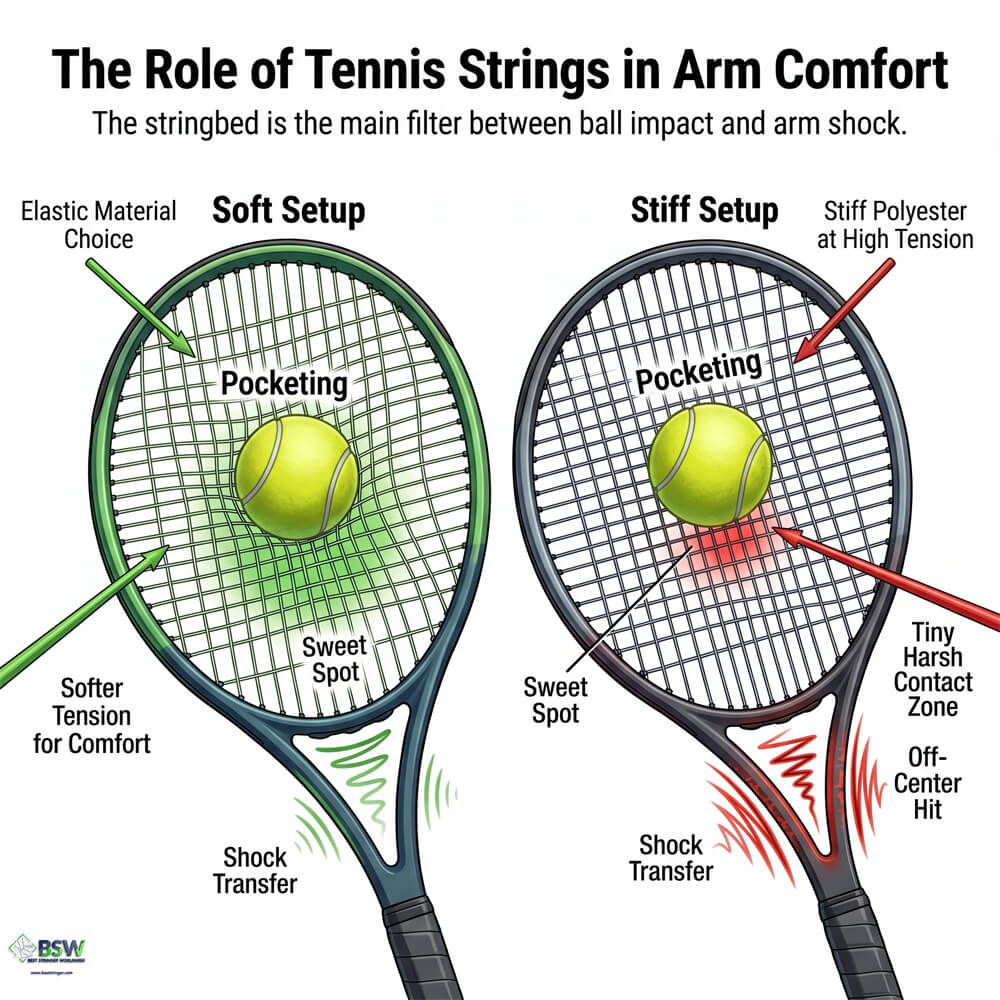
The Role of Tennis Strings in Arm Comfort
String material and tension change stringbed stiffness and perceived impact feel. Understanding this synergy is essential for players and stringers dealing with arm sensitivity:
Why Material Matters. String construction affects elasticity, stiffness, durability and feel. Natural gut and many multifilaments are commonly perceived as softer than many polyester strings. Actual vibration and comfort depend on the full racquet, stringbed, impact and player.
Why Tension Matters. Tension determines the firmness of the stringbed. Higher reference tension creates a firmer stringbed and may feel harsher to some players. Lower reference tension creates a softer stringbed and may feel more comfortable to some players.
The Impact of Off-Center Hits. A stiff string at a high reference tension may feel firm or uncomfortable, particularly on off-centre impacts. A trained stringer can document the current setup and offer conservative alternatives within manufacturer limits, without promising a medical outcome.
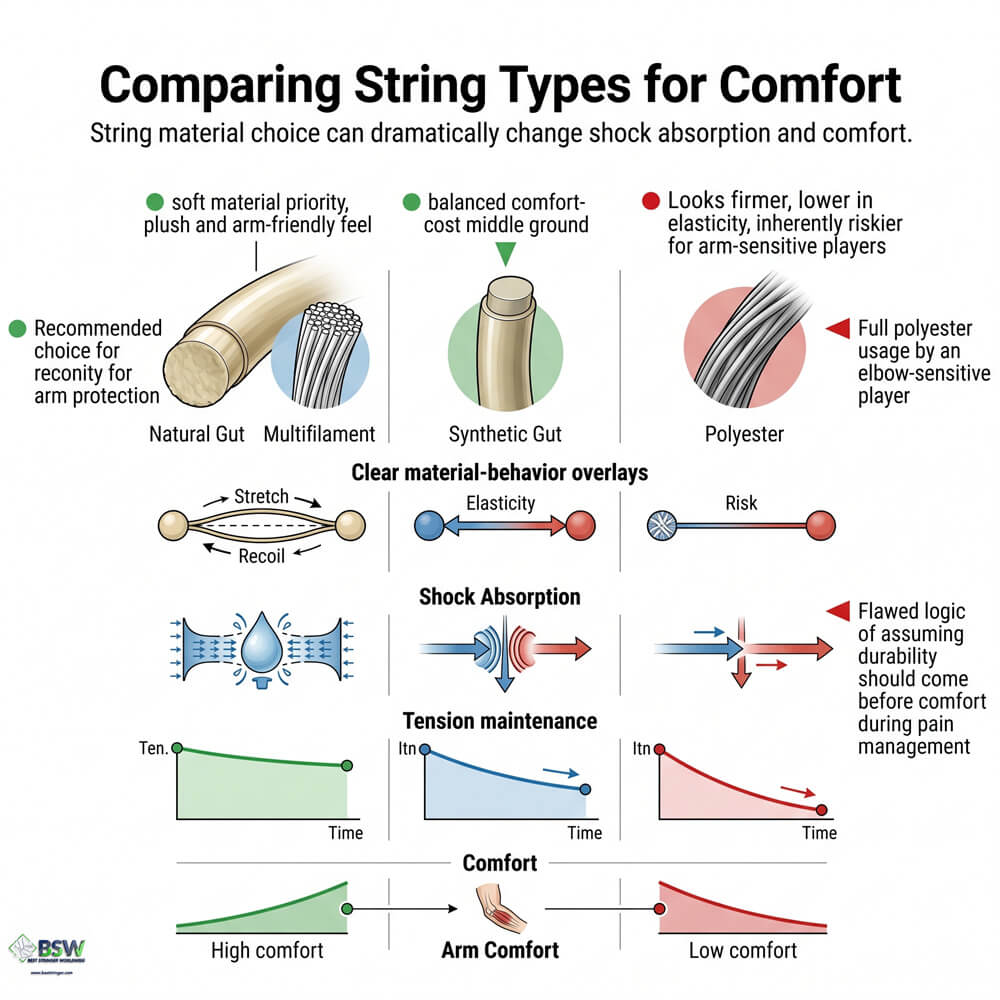
1.5 String Types & Tennis Elbow
Comparing String Types for Comfort
Natural Gut & Multifilament.
Natural gut and many multifilaments are commonly selected when a player prefers a softer stringbed feel. They are equipment options, not proven prevention or treatment for tennis elbow.
Synthetic Gut.
A solid middle ground. While not quite as plush as a premium multifilament, synthetic gut is noticeably softer than polyester and offers a reasonable balance of comfort and cost for recreational players.
Polyester Strings.
Many polyester strings produce a firmer stringbed feel than natural gut or multifilament. Their playability, durability and feel vary by product, gauge, tension and use. A stringer should discuss perceived firmness and alternatives, then refer persistent or worsening pain to a healthcare professional.
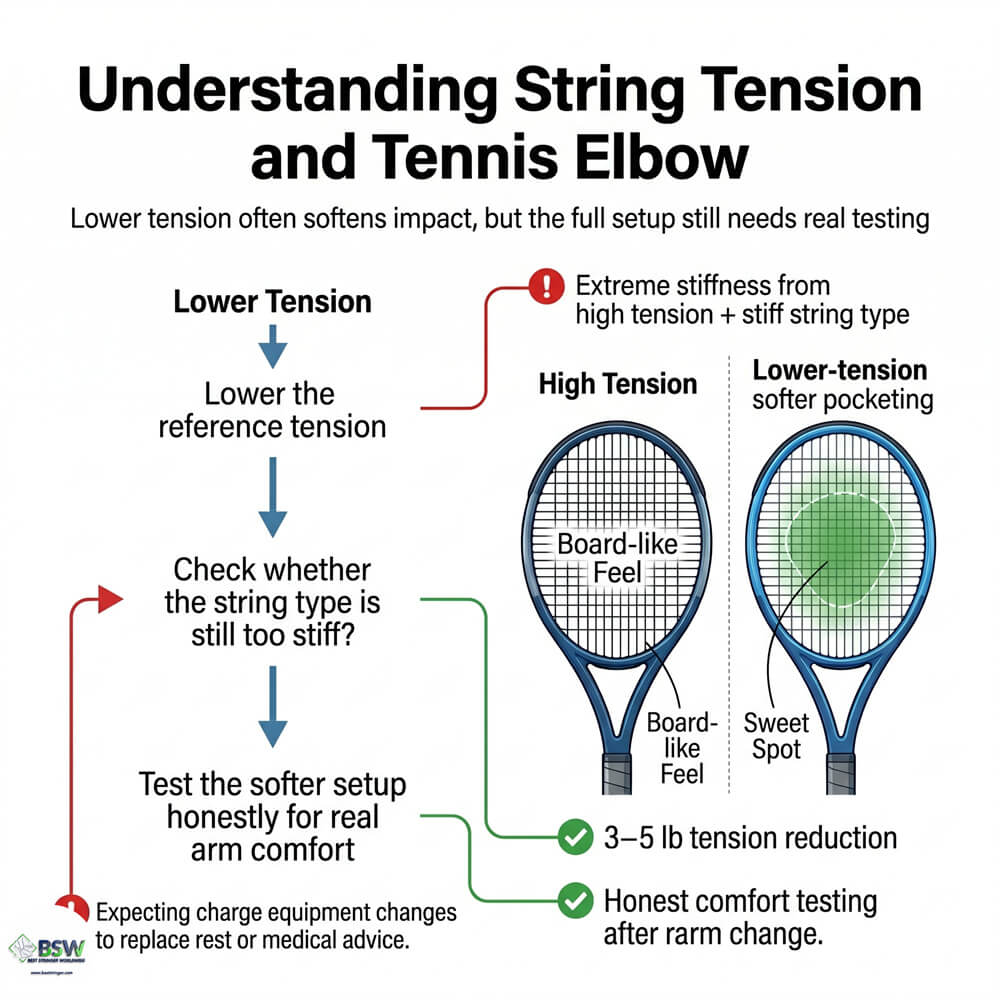
1.6 Tension Adjustments
Understanding String Tension and Tennis Elbow
Adjusting your setup is a practical way to manage arm stress. Use this simple framework to optimize comfort before returning to the court:
Step 1: Lower the Reference Tension. Lower tension may create a softer perceived response for some players. Use a small, documented change within manufacturer limits rather than a universal 3-5 lb prescription, then compare feel after medical clearance to play when needed.
Step 2: Avoid Extreme Stiffness. Determine if your current tension is too high for your string material. A high-tension, stiff-string combination creates a firmer stringbed; individual comfort and measured vibration vary.
Step 3: Test for Actual Comfort. After symptoms are appropriately assessed and return to play is suitable, compare the softer setup and record perceived comfort. Remember, equipment adjustments support comfort but do not replace the need for proper rest and medical advice.
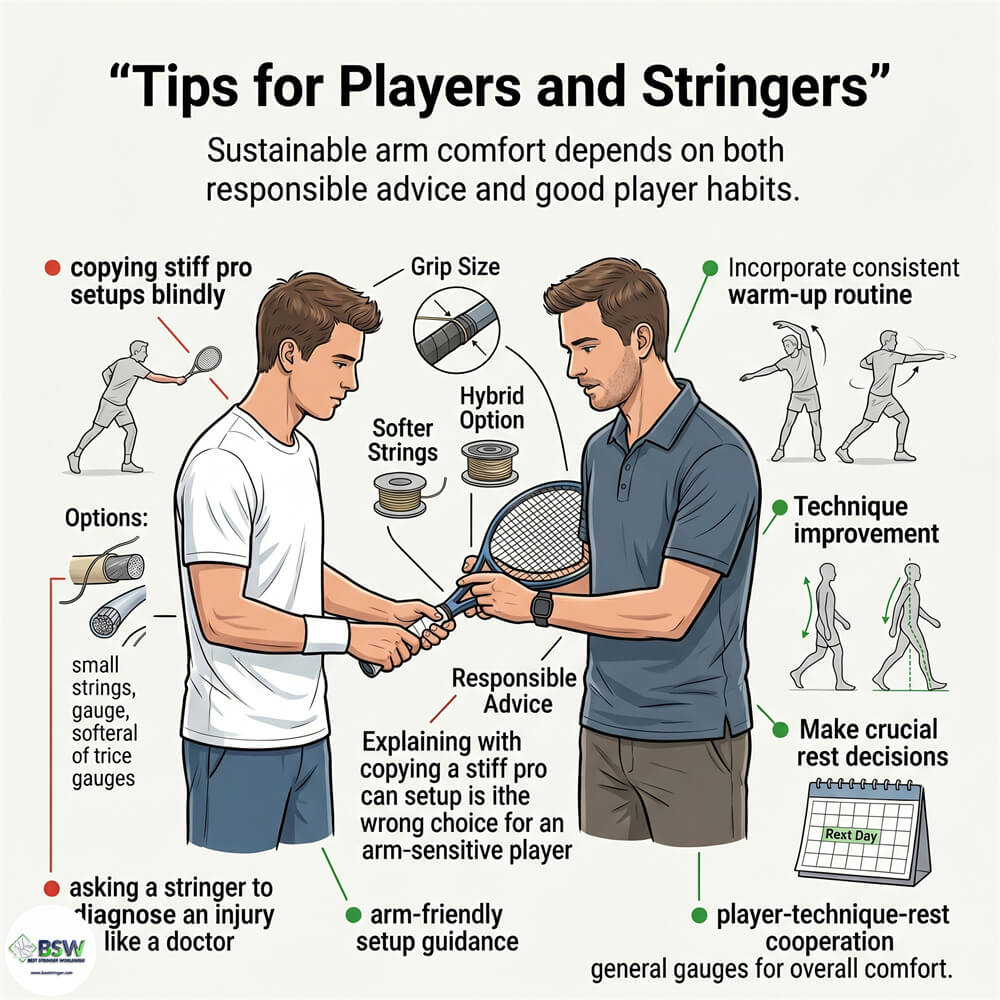
1.7 Prevention & Management
Tips for Players and Stringers
Proper prevention and management require a collaborative approach. A racquet stringing course teaches that stringers should recommend softer strings and review grip sizes to enhance comfort, rather than just copying stiff pro setups.
At Best Stringer Worldwide, we know that a certified stringer provides responsible advice. While players must focus on improving technique, warming up properly, and resting when pain occurs, a stringer can provide a setup intended to change perceived firmness or comfort.
BSW certification pathways teach stringers to document equipment, explain trade-offs, stay within manufacturer limits and refer medical concerns appropriately. Certification does not qualify a stringer to diagnose or treat elbow pain.
Tennis Elbow Quick FAQ
Clear, educational answers about tennis elbow, racquets, and string setups.
What is tennis elbow in simple terms?
It is a condition associated with pain and tenderness around the outside of the elbow, often linked to repeated wrist and forearm use. A clinician should assess persistent symptoms and rule out other causes.
Can string choice affect arm comfort?
They can change stringbed stiffness and perceived feel. Natural gut and many multifilaments are commonly perceived as softer than many polyester strings, but this is not proof that they prevent or treat injury.
Is polyester always a bad choice?
Not necessarily. Many polyester products create a firmer feel, and players with discomfort may prefer to compare softer alternatives. Product, gauge, tension, hours of use and the full racquet setup all matter.
Can lower tension help comfort?
Lowering reference tension creates a softer stringbed and may change perceived comfort. It is an equipment experiment, not medical treatment; remain within manufacturer limits and do not play through worsening pain.
When should a player see a doctor?
If elbow pain persists despite rest, technique improvements, and softer equipment setups, a player should consult a qualified healthcare professional for an accurate diagnosis and proper treatment plan.
Can stringers diagnose injuries?
No. A professional stringer can modify equipment to reduce harshness and improve comfort, but they should never act as a medical diagnostician or claim that a specific string will cure an injury.
Why review grip size?
Review whether the grip feels secure without excessive squeezing. Grip preference varies, and equipment fit should be considered alongside technique, playing load and clinical advice.
Why is stringer certification important?
A racquet stringing course can teach material, tension and equipment trade-offs. A certified stringer can discuss setup feel but must not present that guidance as medical diagnosis, prevention or treatment.
Do soft setups cure tennis elbow?
Equipment adjustments may change perceived comfort, but they are not medical treatment. Recovery and return-to-play decisions should follow qualified healthcare advice.
Stringbed Feel: Material & Tension Comparison
Stringbed Feel Simulator
Illustrative comparison of how string construction and gauge can change perceived stringbed feel.
This thinner-gauge illustration shows more visible string movement. It compares perceived stringbed feel only and does not measure injury risk.
Illustrative softer-response example only; it does not measure elbow load or predict injury risk.
Responsible Setup Guidance
Our stringing approach is rooted in responsible equipment education. We prioritize arm comfort, proper tension evaluation, and realistic playstyle support over unproven medical claims or marketing hype.
| Setup Factor | Firmer Example | Softer Example |
|---|---|---|
| Materials | Polyester: Often a firmer perceived response; products vary. | Natural Gut: Commonly selected for a softer perceived response. |
| Alternatives | Aramid/Kevlar: Typically a firm stringbed response. | Multifilament: Often selected for a softer perceived response. |
| Hybridization | Full Polyester: Often firmer; product, gauge and tension matter. | Hybrid: Combines string types; resulting feel depends on construction. |
| Tension | Higher Tension: Firmer stringbed; perceived comfort varies. | Lower Tension: Softer stringbed; perceived comfort varies. |
| Grip Size | Uncomfortable Size: May change grip pressure or control. | Suitable Size: Should feel secure without excessive squeezing. |
Master Softer Example Setups with Best Stringer Worldwide
Ready to upgrade your stringing knowledge? Best Stringer Worldwide offers professional racquet stringing courses that teach how string setups, tension, and equipment choices affect player comfort. We serve tennis and racquet technicians worldwide, especially in Singapore, Hong Kong, Malaysia, Indonesia, the UK, France, and Europe. Build equipment-consultation skills while keeping diagnosis, treatment and return-to-play decisions with qualified healthcare professionals.