1.1 Tennis String Materials
Introduction to Tennis String Materials
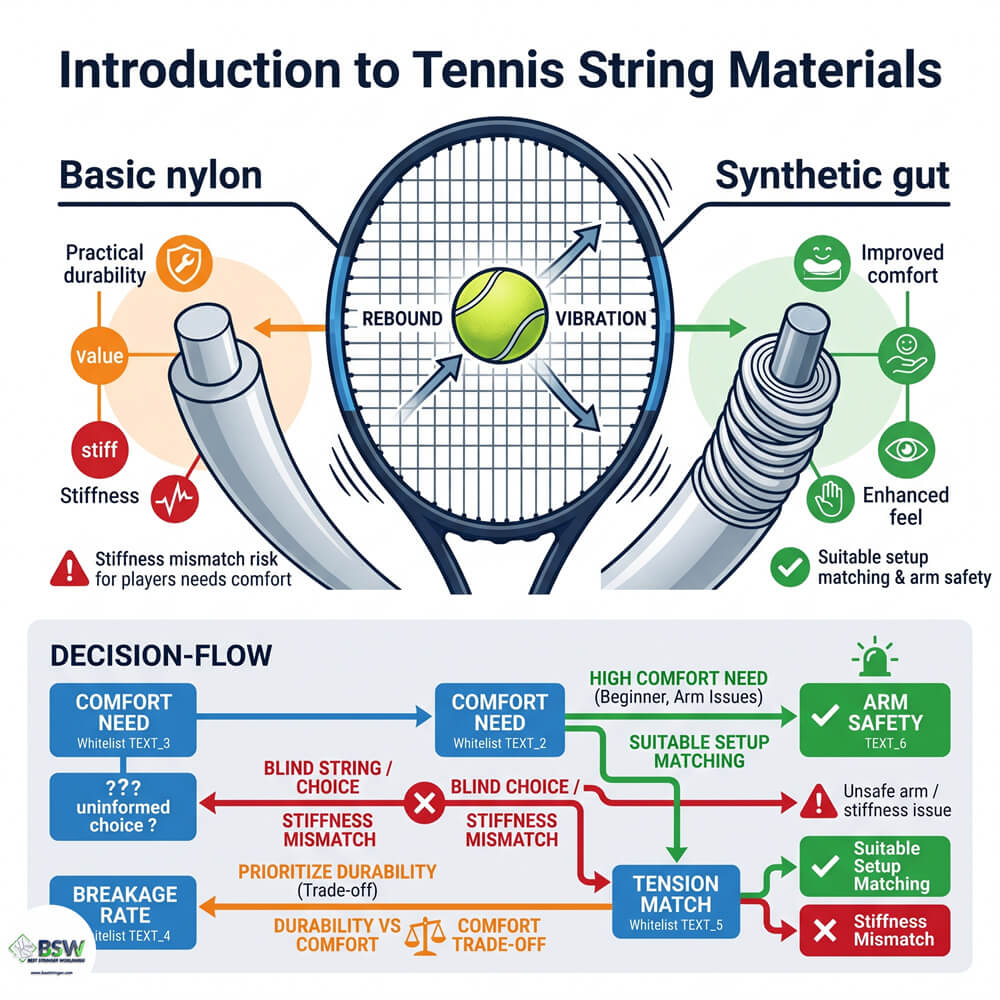
Understanding tennis string materials is essential for how specific setups combine to enhance your playstyle. In this guide, you will learn why nylon and synthetic gut tennis strings remain foundational choices, and how they influence power, comfort, and durability differently than stiff polyesters.
In short, nylon as a broad material family provides a practical baseline for durability and value, while synthetic gut is a specific nylon-based construction that offers a more refined, comfortable feel. Mastering these concepts is crucial for any tennis player aiming to improve, as the stringbed heavily dictates your touch and response.
Here is a simple decision flow:
Step 1: Assess your comfort needs and string breakage rate honestly.
Step 2: Understand that ‘synthetic gut’ is typically a more advanced nylon construction designed to mimic natural playability.
Step 3: Consult a certified stringer to select a material and tension that perfectly matches your arm safety and sweet spot accuracy.
1.2 Nylon Strings
Nylon Strings: The Versatile and Accessible Option
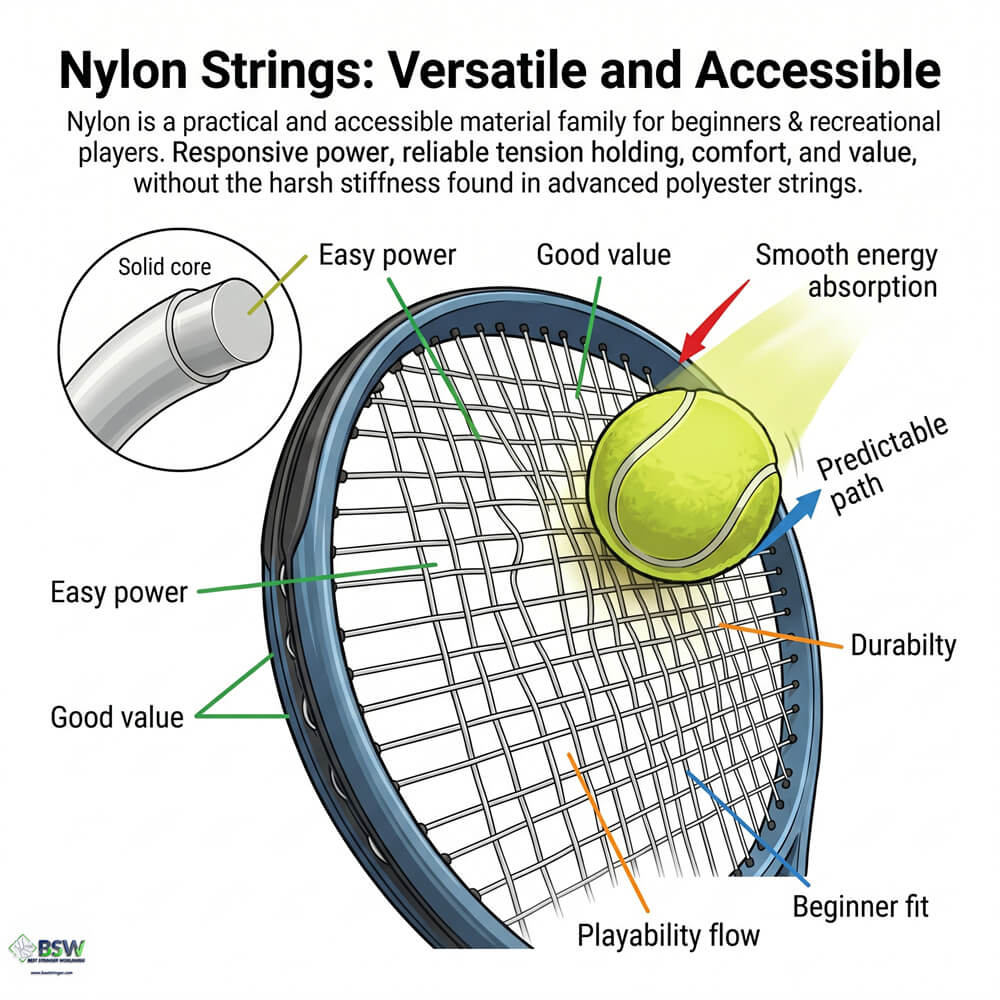
When discussing tennis strings, nylon is widely regarded as the most versatile and accessible material family available. Basic nylon tennis strings provide a practical foundation, offering excellent playability without the stiff, unforgiving harshness of advanced polyester materials. They naturally hold tension well and provide an easy source of responsive power.
While “nylon” is a broad chemical category, in the stringing world it often refers to simpler, solid-core string constructions. These more basic strings lack the complex outer wraps found in premium synthetic guts, but they compensate by delivering exceptional raw durability for their price point.
A tennis player needs the right balance of affordability, comfort, and court reliability. For beginners learning the mechanics of the game or recreational players wanting an economical restring, a basic nylon string is generally the smartest starting point. It offers a consistent response while remaining gentle on developing arms.
1.3 Characteristics
Understanding Characteristics of Nylon Strings
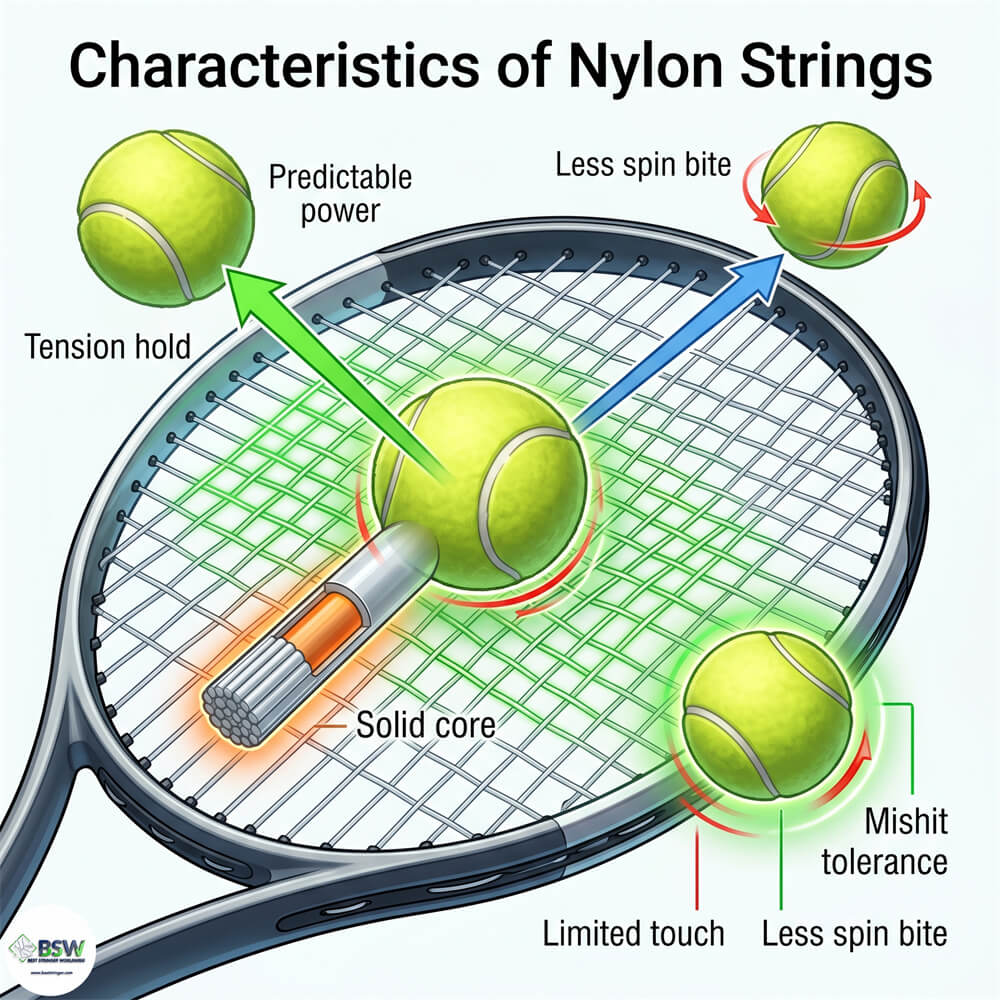
While nylon strings provide great versatility, understanding their specific characteristics is key to setting expectations. Basic nylon offers predictable power and excellent tension maintenance, but it may lack the nuanced touch or heavy spin potential of more specialized string families. It is a workhorse material, ideal for solid, flat hitting.
A basic nylon string acts as a reliable baseline. It is forgiving enough to absorb impact energy smoothly, helping players effortlessly send the ball deep into the court, even if their swing action is slightly slower or their contact is occasionally off-center.
Durability is also a major factor. The simpler, thicker solid-core construction of standard nylon ensures that your strings survive mishits better than heavily wrapped multifilaments, saving your strings from snapping early while remaining budget-friendly.
1.4 Synthetic Gut
Synthetic Gut: The Natural Feel
Synthetic gut is generally a nylon-family string category, purposefully designed to provide a more refined playing experience. Understanding this structural synergy is essential for all levels:
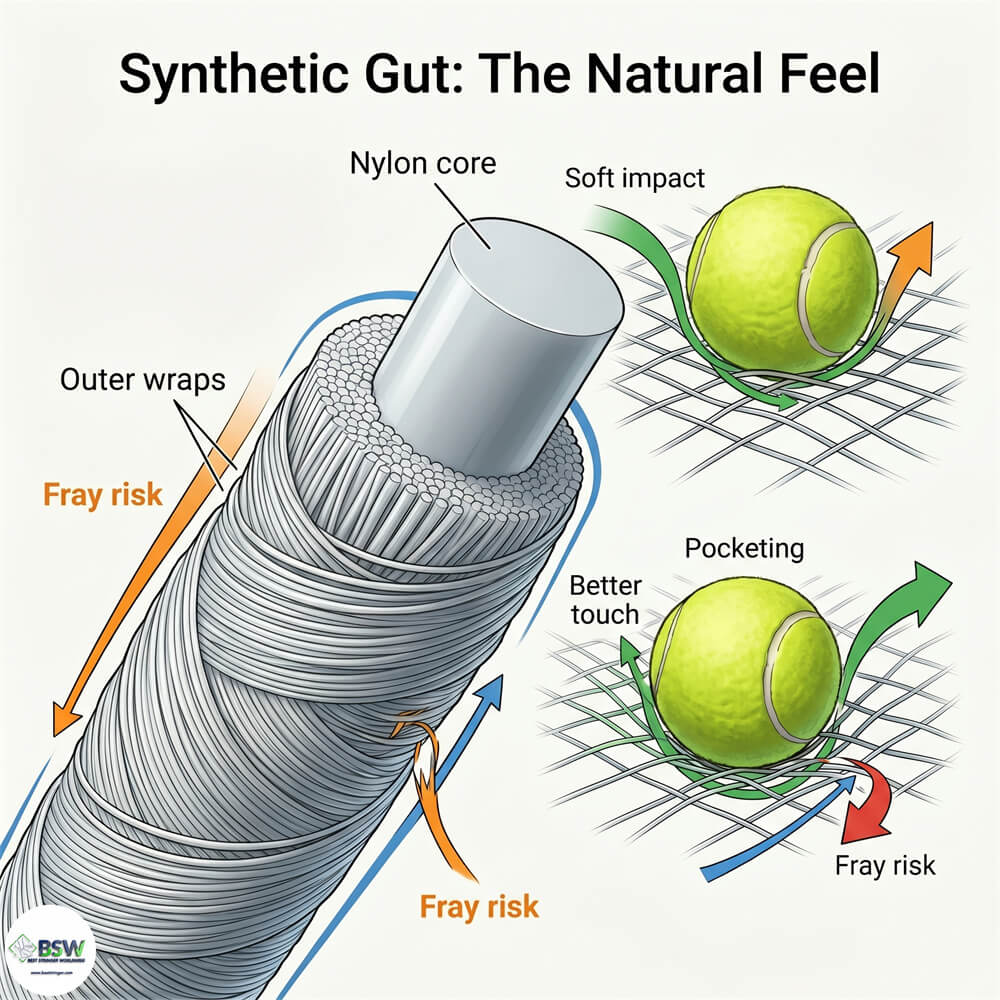
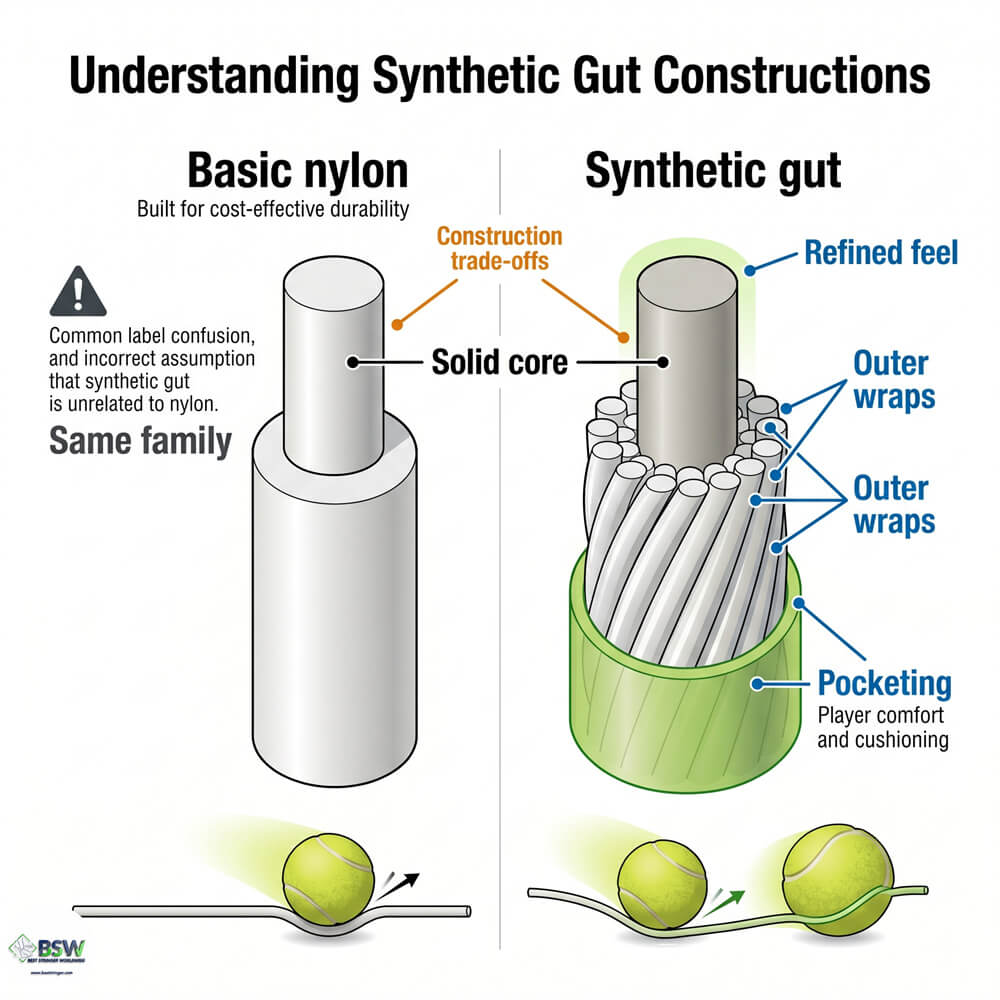
What is Synthetic Gut? The term can confuse players, as it contains no actual animal gut. Instead, it is a nylon-based string featuring a solid central core wrapped in additional, finer filaments. This design aims to imitate the highly comfortable response of expensive natural gut.
The Natural Feel. These outer wraps soften the impact, offering enhanced touch, comfort, and pocketing compared to basic nylon. It provides a balanced middle ground of power and control, making it a highly practical all-around string for intermediate players.
The Durability Trade-off. While synthetic gut provides superior feel, those complex outer wraps can fray over time through heavy spin hitting. A professional racquet stringer will always weigh this slight decrease in durability against the immediate benefits to your arm comfort.
1.5 Understanding Constructions
Understanding Synthetic Gut Constructions
Construction Differences: Basic vs Refined.
Basic nylon strings are typically single-filament solid cores, built strictly for cost-effective durability. By contrast, synthetic gut constructions add complex outer wraps to that core, drastically altering how the stringbed behaves upon impact.
Refined Feel and Pocketing.
These outer wraps help soften the impact of the ball. This creates a more responsive pocketing effect, providing a crisp but comfortable feel. Power and control remain balanced, making it highly suitable for players developing touch volleys and controlled slices.
Avoiding Label Confusion.
Assuming “synthetic gut is completely different from nylon” is a common error among players. Synthetic gut is simply a specific, comfort-oriented construction within the broader nylon family. A certified stringer knows they share similar chemical roots but offer distinctly different playing experiences.
1.6 Player Selection
Choosing the Right String for Your Game
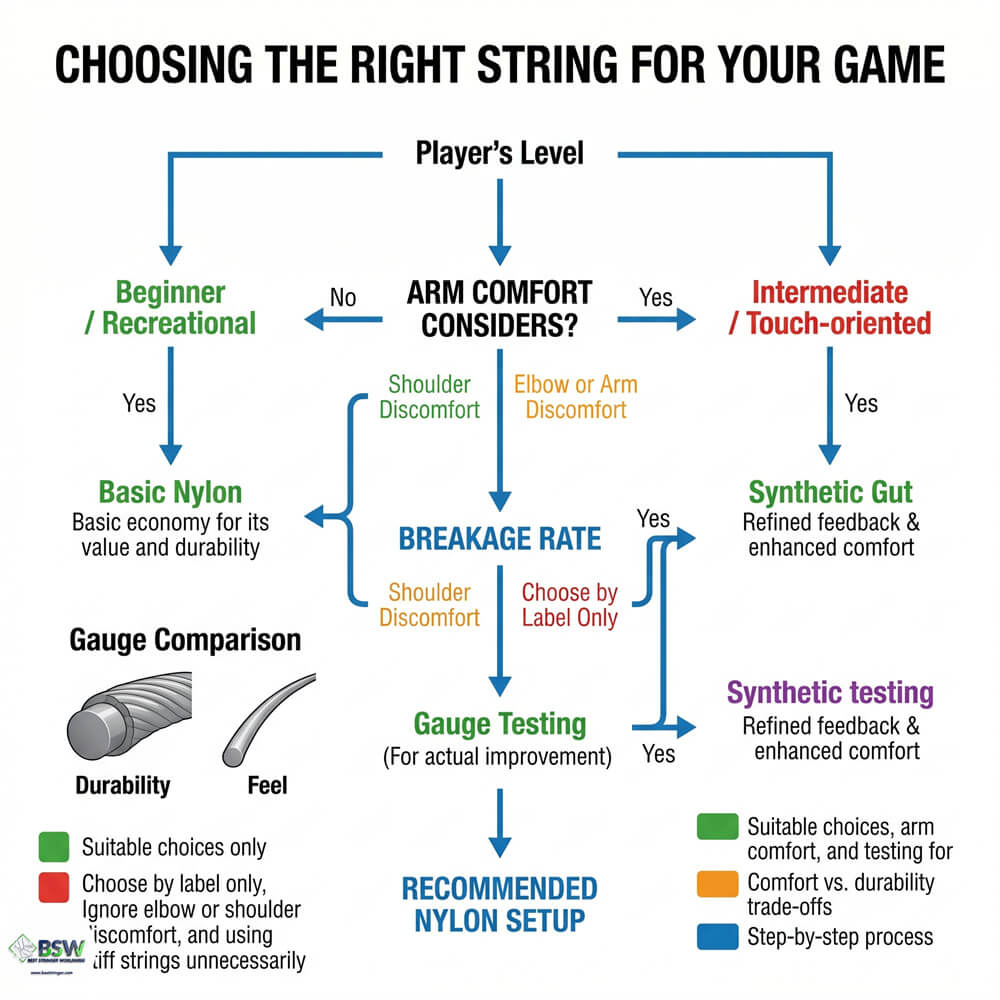
A thoughtful decision flow is crucial for balancing comfort and durability safely. Use this simple framework before stringing your racquet to find the best match:
Step 1: Assess Your Level. Basic nylon is often perfect for beginners seeking durability and an affordable entry point. Conversely, intermediate or touch-oriented players frequently benefit from the refined, balanced feedback of a synthetic gut.
Step 2: Identify Arm Issues. If you experience elbow or shoulder discomfort, moving away from stiff materials is vital. The softer response of a synthetic gut construction is generally preferred over basic nylon to help absorb harsh impact shocks.
Step 3: Test for Actual Improvement. Try experimenting with string gauges. A thicker synthetic gut might blend comfort with longevity, while a thinner basic nylon could offer a snappier response. Pay attention to performance and tension changes, not only when the string eventually breaks.
1.7 Stringer Knowledge
The Value of Stringer Certification
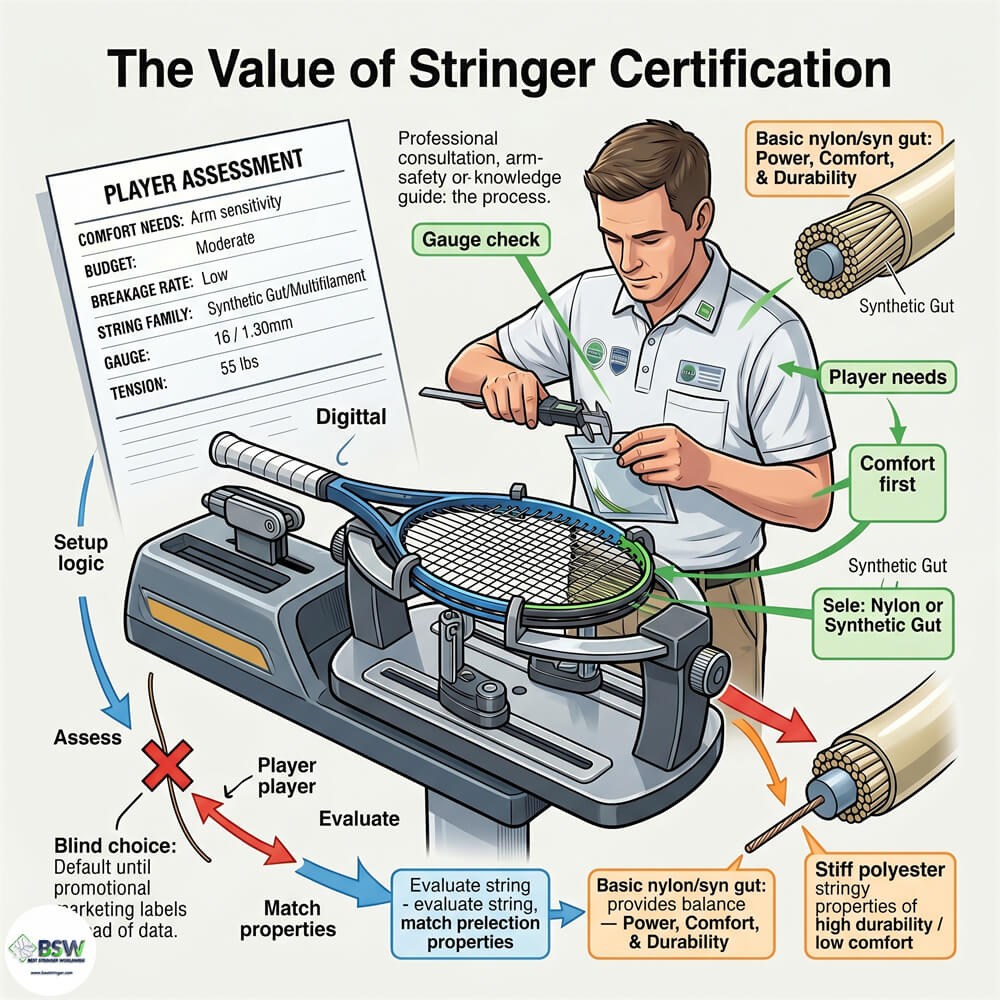
Proper material education is a core part of a professional racquet stringing course and good stringer certification standards. A certified stringer understands that recommending strings blindly based on marketing labels, without considering a player’s real needs, is a disservice.
At Best Stringer Worldwide, we know that string material directly influences comfort and performance. The magic is in the precise consultation logic a stringer uses to match a basic nylon or a refined synthetic gut to your game. Even badminton stringers learning cross-sport basics must understand these material families to truly service their tennis clients.
By prioritizing accurate knowledge, our stringer certification ensures that every setup perfectly balances power, comfort, and control. You eliminate guesswork, avoid arm injuries from overly stiff materials, and focus purely on enjoying and improving your tennis game.
Nylon vs Synthetic Gut Quick FAQ
Quick, definition-first answers to common questions about nylon and synthetic gut tennis strings.
What is the difference between nylon and synthetic gut?
Synthetic gut is generally a nylon-based string that features a central core surrounded by outer wraps for better feel, while standard nylon is often a simpler, more basic solid-core construction focused on raw durability and affordability.
Is synthetic gut actually natural gut?
No. Synthetic gut is a man-made, nylon-based string designed to emulate the soft, comfortable playing characteristics of highly expensive natural cow intestine gut, but at a far more affordable and accessible price point.
Which string is usually better for comfort?
Between the two, synthetic gut is usually associated with a softer, more comfortable feel because its multifilament outer wraps help absorb impact shock better than a basic solid-core nylon, making it easier on the elbow.
Which option is more affordable and durable?
Basic nylon tennis strings are generally the most affordable and often offer slightly better raw durability. The lack of fraying outer wraps makes them an excellent choice for budget-conscious beginners who tend to break strings frequently.
Why do string gauges matter for these materials?
Thicker gauges in both nylon and synthetic gut increase durability but slightly reduce touch. Thinner gauges offer enhanced feel and spin potential but will snap faster under heavy hitting. Gauge acts as a final tuning step.
Do all nylon strings feel exactly the same?
Not at all. The nylon family covers everything from basic, crisp tournament nylons to highly elastic, soft formulations. Performance and tension maintenance vary significantly based on the specific manufacturing process and design.
Why should a certified stringer understand this?
A professional stringer must recommend setups based on a player’s actual arm comfort, budget, and breakage rate, rather than just repeating vague marketing labels on the string package or defaulting to stiff polyesters.
Are racquet stringing courses necessary?
For those wanting to master string-family logic, yes. A racquet stringing course teaches a certified stringer how to expertly navigate nylon, synthetic gut, and modern polyester to best serve their clients safely and effectively.
Are basic nylon strings still useful?
Absolutely. They remain one of the most reliable and budget-friendly options available. For recreational players who do not need heavy topspin bite, basic nylon provides all the necessary power and longevity required for casual play.
String Material Simulator: Basic Nylon vs Synthetic Gut
Material Anatomy: Nylon vs Synthetic Gut
Explore the macro cross-section of tennis strings. Tap Simulate Impact to see how the outer wraps cushion the blow.
Professional Education
Our stringing approach is based on verified material parameters used by top professionals. We prioritize arm safety, proper string family evaluation, and playstyle efficiency over pure marketing hype.
| Performance Area | Basic Nylon Strings | Synthetic Gut Strings |
|---|---|---|
| Construction Focus | Often a simpler solid core design meant for general utility. | Usually features a solid nylon core with engineered outer wraps. |
| Playing Feel | Can feel slightly crisper or more direct depending on gauge. | Generally softer and designed to mimic natural comfort. |
| Durability Tendency | Highly durable for beginners learning proper contact. | Outer wraps may fray over time before the core snaps. |
| Power Potential | Offers standard repulsion for everyday recreational play. | Often provides a slight boost in pocketing and responsive power. |
| Control & Spin | Predictable response, though less specialized for heavy spin. | Enhanced touch and grip for slice and controlled placement. |
| Ideal Player Profile | Budget-conscious beginners and frequent string breakers. | All-court players seeking balanced comfort and arm safety. |
Master Your Stringing Craft with Best Stringer Worldwide
Ready to upgrade your stringer certification knowledge? Best Stringer Worldwide offers professional racquet stringing courses to teach you how nylon and synthetic gut strings affect playability safely. We serve tennis and badminton stringers worldwide especially in Singapore, Hong Kong, Malaysia, Indonesia, UK, France and Europe mastering cross-sport logic. Contact a certified stringer or join our certification to find the perfect tension and gauge for your game.