






1.1 Starting Point
What should I record before choosing a new gauge?
Before choosing a different squash string gauge, identify the string already installed and the player’s reason for changing. Ask about playing frequency, previous breakage and the feel they want to discuss. Gauge is one property of a string, not a complete description of its construction or performance.
A useful recommendation considers the actual product, racket and service history rather than treating the smallest diameter as automatically the best choice. Ask the player to describe the current setup and the reason for considering a change. Record the racket, known string details, service date and typical playing routine.
Use a concrete review question, such as how the setup feels during a familiar session or why the previous string was replaced. This gives the consultation a clear starting point. The next service can then be reviewed against the player’s own experience instead of a general preference for a particular product label.

1.2 Preparation
Which product details identify the string?
Record the manufacturer, product name and diameter. Two strings described with a similar gauge label may not be the same material or construction. Use the product’s stated millimetre measurement where available rather than assuming every brand’s gauge naming is identical. Keep the packet or reel information available for the order.
This makes future replacements and comparisons more reliable. Read the full product name and gauge from the packaging or reel and write both on the order. Keep any variant name visible so similar materials are easy to distinguish at the workstation.
Confirm the selection with the player before preparing the job. At collection, include the same description on the service record. This creates a useful product history and allows another technician to understand exactly which material was installed when the racket returns for a repeat service.

1.3 Working Method
How should gauge options be discussed?
Product construction, installation, racket condition and use also matter. Explain what the trial can realistically help the player learn. Discuss the player’s priorities in practical terms, including feel, replacement frequency and the complete installed cost. Present a small set of relevant options with their exact product descriptions.
Agree which difference the player will observe during the trial and keep that objective with the order. After use, compare their comments with the recorded setup. This makes string selection a manageable conversation with a clear follow-up, particularly when the player has little previous service information.
If the player has used several setups, compare the records in date order and ask what prompted each change. Include the installed cost and reason for replacement alongside the playing comments. This history helps the customer recognise their own priorities and gives the technician a clearer starting point when narrowing the next choice.
1.4 Practical Review
What frame information should guide the service?
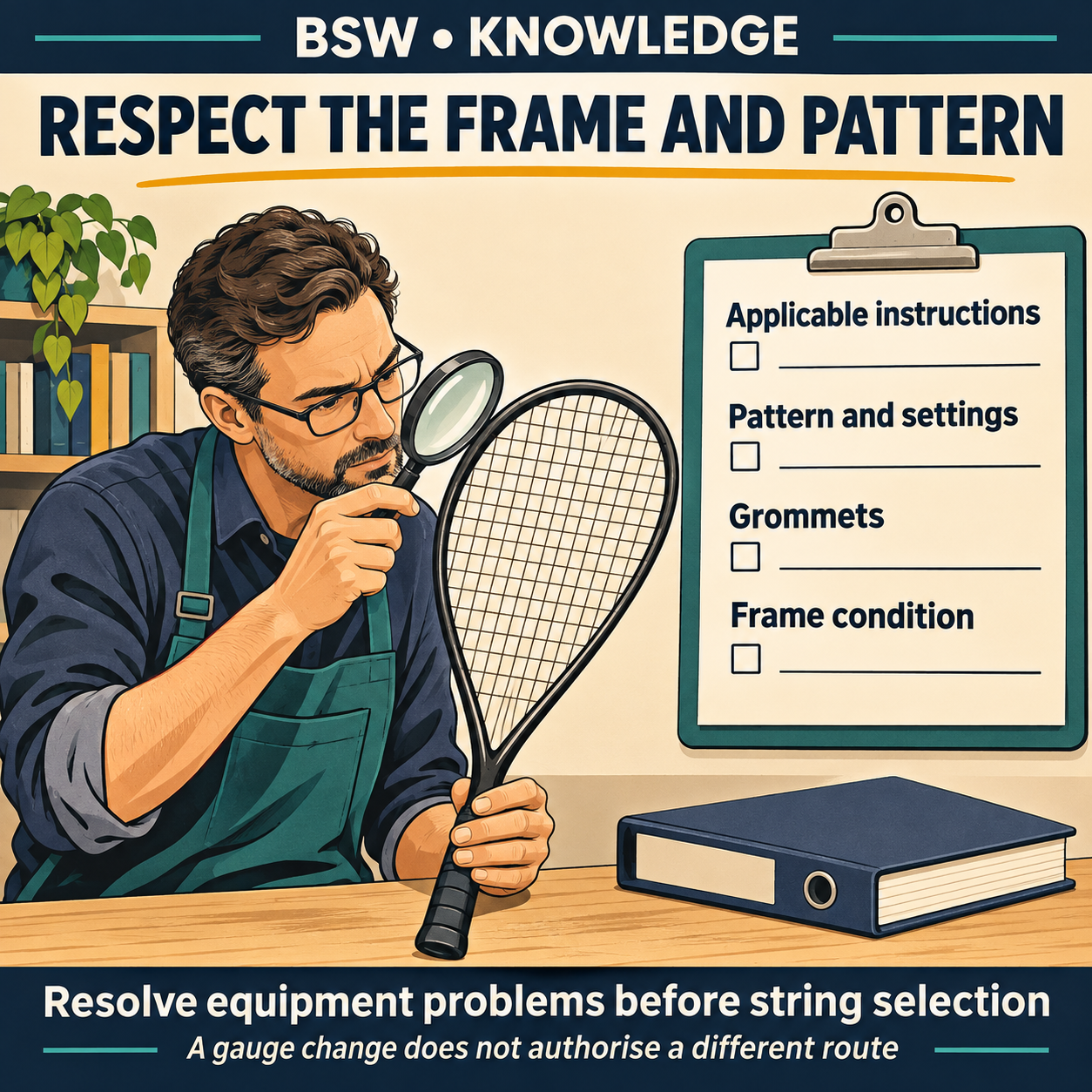
Check the applicable racket instructions, string pattern and tension guidance before selecting the installation plan. A change of gauge does not permit a different route or an unsupported setting.
Check the details. Inspect grommets and frame condition before proceeding. If there is damage or uncertain serviceability, address that first. String selection cannot solve an unresolved equipment problem.
Review the process. Match the racket to the applicable pattern and review its condition before preparing the selected material. Write the agreed settings with their units and keep the instructions available during work.
Plan the next step. The product choice and installation plan should be clear on the same service record. Keep the selected product description visible with the pattern at the workstation. Confirm any customer-approved change on the order before proceeding, then use the same details when explaining the completed service.
1.5 Key Checks
How can a new setup be compared fairly?
Record the context.
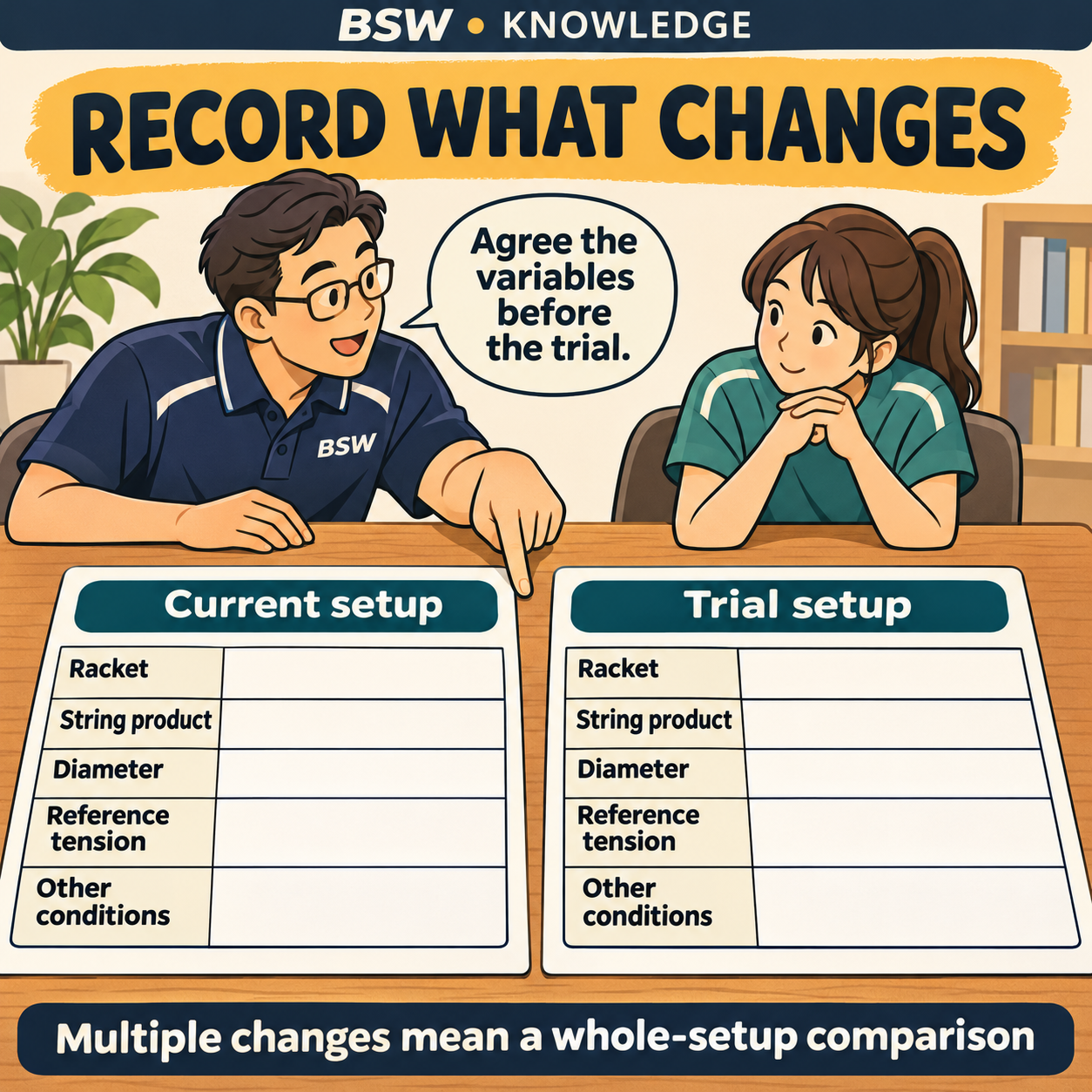
Agree which variables will change and record them. If possible, retain the same racket and other relevant conditions so that the player can describe the difference usefully. If tension and string product both change, describe the trial as a new complete setup.
Check the details.
Avoid claiming that one material property caused every perceived change when several parts of the service were altered. List the variables that will change and retain the details of the previous setup.
Review the process.
Ask the player to use familiar drills or sessions and return with comments about the agreed objective. A short comparison record helps the technician connect playing feedback with a specific service decision.

1.6 Service Record
What should be reviewed after playing?
At follow-up, ask about familiar shots and any change in feel, then inspect the racket and strings.
Check the details. Record playing duration and the location of wear or breakage. Use the findings to decide whether to repeat the setup or adjust the next trial.
Review the process. A thicker string is not automatically the right response to every break, especially if inspection identifies a separate frame or grommet issue. Record the reason for replacement, visible wear and the amount of playing use reported by the customer.
Plan the next step. Inspect the racket when reviewing an early break or unusual change. Keep these observations beside the original setup so the next recommendation follows the player’s actual service history.
1.7 Guided Practice
How can learners practise string selection?
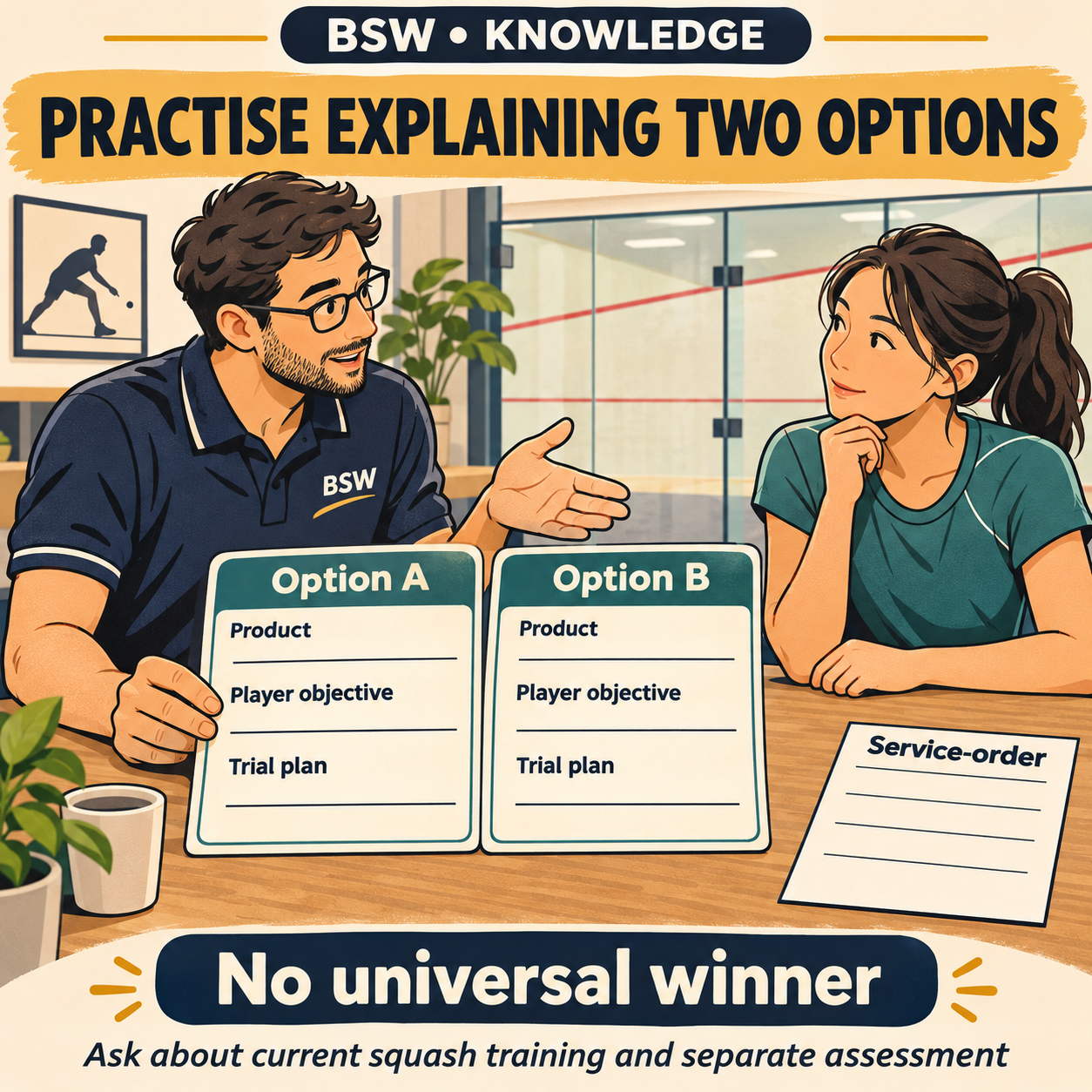
For squash stringing training, practise explaining two suitable options without declaring a universal winner. The learner should identify the products, describe the planned trial and write a clear service order. Give learners a customer profile and ask them to explain two suitable service options using exact product details.
Review the written order and follow-up questions together. The exercise should produce a clear recommendation the customer can understand and the workshop can reproduce. Ask the learner to prepare a follow-up question for each option and explain what information would lead to repeating or changing the setup.
Swap roles and repeat the discussion with a different service priority. Keep the two written orders for comparison, using instructor feedback to improve the clarity of the recommendation and the planned review.
Squash String Gauge Quick FAQ
Practical answers about squash string gauge, preparation, service decisions and guided stringing practice.
What should I record before choosing a new gauge?
Before choosing a different squash string gauge, identify the string already installed and the player’s reason for changing. Ask about playing frequency, previous breakage and the feel they want to discuss.
Which product details identify the string?
Record the manufacturer, product name and diameter. Two strings described with a similar gauge label may not be the same material or construction. Read the full product name and gauge from the packaging or reel and write both on the order. Keep any variant name visible so similar materials are easy to distinguish at the workstation.
How should gauge options be discussed?
Product construction, installation, racket condition and use also matter. Explain what the trial can realistically help the player learn. Discuss the player’s priorities in practical terms, including feel, replacement frequency and the complete installed cost. Present a small set of relevant options with their exact product descriptions.
What frame information should guide the service?
Check the applicable racket instructions, string pattern and tension guidance before selecting the installation plan. A change of gauge does not permit a different route or an unsupported setting.
How can a new setup be compared fairly?
Agree which variables will change and record them. If possible, retain the same racket and other relevant conditions so that the player can describe the difference usefully.
What should be reviewed after playing?
At follow-up, ask about familiar shots and any change in feel, then inspect the racket and strings. Record playing duration and the location of wear or breakage.
How can learners practise string selection?
For squash stringing training, practise explaining two suitable options without declaring a universal winner. The learner should identify the products, describe the planned trial and write a clear service order.
What should I keep for the next review?
Keep the task objective, equipment details, completed work and useful observations together. Add the date and a clear next action so the next review can build on the same record.
How can I develop this skill with BSW?
Bring your current experience and a specific practical question to BSW. Discuss the relevant stringing course and use instructor feedback to plan the next exercise around the skill you want to develop.
Squash String Gauge: Explore the Practical Decisions
Build a Clear Working Method
Use the sections, questions and interactive comparison to review squash string gauge. Keep a clear practice record and use instructor feedback to choose a focused next task.
| Service Check | Rushed Approach | Planned Approach |
|---|---|---|
| Gauge | Complete description of the string | One specification among several |
| Recommendation | Thinnest is always best | Match a stated player objective |
| Trial | Change everything without notes | Record all changed variables |
| Breakage | Automatically choose thicker | Inspect the equipment and history |
| Job record | Leave the setup in memory | Write the exact task, equipment and agreed settings |
| Next action | Repeat the same routine without review | Use the recorded feedback to choose the next task |
Develop Your Squash Stringing Skills with Best Stringer Worldwide
Ready to work on squash string gauge in a guided learning setting? Tell Best Stringer Worldwide about your racket sport, current experience and available equipment. Bring a specific question or practice record so the discussion can focus on the skill you want to develop. Explore the relevant course and plan a practical next step with clear preparation, useful feedback and an organised learning record.

