Badminton Stringing Course Graduate
Tan Jun Yee

Singapore
BSW Badminton Stringing Course
Stringer ID : BS260831118
✅ Course Completed
Growing Existing Skills with a Professional Foundation
Tan Jun Yee is a secondary-school student from Singapore who brought practical stringing experience to the BSW badminton stringing course. During school holidays, he had already worked helping others string racquets. His family supports this interest and bought him a machine for practice at home. He came to BSW to develop professional technique on top of that experience and completed the course.
Badminton Stringer Course
BSW Badminton Stringing Course
School Holidays and a Growing Interest in Racquet Stringing
Tan Jun Yee’s interest goes beyond watching badminton. His younger brother plays for his school, and stringing has become a practical interest within the family. He used holiday time to gain experience helping with racquet stringing work. Those sessions gave him familiarity with the process before he sought more structured professional training.
Refining an Established Foundation
Tan Jun Yee did not arrive as someone handling a stringing machine for the first time. His previous work had given him a useful starting point. The course helped him revisit frame inspection, mounting, string selection and pound settings as parts of one complete process. A proper badminton stringing foundation allows an experienced learner to improve the reasons behind familiar movements.
Connecting Stringing with the Player
Having a younger brother who plays badminton at school gives Tan Jun Yee a close connection to the equipment players use. String choice and pound settings should reflect the player’s preferences and the racquet’s guidance. Learning to ask clear questions adds another skill to practical stringing: understanding what someone needs before deciding how to prepare their racquet.
Developing Professional Stringing Methods
His course included the 2-knot professional stringing method, 4-knot proper stringing method and around-the-world stringing method. Each badminton stringing pattern needs a clear route through the mains, crosses and finishing points, checked against the racquet manufacturer’s instructions. Revisiting these methods gave him a way to connect previous experience with a more deliberate professional sequence.
Learning Beyond Speed
Eric Chuar observed that Tan Jun Yee handled strings and wove the crosses smoothly, with a working pace that reflected his earlier experience. His practical ability was comparable with that of many adult learners and shop operators Eric had encountered. The purpose of further training was to refine technique and consistency, while allowing this young learner time to keep developing.
Giving Familiar Movements a Clear Reason
In the badminton stringing course, Tan Jun Yee could connect tasks he already knew with badminton stringing theory. Frame support, string behaviour, pattern choice and pound settings influence one another. Understanding these relationships helps him explain a decision and spot a step that needs more attention, rather than rely entirely on speed or habit.
Prior experience can make a movement feel natural, but professional learning asks whether the method is appropriate for the racquet. Reviewing the planned string route, clamp contact and finished stringbed provides useful checks. Tan Jun Yee’s training builds on his existing fluency while giving him a more organised way to review the quality of the work.
Practical Experience with Stringing Equipment
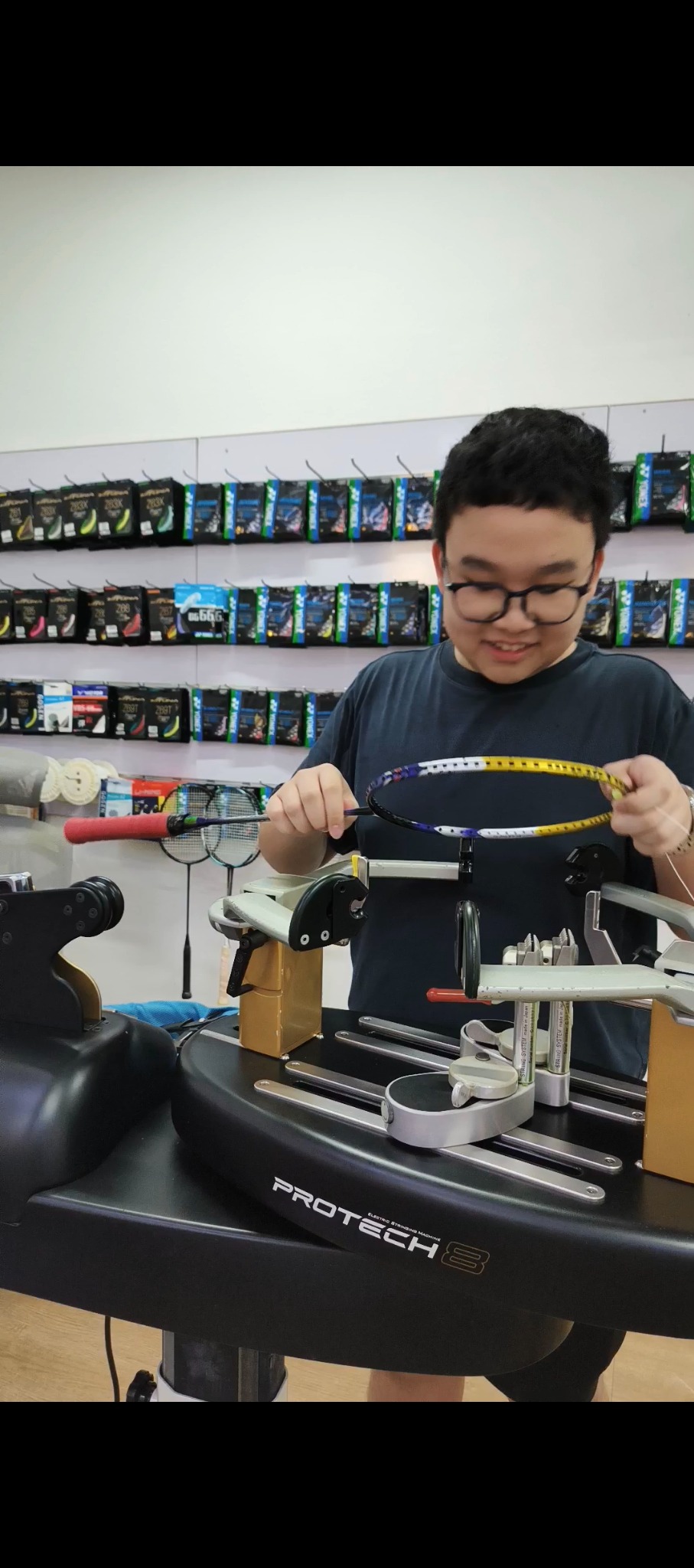
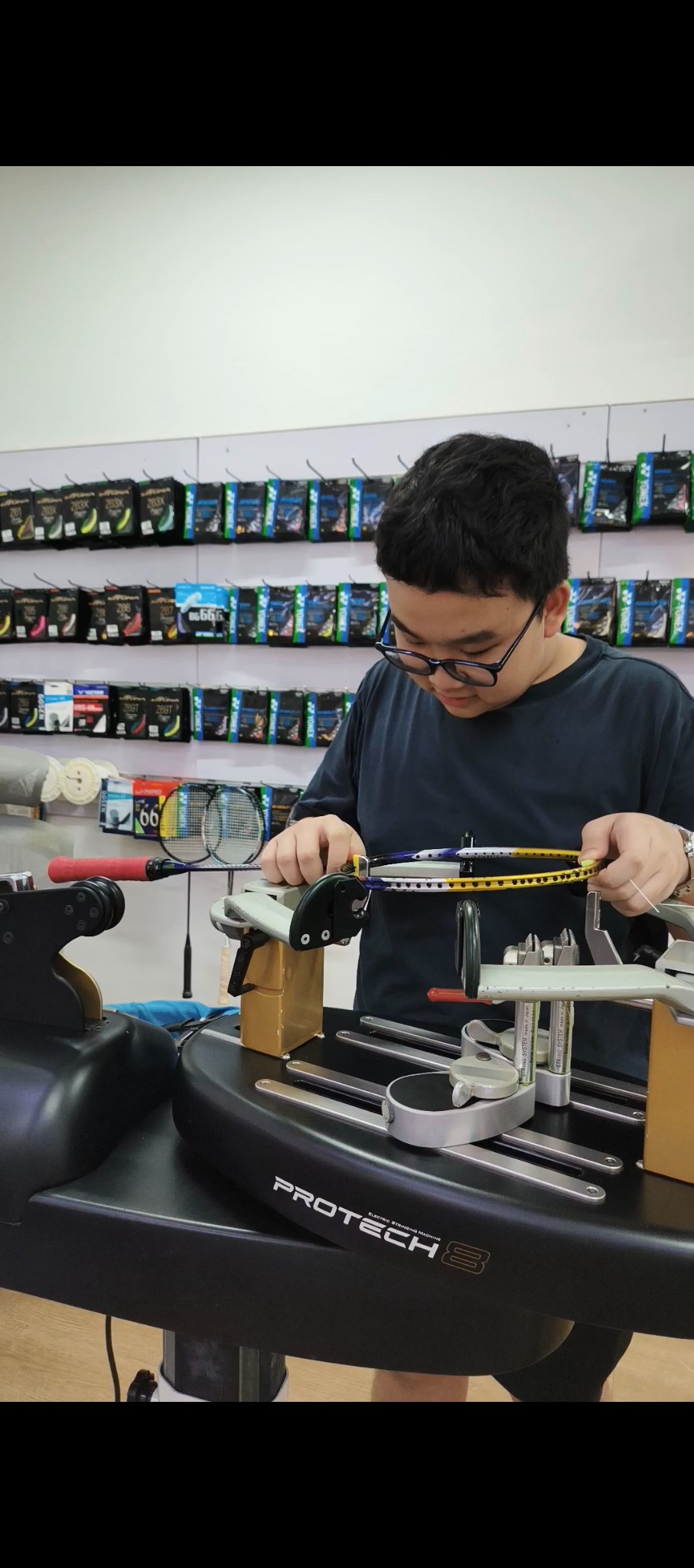
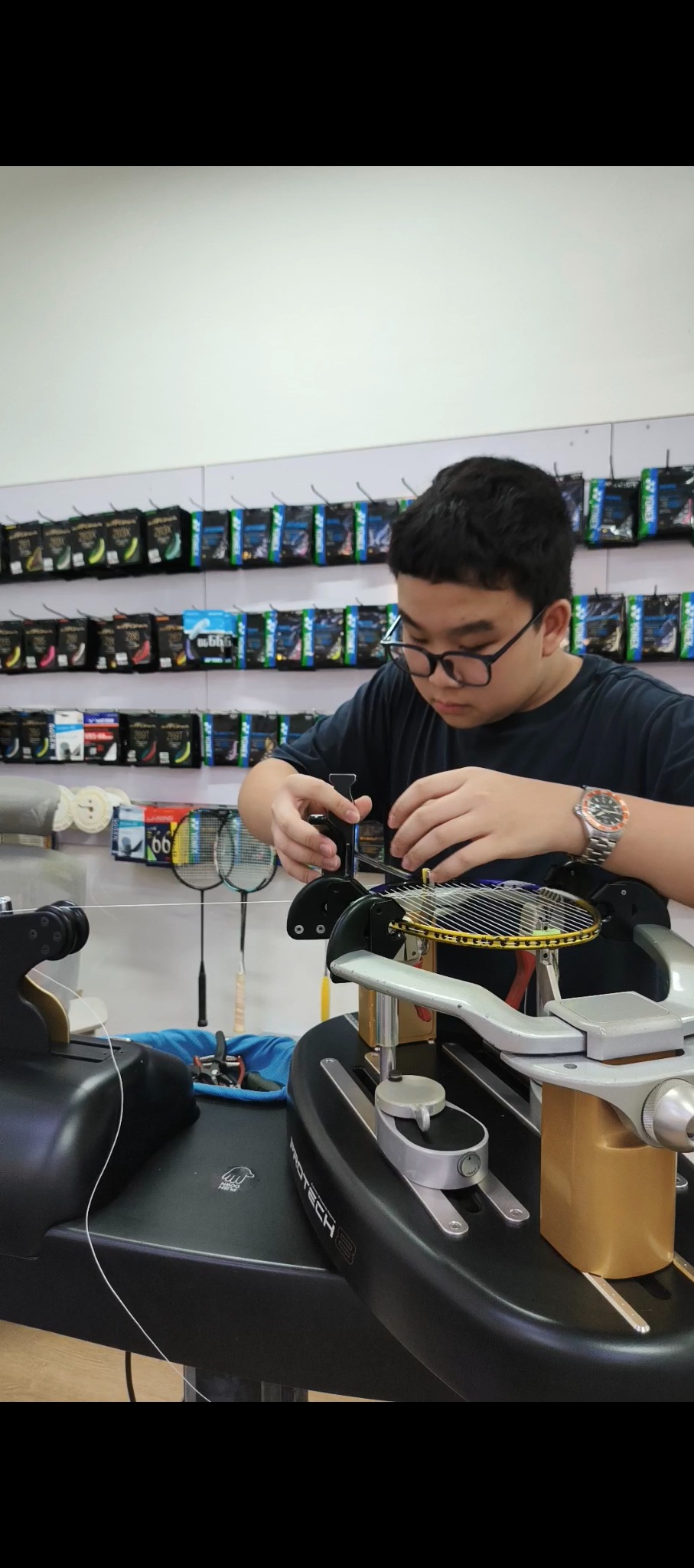
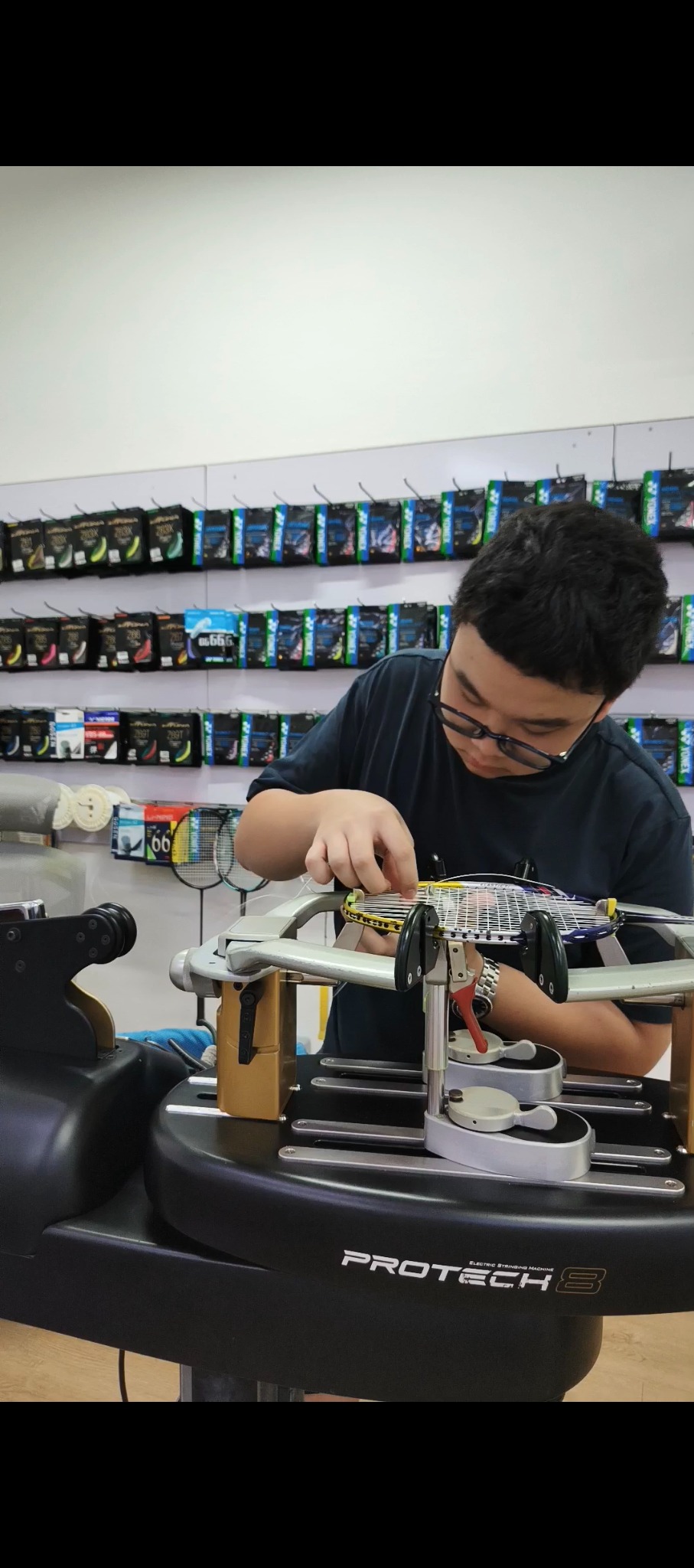
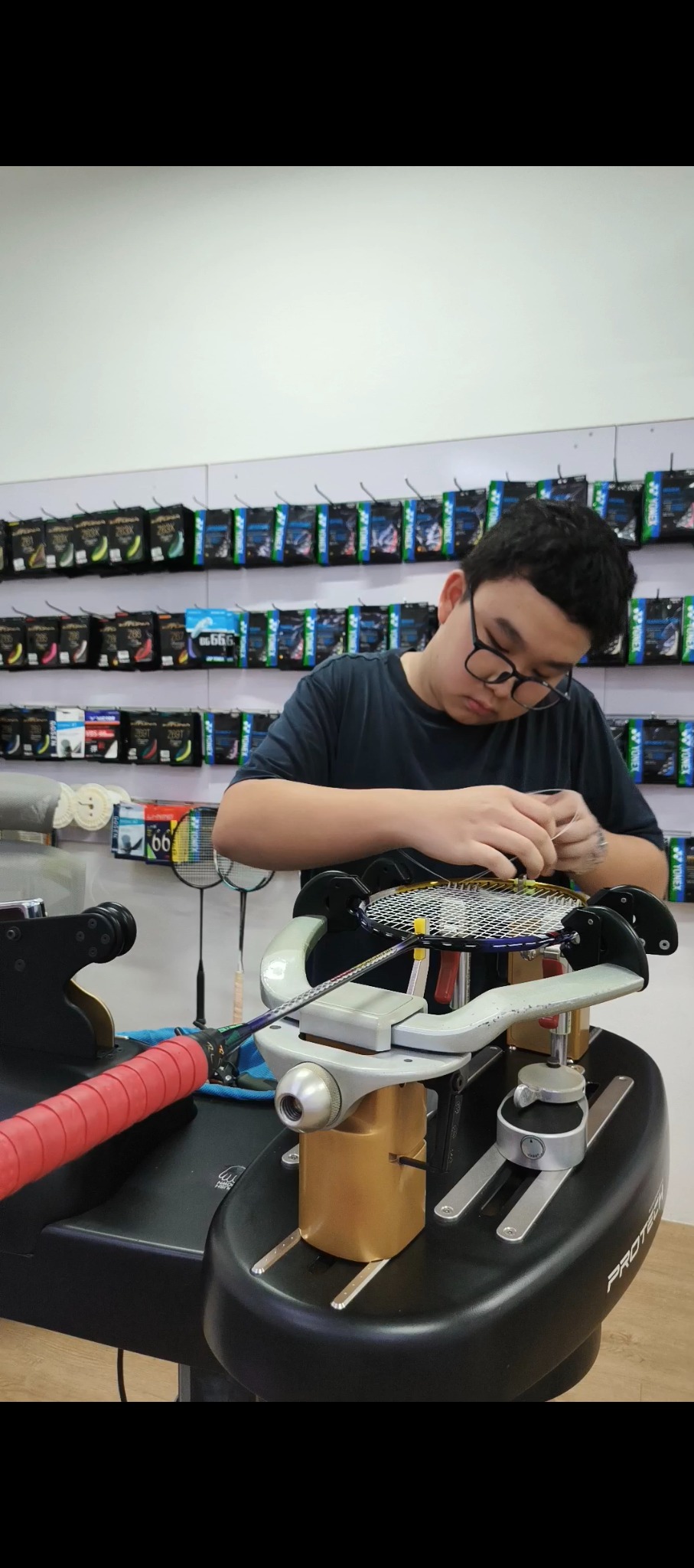
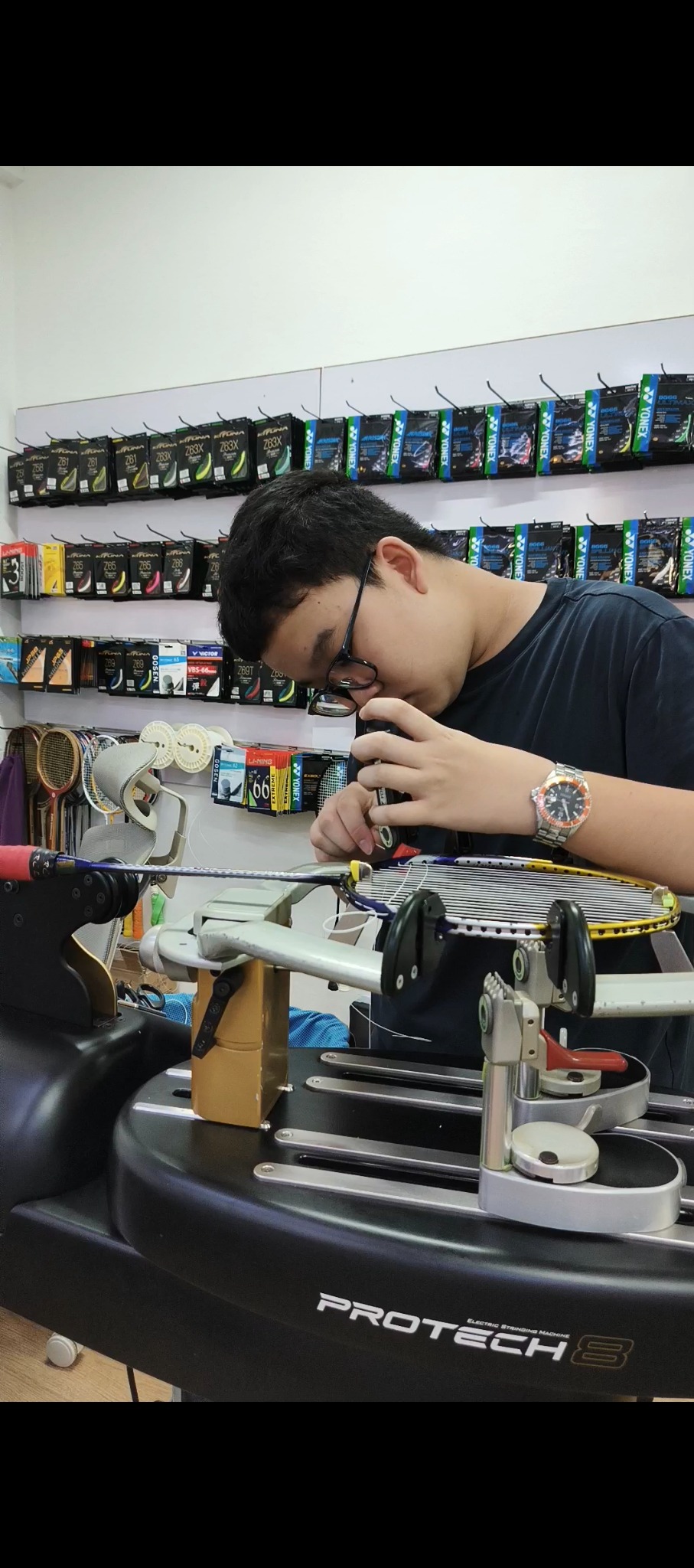
The photographs show Tan Jun Yee preparing and working on a badminton racquet at the stringing machine. He handles the frame, strings and clamps during real practical sessions. This part of the racket restringing course brought professional badminton stringing techniques into the working sequence, where accurate setup and careful string handling matter alongside a fluent pace.
His family’s purchase of a machine gives him a place to continue practising at home. That support can help him revisit lessons outside the classroom, especially during school holidays. Practice is most useful when each racquet receives a careful inspection, a planned pattern and a final review. Building those habits now can support the further growth of his skills.
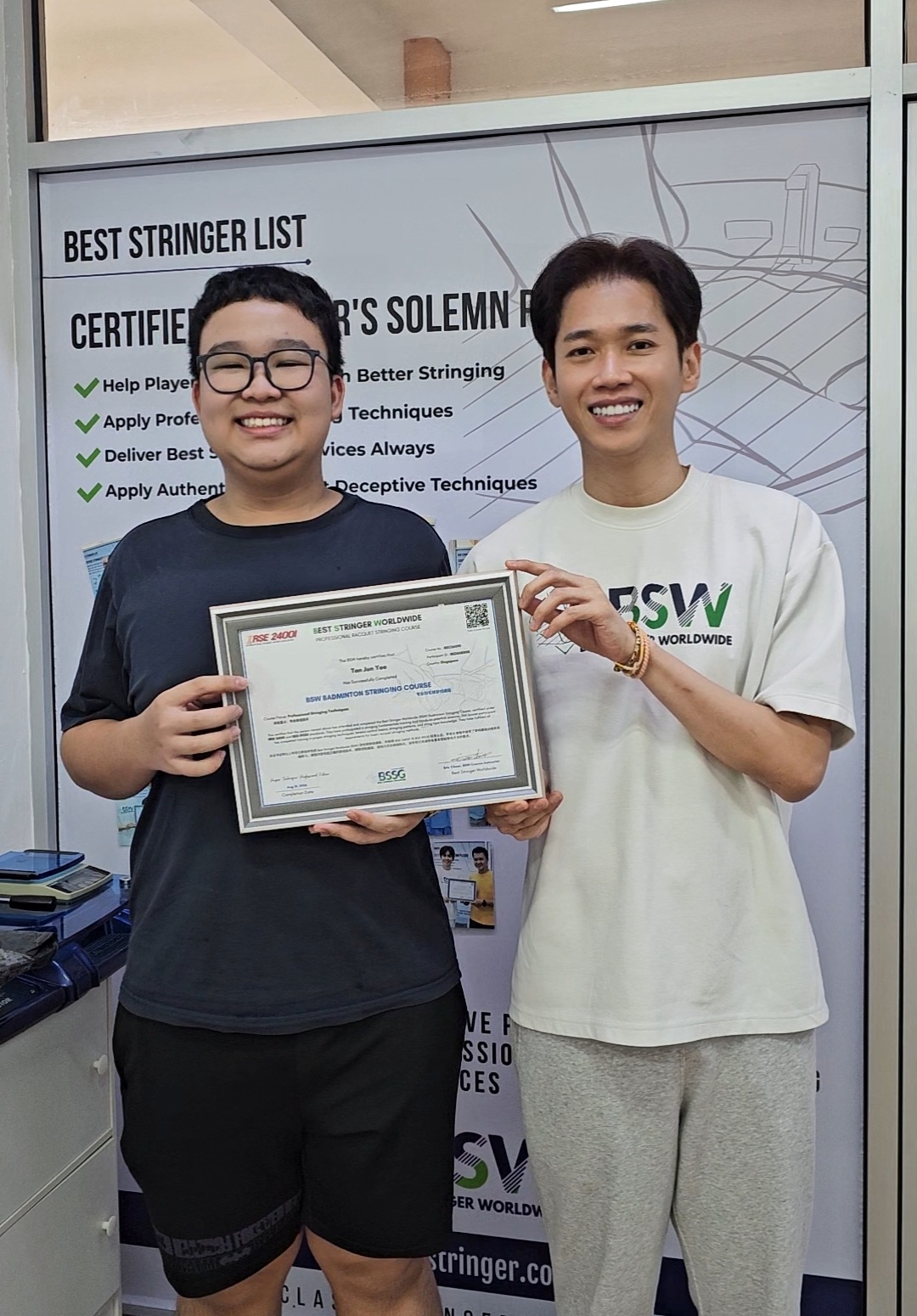
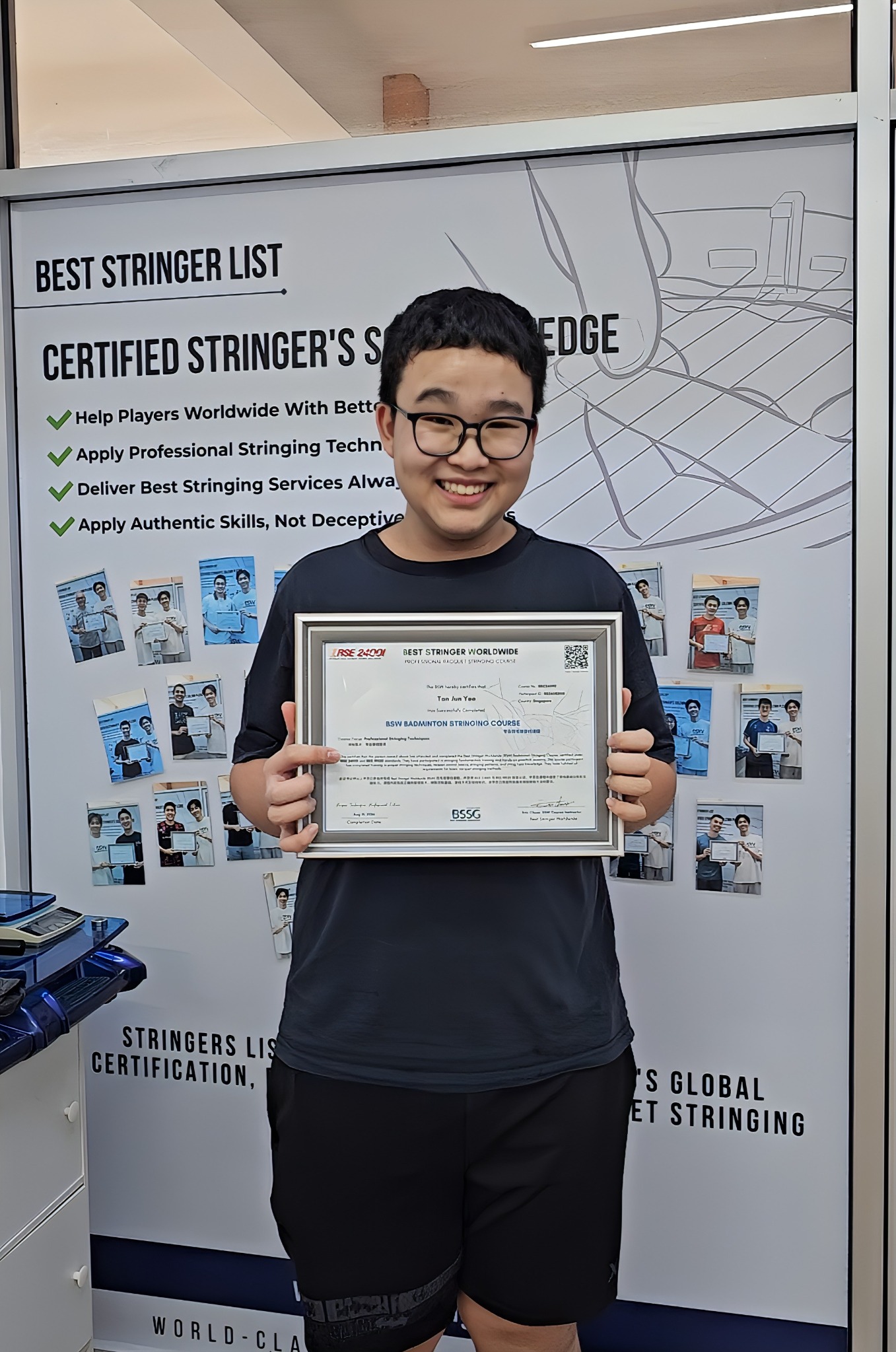
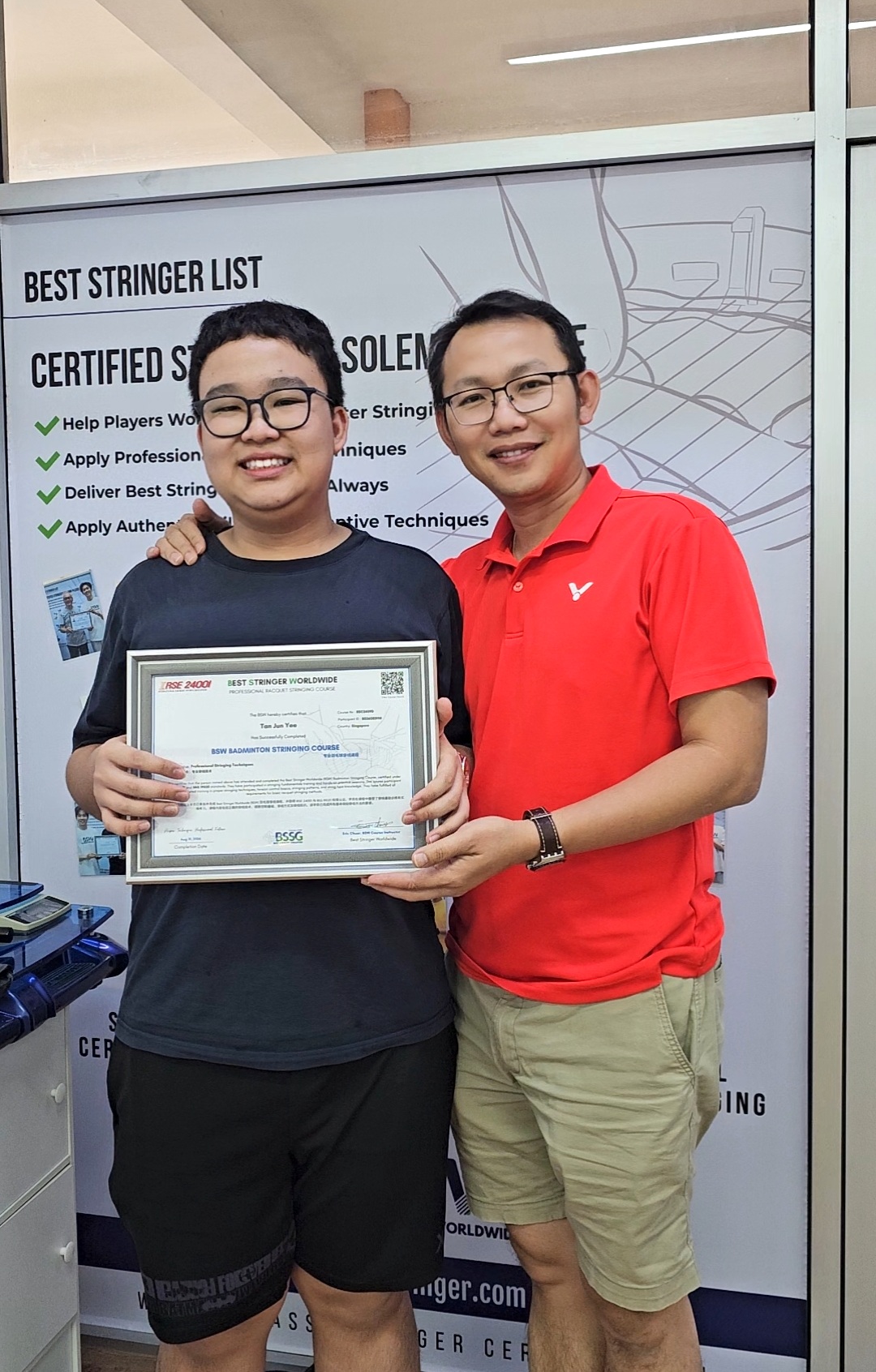
Tan Jun Yee’s certificate confirms completion of the BSW Badminton Stringing Course, focused on professional stringing techniques. It records fundamentals, hands-on practice, pound-control basics, stringing patterns and string-type knowledge, with references to IRSE 24001 and BSS 19020. These educational frameworks give context to the course he completed and the structured foundation added to his earlier practical experience.
Family Support and a Willingness to Learn
Tan Jun Yee’s family encourages his interest in racquet stringing. They supported his training and provided a machine so he could practise at home. Eric Chuar also found his father humble and supportive. This family involvement gives a young student room to explore a practical skill while continuing his school education.
Eric describes Tan Jun Yee as a capable young learner with useful experience already behind him. His smooth weaving and string handling should not be overlooked because he is still at school. Eric recommends giving his work a try, while recognising that steady practice and time will help him grow further. Professional training provides a foundation for that development.
Building His Stringing Future in Singapore
In Singapore, Tan Jun Yee can continue developing his stringing interest with support from his family and the machine they provided. School holidays offer time to practise the professional techniques he came to BSW to learn. His earlier holiday work and course training form a useful starting point for a future in racquet stringing, developed at a pace that fits his education.
The next stage is to make quality as repeatable as the movements themselves. Keeping notes about each racquet, the string used, pound settings and the chosen method gives practice a clear purpose. The topics below can help him review the 2-knot, 4-knot and around-the-world methods while continuing to improve consistency and communication with players.
Practice Habits for Continued Development:
- Inspect the frame before each stringing job
- Check the grommets for wear
- Ask what the player wants from the racquet
- Review the manufacturer’s stringing instructions
- Choose an appropriate string and gauge
- Record the agreed pound (lbs) setting
- Mount the frame with suitable support
- Plan the complete 2-knot route
- Review the finishing points of a 4-knot pattern
- Trace an appropriate around-the-world route
- Check clamp contact before pulling
- Weave crosses smoothly without rushing
- Review string alignment and the knots
- Keep a short record of each practice racquet
- Return to unclear steps with guidance
Tan Jun Yee’s Training Photographs
These photographs record Tan Jun Yee’s badminton stringing course, including racquet preparation, work at the machine and his course-completion certificate. They show the actual equipment and practical learning behind his story. Each displayed photograph links to its original, preserving the training record while the square crops keep the learner and the work clear.
Frequently Asked Questions
Read about Tan Jun Yee’s earlier stringing experience, his family’s support, the professional methods he learned and his continued development in Singapore.
Tan Jun Yee completed the BSW Badminton Stringing Course. His certificate lists Singapore, course BSC2609D and participant ID BS260831118. It records professional stringing techniques, fundamentals training, practical sessions, pound-control basics, patterns and string-type knowledge.
Yes. During school holidays, Tan Jun Yee had worked helping others string racquets. Eric Chuar observed smooth string handling and cross weaving, with practical ability comparable with many adult learners and shop operators he had encountered. Tan Jun Yee joined BSW to build professional technique on that existing experience.
His learning covered a proper badminton stringing foundation and the 2-knot, 4-knot and around-the-world methods. The pattern should suit the racquet’s instructions, with the mains, crosses and finishing points understood before starting. Theory and practical work helped him review the purpose behind each step.
His family supports his interest and bought him a stringing machine to practise at home. His younger brother plays badminton at school, adding a family connection to the sport. Tan Jun Yee can continue refining professional techniques during suitable free time and school holidays, allowing his experience to develop steadily alongside his studies.
His course-completion certificate references IRSE 24001 and BSS 19020 as educational frameworks for the training. The document records completion of the BSW badminton stringing course. This completion record is separate from a certified-stringer qualification or examination.