
1.1 Definitions
Course, Workshop and Certification Are Different Commitments
A badminton stringing course is a structured learning programme. A workshop is usually a shorter, focused session on a particular skill or problem. Certification is an assessment against stated requirements. These three activities can support the same professional pathway, but they should not be described as interchangeable.
The distinction protects learners from paying for the wrong outcome. Someone who has never mounted a racket may need foundation training. An experienced shop stringer may need a focused workshop on workflow or quality control. A candidate seeking a credential needs to understand the certification requirements and whether they are ready to be assessed.
When comparing options in Singapore, Malaysia or internationally, ask the provider to name the activity clearly. The title, fee, timetable and promotional wording should all match what will actually happen. Attendance, practice and assessment should not be blurred into one promise.
1.2 Structured Learning
What a Badminton Stringing Course Is For
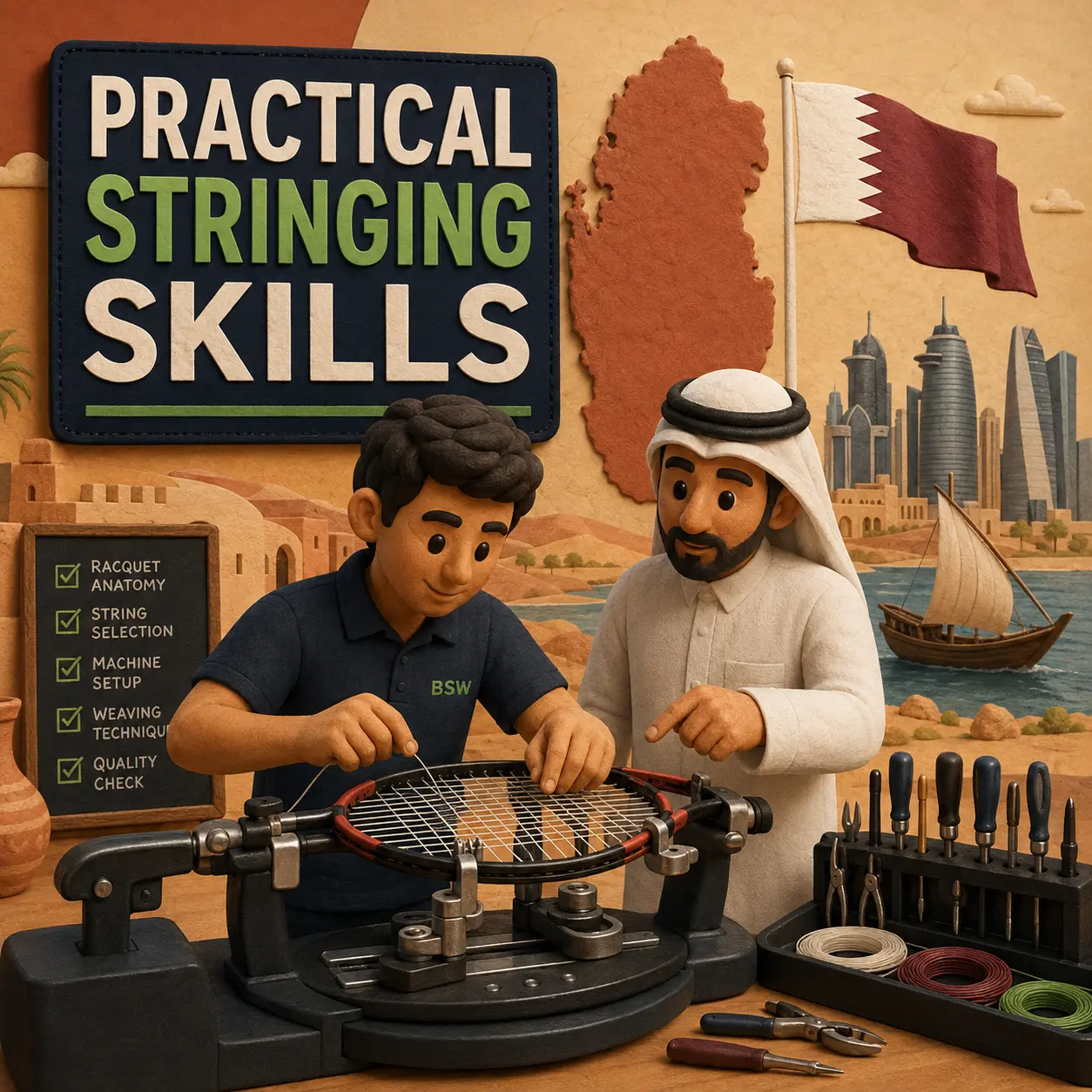
A course is designed to build a connected body of knowledge and practical skill. It should explain racket inspection, machine setup, mounting, clamps, string characteristics, reference tension, weaving, pulling, knots, final inspection and professional records in a logical sequence.
A foundation course is suitable for someone who needs the complete process, not only a correction to one technique. More advanced courses may develop consistency, speed, player consultation, equipment knowledge or assessment preparation. The important point is that a course has a learning progression rather than one isolated demonstration.
ERSA describes training as suitable for beginners and experienced professionals, with practical demonstrations and attention to preparation, tension, strings, workflow and service quality. That is a useful benchmark: a course should help the learner understand why each step matters and provide an appropriate way to practise it.

1.3 Focused Practice
What a Badminton Stringing Workshop Is For
A workshop is most useful when the learning objective is narrow and specific. Examples include racket inspection, clamp adjustment, knot technique, reducing weaving friction, machine calibration awareness, improving shop intake records or comparing a small number of stringing methods.
Because a workshop is shorter, it should not imply that every participant has completed a full professional curriculum. The organiser should state the expected starting level, topic, practical capacity, equipment arrangement and what the participant should be able to do afterwards.
A good workshop can be valuable for experienced stringers who already understand the full process and want to refine one part. It can also introduce beginners to the field, provided it is described as an introduction rather than a complete certification route. The title and claims should remain proportionate to the actual session.
1.4 Assessment
What Certification Is Designed to Confirm
Certification is not simply another lesson. It is a process for determining whether the candidate meets the applicable knowledge, practical and professional requirements. A credible certification can therefore have an unsuccessful result when the required standard is not demonstrated.
ERSA describes certification focus areas including stringing technique, technical knowledge and professional standards, and sells certification tests separately from online courses. USRSA likewise distinguishes lessons from Certified Stringer and Master Racquet Technician credentials. These examples show why learners should ask whether they are buying education, an assessment or both.
Before applying for BSW certification, confirm the exact pathway, prerequisites, theory and practical tasks, equipment rules, venue, fee and reassessment process. Do not describe yourself as certified because you attended a course or workshop. The credential should only follow the relevant assessment and issuance process.


1.5 Delivery Format
Online Learning and Onsite Practice Are Not the Same Question
Online learning can support technical knowledge, terminology, pattern study, service records and preparation. It can be especially useful for international learners who need to study before travelling or before accessing a machine. ERSA currently lists online Certified and Master Certified Stringer courses, showing that structured theory can be delivered remotely.
Practical competence still requires an appropriate way to handle the racket, machine, clamps, string and tools. The key question is how hands-on practice, feedback and any assessment are arranged. A video module cannot feel clamp pressure for the learner or inspect the racket they have mounted.
Ask whether the selected pathway is online, onsite or blended. Confirm which parts require attendance, how practical work is reviewed and whether a local or travel venue is involved. The best format is the one that actually supports the learner’s goal, not simply the format with the most convenient label.
1.6 Pathway Choice
How to Choose the Right Next Step
Choose based on the gap you need to close. A complete beginner normally needs a structured foundation. A developing stringer who can complete rackets but lacks consistency may need guided practice or a targeted workshop. Shop staff may need team workflow training. An experienced candidate may be ready to discuss certification requirements.
Write down your current experience, number and type of rackets completed, machine access, service context and goal. Then ask the provider which activity matches that background and why. A responsible answer should not force every learner into the same product.
For BSW, use the course application to explain whether you want foundation learning, practical improvement, shop training or certification preparation. Confirm the current intake, fee, venue, materials and assessment boundary. The correct pathway should be clear before payment, travel or public claims about certification.
Related BSW Course and Certification Guides
BSW badminton stringing course · How to choose a stringing course · Singapore course fee guide · Malaysia course fee guide · Certification integrity · Current schedule
Badminton Stringing Course Quick FAQ
Direct answers to the questions learners ask before choosing training, practical sessions or certification.
Is a badminton stringing workshop the same as a course?
No. A workshop is usually narrower and shorter, while a course follows a broader learning progression.
Does a course automatically include certification?
Do not assume so. Ask whether certification assessment is included, separate or not part of the course.
Can a beginner attend a workshop?
Yes when the workshop is designed for beginners, but an introductory workshop should not be presented as a complete professional qualification.
Can an experienced stringer go straight to certification?
That depends on the pathway requirements and whether the candidate can demonstrate the assessed knowledge and practical skills.
Is online learning enough?
It can support theory, but practical competence needs a credible arrangement for machine work, feedback and assessment where applicable.
What should a workshop description include?
It should state the topic, starting level, duration, practical capacity, equipment arrangement, fee and intended outcome.
What happens if a candidate does not pass certification?
The candidate should identify the unmet requirements, confirm the reassessment process and practise the specific gaps before another attempt.
Which option is best for shop staff?
Shop staff may need a structured team course or a workshop focused on intake records, consistency, quality control and customer communication.
How should I compare the fees?
Compare the actual scope, practical time, materials, machine access, venue and assessment costs rather than only the headline price.
Master Stringing Methods with Best Stringer Worldwide
Ready to elevate your equipment knowledge? Best Stringer Worldwide offers professional stringing consultation and education to help you understand knot patterns, tension flow, and method execution. We serve badminton players worldwide, especially in Singapore, Hong Kong, Malaysia, Indonesia, UK, France, and Europe. Gain a prestigious stringer certification to confidently select and execute the right methods for players everywhere.