Badminton Stringing Course Graduate
Ng Kim Way

Malaysia
BSW Badminton Stringing Course
Stringer ID : BS260831189
✅ Course Completed
Building on Experience with a Proper Foundation
Ng Kim Way from Malaysia joined the BSW badminton stringing course to strengthen the foundations behind his existing interest in racquet stringing. He works in the automotive trade and repairs many types of cars, while badminton remains a subject he enjoys exploring. After learning independently for some time, he wanted a more complete understanding of the process. He completed the course.
Badminton Stringer Course
BSW Badminton Stringing Course
From Vehicle Repair to Racquet Stringing
Working with cars is one part of Ng Kim Way’s background; badminton is another interest he continues to develop. He had already spent time learning stringing on his own before coming to BSW. His reason for joining was to revisit the basics properly, connect what he knew and find ways to prepare a better racquet each time.
Strengthening the Complete Foundation
A proper badminton stringing foundation brings separate tasks into one reliable sequence. Frame inspection, grommet checks, mounting, string choice and pound settings all affect the work that follows. For someone with prior self-directed learning, returning to these basics offers a chance to question habits and understand their purpose. Ng Kim Way came to the course with that willingness to improve.
Listening to Different Players
Ng Kim Way is interested in the differences between badminton players, rather than treating every racquet in the same way. Understanding a player begins with listening to their playing habits, preferences and experience with their current strings. The course connected these questions with string properties, racquet guidance and pound-control basics, giving his equipment interest a clearer foundation.
Following Proper Stringing Methods
His learning covered the 2-knot professional stringing method, 4-knot proper stringing method and around-the-world stringing method. Badminton stringing patterns need to be understood as complete routes through the mains, crosses and finishing points. The appropriate method follows the racquet manufacturer’s guidance. Practising these routes helped connect his existing experience with a more organised working process.
Remaining Open to Improvement
Ng Kim Way did not come to BSW simply to repeat what he already knew. He wanted to strengthen the parts of his foundation that could be more complete. During the course, he exchanged stringing experiences with Eric Chuar and remained open to other explanations. That willingness to discuss the work gives him practical questions to take into further practice.
Understanding the Reason Behind Each Step
The badminton stringing course brought practical work together with badminton stringing theory. The frame, string material, pattern and pound setting influence one another. Knowing why a step is required makes it easier to follow a clear sequence at the machine and to notice when something deserves another check.
His experience repairing cars gives his story a technical background, but racquet stringing has its own details to learn. Ng Kim Way approached those details with curiosity. Revisiting a string route, asking about a machine step and discussing a player’s needs can turn an uncertain habit into a better-understood decision. Continued improvement comes from checking the work as well as completing it.
Careful Practice with Stringing Equipment
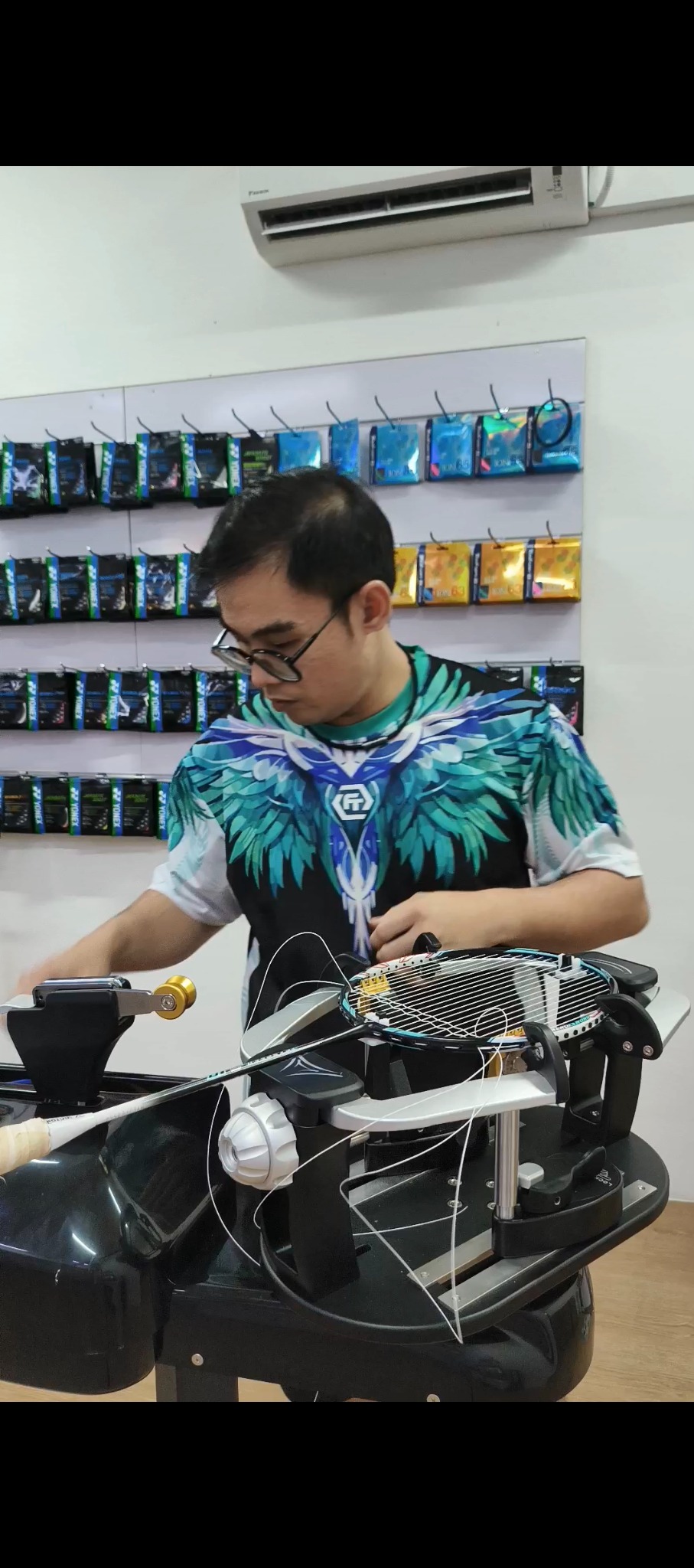
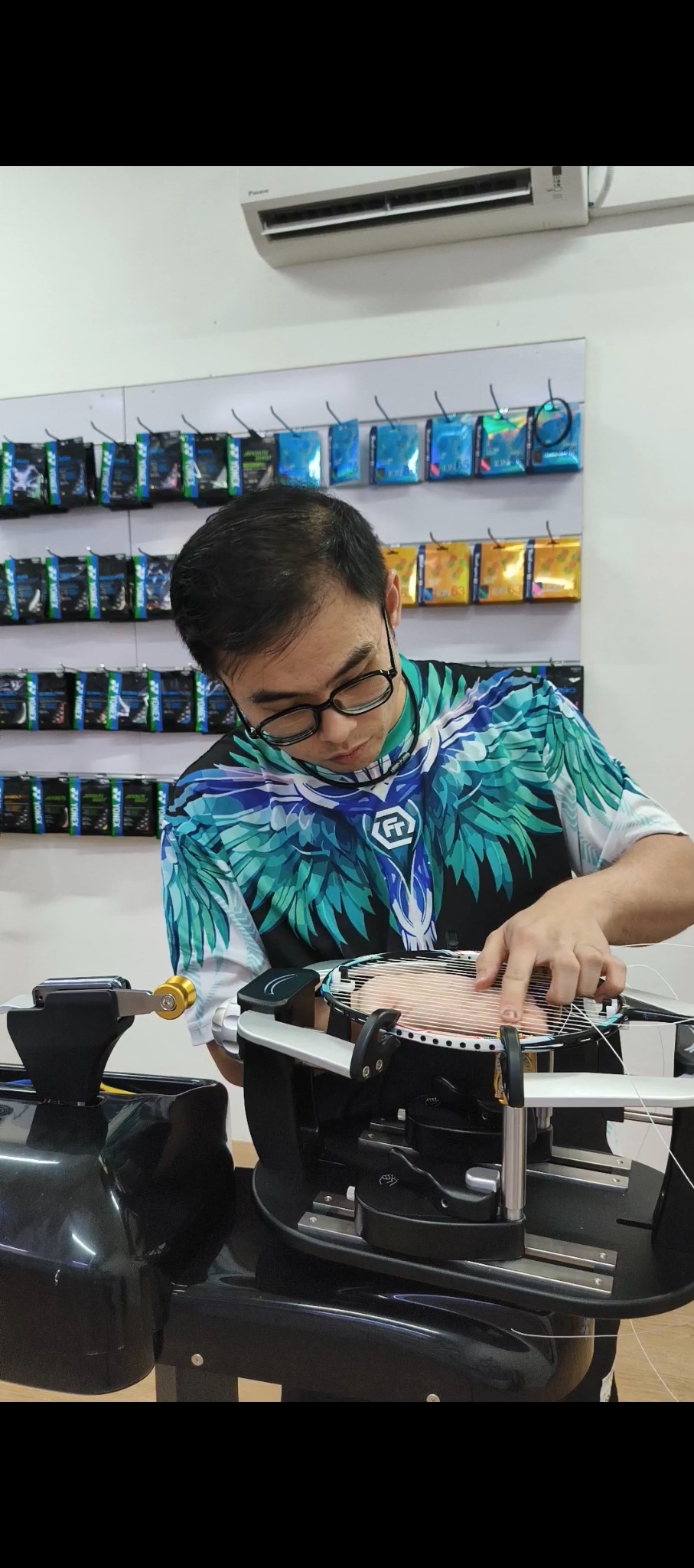
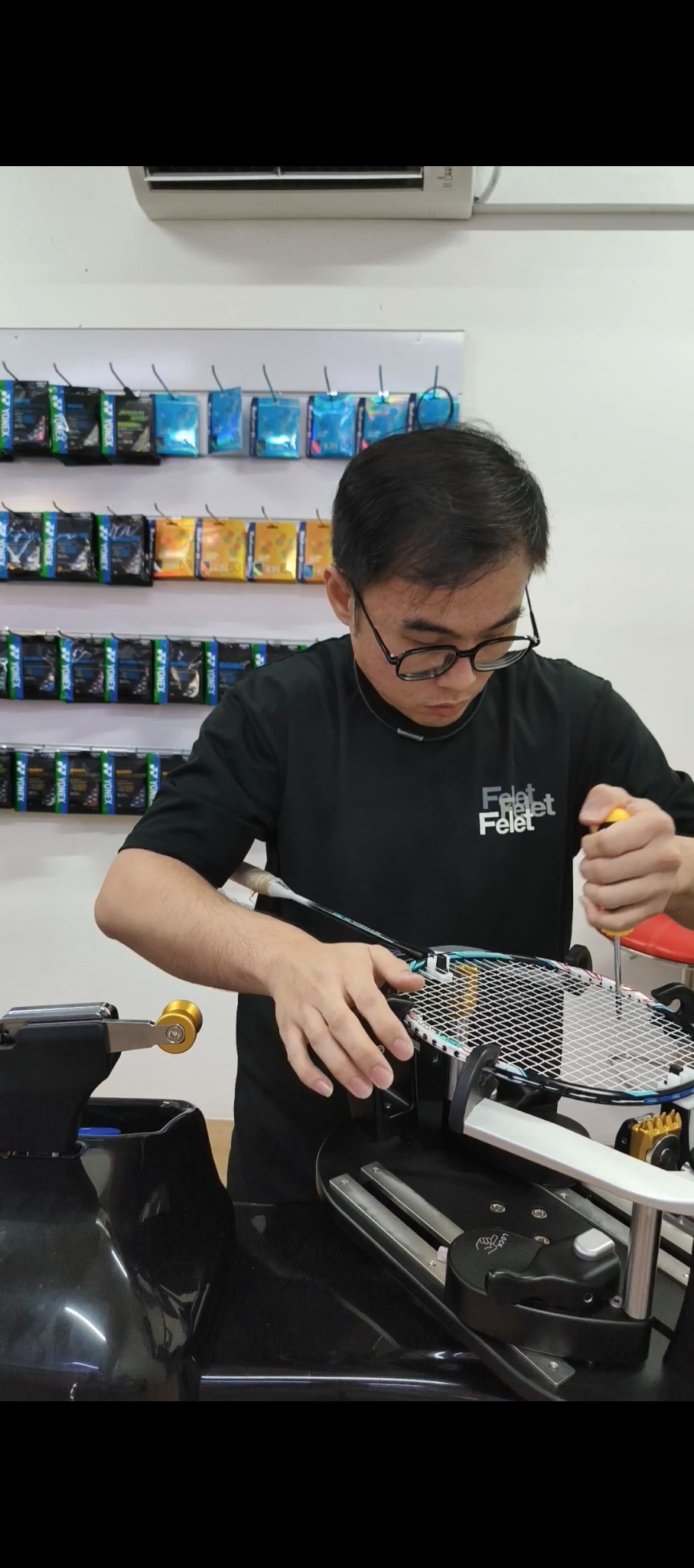
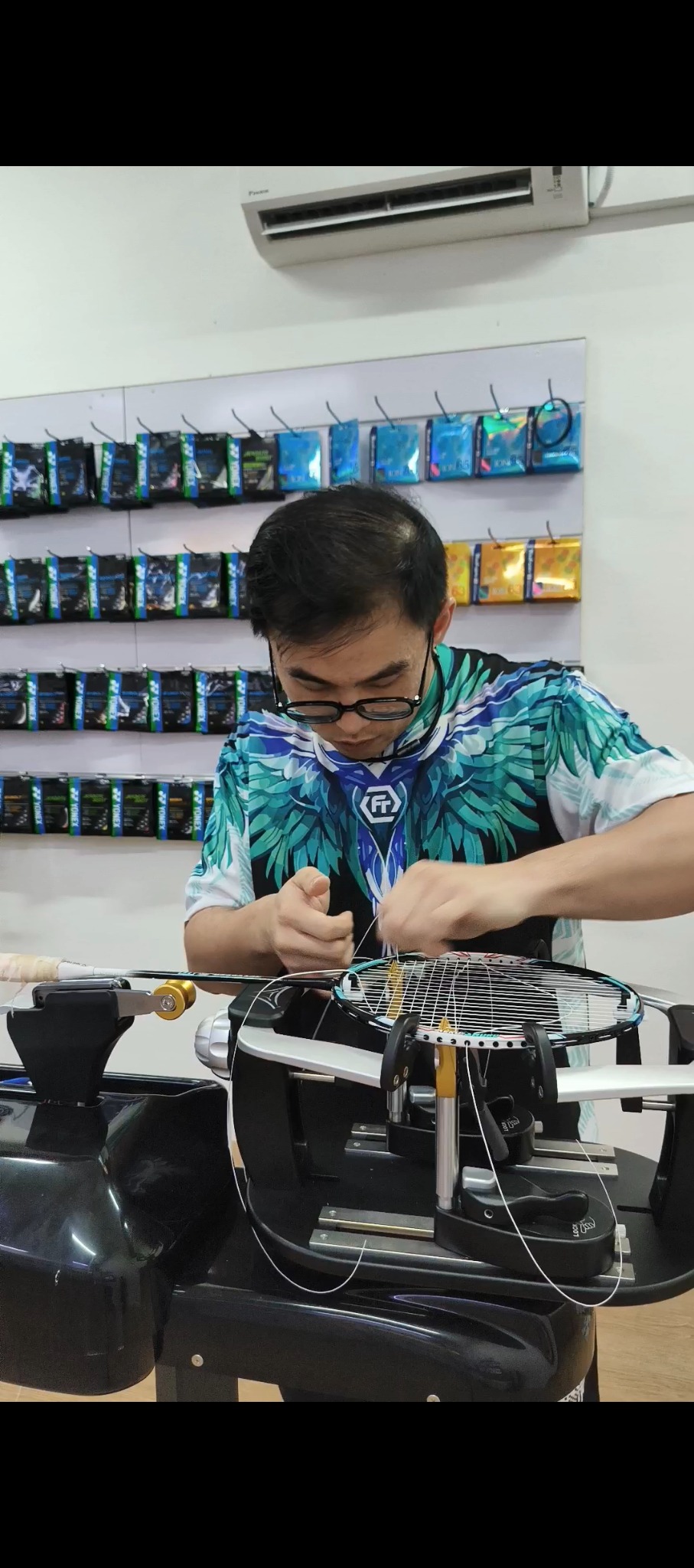
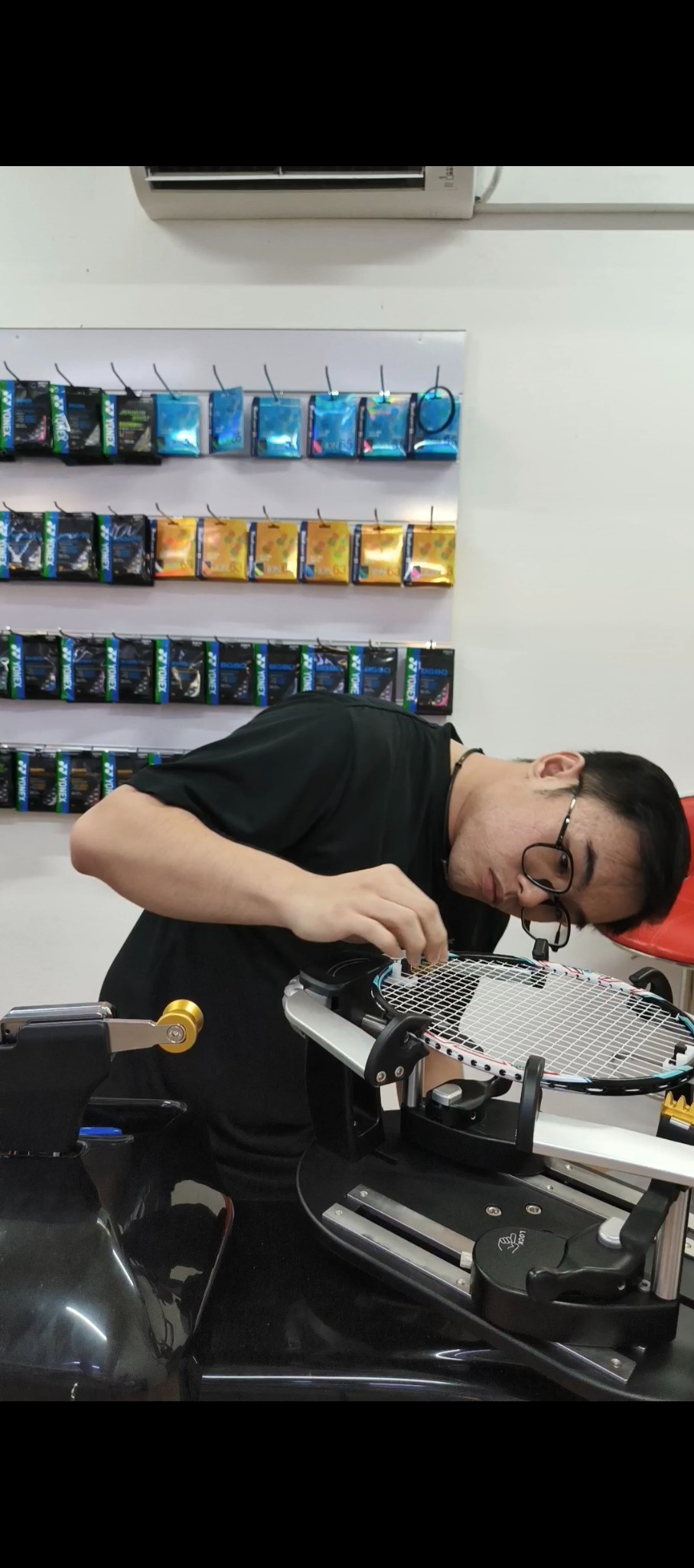
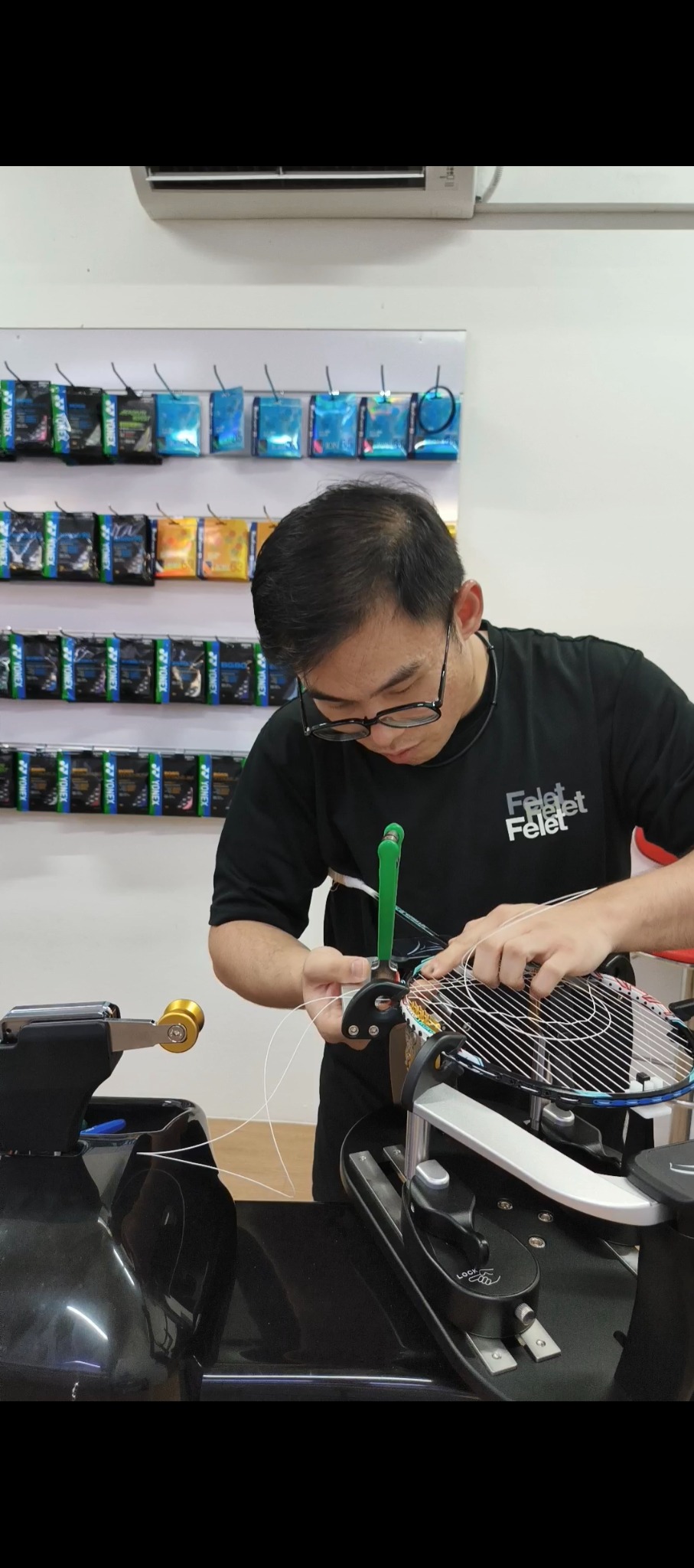
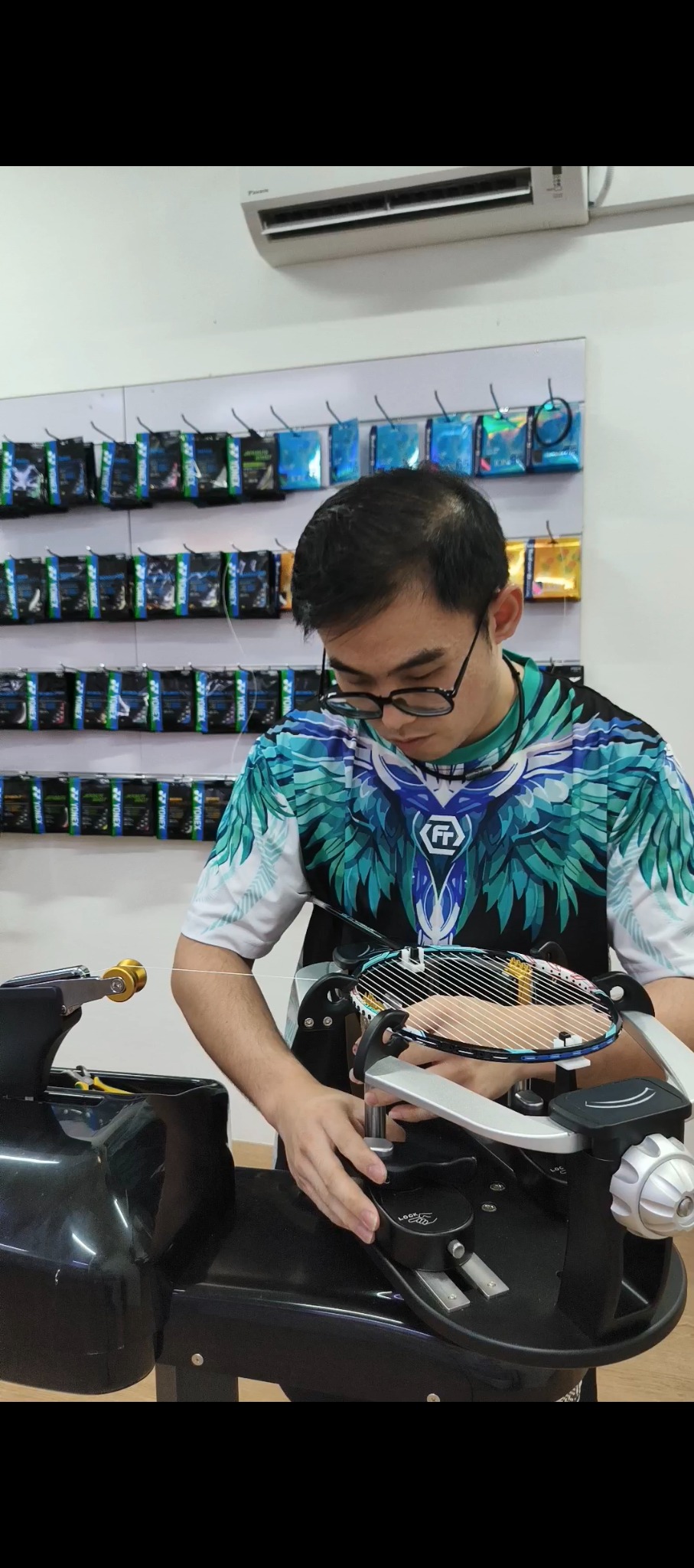
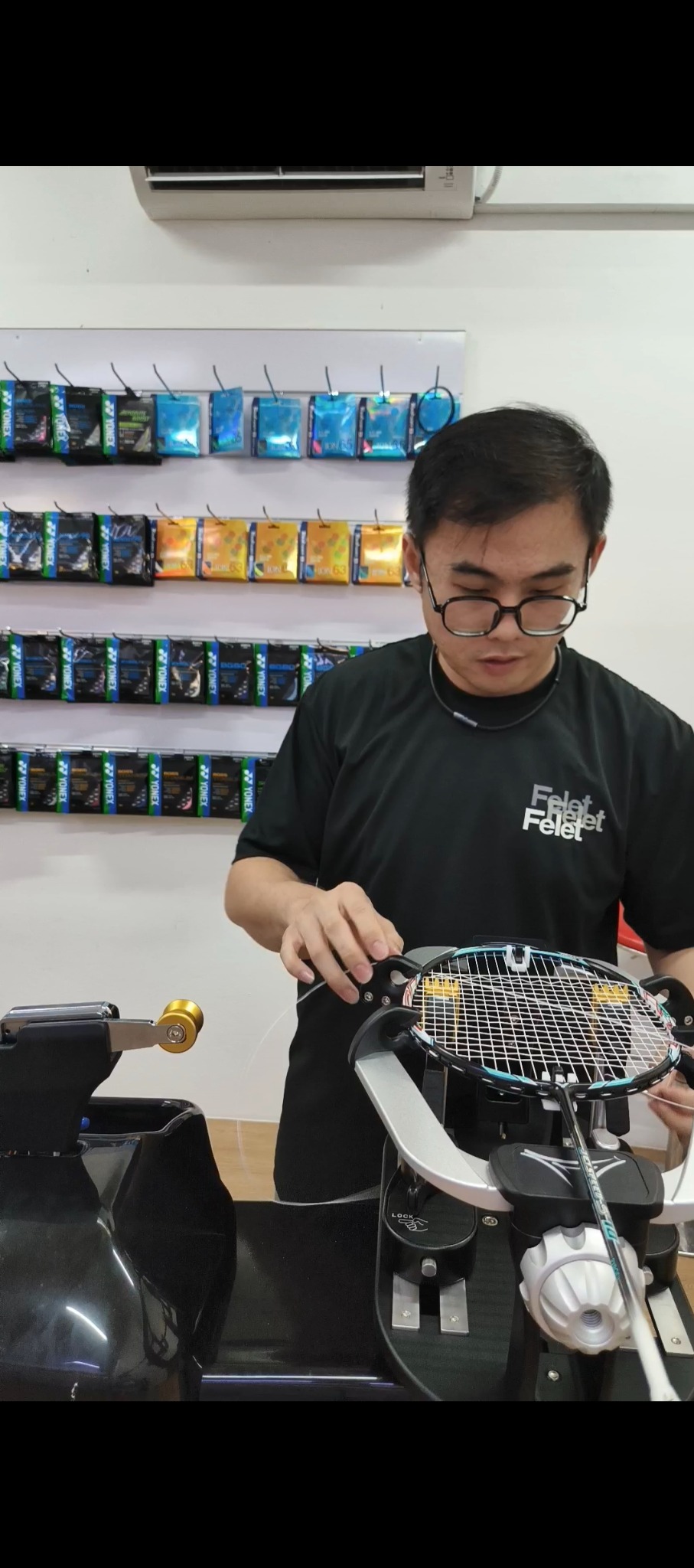
The photographs show Ng Kim Way working with a mounted badminton racquet, strings and tools during hands-on training. A stringing machine makes each lesson practical: supporting the frame, handling the string, using clamps and checking the stringbed all require attention. This part of the racket restringing course gave him a setting in which to practise and discuss the sequence.
He wants each racquet he works on to be better than the last. That aim calls for patience with small details and an honest review of the finished work. Rather than relying only on familiarity, he is willing to look for a better approach. The experience he shared with Eric during training also made room for questions about the methods he had used before.
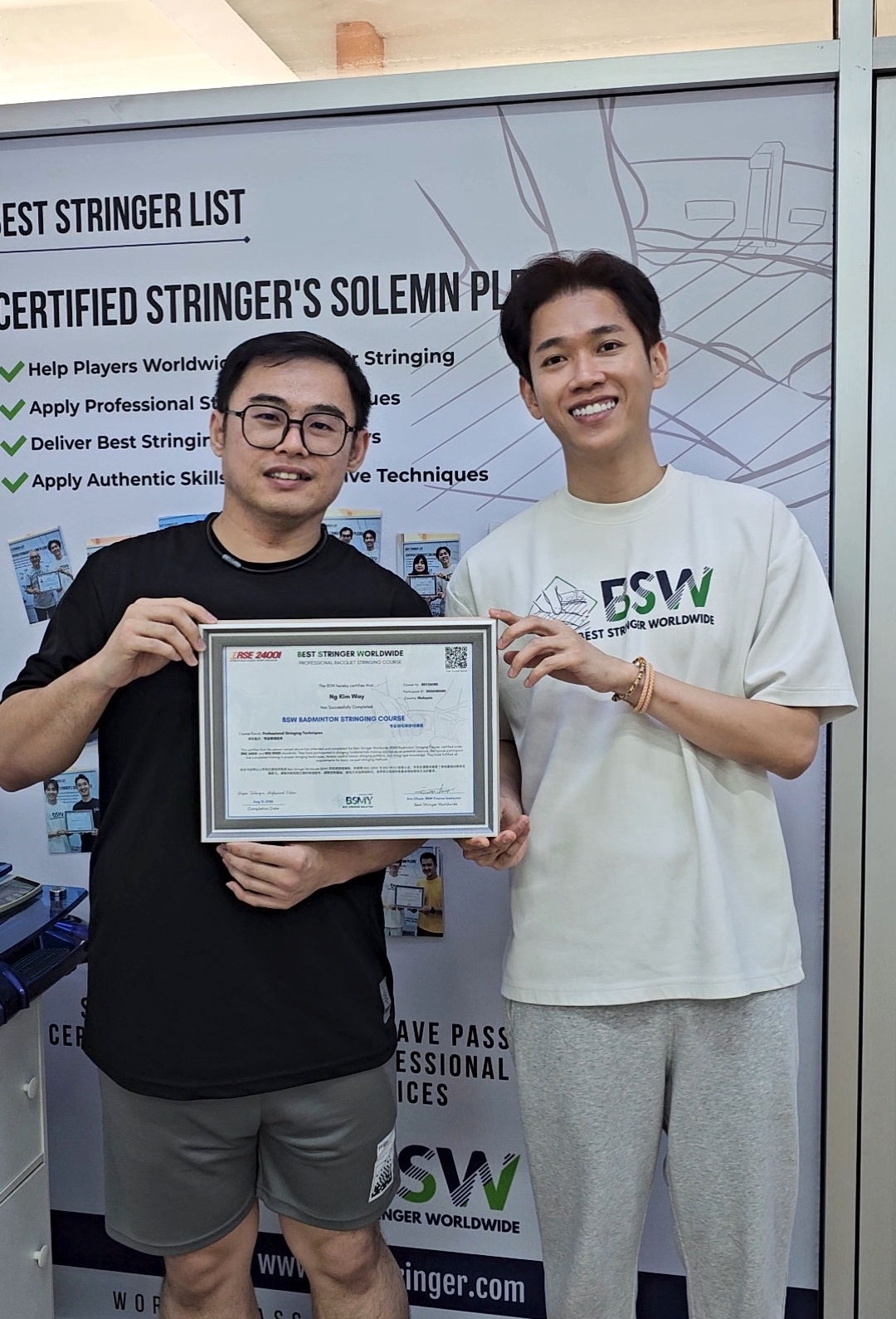
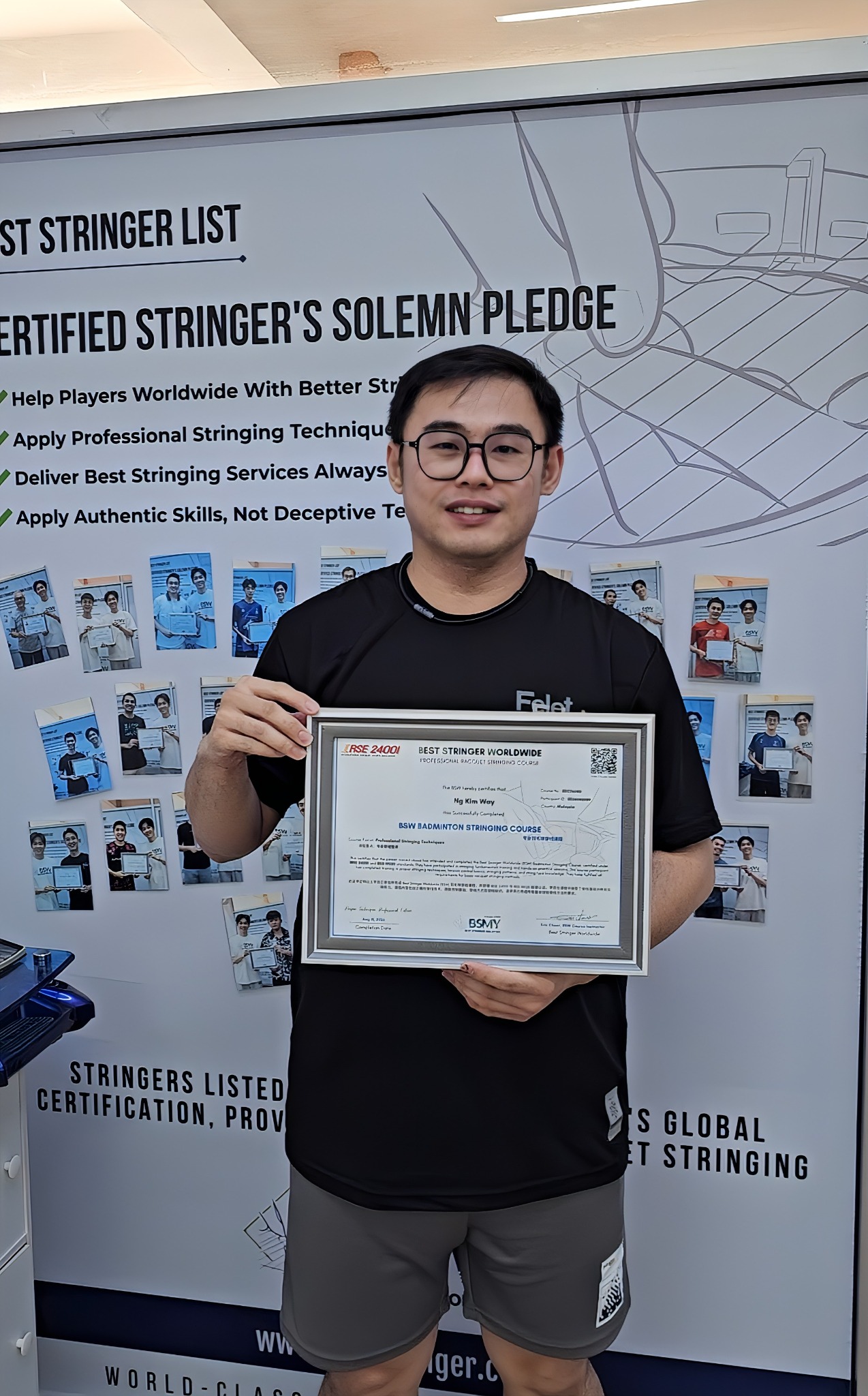
His certificate records completion of the BSW Badminton Stringing Course with a focus on professional stringing techniques. It lists fundamentals training, hands-on practice, pound-control basics, stringing patterns and string-type knowledge. References to IRSE 24001 and BSS 19020 describe the educational frameworks named on that document. For Ng Kim Way, the course adds structured learning to an interest he had already been pursuing.
A Friendly and Humble Learner
Alongside his work in the automotive trade, Ng Kim Way gives time to an interest that matters to him. He enjoys badminton and has spent time looking into racquets and stringing. Joining the course was a way to keep moving forward, rather than assume that earlier experience meant there was nothing left to learn.
Eric Chuar describes him as friendly, humble and easy to talk to. He exchanged experiences without acting as though he already had every answer, and kept looking for ways to string a racquet better. His approachable manner and willingness to understand different players are reasons Eric encourages players to get to know him and give his work a try.
Continuing His Stringing Journey in Malaysia
Ng Kim Way’s future direction is to continue developing badminton racquet stringing in Malaysia. The foundation strengthened at BSW can support more deliberate practice and better conversations with players. His interest is in understanding what each player needs and improving the quality of each racquet, while remaining approachable and willing to learn.
A useful practice routine connects the player’s information with the frame, string choice and appropriate pattern. Checking the finished stringbed and recording questions help make the next session more purposeful. The topics below keep his focus on the basics behind consistent work, including the 2-knot, 4-knot and around-the-world methods introduced during the course.
Topics to Keep Improving:
- Ask about the player’s badminton habits
- Listen to their preferred racquet feel
- Review the strings they have used
- Inspect the racquet frame carefully
- Check grommet condition before starting
- Confirm the manufacturer’s stringing instructions
- Choose a suitable string and pattern
- Record the intended pound (lbs) setting
- Support the racquet correctly on the machine
- Check clamp contact and string handling
- Review the full 2-knot route
- Practise an appropriate 4-knot route
- Trace the around-the-world pattern with guidance
- Inspect the finished mains, crosses and knots
- Discuss questions and review the next racquet
Ng Kim Way’s Course Photographs
This gallery records Ng Kim Way’s practical learning and course completion at BSW. The training photos show the real racquet, machine and tools he worked with, while the certificate photos mark completion of the course. Each displayed crop links to its original photograph, preserving the record alongside his story of learning, discussion and continued improvement.
Frequently Asked Questions
Read about Ng Kim Way’s background, his reasons for studying badminton stringing, the methods he learned and his plans to keep improving in Malaysia.
Ng Kim Way completed the BSW Badminton Stringing Course. His certificate lists Malaysia, course BSC2608D and participant ID BS260831189. The stated focus is professional stringing techniques, including fundamentals, hands-on practice, pound-control basics, patterns and string-type knowledge.
He had spent time learning independently and wanted to strengthen his complete foundation. His background is in the automotive trade, repairing cars, and he has a strong interest in badminton. The course gave him a chance to revisit the basics, exchange experiences with Eric Chuar and look for ways to improve each racquet.
His learning included proper badminton stringing foundations and the 2-knot, 4-knot and around-the-world methods. Each method is considered alongside the racquet’s instructions and the route through the mains, crosses and finishing points. Theory and practical work help explain the purpose of the process.
Eric Chuar found him friendly, humble and approachable. Ng Kim Way wants to understand how players differ and keeps looking for ways to improve his stringing. He shared experiences during the course and remained willing to learn. His future direction is to continue developing that work in Malaysia.
The course-completion certificate names IRSE 24001 and BSS 19020 as educational frameworks for the training. It records completion of the badminton stringing course. This course-completion record is separate from a certified-stringer qualification or examination.