Badminton Stringing Course Graduate
Lau An Cheung (Gordon)

Hong Kong
BSW Badminton Stringing Course
Stringer ID : BS26080898
✅ Course Completed
Learning with a Proper Stringing Foundation
Lau An Cheung, known as Gordon, travelled from Hong Kong to Malaysia to attend the BSW badminton stringing course. A regular badminton player and attentive father, he arranged his learning around his son’s training camp and school activities. He completed the course, building a proper foundation through stringing theory, patterns, pound-control basics and hands-on practice.
Badminton Stringer Course
BSW Badminton Stringing Course
Gordon’s Journey into Racquet Stringing
Badminton is already part of Gordon’s life in Hong Kong. His interest in the game led him to explore how racquets are prepared, rather than only how they are used on court. By travelling to BSW, he made time to learn badminton stringing properly and develop an interest of his own while supporting his son’s activities in Malaysia.
Starting with the Right Foundation
Gordon approached the course as a chance to understand the complete stringing process. Proper badminton stringing foundations connect frame inspection, mounting, string selection and the planned route. Learning these steps together gives practical work a clear sequence. His course-completion certificate records fundamentals training, string-type knowledge and pound-control basics, providing a starting point for continued practice.
Understanding the Player and Racquet
Playing regularly gives Gordon a personal reason to understand strings and racquet feel. The course introduced how string choice and pound settings relate to the racquet and its use. A careful approach begins with questions about the player and the frame, then follows the manufacturer’s guidance. These fundamentals help turn an interest in equipment into informed decisions.
Learning Different Stringing Methods
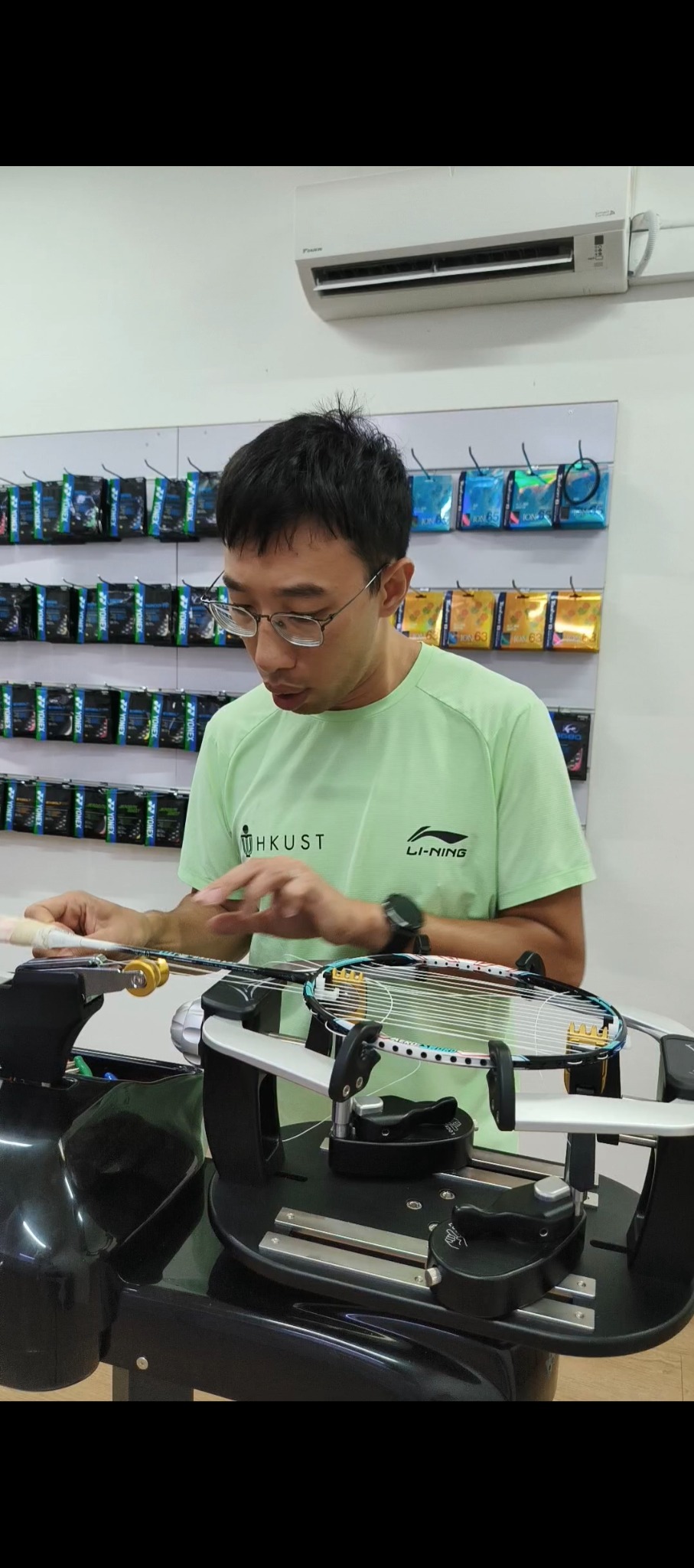
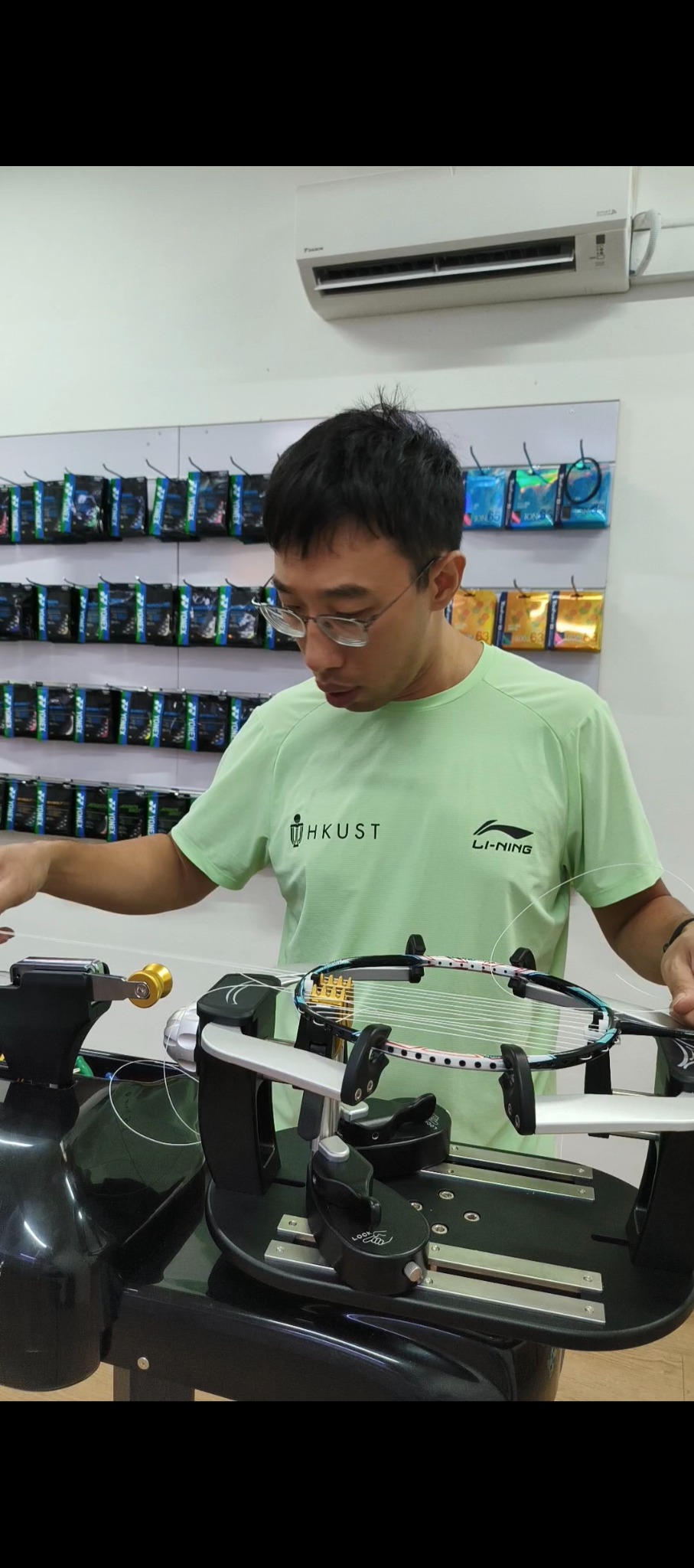
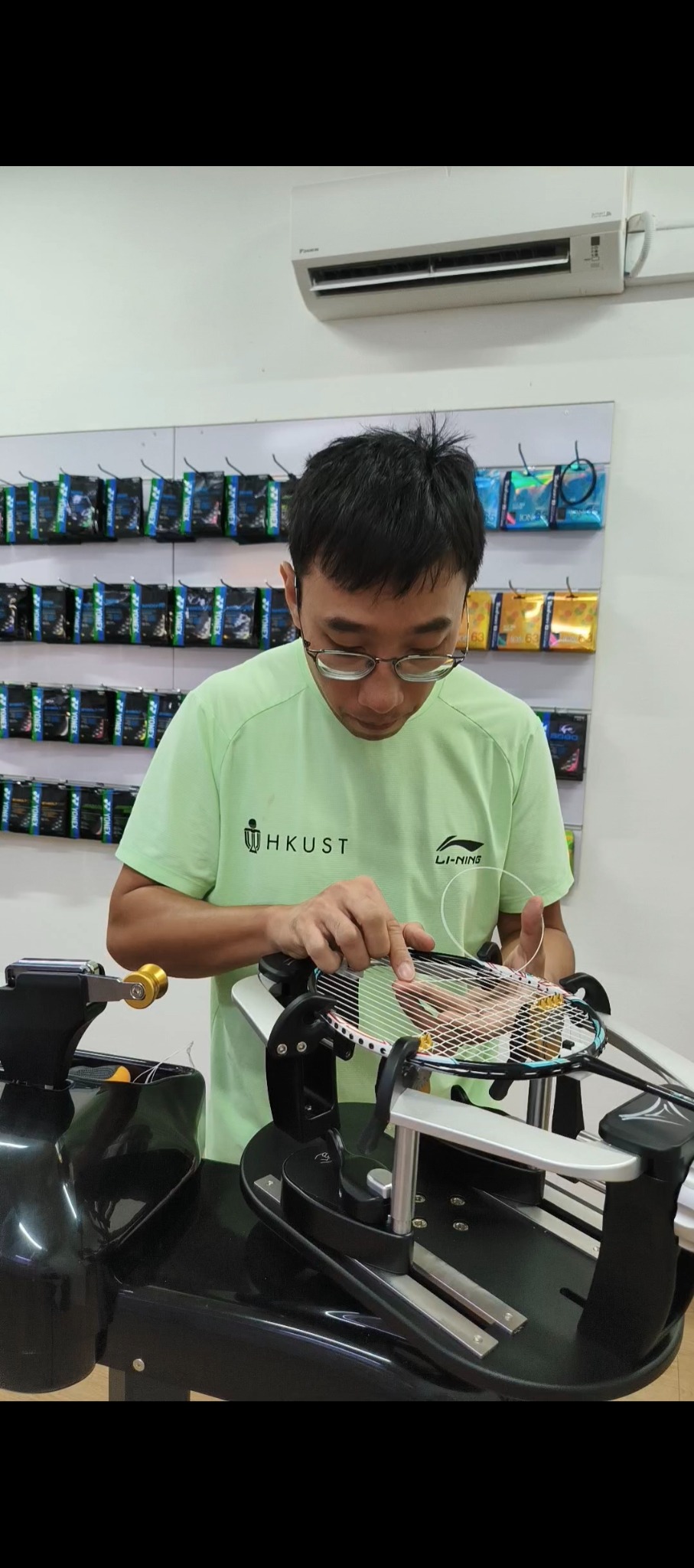
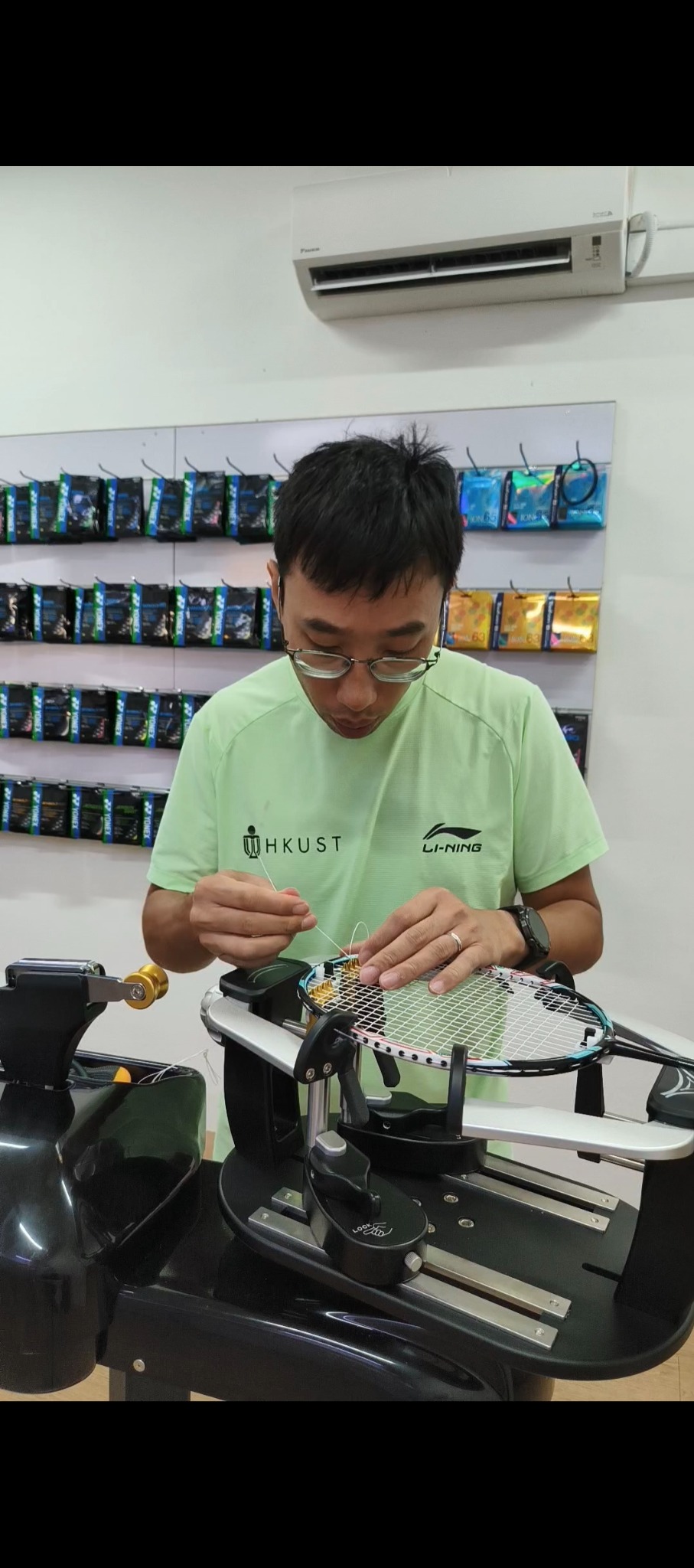
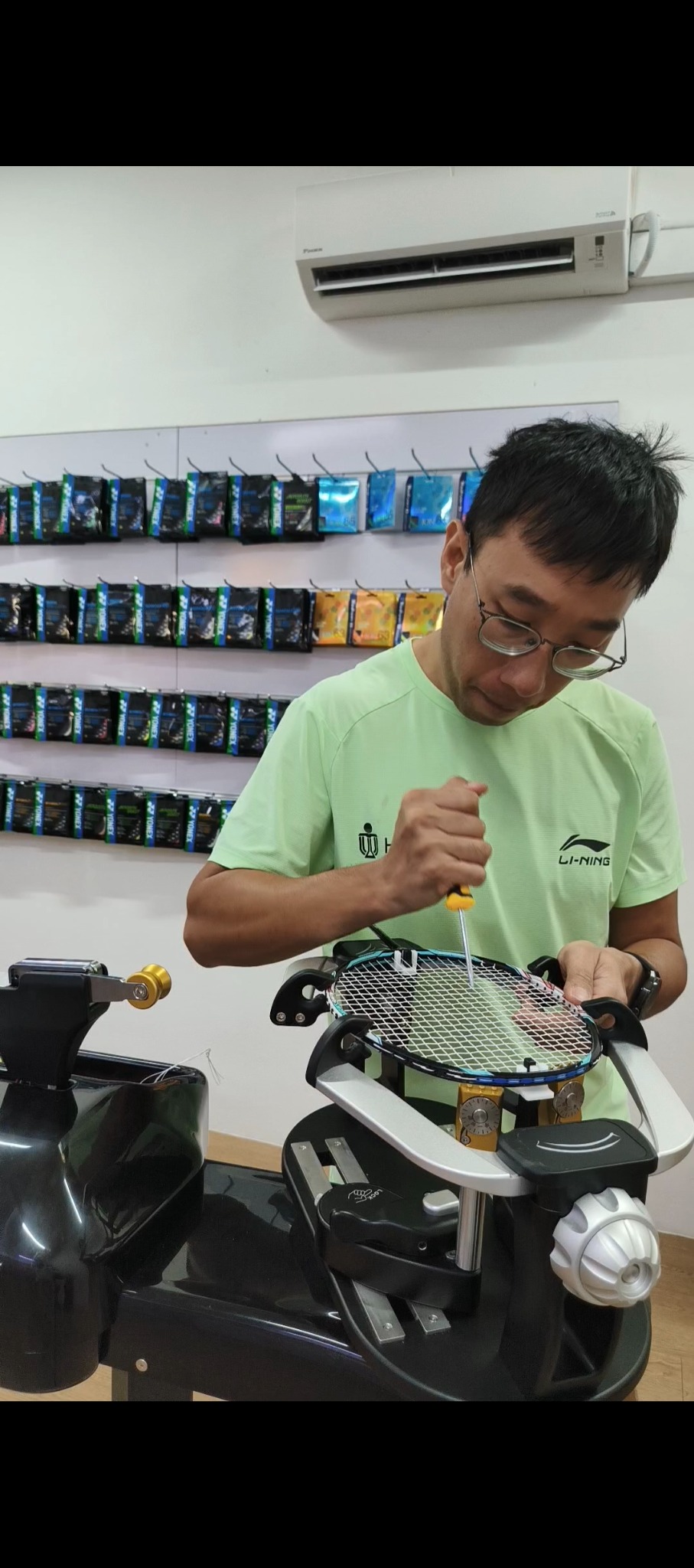
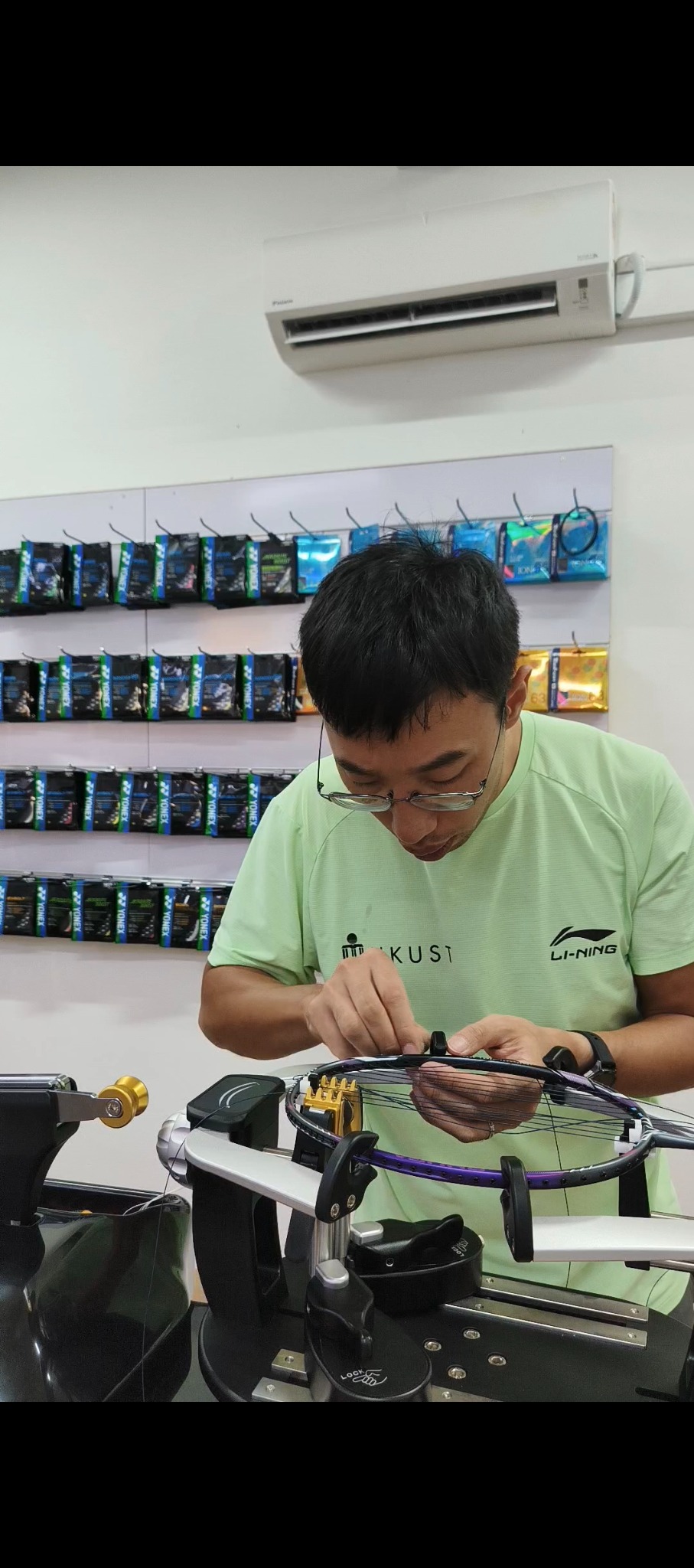
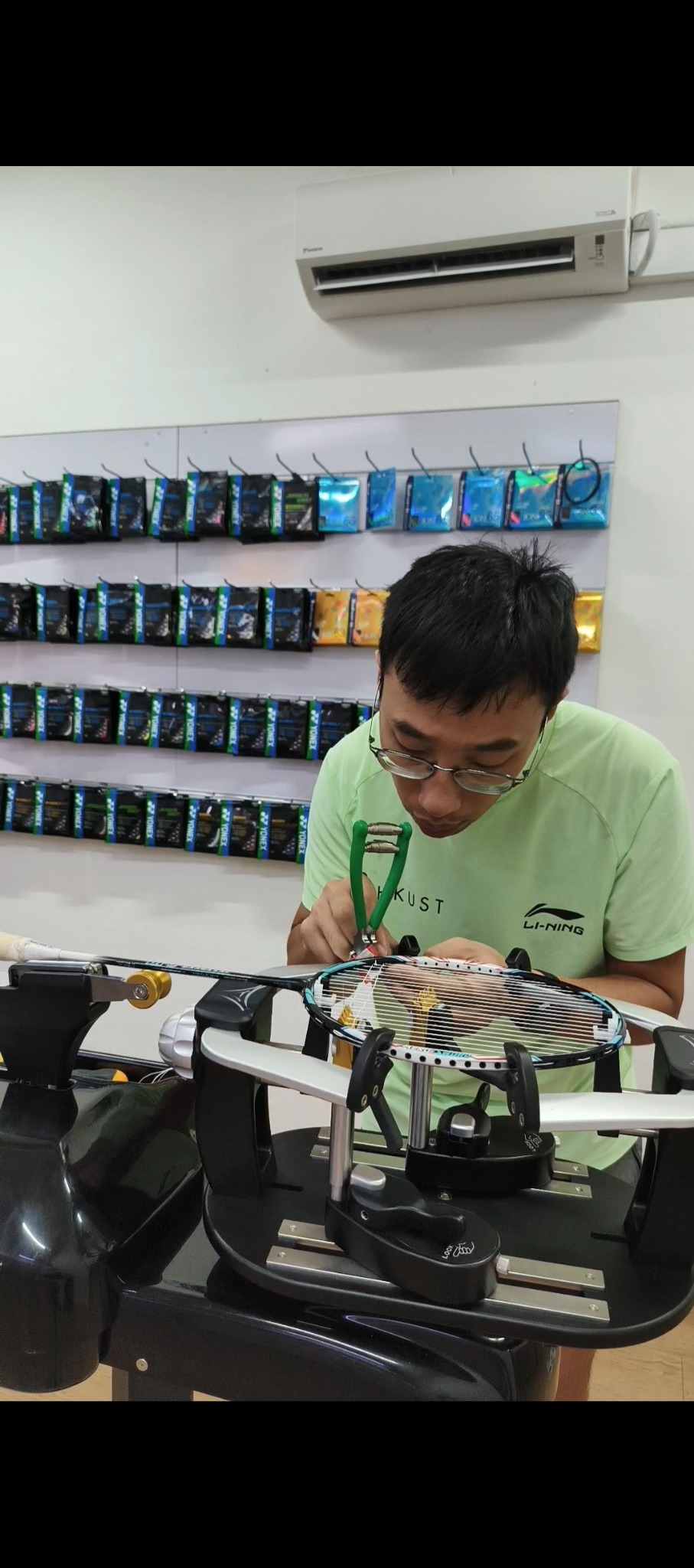
His badminton stringing education included the 2-knot professional stringing method, 4-knot proper stringing method and around-the-world stringing method. These routes connect the mains, crosses and finishing points in different ways. Understanding a pattern means following the racquet’s instructions and tracing the whole route, rather than choosing by knot count alone. Gordon’s practical photographs show this learning at the machine.
A Patient Approach to Learning
Eric Chuar found Gordon friendly, humble and hardworking during training. He picked up the lessons quickly and was willing to look carefully for the cause of a problem. He did not approach the work as something to start and leave unfinished. That patience and attention made him a thoughtful learner who wanted to understand what he was doing.
Connecting Practice with Theory
The badminton stringing course gave Gordon a way to connect the movements at the machine with their purpose. Badminton stringing theory covers how the frame, strings, pattern and pound settings work together. Understanding those relationships supports a proper working sequence and helps a learner explain why each step matters.
For Gordon, looking into a problem carefully was part of learning. Theory provides a useful reference when a string route or machine step is unclear. Returning to the racquet’s instructions, checking the planned pattern and asking for guidance can make practice more purposeful. A simple record of settings and questions also supports steady improvement after the course.
Hands-on Stringing and Equipment
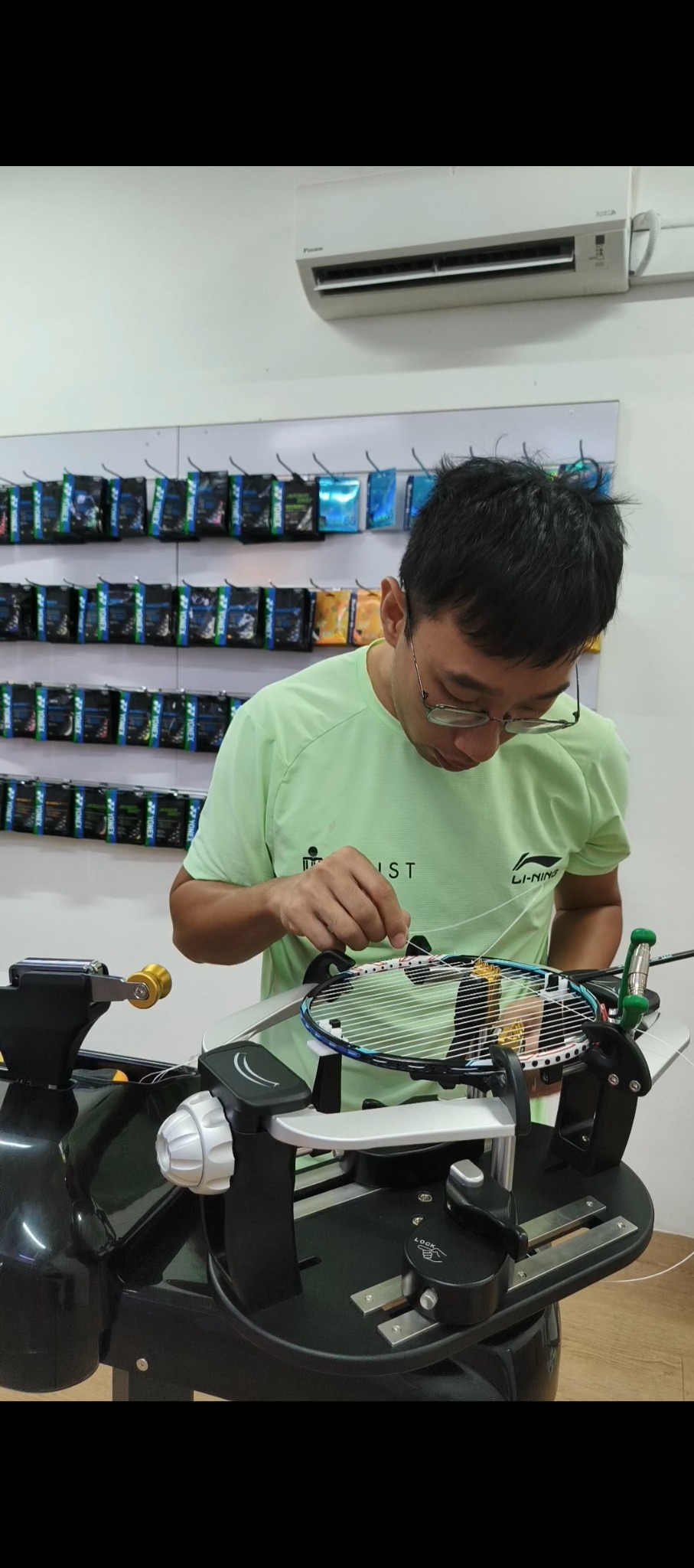
Gordon’s practical sessions brought the lessons onto a real stringing machine. He worked around a mounted badminton racquet, handling strings and checking the stringbed with the frame supported. This hands-on part of the racket restringing course connected the theory to equipment, including supports, clamps and tools. The photographs record his attention to the work in front of him.
His careful planning outside the classroom was reflected in his learning. He made room for training while looking after his son, and brought a similarly attentive attitude to practical tasks. Eric Chuar observed a learner who was willing to investigate difficulties and put in the effort to understand them, rather than rush through a step without a clear reason.
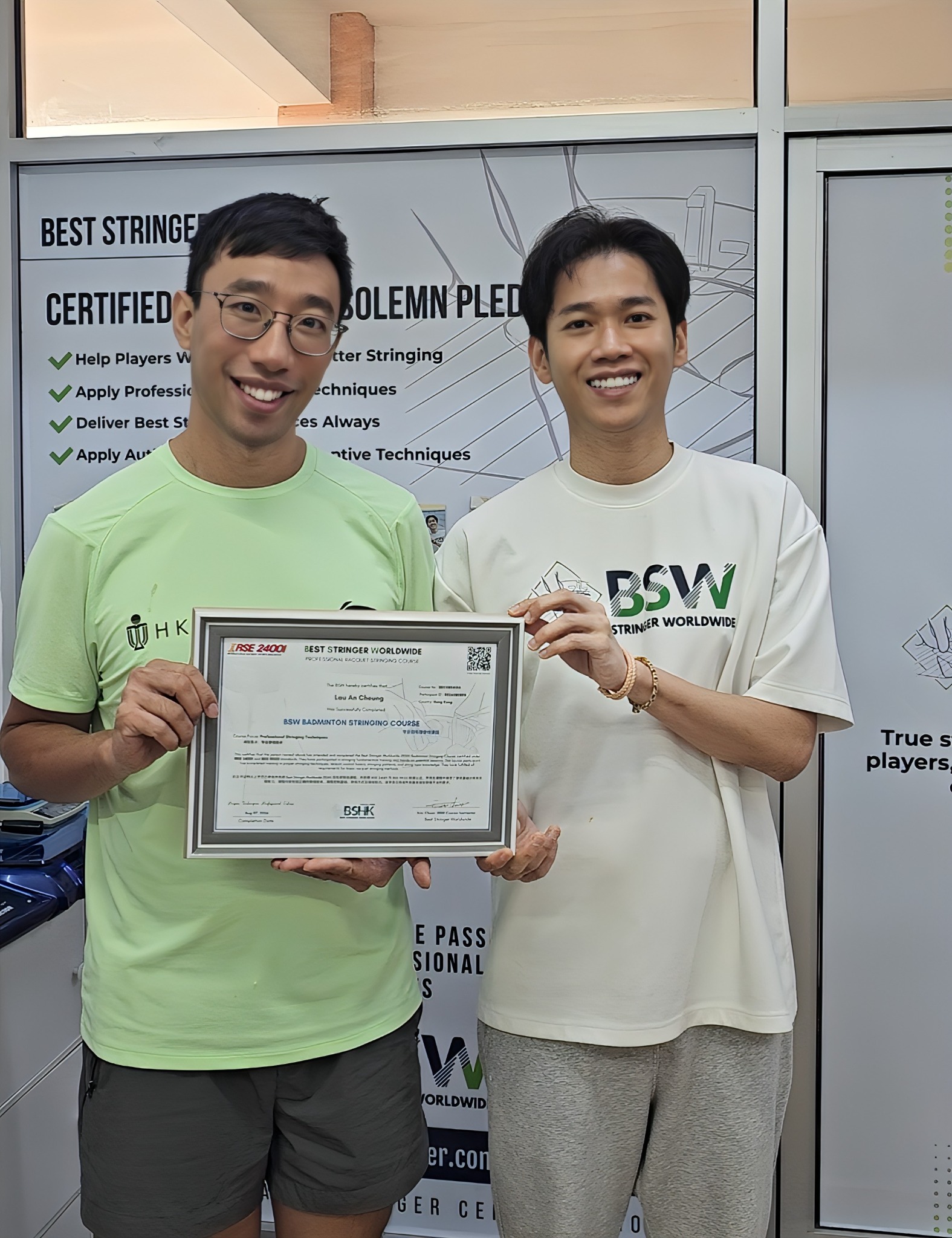
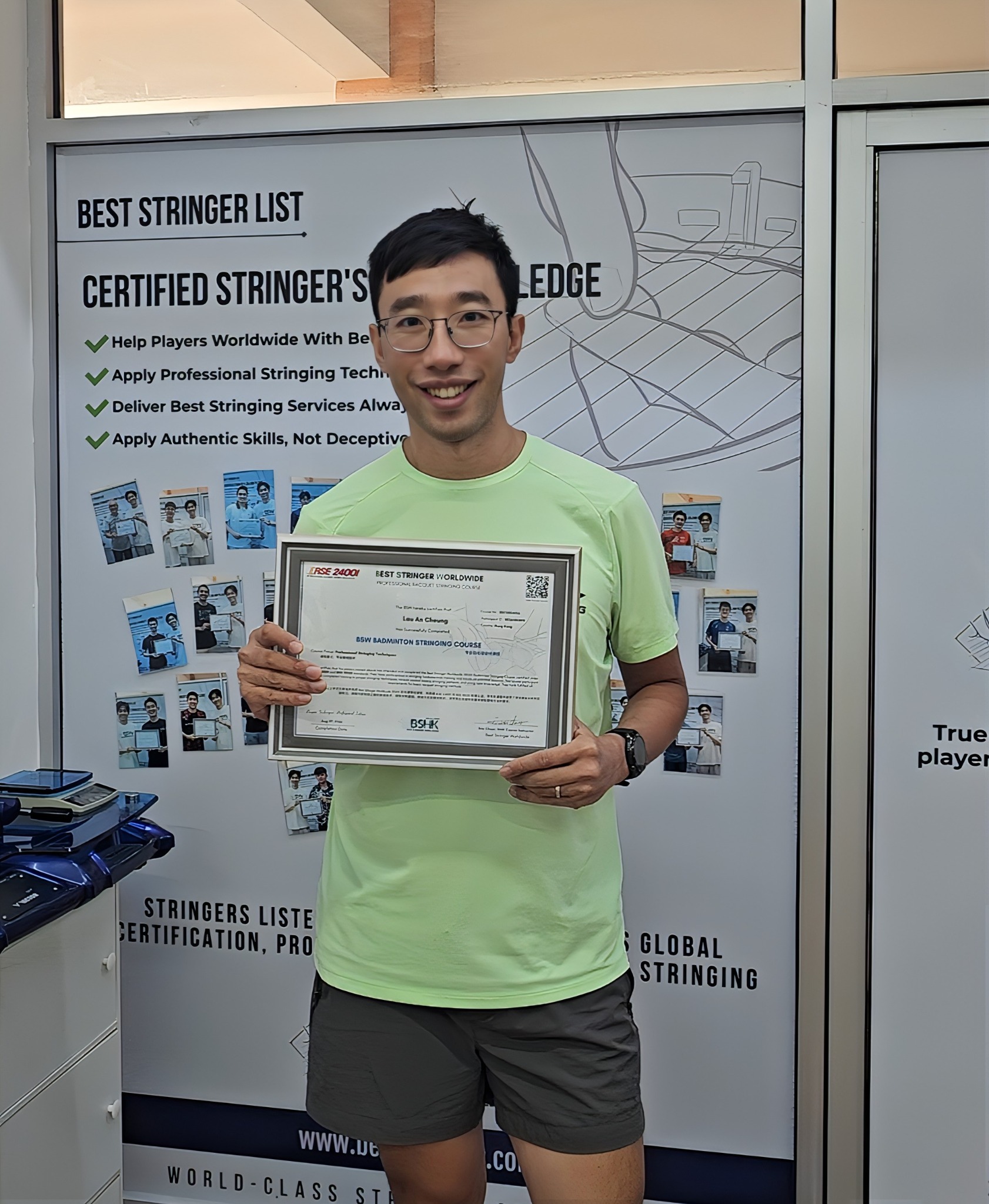
The certificate issued to Lau An Cheung confirms completion of the BSW Badminton Stringing Course, focused on professional stringing techniques. It records fundamentals, hands-on practice, pound-control basics, stringing patterns and string types, with references to IRSE 24001 and BSS 19020. These frameworks place his learning within the course’s stated educational standards and provide context for the foundation he developed.
Gordon’s Learning and Character
Gordon carefully arranged his trip from Hong Kong so that his son’s training camp and school commitments could fit alongside his own BSW lessons. He cared for his child while also making time for an interest he wanted to develop. His story shows that learning a new badminton skill can be planned around family responsibilities rather than treated as an afterthought.
Eric Chuar describes Gordon as approachable, modest and diligent. He learned quickly, paid attention to the details and took problems seriously enough to look for their cause. In Eric’s experience, he is a trustworthy person who follows through with care. Those observations describe his conduct during training and the thoughtful attitude he brought to learning badminton racquet stringing.
Continuing His Badminton Interest in Hong Kong
Completing the course adds racquet stringing to Gordon’s existing enjoyment of badminton in Hong Kong. His next step is to keep practising the proper foundation he learned and connect it with the racquets he uses. The same careful scheduling that brought him to BSW can help him make regular time for this interest alongside his responsibilities as a father.
Continued learning can build on his willingness to ask questions and investigate problems. Checking the frame, following an appropriate 2-knot, 4-knot or around-the-world route and reviewing the finished stringbed belong in a consistent routine. The topics below offer a practical focus for future sessions, helping him revisit the course’s basics while developing confidence through careful repetition.
Foundation Topics for Continued Practice:
- Inspect the racquet frame before mounting
- Check grommets and the protection they give the string
- Confirm the manufacturer’s recommended stringing pattern
- Set up the frame supports carefully
- Identify the string and its relevant properties
- Prepare enough string for the chosen route
- Review a suitable 2-knot method
- Note the intended pound (lbs) setting
- Practise steady control of the machine setting
- Check the clamps and string handling
- Review a suitable 4-knot method
- Study the around-the-world route with guidance
- Inspect the finished mains and crosses
- Record questions and lessons from practice
- Discuss unclear steps before repeating them
Gordon’s Course Photographs
These photographs follow Gordon’s hands-on learning at BSW, from working with strings on the mounted racquet to receiving his course-completion certificate. They show the real practical setting, the equipment and his attention during training. Each display image links to its original photograph, keeping a record of the badminton stringing course he travelled from Hong Kong to complete.
Frequently Asked Questions
Learn about Gordon’s journey from Hong Kong, his badminton stringing course, his approach to learning and the foundation he can continue practising.
Lau An Cheung (Gordon) completed the BSW Badminton Stringing Course. His certificate lists Hong Kong and a focus on professional stringing techniques. It records fundamentals, hands-on practice, pound-control basics, stringing patterns and string-type knowledge.
Gordon enjoys playing badminton in Hong Kong and wanted to learn racquet stringing properly. While bringing his son to Malaysia for training camp and school activities, he carefully arranged time for his own BSW course. This allowed him to support his child and develop his personal badminton interest during the trip.
His learning included proper foundations and the 2-knot, 4-knot and around-the-world stringing methods. The route should suit the racquet’s instructions, with the mains, crosses and finishing points understood before starting. These methods connect pattern knowledge with practical work at the machine.
Eric Chuar observed a friendly, humble and hardworking learner who understood lessons quickly and looked carefully into problems. Gordon took his learning seriously while also caring for his son. Continued practice can build on that patient attitude and the proper badminton stringing foundation introduced by BSW.
His course-completion certificate references IRSE 24001 and BSS 19020 as educational frameworks. The document records completion of the BSW badminton stringing course. Course completion is distinct from a separate certified-stringer qualification or examination.