Badminton Stringing Course Graduate
Lee Sai Foong

Singapore
BSW Badminton Stringing Course
Stringer ID : BS26070898
✅ Course Completed
Developing a Proper Stringing Foundation
Lee Sai Foong from Singapore works in an IT company and is also a badminton coach who enjoys playing the game. He joined the BSW badminton stringing course to build a proper foundation for stringing his own racquets and preparing to offer badminton stringing services in Singapore. He completed the course, covering stringing fundamentals, tension-control basics, badminton stringing patterns and string-type knowledge.
Badminton Stringer Course
BSW Badminton Stringing Course
Lee Sai Foong’s Stringing Learning Record
Lee Sai Foong’s interest in racquet stringing grew from his own badminton playing and coaching. Alongside his work in IT, he wanted to understand how a racquet is strung and how the choice of string and setting affects the player. Learning proper badminton stringing gives him a practical skill he can use for his own racquets while building towards a service for other players in Singapore.
Building Proper Foundation
Proper badminton stringing begins with understanding the racquet, the string and the intended pattern. Lee Sai Foong’s completion certificate records training in these fundamentals, including tension-control basics and string-type knowledge. A sound foundation helps a learner see how each step fits into the whole job. Preparing the frame, managing the strings and checking the finished string bed are connected parts of a careful routine, rather than isolated actions at the machine.
Connecting Strings with Player Requirements
As a badminton coach and player, Lee Sai Foong is willing to take time to understand what a player needs. He sees a stringing request as a conversation about the racquet, the string and the player’s preferences. The course’s string-type knowledge and tension-control basics support that approach. A suitable string and pound setting should be considered together with the racquet’s instructions and the way the player uses it.
Understanding Stringing Patterns
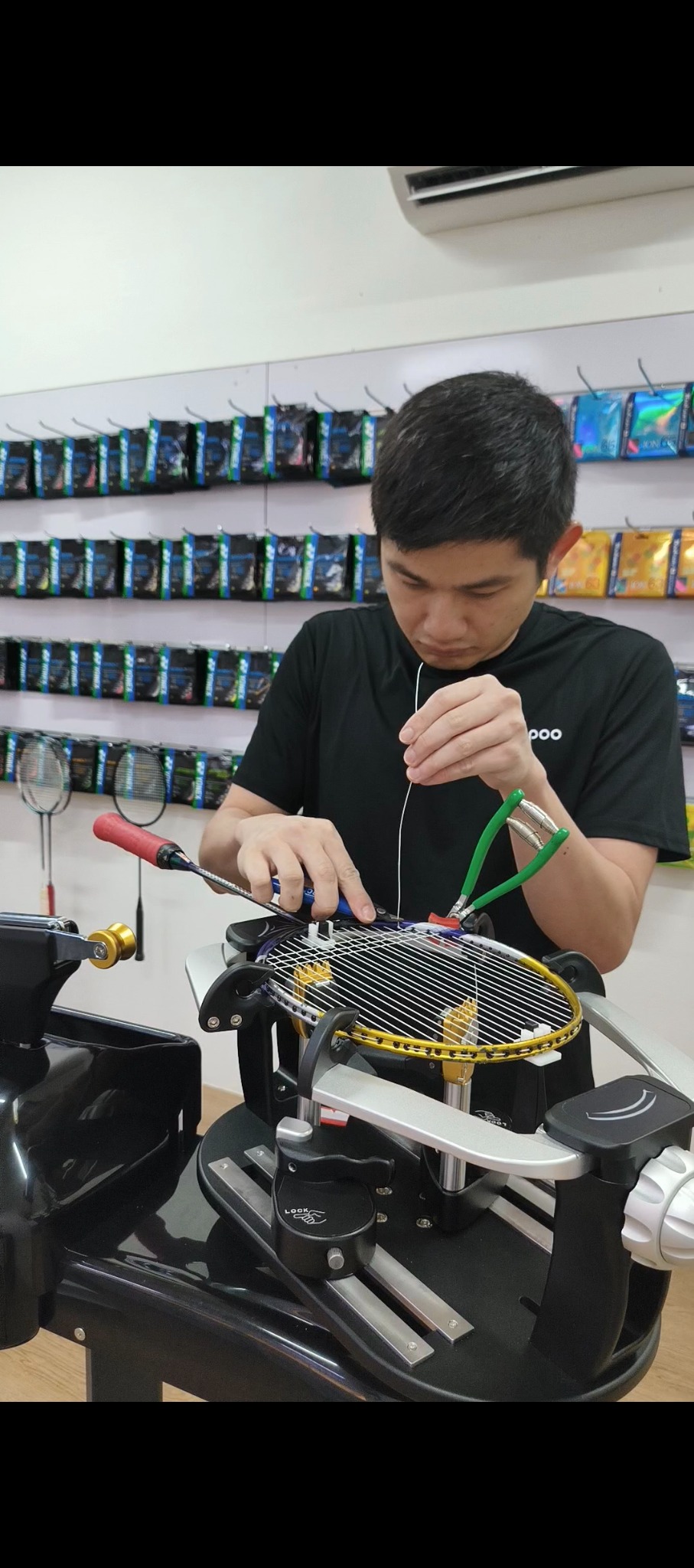
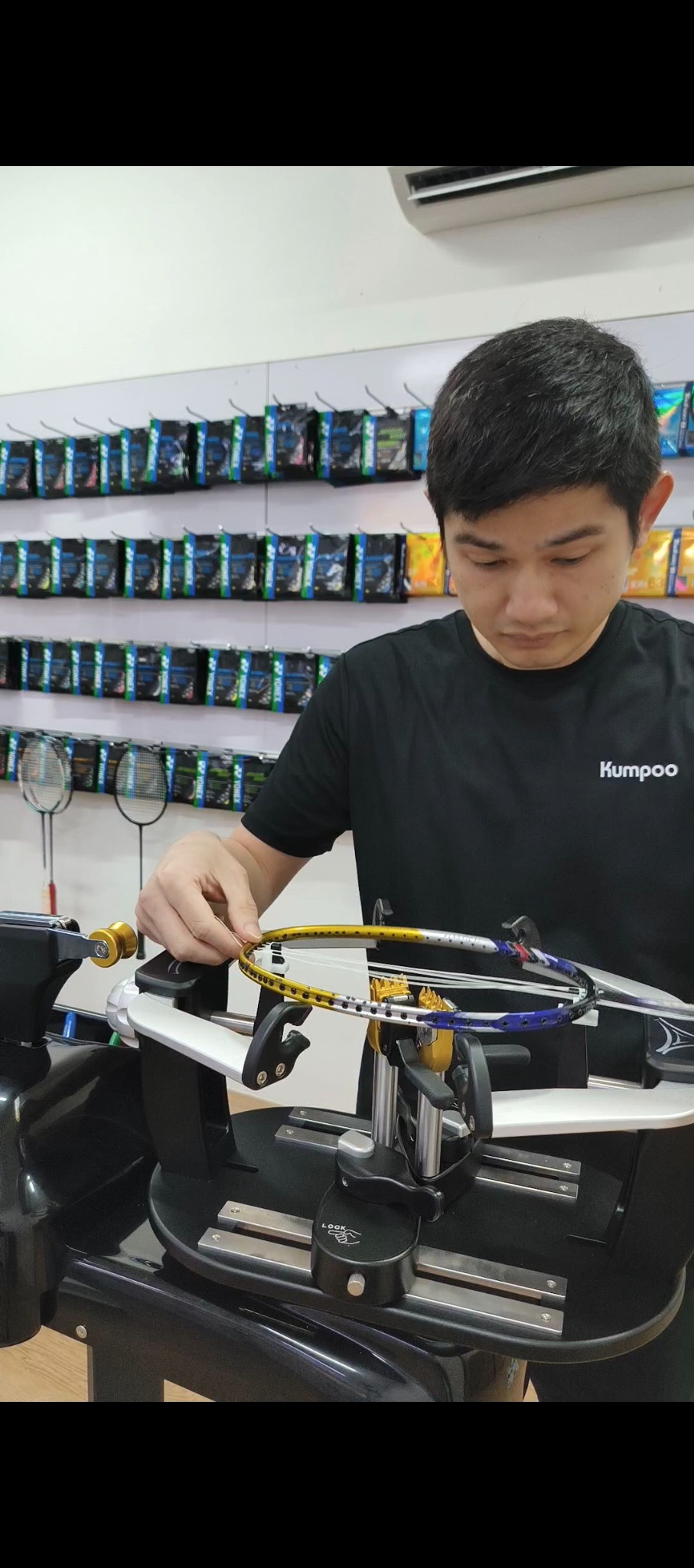
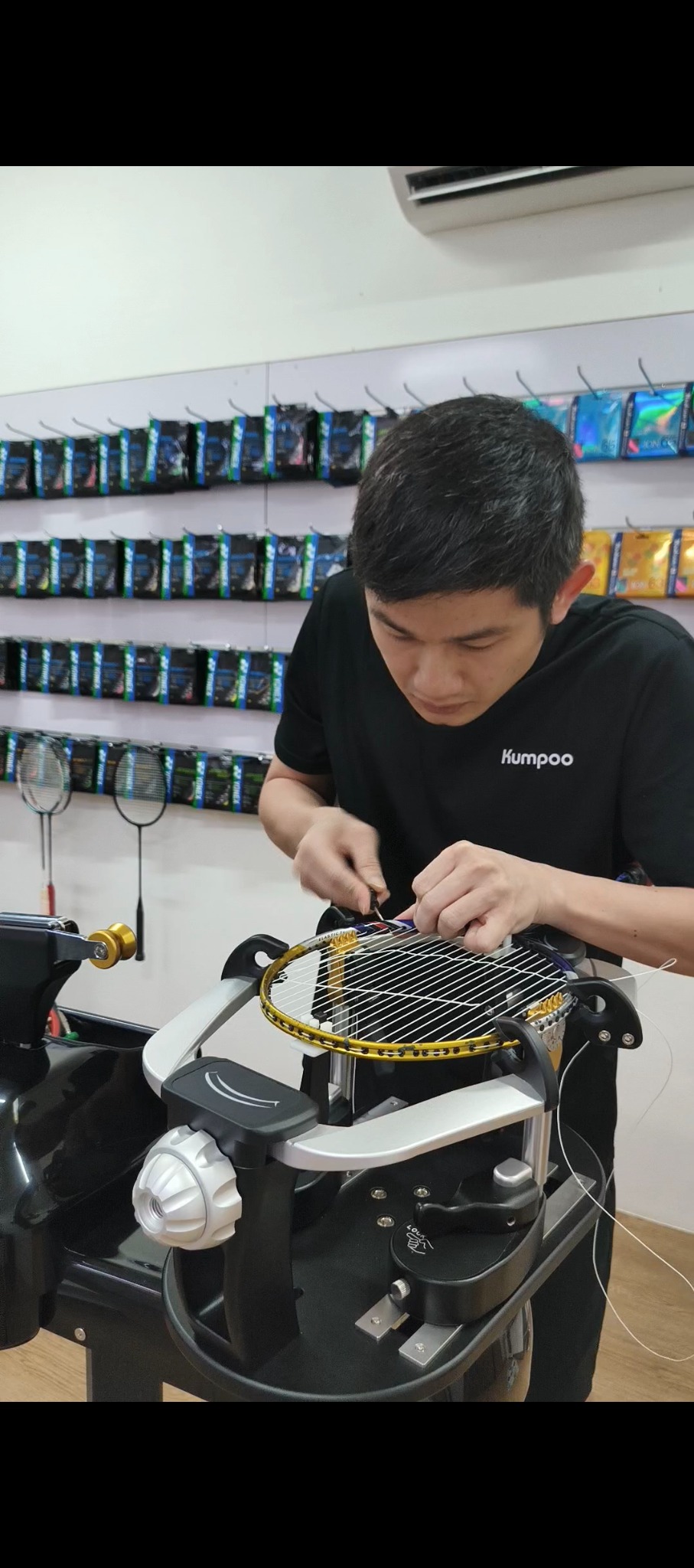
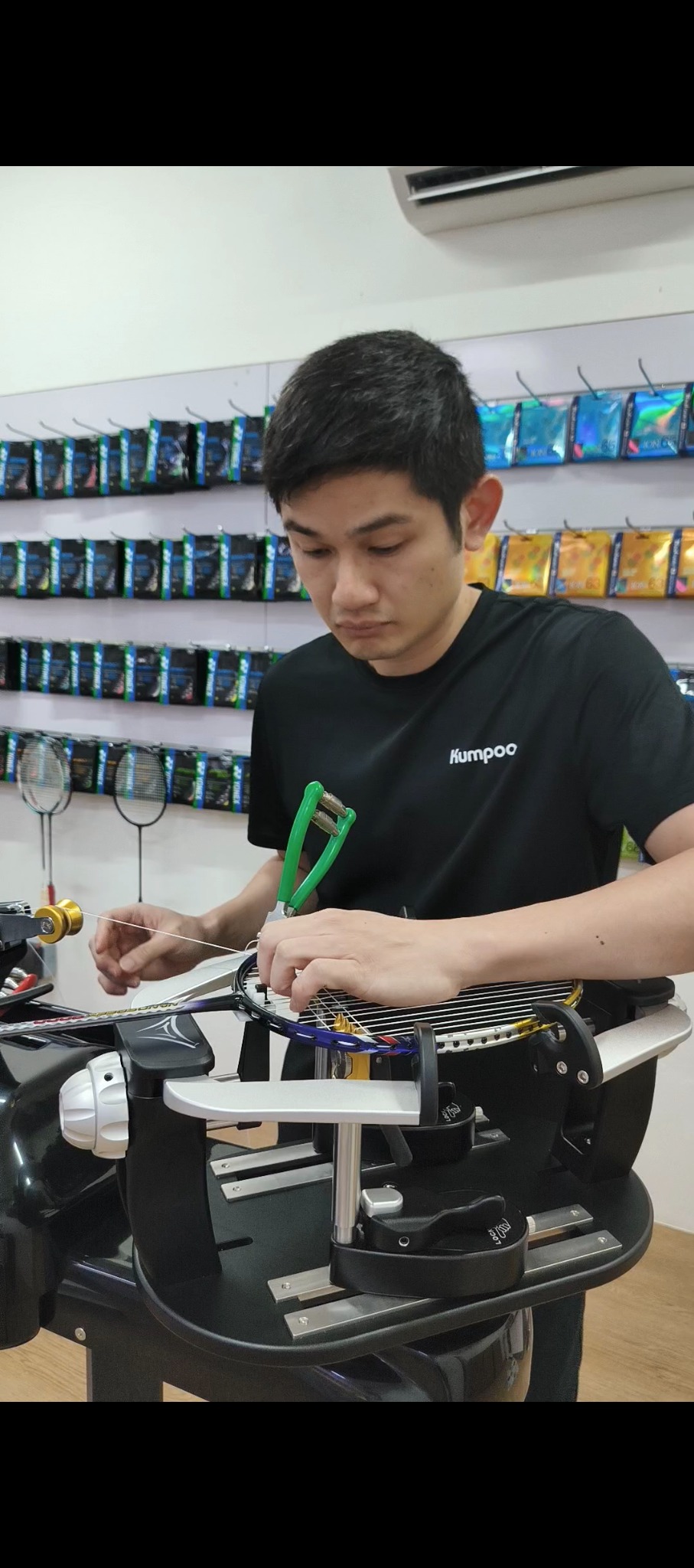
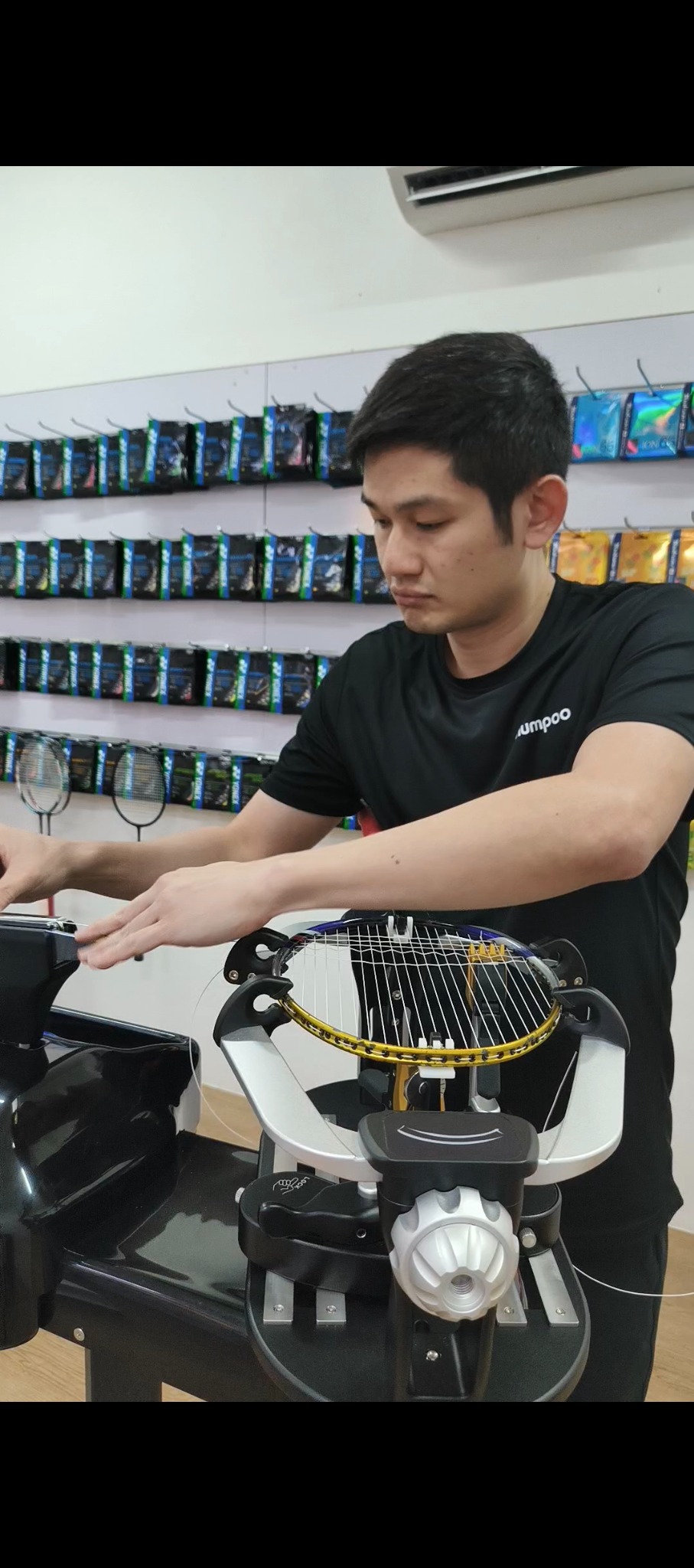
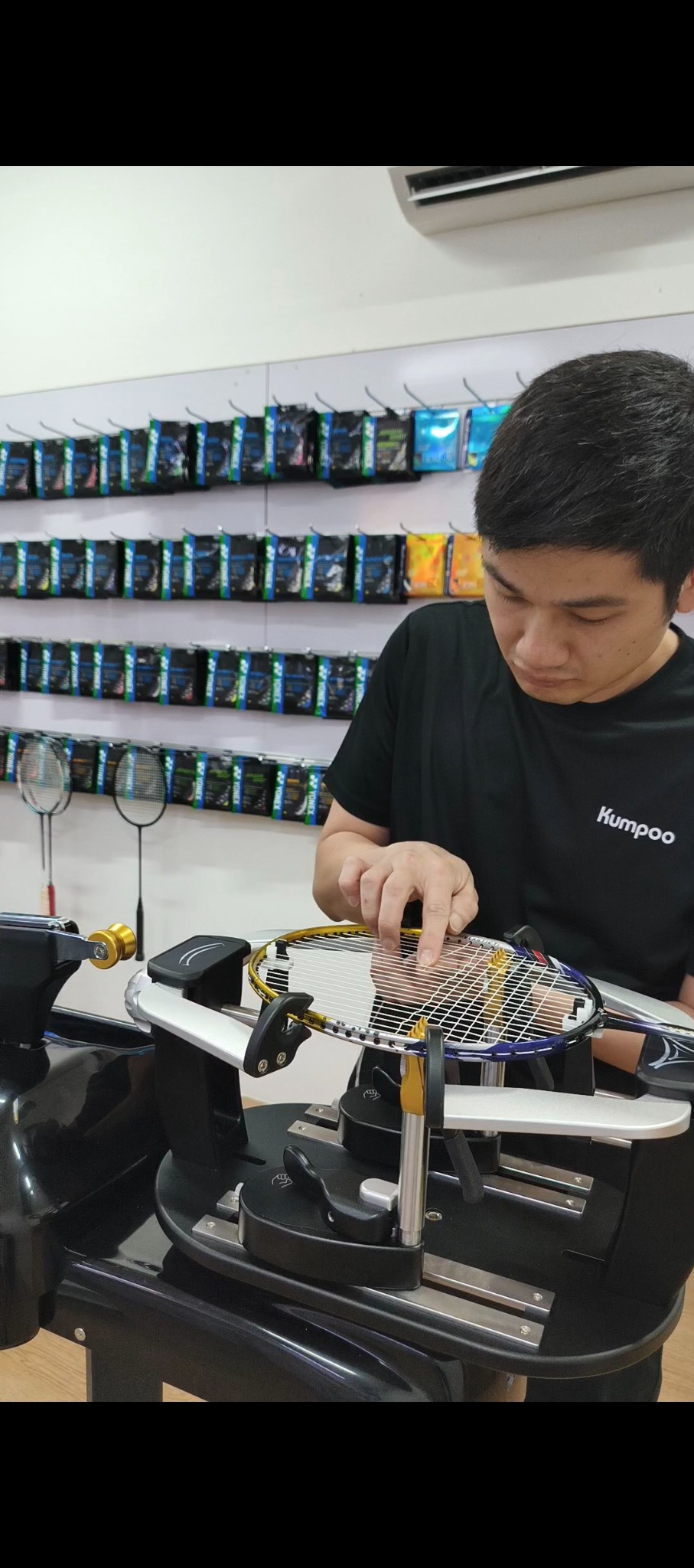
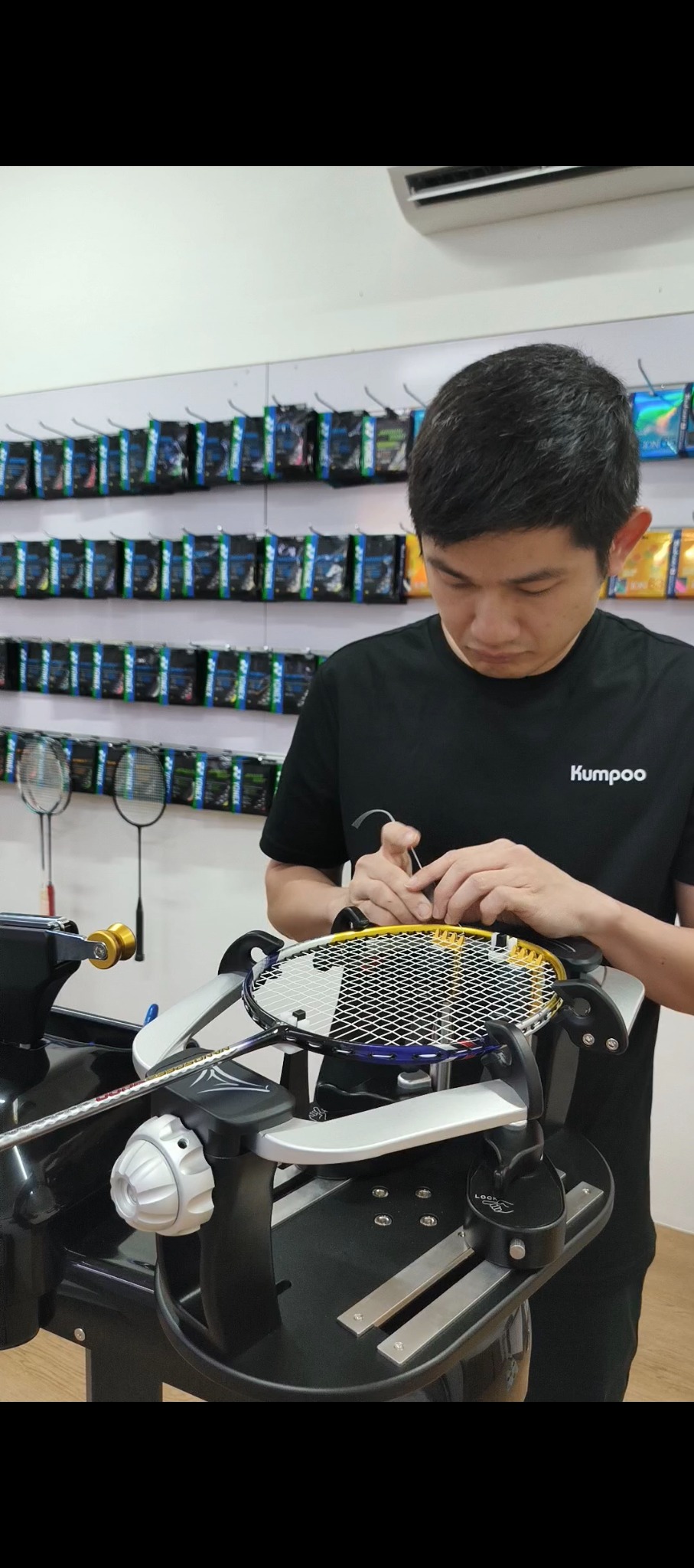
Badminton stringing patterns connect the mains, crosses and finishing points into a complete route. The 2-knot professional stringing method, 4-knot stringing method and around-the-world stringing method are useful topics within proper stringing education. Choosing a route requires the racquet’s instructions, rather than a preference for one knot count. Lee Sai Foong’s certificate records stringing-pattern training; the accompanying photographs show him working through the string bed with the racquet mounted on the machine.
Working Carefully at the Machine
Eric Chuar describes Lee Sai Foong as steady, honest and responsible, someone who takes his commitments seriously. If he is unhappy with the quality of his work, he is willing to redo it rather than leave it as it is. That attitude matters at the stringing machine, where a careful sequence and attention to small details help him work towards a result he is satisfied to hand back to a player.
Stringing Fundamentals and Theory
Lee Sai Foong’s badminton stringing course covered the relationship between proper techniques, tension-control basics, stringing patterns and string types. Badminton stringing theory gives meaning to the steps performed at the machine. It helps explain why preparation comes before tensioning and why the intended string route needs to be understood before starting. His certificate records these subjects as part of the course he completed.
Theory also provides a reference for reviewing practical work. The arrangement of mains and crosses, the behaviour of a chosen string and the racquet’s prescribed pattern need to be considered together. For a learner continuing beyond the course, checking those details is more useful than relying on memory alone. A written practice record and instructor guidance can help connect each racquet job with the fundamentals introduced during training.
Practical Racquet Stringing and Equipment
At the stringing machine, Lee Sai Foong worked with a mounted badminton racquet, the strings and the tools around the frame. The hands-on part of the course connected proper badminton stringing techniques with real equipment: frame supports, clamps, string routes and machine settings. For someone who plays and coaches badminton, this practice brings the preparation of the racquet closer to the game he already enjoys.
His approach to practical work reflects the responsibility Eric Chuar has observed in him. He is not comfortable leaving a job unfinished or accepting a result he feels should be better. He is willing to revisit the work and do it again. Alongside continued practice, that patience and willingness to correct a problem are useful qualities as he prepares to provide badminton stringing services.
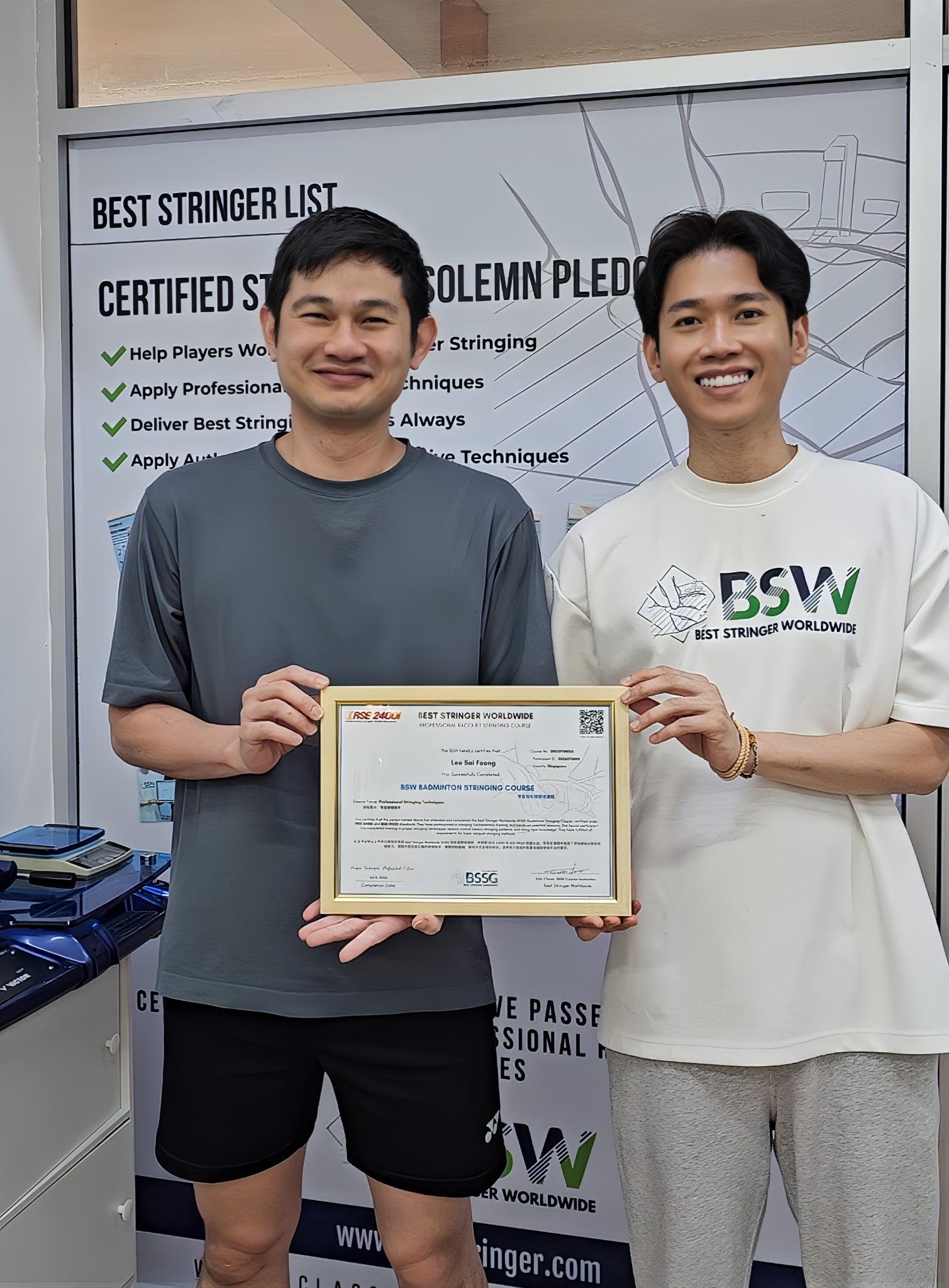
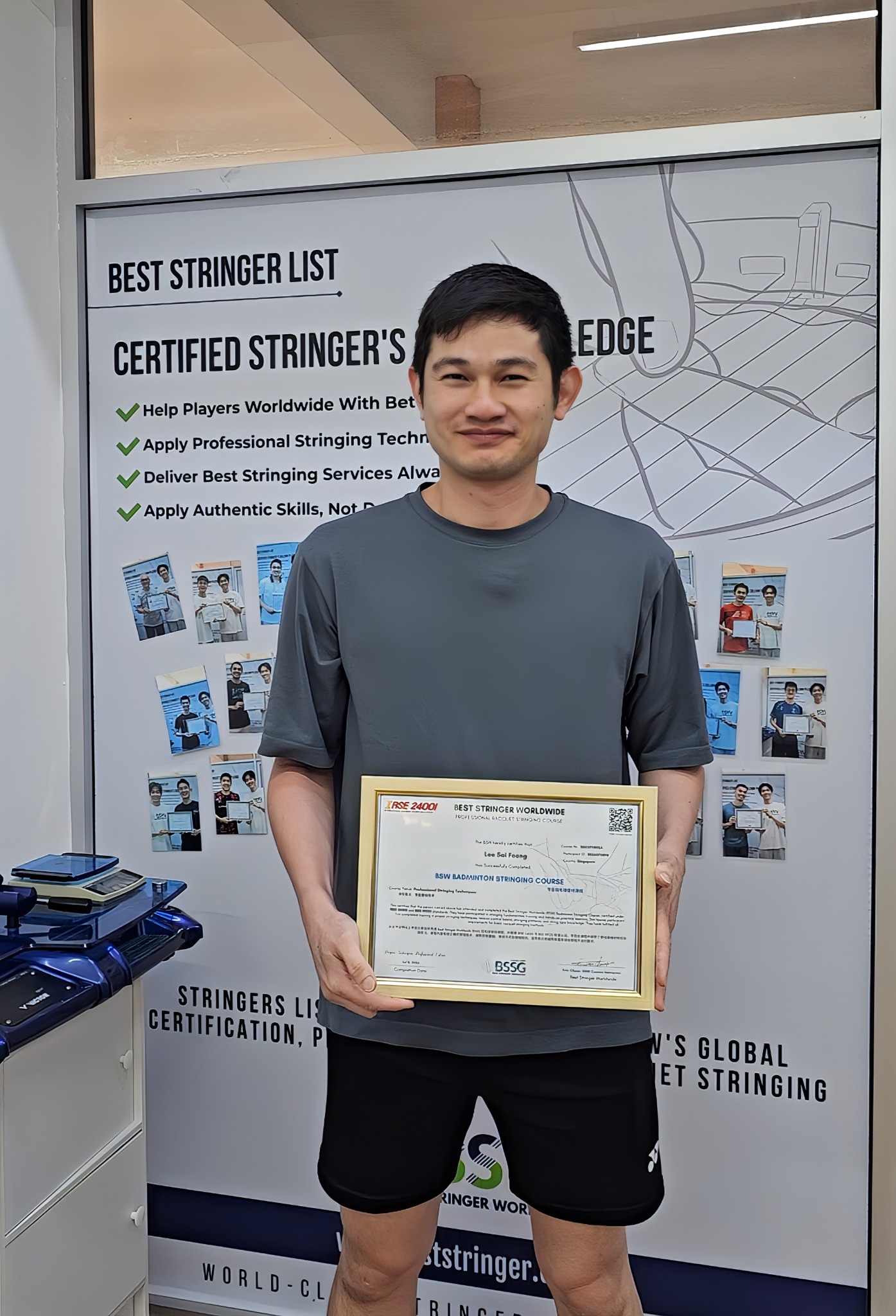
Lee Sai Foong’s certificate confirms completion of the BSW Badminton Stringing Course, with a focus on professional stringing techniques. It records fundamentals training, hands-on practice, tension-control basics, stringing patterns and string-type knowledge, and references IRSE 24001 and BSS 19020. These references identify the educational frameworks stated on the certificate. This page records his course completion and the practical learning shown in the supplied photographs.
Lee Sai Foong’s Course Profile
Lee Sai Foong balances work in an IT company with badminton coaching and playing. Stringing began as a way to look after his own racquets and understand another part of the sport. He is now preparing to develop badminton stringing services in Singapore, bringing together his interest in the game, his coaching role and the proper foundation introduced during his BSW course.
In Eric Chuar’s experience, Lee Sai Foong is straightforward, reliable and careful with what he says. He does not make casual promises to impress people. He takes the quality of his work seriously and is prepared to redo something when it falls short of his expectations. Players looking for a thoughtful person to discuss their racquet needs with can consider him as he develops his stringing service.
Preparing Badminton Stringing Services in Singapore
Lee Sai Foong already uses stringing for his own racquets and is preparing to offer badminton stringing services in Singapore. His aim is to understand each player’s needs and do the work properly, rather than treat every racquet in the same way. His coaching and playing background give him a familiar starting point for those conversations, while further practice will help him develop the foundation from the course.
His next steps combine practical stringing with the same honest, responsible approach Eric Chuar has observed. Listening to the player, checking the racquet’s instructions and reviewing the finished job belong in one routine. The practice topics below support that development, including suitable 2-knot, 4-knot and around-the-world routes. When something is unclear, returning to the fundamentals and seeking guidance remain part of learning.
Suggested Foundation Practice Topics:
- Examining the frame before a stringing job
- Reviewing grommet condition and string protection
- Reading the manufacturer’s prescribed stringing route
- Checking frame support and mounting position
- Identifying the string selected for practice
- Planning the string length for the intended route
- Studying an appropriate 2-knot route
- Recording the machine setting before starting
- Revisiting tension-control basics
- Checking clamp handling and string movement
- Studying a suitable 4-knot pattern
- Tracing an around-the-world route with guidance
- Reviewing the finished mains and crosses
- Writing down questions from each practice session
- Discussing uncertain steps with the instructor
Practical Learning Photographs
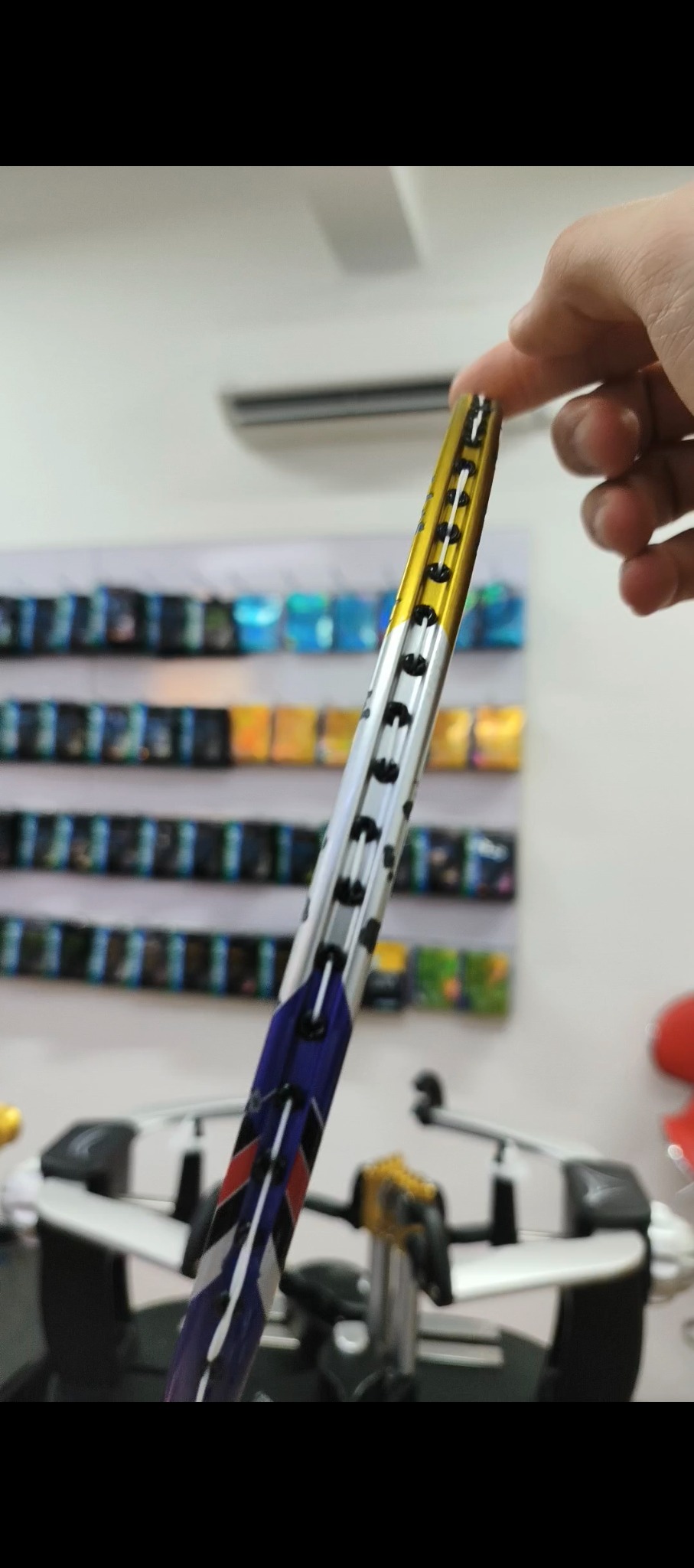
This gallery brings together Lee Sai Foong’s badminton stringing practice and course-completion photographs. It shows hands-on work at the machine, details of the mounted racquet and the certificate marking the completion of his training. The original photographs can be opened from the gallery images. They provide a record of the racket restringing course experience, from working with strings and equipment to receiving the completed-course certificate.
Frequently Asked Questions
Questions about Lee Sai Foong’s background, badminton stringing course, approach to players and plans for stringing services in Singapore.
Lee Sai Foong completed the BSW Badminton Stringing Course. His certificate lists Singapore and records professional stringing techniques as the course focus. The training described on it covers fundamentals, hands-on practice, tension-control basics, stringing patterns and knowledge of string types.
Lee Sai Foong works in an IT company, coaches badminton and enjoys playing. Eric Chuar describes him as honest, steady and responsible. He takes commitments seriously and is willing to redo work when he is dissatisfied with the result. He is also willing to understand the player’s needs before deciding how to approach the racquet.
The 2-knot, 4-knot and around-the-world stringing methods describe different routes and finishing arrangements used in badminton stringing education. Understanding them involves following the racquet’s instructions, tracing mains and crosses and checking the finishing points. Lee Sai Foong’s certificate records stringing-pattern training; his learning record also includes practical work at the machine.
He strings his own racquets and is preparing to offer badminton stringing services in Singapore. His plans build on his badminton coaching and playing background, the proper foundation from the BSW course and his willingness to listen to players. He intends to take care with the work and continue improving through practice.
Lee Sai Foong’s completed-course certificate names IRSE 24001 and BSS 19020 as its educational frameworks. This page records completion of the BSW badminton stringing course and the subjects stated on that document. Course completion is distinct from a separate certified-stringer qualification or examination.