1.1 Pengenalan kepada Binaan Tali Raket
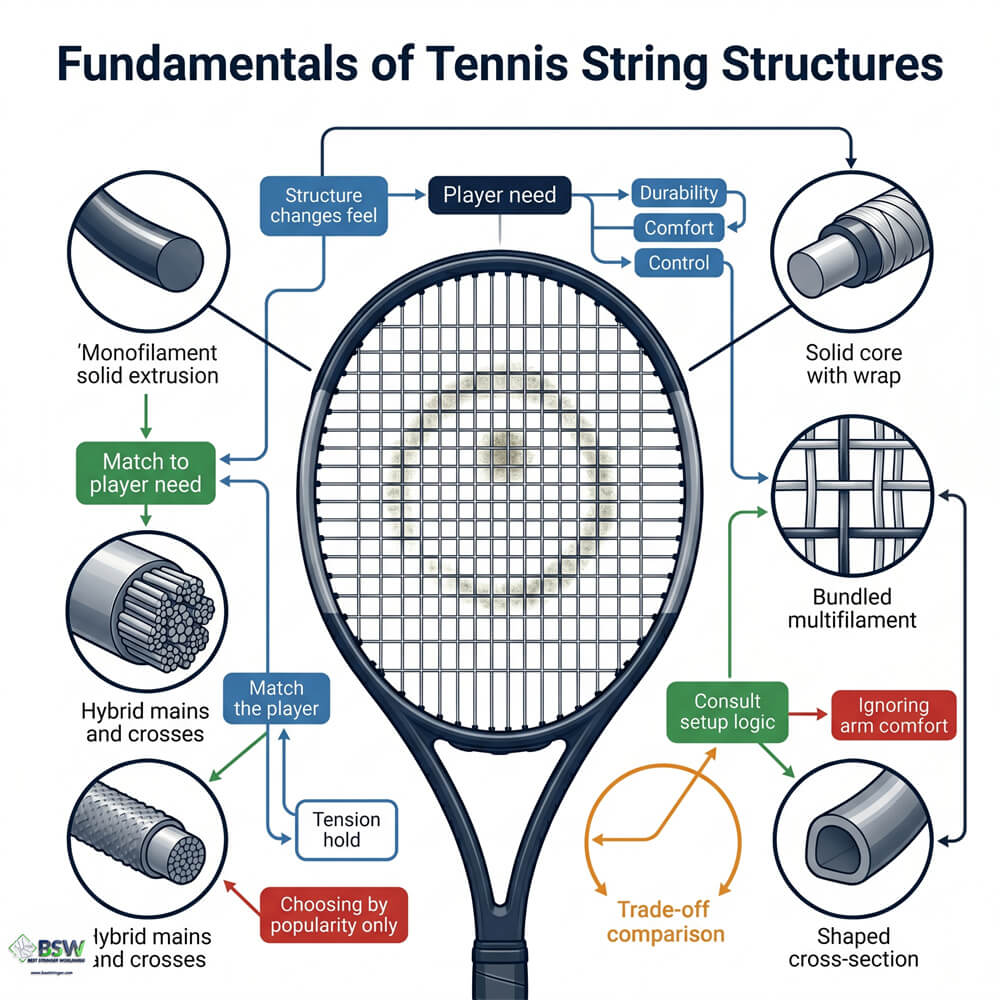
Apakah Asas Struktur Tali Tenis?
Pasaran tali tenis moden agak padat dan mengelirukan. Walau bagaimanapun, struktur dan tekstur tali tenis membentuk perbezaan prestasi sebenar, melangkaui sekadar nama jenama. Dalam panduan ini, anda akan pelajari bagaimana binaan dalaman mempengaruhi ketahanan, kuasa, kawalan, rasa, dan kekalan paun.
Di Best Stringer Worldwide, kami mencipta panduan ini kerana pemain tenis dan Stringer profesional memerlukan pengetahuan praktikal ini. Memilih tali yang betul memerlukan lebih daripada sekadar mengikut populariti; ia memerlukan padanan sifat fizikal tali dengan gaya permainan, keperluan keselesaan, dan matlamat prestasi anda.
Berikut adalah carta keputusan ringkas:
Langkah 1: Nilai keperluan keselesaan dan kekerapan tali putus anda secara jujur.
Langkah 2: Fahami bahawa ‘lebih tahan lama’ daripada struktur yang lebih keras sering bermaksud kurang keselesaan lengan.
Langkah 3: Dapatkan nasihat Stringer Bertauliah Antarabangsa untuk memilih struktur dan tekstur yang mengimbangkan keperluan fizikal dan prestasi di gelanggang dengan sempurna.
1.2 Struktur Monofilament
Memahami Tali Tenis Monofilament
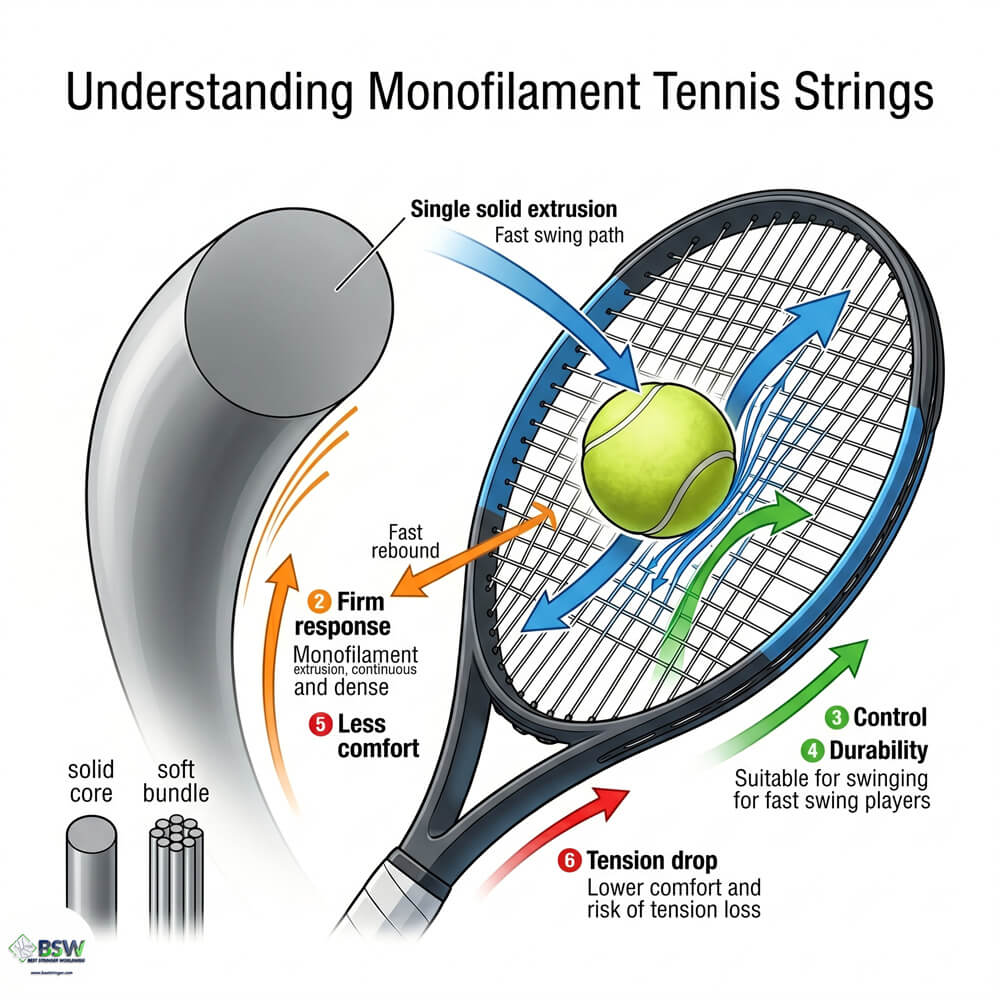
Apakah maksud monofilament? Secara ringkasnya, ia adalah tali yang diperbuat daripada satu penyemperitan bahan pepejal tunggal, yang sering dikaitkan dengan binaan berasaskan poliester. Monofilament moden sering dipilih untuk kawalan, ketahanan, dan permainan berorientasikan putaran (spin). Kerana ia biasanya lebih keras, ia membolehkan pemain dengan kelajuan ayunan pantas memukul bola dengan kuat sambil mengekalkannya di dalam gelanggang.
Namun, ketahanan dan kawalan datang dengan satu kelemahan. Tali tenis monofilament biasanya lebih keras (stiff), bermakna keselesaan mungkin lebih rendah bagi sesetengah pemain, terutamanya mereka yang mempunyai masalah lengan. Ia juga cenderung kehilangan kekalan paun dengan lebih pantas berbanding binaan yang lebih lembut dan kompleks.
Pemain tenis memerlukan keseimbangan yang tepat. Bagi pemukul kuat yang sering memutuskan tali, monofilament secara amnya lebih disyorkan. Pemain yang memerlukan lebih penyerapan hentakan selalunya mendapat manfaat daripada alternatif yang lebih lembut atau mencampurkan monofilament dalam tetapan tali hibrid untuk mengembalikan keselesaan.
1.3 Teras Pepejal & Struktur Balutan
Meneroka Binaan Teras Pepejal dan Balutan
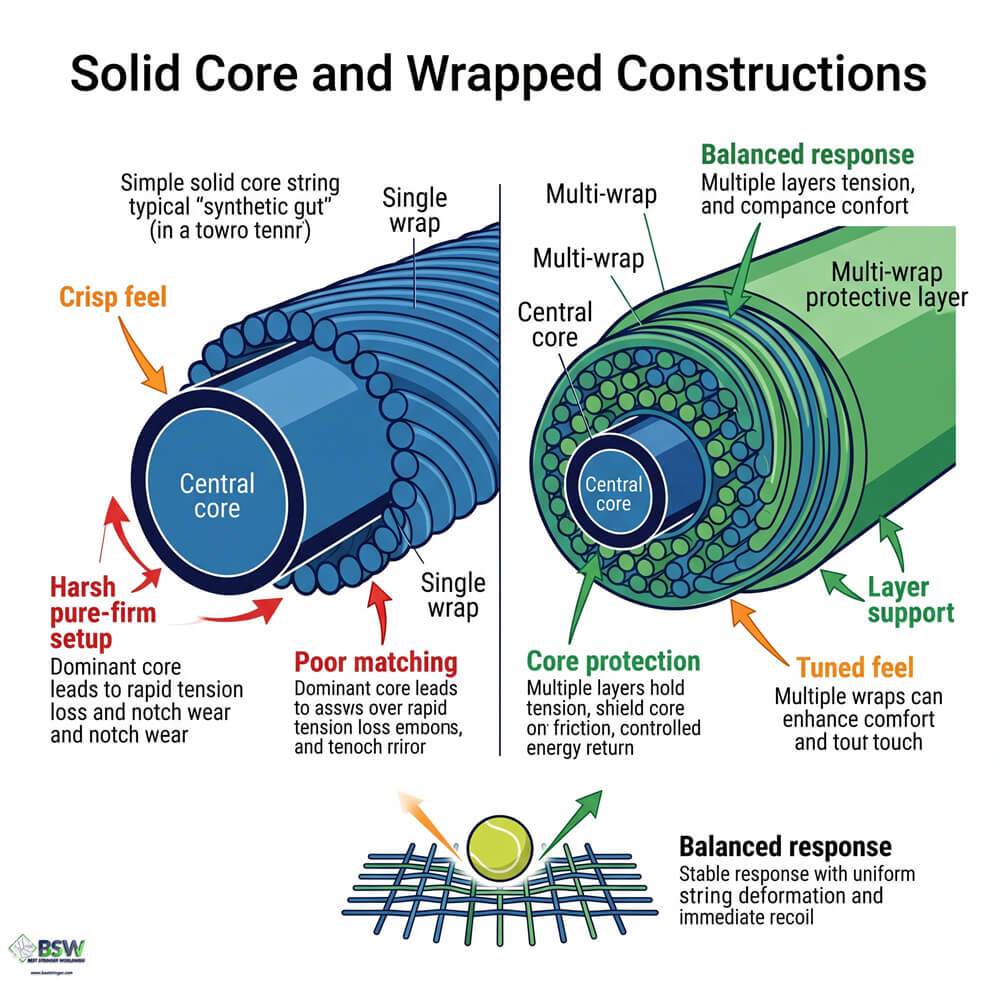
Beralih daripada monofilament, teras pepejal dengan struktur balutan tunggal (single wrap) sering dipilih sebagai pilihan sintetik yang seimbang. Binaan ini mempunyai teras pusat yang dikelilingi oleh lapisan luar filamen yang lebih kecil, menawarkan jalan tengah yang terletak antara poliester yang lebih keras dan multifilament yang lebih lembut dari segi rasa dan keselesaan bermain.
Menambah kerumitan, teras pepejal dengan struktur pelbagai balutan (multi-wrap) menggunakan balutan tambahan untuk melaraskan rasa dan perlindungan di sekeliling teras. Jenis ini boleh menawarkan maklum balas yang lebih halus berbanding binaan balutan yang lebih ringkas, menggabungkan rasa rangup (crisp) dengan kekalan paun yang lebih baik dari masa ke masa.
Dengan memahami lapisan ini, Stringer Bertauliah Antarabangsa boleh mengesyorkan tetapan yang menawarkan prestasi yang boleh dipercayai tanpa kekerasan seperti monofilament tulen. Ini memastikan pemain mendapat tindak balas yang seimbang, selesa, tetapi masih menawarkan jangka hayat tali dan nilai yang munasabah.
1.4 Struktur Multifilament
Keselesaan Binaan Multifilament
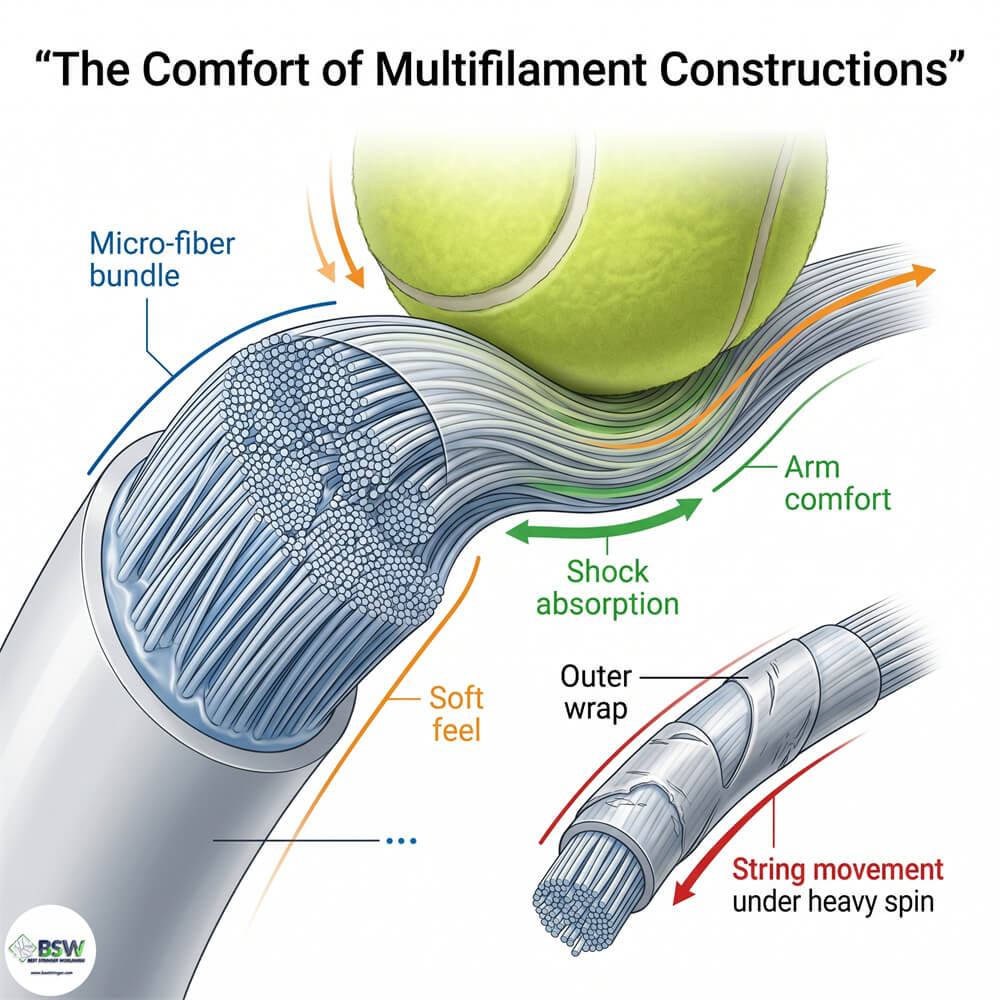
Struktur multifilament terdiri daripada beribu-ribu gentian mikro yang digabungkan bersama dan diikat oleh resin khusus. Memahami sinergi ini adalah penting bagi pemain yang mencari perlindungan lengan:
Apakah itu Multifilament? Kerana banyak gentian kecil digabungkan bersama, reka bentuk ini biasanya lebih lembut dan lebih berorientasikan keselesaan. Ia sering dipilih untuk penyerapan hentakan yang luar biasa dan rasa empuk serta bertenaga yang menyerupai tali perut haiwan asli (natural gut).
Multifilament Berbalut. Multifilament dengan struktur balutan tunggal menambah lapisan pelindung luar untuk menyokong teras yang lebih lembut. Ini membantu ketahanan dan mengurangkan pergerakan tali yang berlebihan sambil kekal sebagai pilihan yang sangat mementingkan keselesaan.
Perlindungan Pelbagai Balutan. Multifilament dengan struktur pelbagai balutan meningkatkan perlindungan dan mengimbangkan prestasi. Dengan melapiskan binaan, keselesaan dan ketahanan boleh diadun pada tahap tertentu, walaupun kekalan paun dan jangka hayat masih akan berbeza daripada pilihan monofilament yang lebih keras.
1.5 Struktur Hibrid
Menguasai Tetapan Tali Hibrid
Apakah itu Tetapan Hibrid?
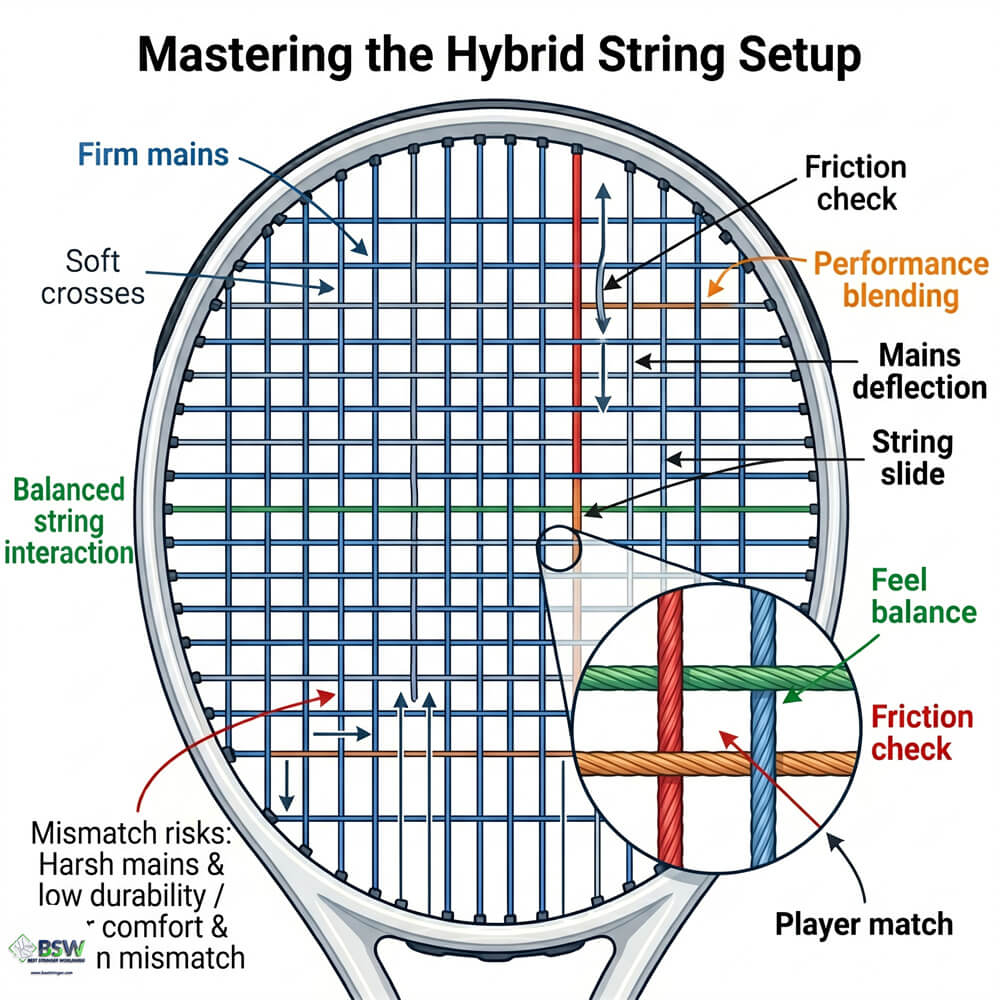
Tetapan hibrid secara sengaja mencampurkan dua struktur tali yang berbeza satu untuk tali utama (mains) dan satu lagi untuk tali silang (crosses). Ini membolehkan tapak tali menggabungkan ciri-ciri daripada dua keluarga tali yang berbeza.
Mengimbangkan Prestasi.
Pemain menggunakan hibrid untuk mengimbangkan keselesaan, kawalan, ketahanan, dan rasa. Sebagai contoh, memadankan tali utama monofilament yang tahan lama dengan tali silang multifilament yang lembut menawarkan putaran poliester bersama penyerapan hentakan dan sentuhan yang dipertingkatkan.
Bimbingan Profesional Adalah Penting.
Oleh kerana tali utama dan silang berinteraksi secara dinamik, cadangan hibrid memerlukan lebih banyak pengetahuan daripada seorang Stringer. Kursus pasang tali raket mengajar bagaimana bahan berbeza ini bergesel dan menakik antara satu sama lain, memastikan tetapan akhir sepadan dengan keperluan khusus pemain.
1.6 Tekstur dan Bentuk
Tekstur Tali Tenis dan Bentuk Geometri
Tekstur dan bentuk keratan rentas memerlukan perbincangan berasingan daripada struktur dalaman. Berikut adalah bagaimana reka bentuk luaran mempengaruhi permainan anda:
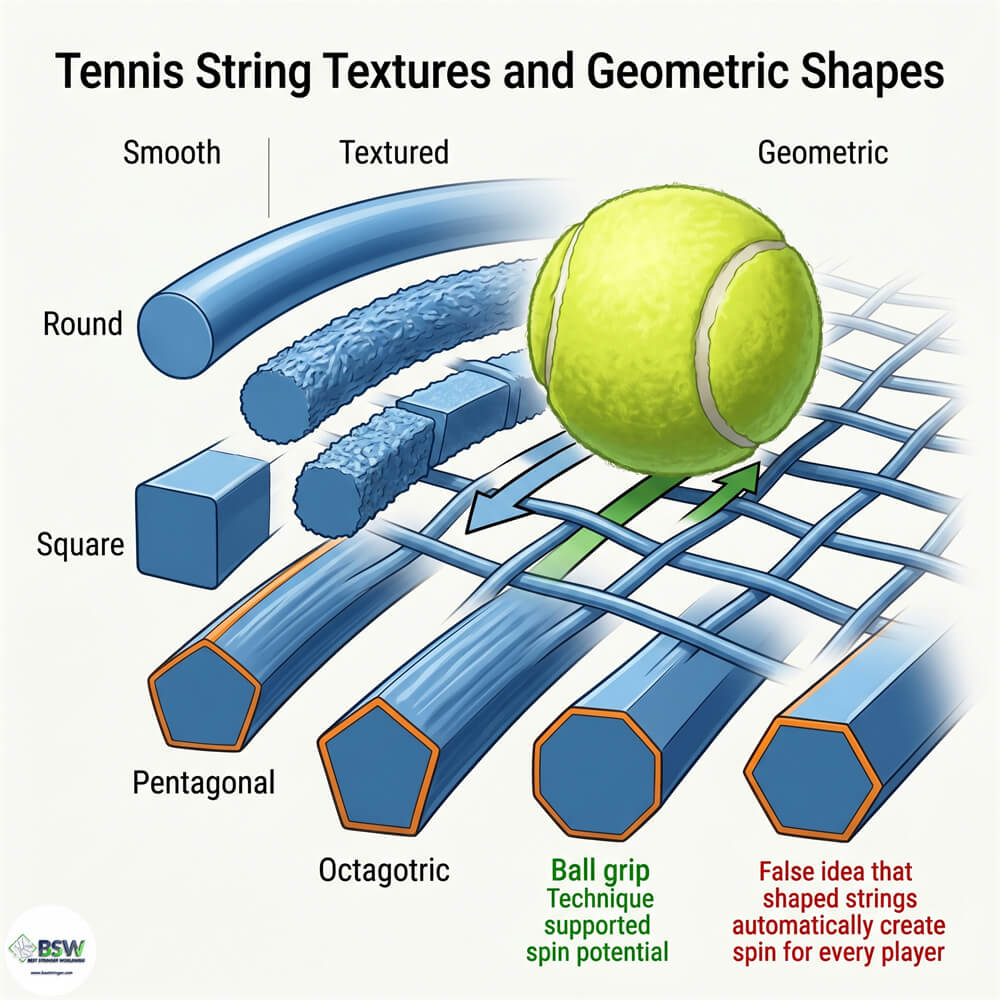
Tali Bertekstur. Kekasaran permukaan boleh dicipta melalui lekukan atau salutan tambahan. Matlamatnya biasanya adalah untuk memberikan lebih cengkaman atau mengubah interaksi antara tali itu sendiri. Namun, kesannya masih sangat bergantung kepada teknik pemain dan tetapan penuh.
Struktur Bentuk Geometri. Tali sering disemperit ke dalam keratan rentas berbentuk seperti segi empat sama, pentagon, oktagon, atau heksagon. Ini banyak dibincangkan untuk permainan berorientasikan putaran (spin) kerana bucunya secara teori boleh mencengkam bola dengan lebih baik, walaupun laporan pemain mungkin berbeza-beza berdasarkan mekanik pukulan mereka.
Membuat Pilihan. Mengapa pemain patut ambil peduli? Kerana geometri hanyalah sebahagian daripada prestasi tali. Stringer profesional faham bahawa menambah tekstur pada monofilament yang keras tidak akan secara automatik memberikan putaran besar kepada pemain baru teknik pukulan kekal menjadi perkara utama.

1.7 Pasang Tali Raket Profesional
Kepentingan Pasang Tali Raket Profesional
Pendidikan peralatan yang betul adalah teras kepada kursus pasang tali raket profesional dan standard pensijilan Stringer yang baik. Tali yang betul masih memerlukan pemasangan yang tepat; pemasangan tali raket yang tidak betul boleh merosakkan manfaat mana-mana struktur.
Di Best Stringer Worldwide, kami tahu bahawa Stringer terlatih memahami paun (lbs), kualiti pemasangan, dan pemadanan tetapan. Bimbingan profesional sangat penting apabila pemain membandingkan keluarga tali yang sangat berbeza, dari multifilament yang lembut hingga poliester yang berbentuk.
Dengan mengutamakan pengetahuan binaan tali yang tepat, pensijilan Stringer kami memastikan setiap tetapan mengimbangkan kuasa, kawalan, ketahanan, dan keselesaan lengan dengan sempurna. Anda menyingkirkan tekaan, bereksperimen dengan tujuan, dan meningkatkan standard tetapan peribadi anda mahupun perkhidmatan pelanggan.
Soalan Lazim Pantas Memilih Tali
Jawapan pantas berasaskan definisi kepada soalan lazim mengenai struktur dan tekstur tali tenis.
Apakah perbezaan antara monofilament dan multifilament?
Tali monofilament ialah binaan penyemperitan tunggal (biasanya poliester) yang menawarkan kawalan dan ketahanan. Tali multifilament menggabungkan beribu-ribu gentian mikro, menawarkan penyerapan hentakan yang hebat, keselesaan, dan rasa yang lebih lembut.
Apakah fungsi tetapan hibrid?
Tetapan tali tenis hibrid mengadun dua jenis tali yang berbeza (cth., monofilament dan multifilament) pada tali utama dan silang. Ini membolehkan pemain mengimbangkan ketahanan dan kawalan dengan keselesaan dan rasa tambahan.
Adakah tali bertekstur sama dengan tali berbentuk?
Tidak sepenuhnya. Tali bertekstur mempunyai permukaan yang dikasarkan atau berlekuk untuk mengubah geseran, manakala tali berbentuk disemperit dengan profil geometri (seperti pentagon atau oktagon) untuk berinteraksi secara berbeza dengan bola untuk permainan berorientasikan putaran.
Struktur tali manakah yang terbaik untuk keselesaan?
Tali tenis multifilament dan tali perut haiwan asli (natural gut) selalunya pilihan terbaik apabila keselesaan dan perlindungan lengan menjadi keutamaan tinggi, memandangkan struktur gabungannya cemerlang dalam menyerap hentakan berbanding monofilament pepejal.
Mengapa sesetengah pemain memilih monofilament?
Pemain dengan ayunan pantas dan pukulan kuat memilih tali tenis monofilament kerana ketahanan dan kawalannya. Tapak tali yang lebih keras membantu mengekalkan pukulan agresif di dalam gelanggang dan memberikan tindak balas yang rangup serta mesra putaran (spin).
Bagaimana tekstur tali mempengaruhi prestasi?
Tali bertekstur dan berbentuk direka untuk mengubah cara tali mencengkam bola dan menggelongsor sesama sendiri. Walaupun ia boleh meningkatkan potensi putaran, putaran sebenar yang dijana masih bergantung kuat pada teknik pemain yang betul.
Apakah yang patut dipertimbangkan Stringer sebelum penukaran?
Stringer tenis profesional sentiasa perlu menilai tahap kemahiran pemain, keperluan keselesaan, kekerapan bermain, dan bajet. Mereka harus mengesyorkan struktur yang sepadan dengan pemain secara bertanggungjawab, bukan sekadar jenama yang popular.
Mengapa pensijilan stringer penting?
Kursus pasang tali raket yang komprehensif mengajar sains di sebalik binaan tali, kekalan paun, dan rasa (feel). Stringer Bertauliah Antarabangsa memberi bimbingan berpendidikan, dan tahu dengan tepat bila untuk mengesyorkan binaan lebih lembut atau tetapan hibrid.
Adakah kursus pasang tali raket diperlukan?
Bagi mereka yang mahu menguasai rundingan peralatan, ya. Stringer mempelajari konsistensi ukuran, ikatan simpulan yang tepat (seperti 2-knot atau 4-knot), dan logik pemadanan tetapan tali dengan tahap pemain, sekaligus menghapuskan tekaan dari proses pemilihan peralatan.
Fizik Struktur: Mengapa Binaan Tali Penting
Pengetahuan Profesional
Pendidikan pasang tali raket kami berdasarkan prinsip binaan yang disahkan. Kami mengutamakan keselamatan lengan, padanan tali pintar, dan pensijilan Stringer yang bertanggungjawab berbanding sekadar gembar-gembur pemasaran.
| Kategori Tali | Kukuh / Berorientasikan Ketahanan | Lembut / Berorientasikan Keselesaan |
|---|---|---|
| Struktur Dalaman (Mono vs Multi) | Monofilament: Maklum balas lebih kukuh, kawalan cemerlang, dan ketahanan untuk pemukul kuat. | Multifilament: Beribu-ribu gentian tergabung menawarkan keselesaan empuk dan penyerapan hentakan. |
| Reka Bentuk Teras (Pepejal vs Berlapis) | Teras Pepejal: Teras tengah tunggal memberikan maklum balas sintetik yang seimbang dan rangup. | Pelbagai Balutan (Multi-Wrap): Lapisan pelindung tambahan melaraskan rasa dan meningkatkan kekalan paun. |
| Gaya Tetapan (Penuh vs Hibrid) | Satu Jenis Penuh (Full Bed): Rasa konsisten menggunakan tali yang sama di seluruh tapak tali. | Tetapan Hibrid: Mengadun dua struktur tali berbeza untuk mengimbangkan keselesaan dan ketahanan. |
| Tekstur Permukaan (Licin vs Kasar) | Licin: Permukaan tradisional membenarkan pergerakan tali biasa dan maklum balas konsisten. | Bertekstur: Permukaan berlekuk atau kasar direka untuk mengubah cengkaman dan interaksi tali. |
| Bentuk Keratan Rentas (Bulat vs Geometri) | Bulat: Profil tradisional menawarkan sudut pelepasan boleh dijangka dan corak permainan universal. | Geometri (Berbentuk): Permukaan berbucu (cth., oktagon) sering dipilih untuk rasa berorientasikan putaran (spin). |
| Kelemahan & Kelebihan Utama (Kawalan vs Kuasa) | Keras/Tebal: Kawalan dan jangka hayat tali maksimum, tetapi kuasa dan keselesaan lengan lebih rendah. | Lembut/Nipis: Sentuhan, kuasa, dan keselamatan menakjubkan, tetapi mungkin lebih cepat putus bagi pemain spin berat. |
Kuasai Tali Tenis Bersama Best Stringer Worldwide
Bersedia untuk meningkatkan pengetahuan anda? Best Stringer Worldwide di Kuala Lumpur, Malaysia, menawarkan kursus pasang tali raket profesional bagi mengajar anda cara struktur dan tekstur tali tenis mempengaruhi prestasi dengan selamat. Sama ada anda seorang pemula, pakar tenis, atau Stringer badminton yang ingin mempelajari logik tetapan merentas sukan, kami sedia membantu juruteknik dari kawasan sekitar seperti Setapak dan Wangsa Maju hingga ke seluruh dunia. Hubungi Stringer Bertauliah Antarabangsa untuk menguasai proses pemilihan tali hari ini.